Members of the tribe looking for an Oscar finalist full of Jewish characters will find it in an unlikely place — Argentina’s “Wild Tales.”
The movie by director Damian Szifron is among the five surviving nominees in the foreign-language film category, culled from entries submitted by 83 different countries.
Poland’s “Ida” also made the cut with the story of an aspiring Polish nun, who discovers that her parents were Jews murdered in the Holocaust.
Two out of five entries with Jewish themes isn’t bad, considering that this year’s roster of Academy Award candidates is quite short on Jewish talent.
“Wild Tales” (“Relatos Salvajes” in Spanish) consists of six separate short stories, all directed by Szifron. The central characters in the episodes vary, but they all share a common frustration — each has had it up to here and is not going to take it anymore.
Typical is “Bombita,” in which demolition engineer Simon is having a day you wouldn’t wish on your worst enemy. Through a bureaucratic foul-up his car is impounded, snotty clerks ignore his protests and slap him with a heavy fine, and the tow operator overcharges him. When he finally gets home, his wife upbraids him for missing his daughter’s birthday party.
Finally it’s payback time, which the engineer accomplishes in spectacular fashion.
The crudest of the segments is “Road to Hell,” in which an enraged man urinates and defecates on the windshield of another car, with the driver inside.
Szifron recovers from this with the last and best episode, “Till Death Do Us Part.”
In this ultimate Jewish wedding reception from hell, the lovely bride Romina (Erica Rivas) discovers that her newly betrothed (Diego Gentile) has been sleeping with one of the more attractive wedding guests.
Romina embarks on an elaborate rampage, which leaves few dishes or bystanders unshattered.
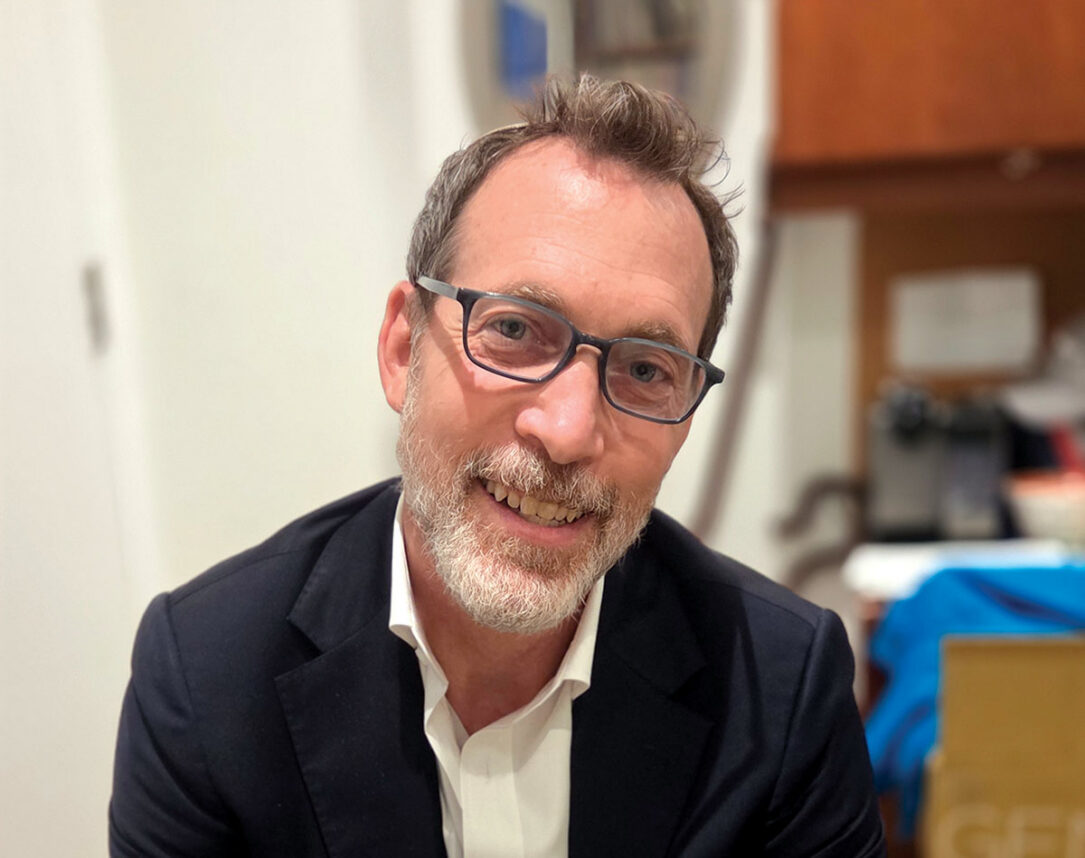
The Journal interviewed Szifron at the Four Seasons Hotel, and at first sight he looks more like a UCLA graduate student than the experienced 39-year-old filmmaker he is.
His precocious beginning has a Spielbergian ring. His father was an ardent movie fan, who kept the house loaded with projectors and took his 3-year-old son to his first movie, “Superman,” starring Christopher Reeve.
There was no stopping after that, and father and son would frequently see three, occasionally five movies a day.
At 9, young Damian made his first short movie, enlisting his friends and family as actors and crew.
As a teen, he studied film at the ORT School in Buenos Aires and soon was editing and adding music to his footage.
Although Argentina became notorious as a haven for Nazi war criminals, under dictator Juan Peron, Szifron said he now feels entirely at home in the tight-knit Argentinian-Jewish community of some 230,000 — the largest in South America.
“I feel completely safe in my country, and there is no overt anti-Semitism,” he said.
That sense of security may have been shaken in recent weeks, however, with the appearance of anti-Semitic posters in Buenos Aires referring to the mysterious death of Argentinian state prosecutor Alberto Nisman, who was Jewish.
Nisman was about to testify that Argentinian President Cristina Fernandez had been trying to orchestrate a cover-up of Iranian involvement in the 1994 bombing off the AMIA Jewish community center in Buenos Aires, which claimed 85 lives.
Szifron said a major key to his artistic outlook is his Jewishness, which plays a part in almost all his films. “You are your origins,” he declared. “I’ve always loved movies about origins, from “Dirty Harry” and “Rocky” to “Fiddler on the Roof.”
He got his start as a television writer and director, and his first series, “The Pretenders” was loaded with Jewish characters, many bearing the names of real people Szifron remembered from his youthful days at “Bet Am del Oeste” (Bet Am of the West), a Jewish community center in the western part of Buenos Aires.