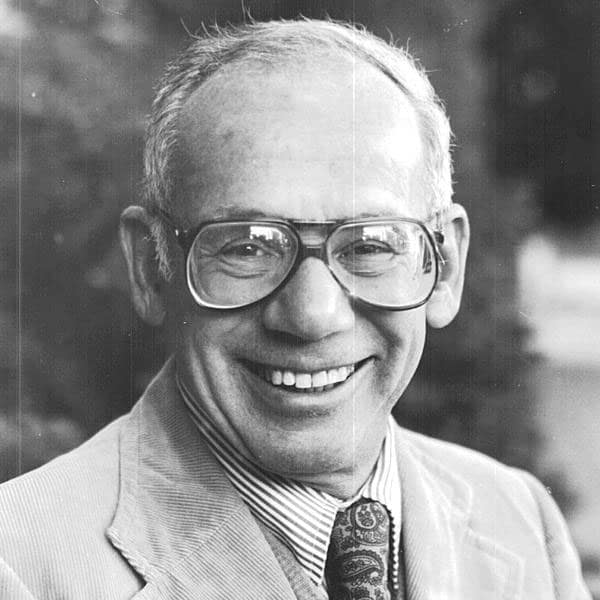
New York Mayor Edward Irving Koch, universally addressed as “Ed,” was a master of timing and promotion.
So one may assume that he would have applauded the timing of his departure, at 88, on Feb. 1, which coincided with the release in his home city of the documentary “Koch,” to boffo box office.
Born in the Bronx to Jewish immigrants from Poland, Koch became not only the chief executive but also the incarnation of New York City — brash, argumentative, resilient, as much a man of action as of words.
As one observer noted on his passing, if Koch made it to heaven, he would let it be known that the place was quite inferior to Manhattan.
First-time filmmaker Neil Barsky, along with producer Jenny Carchman and editor Juliet Weber, has done a remarkable job in catching his subject’s multifaceted personality and the ups and downs of the city he loved and molded.
Previously a reporter for the Long Island Jewish Press, New York Daily News and Wall Street Journal, Barsky said that as director, he approached the story “like a journalist.”
In our era of colorless politicians — think Senate Majority Leader Harry Reid or House Speaker John Boehner — one longs for the man who could say, after he was defeated for a fourth term as mayor, “The people have spoken — and the people must be punished.”
After serving as an infantryman during World War II, Koch became a lawyer and won a seat in Congress, serving from 1969 to 1977.
The next year, he was elected mayor, at a time when the Big Apple seemed to be falling apart, plagued by crime, graffiti, a subway strike and in a deep financial hole.
By the end of his first four-year term, Koch had largely turned the city around, and for his second term he was endorsed by both the Democratic and Republican parties, earning about 75 percent of the vote.

From left: Ed Koch and director Neil Barsky Photo by Julie Cunnah
He launched an ambitious public-housing program and cleaned up a porn-ridden Times Square, but his political career went downhill during his third term.
Many of his political appointees were caught in bribery and extortion scandals, and although Koch himself was never accused of wrongdoing, apparently even New Yorkers were getting tired of their high-decibel mayor.
After being defeated in 1989 for a fourth term, Koch “retired” to a second career as political commentator and movie critic and succeeded Judge Joseph Wapner as the presiding presence on the television series “The People’s Court.”
Koch’s book, “Mayor,” became a best-seller and later a successful off-Broadway musical of the same title.
Members of the Tribe might have wished that the film focused a bit more on Koch’s Jewishness, but his ethnic heritage is so obviously imprinted in his DNA that maybe it didn’t have to be spelled out.
Koch was a secular Jew, Barsky said, who attended synagogue only on High Holy Days, and he instructed that he be buried at the Trinity Church Cemetery in upper Manhattan. “It was the only Manhattan cemetery which still had space for new burials, and Ed simply couldn’t bear the idea of New Jersey as his last resting place,” Barsky said.
Koch was a lifelong bachelor and after a day of public appearances, applause and catcalls, he would return alone to his apartment, often cooking his own meals.
Throughout his election campaigns, he was dogged by rumors that he was gay, a death knell for any politician in the 1970s and ’80s.
When asked about his sexual orientation in the documentary, Koch smiles pleasantly before answering, “None of your (expletive) business.”
The one extended scene that shows Koch as a Jew and in a family setting is at a break-the-fast dinner at the end of Yom Kippur, at the home of his sister and her extended family. The occasion so mellowed the mayor that he allows a brash nephew to get the better of him in a political argument.
But it is during a visit with his chief of staff, Diane Coffey, to preview his tombstone, that Koch’s connection to his heritage and faith is fully expressed.
Chiseled on the tombstone are a Magen David, the Shema prayer in Hebrew and English, and the final words of journalist Daniel Pearl before he was beheaded by Muslim extremists: “My father is Jewish, my mother is Jewish, I am Jewish.”
There is also a bench, so that people can sit while visiting him, Koch explains.
“Koch” opens March 1 at Laemmle’s Royal Theatre in West Los Angeles, Town Center in Encino and Playhouse in Pasadena.