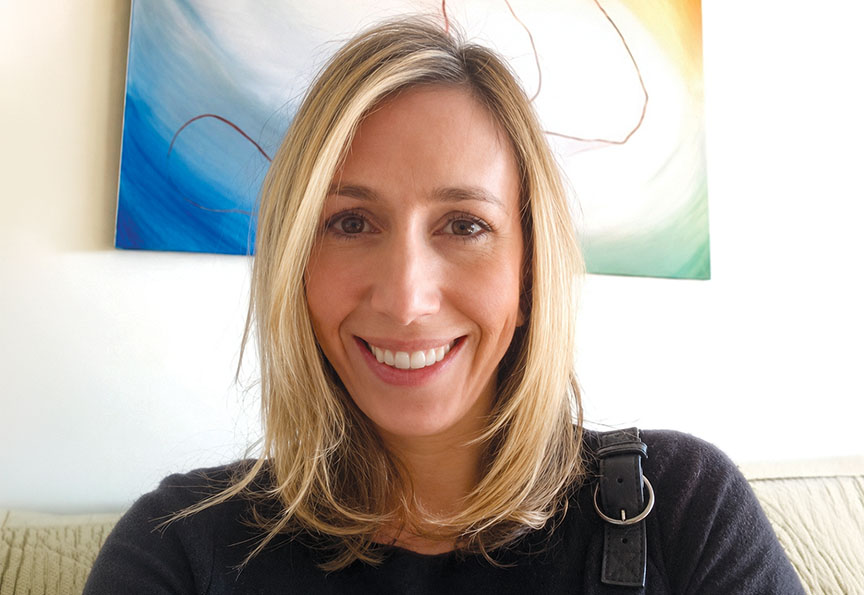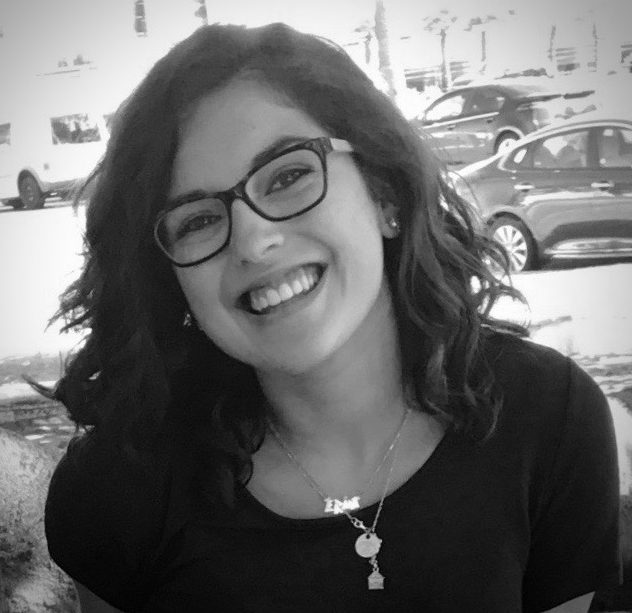

Michal Uziyahu is an Israeli community center director in the Eshkol region of southern Israel. Her centers share about 40 miles (65 kilometers) of border with Gaza. On the morning of Nov. 12, she jumped into action when more than 100 rockets hit southern Israel after the Israel Defense Forces assassinated Palestinian Islamic Jihad leader Baha Abu al-Ata via a precision airstrike.
Even as sirens wailed around her for more than 15 hours — including during an interview with the Journal — Uziyahu remained calm. She said her strength comes from her community and her efforts to offer relief to those during this repetitive, long-running crisis.
Uziyahu spoke with the Journal on the evening of Nov. 12, Israel time.
Jewish Journal: What have the last 15 hours been like for your and your community?
Michal Uziyahu: It’s intense. Unfortunately, this is the reality that we have lived in for the last 18 years. We are doing our best not feel sorry for ourselves but to say, ‘This is the reality’ and we focus on anyone who needs our help. … In this crazy, madness situation, we try to do the best we can. We are not giving up. This is our home and we won’t let terror defeat us.
JJ: Are sirens still going off?
MU: Yes. In the last 15 minutes. All over the communities attached to the Gaza envelope.
JJ: What do you do when you hear the sirens? What goes through your head when something like this happens?
MU: You never get used to it completely. It’s important to understand that our communities have been living with this reality for the past 18 years. We call this reality Emergency Routine, which means it’s not a routine, it’s not like your day-to-day life and it’s not always an emergency like today, when there’s no school.
But Emergency Routine is like, one day there are two rockets; there is infiltration. One day there might be fires. One day it could be nothing. One day it’s one rocket and one day it’s 150. This is our reality. You have to find ways to move from zero to 100% being alerted and going back to zero again. [Today], we woke up at 5 a.m. because of the high alert after the assassination of a Jihad Islamic terrorist and we understood that school was canceled.
JJ: How do you support the children and families you work with at the community centers?
MU: We had 60 children who were camping overnight outside, preparing for a big celebration of all our youth movements in our region, which was supposed to happen tonight. We had to evacuate them. We woke them up with music. … In one hour, all the kids were back at home safe with their parents. Then we prepare to see each and every community. We see how can we be helpful. A situation where each family is with their children at home all day in a safe room or shelter is not healthy.
On the other hand, we have to remember we are not alone. You need to look right and left and realize other parents are experiencing the same anxiety as you and to be together is very important. In the communities that we have shelter space, we can gather enough people so we prepare activities and kits. We sent volunteers to help families and children.
We have resilience centers that are constantly in touch with whoever needs help. We are also looking toward the day where we realize that despite all these challenges, we have a country and an amazing army that really defends us. And we have amazing friends around the world like Jewish National Fund that reminds us we aren’t alone.
This morning (Jewish National Fund CEO) Russell Robinson asked if we are OK and we had text messages from Los Angeles, Florida, New York, Arizona, Denver and all over the United States. The first thing you feel in an emergency is that you are alone and that nobody understands you, and when you are in a community that reminds us that we are not alone, it brings a lot of strength.
We always say that life is 99% heaven and 1% hell and today it is the 1% but we do everything we can not to focus on it because then it becomes all consuming. We are focusing on the future, our children, on our community and our elderly — those with special needs. That’s what we focus on.