The Israel Defense Forces (IDF) tweeted out a video on Nov. 13 detailing Islamic Jihad’s terror ambitions as a background for the recent rocket attack against Israel from the Gaza Strip.
The video explains that Islamic Jihad is an Iranian proxy in Gaza that has the same Islamic extremist ideology as al-Qaeda and Hezbollah. “The ideology of this organization sees terror as the primary tool for the destruction of the State of Israel,” the video states, later adding that Islamic Jihad “is solely a military organization, not a governmental movement, and has no intention of leading the Palestinians. Its only purpose is to inflict terror by any means in order to harm Israelis.”
The video proceeded to highlight Islamic Jihad’s involvement during the Second Intifada and how in May, the terror group’s snipers wounded two Israeli soldiers and launched hundreds of rockets toward Israel that killed four Israelis. The latest flare-up of Islamic Jihad came in response to the IDF killing Senior Islamic Jihad Commander Baha Abu Al Ata on Nov. 12; the move was done to “thwart additional terror attacks,” the video stated.
The IDF won’t allow terrorists to threaten the safety of Israelis, the video concluded.
Since Nov. 12, Islamic Jihad has launched around 300 rockets toward Israel; the Iron Dome intercepted 90% of them, according to Haaretz. The Times of Israel reports that the Israeli government and Islamic Jihad are close to reaching a ceasefire agreement, but the rockets from Gaza are ongoing.
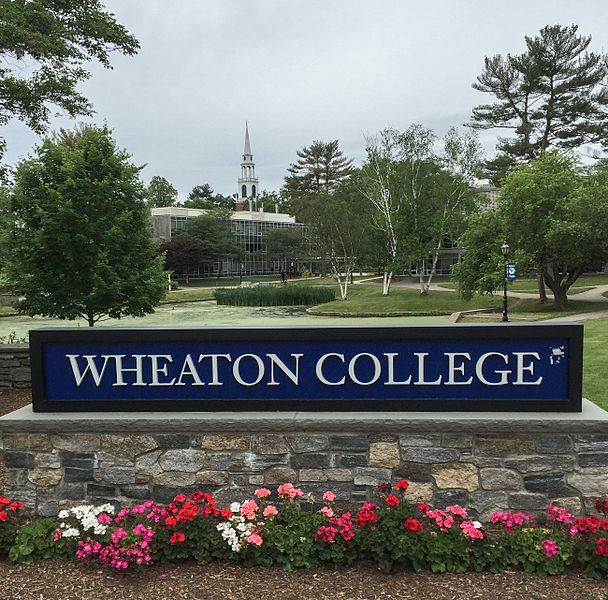
A couple of swastikas were discovered at Wheaton College in Norton, Mass. in two weeks, WLNE reports.
Both swastikas were found drawn on whiteboards in the Pine Hall dormitory; the first one, discovered on Oct. 27, was on a whiteboard in the common area and the second one was found on a whiteboard in front of a dorm room on Nov. 7 that a Jewish student resides in.
Dennis Hanno, the college president, condemned the swastikas in a letter to community members.
“This runs counter to our values as an institution,” Hanno wrote. “The swastika is a symbol of anti-Semitism, white supremacy and genocide. It remains a threat to Jewish people, and an affront to every member of the Wheaton community.”
Hanno added that the college will be beefing up security at the residence hall and is working to determine the perpetrator or perpetrators behind the swastikas. He highlighted the various school resources students could use if they need support.
“Please remember that we are stronger together,” Hanno wrote. “The surest way to defeat hatred and intolerance is through our connections to each other and our support for each other’s rights and dignity.”
Anti-Defamation League New England Regional Director Robert Trestan said in a statement to the Journal, “We are disheartened to learn of swastikas found at Wheaton’s campus, and are particularly troubled by the targeting of a Jewish student with this heinous symbol of hate. We applaud Wheaton’s denunciation and investigation of this incident, and following up with support and [programming] for students. By doing so, the Wheaton community is sending a clear message that acts of hate will not be tolerated on its campus.”
The swastikas discovered at the Massachusetts Wheaton College are not only swastikas to be recently found at a Massachusetts college. On Oct. 24, eight swastikas were found on three buildings at Smith College in Northampton, Mass.
The Massachusetts Wheaton College is a private liberal arts college. It is not affiliated with the Wheaton College in Illinois.
Getting It Right: Ben Hecht and Peter Bergson (aka Hillel Kook)
I applaud Rick Richman’s evocative story “Three Jews, Two Links, One Lesson” (Oct. 25) on Norman Podhoretz, Louis Brandeis and Ben Hecht.
However, Peter Bergson wasn’t just “a young Zionist.” He was a Palestinian Jew, an ardent follower of Vladimir Jabotinsky, the leader of Revisionist Zionism, and the charismatic nephew of the late Rabbi Abraham Kook, the first chief rabbi of Israel. He originally came to the United States to raise funds for the illegal activities of the Irgun, a military organization that fought against the British, but after World War II broke out, he changed his mission to raising money to build a Jewish army that would fight the Nazis. He also changed his name from Hillel Kook to Peter Bergson so that he wouldn’t implicate his renowned family in his political activities.
And Ben Hecht wasn’t just “walking down the street when he bumped into history” … and agreed to meet with Bergson at the 21 Club. David S. Wyman, a renowned scholar of the Holocaust and author of the classic work, “The Abandonment of the Jews: America and the Holocaust, 1941-1945,” notes, after extensive interviews with Bergson, that it was only through Bergson’s exhaustive lobbying, correspondence and meetings with various Jewish leaders that Bergson was finally able to meet with Hecht. It was Bergson’s determination that led to the meeting.
As Jewish people and as human beings, we need to recognize the unsung heroes who, like Bergson, galvanize history. And we need to get it right. Mina Friedler, via email
Rick Richman responds:
I thank Mina Friedler for her letter.
Hecht was speaking metaphorically when he said he was “walking down the street” and “bumped into history” in the form of Bergson, but the metaphor actually minimized the credit due for his own role in the historic meeting. At the time, Hecht was 47 and the most famous screenwriter in Hollywood; Bergson was 27 and had arrived in the United States only nine months earlier. The most remarkable fact is not that Hecht received repeated requests for the meeting, but rather that he agreed to it at all — and ended up spending the entire afternoon with the young man, hearing from him about Jabotinsky for the first time.
My story sought to describe the historic midlife changes of Brandeis, Hecht and Podhoretz, and how those changes came from (metaphorically — but perhaps literally) out of the blue. I did not attempt to cover all of Hecht’s efforts, much less Bergson’s. They were both heroes. I refer interested readers to two excellent Hecht biographies published earlier this year by Adina Hoffman and Julien Gorbach, and to my MOSAIC story under the headline “The Hollywood Legend Who Mobilized the English Language on Behalf of the Jews of Europe and Israel.”
Mental Health of Summer Campers I read with great interest Jeremy Fingerman’s column (“Creating a Culture of Care at Camp,” Nov. 1). As a social worker and Jewish educator, I agree that having support for campers (and staff, many of whom are older adolescents) is crucial for Jewish organizations serving youth.
I served with the Orange County Bureau of Jewish Education for several years as the social worker in residence on weekend retreats. The retreats primarily served ninth graders with older high school students and college students serving as counselors-in-training and staff. The social worker’s role was to offer support to staff and to be available to individuals and groups when social and emotional issues arose. This involved communicating with families and staff. I was incredibly impressed when I joined the staff that the O.C. Builders of Jewish Education recognized that, in addition to having a medical doctor present, there should also be a staff member focusing on the emotional health of the young people. I hope that this becomes the norm for all youth-centered organizations. Jeff Bernhardt, Valley Glen
Fighting Anti-Semitism
David Suissa eloquently defines the word “terrorism” in the Nov. 8 edition (“Fighting Anti-Semitism Without Fear”). So when we fight anti-Semitism or any hate crime because we are terrorized, the terrorist has achieved his or her goal. Elie Zev, via email
David Suissa’s Nov. 8 edition editorial suggests fearless action to oppose anti-Semitism. In the Sept. 13 issue, you published my letter advocating running ads that recount the accomplishments of American Jews. We shouldn’t be afraid to bring attention to these.
Each ad should end with, “This is what Jews have done to help make America great”
and ask, “What have you done?” With the cooperation of local Jewish communities, these ads should run in the heartland of white supremacy: Montana, Idaho, West Virginia and perhaps in newspapers of national circulation.
Despite my age, I’d be happy to serve on a team to implement this pro-Semitism attack. Myron Kayton, Santa Monica
Democrats and Israel
The trio of Republican writers who questioned whether the Democratic Party stands by Israel made the answer to that query into an either/or rather than an and/both scenario.
Each writer focused solely on whether the Democratic Party stood by Israel (either/or) rather than if the Democratic Party stood by both Israel and Judaic values (and/both).
Not one of the writers emphasized that the reason most Jewish Americans vote Democratic rather than Republican is that the Democratic Party supports Israel as well as supporting programs that are in sync with the Jewish values of community, racial and fiscal equality, justice, scientific consensus and immigration (to name just a few out of many).
Until the Republican Party embraces Israel and Judaic values, look for the Jewish vote to remain overwhelmingly in the Democratic column. Marc Rogers, North Hollywood
Early Hanukkah
It seems that Hanukkah is coming early this year. I am happy to learn that the president of South Africa, Cyril Ramaphosa, a boycott, divestment and sanctions supporter, has changed his tune and now praises Israel. Specifically, he expressed his hopes that South Africa can emulate Israel’s approach to funding research in order to create a high-tech economy similar to the startup nation.
Another early Hanukkah gift is witnessing Brazilian players of Corinthian’s soccer team wearing yellow Stars of David on their uniforms in memory of Kristallnacht.
Moreover, Rep. Jerry Nadler (D-N.Y.) and Democratic presidential hopeful Joe Biden along with 50 Jewish organizations have objected to presidential candidates Sen. Elizabeth Warren, Sen. Bernie Sanders and Mayor Pete Buttigieg, who want to stop aid to Israel. These ignoramuses fail to recognize that Israel uses 74% of the military aid the U.S. gives to buy American military equipment and the rest in joint ventures between both countries.
Rabbi Shmuely Boteach is furious with the poor manners of the anti-Semitic group known as Code Pink, which failed to keep its promise to remain quiet while the rabbi was speaking, displaying a clear lack of class. The rabbi used his valuable time to educate the group.
Saeid Mollaei, a judo champion who fled Iran and asked for asylum in Germany, is ready to befriend Israeli world champion Sagi Muki.
Furthermore, I am pleased to hear that the United Arab Emirates is inviting Israelis to participate in Expo 2020 in Dubai with intentions of improving relations between Israel and the Arab States.
On the other hand, I object to Israeli President Reuven Rivlin’s meeting with the Anti-Defamation League (ADL), which has lowered itself to the point where it refuses e-mails unless you agree with the organization. In fact, Andrew Bostom, an authority on Islamic anti-Semitism, asks, “Has the ADL become a Democratic Party operation?” It appears so in my eyes. Pablo Nankin, via email
Now it’s your turn. Don’t be shy, submit your letters to the editor. Letters should be no more than 200 words and must include a valid name and city. The Journal reserves the right to edit all letters. letters@jewishjournal.com.
Karmel Melamed Iranian-born journalist, attorney and activist Karmel Melamed speaks at Congregation Kol Ami. Melamed, who has monitored the status of Iran’s Jews the last two decades, said that a 2018 “PBS NewsHour” report asserting they were safe was a bogus claim. Shabbat services feature Kol Ami’s house band, KOLective Sound, as well as Rabbis Denise Eger and Max Chaiken. 8-9:30 p.m. Free. Congregation Kol Ami, 1200 N. La Brea Ave., West Hollywood. (323) 606-0996.
N’Ranena Shabbat The N’ranena Shabbat service at Adat Ari El brims with upbeat music, community participation and a spiritual tefilah experience. Purchase a hearty barbecue chicken dinner in advance. The synagogue provides the challah. No picnic dinners, please. 6-8:30 p.m. Service free, $18 dinner for adults, $15 for children. Adat Ari El, 12020 Burbank Blvd., Valley Village. (818) 766-9426.
Cantor Fox and Cantorial Art Uzbekistan-born Cantor Herschel Fox leads a Friday night Shabbat farbrengen at Valley Beth Shalom (VBS), spotlighting “The Musical Treasure of Our People,” the history of cantorial art. He is joined by the renowned Israel Rand, chief cantor of Ramat Gan. A festive Oneg follows. On Saturday, after Shabbat morning services, Rand talks with Fox and VBS Rabbi Ed Feinstein. Tonight: 5-5:45 p.m. services. 7:30-10 p.m. Fox and Rand on cantorial art. 9:30 a.m. Shabbat morning services. 12:30 p.m. Fox and Rand conversation. Valley Beth Shalom, 15739 Ventura Blvd., Encino. (818) 788-6000.
SAT NOV 16
AIPAC Shabbat ar Beth Jacob Tal Becker, a senior fellow at the Shalom Hartman Institute and a veteran peace negotiator, speaks twice on this AIPAC Shabbat at Beth Jacob Congregation. After services, he discusses “Exile and Redemption: Reimagining the Relationship Between Israel and World Jewry.” During a lunch to follow, in conversation with AIPAC Regional Director Wayne Klitofsky, he examines “The Deal of the Century? The Past, Present and Future of the Israeli-Palestinian Relationship.” 9 a.m. services. Registration for lunch required. Lunch: $55, $40 for those who attended the 2019 AIPAC conference.
Beth Jacob Congregation, 9030 W. Olympic Blvd., Beverly Hills. (310) 278-1911.
SUN NOV 17
“Stand Up For Her” The organization Women Creating Change holds an event, “Stand Up for Her,” that celebrates and features performers from the Middle East and North Africa. Aiming to bridge cultural divides, the evening showcases poets, musicians, artists and standup comedians who are Lebanese, Egyptian, Iraqi, Syrian, Iranian, Pakistani, Moroccan, Israeli and Palestinian. 5:30 p.m. red carpet, special cocktails, wine tasting. 6:30 p.m. art exhibits. 7 p.m. performances. $50-$75. Expert Dojo, Third Floor Rooftop, Third Street Promenade, 395 Santa Monica Place, Santa Monica.
Saskia Keeley
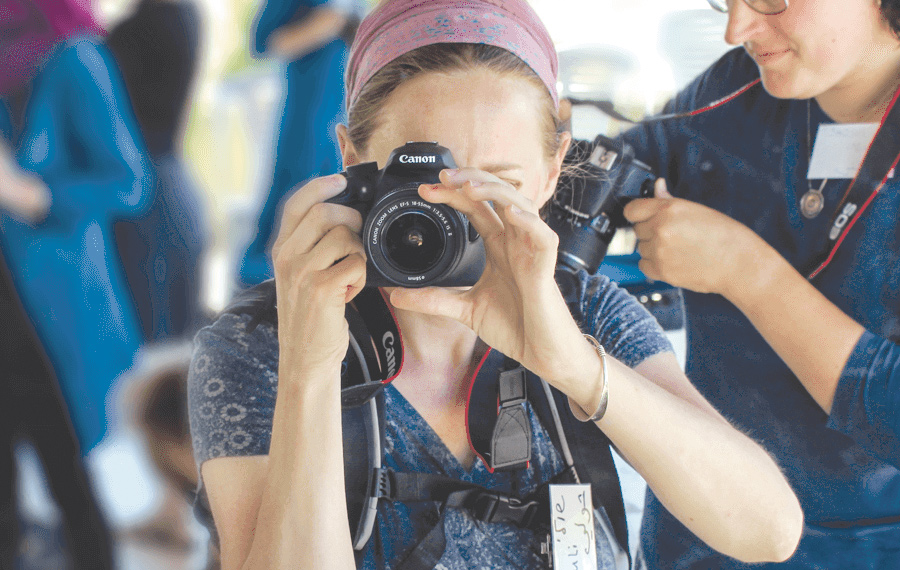
Bringing Rivals Together Since 2015, photojournalist Saskia Keeley has conducted photo workshops in the West Bank for both Israeli and Palestinian girls and women. At Temple Israel of Hollywood, in a lecture open to the public titled “Beyond the Lens: Photography Bridging Divides,” Keeley explains her purpose of developing her students’ photographic skills and fostering an environment where the two sides are comfortable together. 2 p.m. Free. Temple Israel of Hollywood, 7300 Hollywood Blvd. (323) 876-8330.
Hecht, Holocaust and Trump Julien Gorbach, author of “The Notorious Ben Hecht: Iconoclastic Writer and Militant Zionist,” sits down this afternoon with USC Casden Institute Director
Steve Ross for a conversation on the state of the world as it relates to the late screenwriter. Their discussion is called “The Ben Hecht Story: Lessons of the Holocaust in the Age of Trump.” 4-5:30 p.m. Free. USC University Park campus, Doheny Memorial Library, Room 240. (213) 740-1744. .
MON NOV 18
Rabbi Laura Geller One of the earliest women to be ordained in the 1970s, Rabbi Laura Geller introduces her new book, “Getting Good at Getting Older,” at Kehillat Ma’arav with a lecture and book signing. Her late husband, Richard Siegel, was her co-author. When Temple Emanuel of Beverly Hills hired Geller in 1994, she became the first woman rabbi to lead a major metropolitan congregation, where she served for 22 years. Light refreshments served. 7 p.m. Free. Kehillat Ma’arav, 1715 21st St., Santa Monica. (310) 829-0566.
TUE NOV 19
Unconditional Support for Israel Two experts tackle one of the most intriguing questions related to Israel: “Does Unconditional Support for Zionism and Israel Still Matter?” Appearing at Kehillat Israel, Saba Soomekh, assistant director of Interreligious and Intercommunity Affairs at the American Jewish Committee, addresses this and other issues, including political divisiveness in America, a rise in anti-Semitism and a changing demographic in Israel. Rick Entin of the Israel Matters Committee moderates. 7:15 p.m. Free. Kehillat Israel, 16019 W. Sunset Blvd., Pacific Palisades. (310) 459-2328.
“A Case of Life and Death” Given the speed of contemporary changes in medical science, Rabbi Shlomo Bistritzky of Chabad of North Ranch in Westlake Village speaks tonight on “The Jewish Approach to Modern Medical Dilemmas: The Complex Subject of Medical Ethics.” His goal is to educate and to show his audience an ethically correct path through life’s most difficult challenges. Health care specialist Jody Sherman provides additional perspectives. 7:30 p.m. cocktails, 8 p.m. program. Free. Chabad of Encino, 4915 Hayvenhurst Ave., Encino. (818) 784-9986.
“Update on the Supreme Court” Here is a unique opportunity to hear from a legal expert on the most complicated cases of the times. Loyola Law School professor Jessica Levinson, also a political commentator on KCRW’s “Press Play,” brings her insights on the status of a number of urgent cases before the U.S. Supreme Court. Delving into a wide range of cases, she discusses the effects their verdicts will have on us. 7:30 p.m. Free. Wilshire Boulevard Temple, Irmas Campus on the Westside, 11661 W. Olympic Blvd. (213) 388-2401.
Michelle Azar
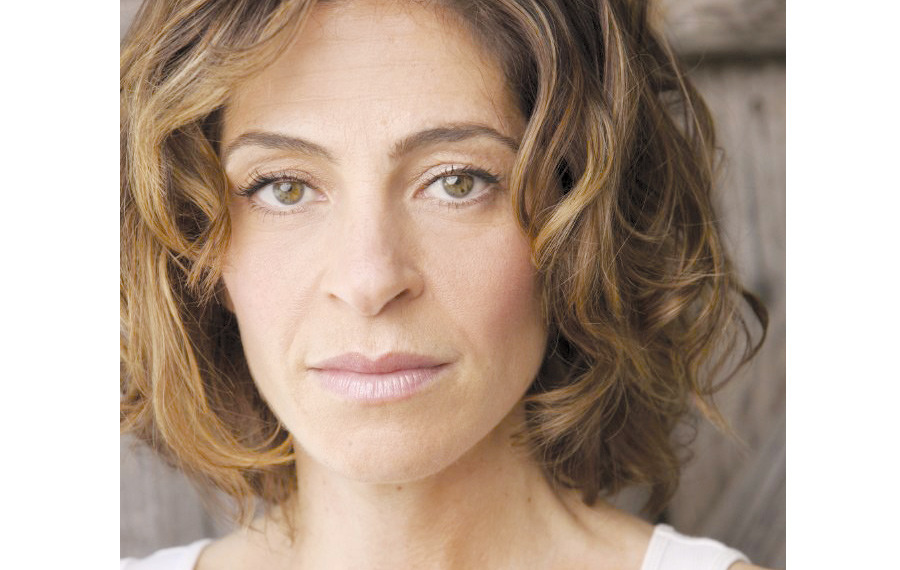
“From Baghdad to Brooklyn” Actress, singer and rebbetzin Michelle Azar brings her one-woman show, “From Baghdad to Brooklyn,” to the Skirball Cultural Center. Tracing her Iraqi roots through story and song, Azar presents a timely account of family love but also dysfunction. A Q&A session with Azar and Aziza Hasan, executive director of NewGround: A Muslim-Jewish Partnership for Change, follows the performance. 7:30 p.m. $15 members, $20 general. Skirball Cultural Center, 2701 N. Sepulveda Blvd. (310) 440-4500.
THU NOV 21
Israel Gap Year Fair The annual American Israel Gap Year Fair for students seeking a reflective and productive year abroad before starting college is being held at Shalhevet High School. Whether you prefer a coed setting, all-boys or all-girls schools, the only cross-denominational Israel gap year fair in the country has a solution. All attendees must be registered. 6:30-9 p.m. Free. A donation to the American Israel Gap Year Fair Association is appreciated. Shalhevet High School, 910 S. Fairfax Ave. (310) 702-0644. aigya.org.
“Love of Zion” From Philo of Alexandria to the present day, Nili Alon Amit, a researcher and lecturer of philosophy at Hakibbutzim Academic College in Tel Aviv, explores many of the sources for Jews’ traditional love of Zion through religious, philosophical and poetic sources in a lecture at the Nazarian Center for Israel Studies at UCLA Hillel. Amit, a visiting professor at the Nazarian Center this year, shows how ancient and medieval thought turns up in the contemporary Israeli “Love of the Land.” Her lecture is titled “Land and Wisdom: The Love of Zion — From the Hebrew Bible to Contemporary Israeli Poetry.” 2-3:15 p.m. Free. UCLA Bunche Hall, Room 10383. (310) 825-9646.
Yuval Ron
Yuval Ron Ensemble Internationally acclaimed world music favorite the Yuval Ron Ensemble performs tonight. Led by award-winning composer and oud player Yuval Ron, the quintet features artists of varying faiths and backgrounds playing sacred Jewish, Christian and Sufi music of the Middle East. The band tries to alleviate national, racial, religious and cultural tensions by melding Middle Eastern music and dance into an inspiring musical celebration. 7:30-10:30 p.m. $30 adults, $20 students. Theatre Raymond Kabbaz, 10361 W. Pico Blvd. (310) 286-0553.
Have an event coming up? Send your information two weeks prior to the event to ryant@jewishjournal.com for consideration. For groups staging an event that requires an RSVP, please submit details about the event the week before the RSVP deadline.
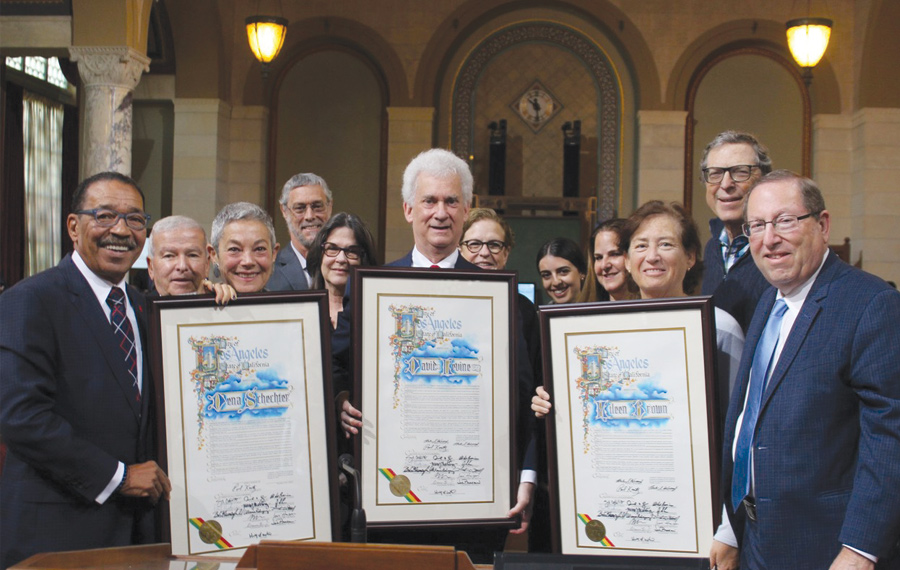
After an inspiring “Topping Off” ceremony at Jewish Family Service of Los Angeles’ (JFS) new flagship service center site on Fairfax Avenue, marking the last beam being placed atop the structure during its construction, the Los Angeles City Council on Oct. 30 honored JFS board members Dena Schechter and David Levine, co-chairs of the JFS Capital Campaign, and JFS board member Eileen Brown, co-chair of the JFS Building Committee, for their leadership on reaching this milestone.
L.A. City Council President Herb Wesson and Councilmember Paul Koretz presented the honors to the JFS leadership. They both spoke of the importance of JFS, a social service organization that serves the elderly, the hungry and Holocaust survivors, among others, to the Los Angeles community.
The JFS Gunther-Hirsh Family Center is set to open to the community in late spring.
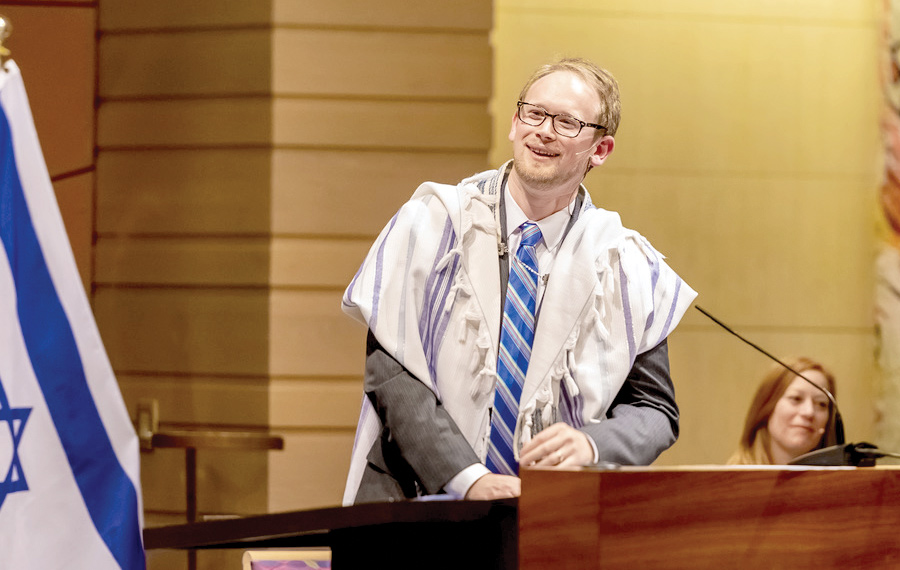
Temple Judea, a Reform congregation in Tarzana, installed its newest clergy member, Rabbi Eric Rosenstein.
Speakers at the celebratory affair, held the weekend of Nov. 1-2, included Joshua Holo, dean of Hebrew Union College-Jewish Institute of Religion (HUC-JIR) in Los Angeles; L.A. City Controller Ron Galperin and his husband, Rabbi Zachary Shapiro of Temple Akiba; and L.A. City Councilmember Bob Blumenfield.
In a statement on the Temple Judea website, Rosenstein said he was “thrilled to be a part of this welcoming community, and is committed to sharing our Jewish tradition, history and culture as sources of inspiration and guidance in our lives.”
He is a graduate of both the rabbinic program and the Rhea Hirsch School of Education at HUC-JIR in Los Angeles, and previously served as an intern at a number of local congregations, including Temple Emanuel of Beverly Hills, Leo Baeck Temple and Temple Ner Ami in Camarillo.
Serving as an assistant rabbi at Judea, Rosenstein joins a clergy team that includes Senior Rabbi Joshua Aaronson and Rabbi Cantor Alison Wissot.
Temple Judea Associate Rabbi Eric Rosenstein, who was installed at Judea the Shabbat weekend of Nov. 1. Photo by Brian Angers
Longtime Beverly Hills resident Adrienne Rubin, author of “Diamonds
and Scoundrels: My Life in the Jewelry Business,” was honored for her philanthropic work on Oct. 27 at the Skirball Cultural Center.
During the event, which was open to the public, Rubin spoke about her fundraising efforts for the Arthritis Foundation’s 2019 Champions for a Cure Gala.
Among the honoree’s recent endeavors was an eight-day bike ride along the California coast that resulted in large financial contributions to the Arthritis Foundation, which aims to guide families in developing personalized plans for living a full life.
Rubin, a longtime advocate, friend and supporter of the Arthritis Foundation, received the Jane Wyman award. A 35-year veteran of the jewelry business, Rubin also was the recent recipient of the Irwin Literary Award from the Book Publicists of Southern California
for best advance publicity campaign of the year.
Music, dinner and comedy from stand-up comedian Jason Love highlighted the event at the Skirball.
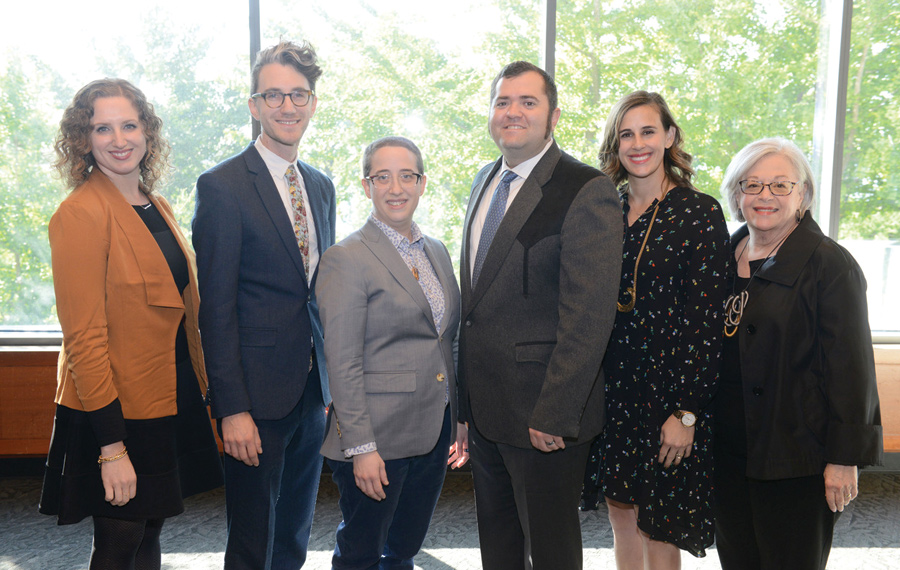
From left: The 2019 Pomegranate Prize recipients Shara Peters, Natan Kuchar, Beverly Socher-Lerner, Rabbi Matthew Dreffin and Na’amit Sturm-Nagel with Covenant Foundation Board Chair Cheryl Finkel. Photo courtesy of Covenant Foundation
The Covenant Foundation has announced the five recipients of its 2019 Pomegranate Prize, which is designed to honor rising education leaders who have been in the field of Jewish education for up to 10 years.
Winners this year of the national prize include Na’amit Sturm Nagel, an English teacher and associate director of the Shalhevet Institute at Shalhevet High School in Los Angeles, and Shara Peters, head of school at Adat Ari El Day School in Valley Village.
Cheryl Finkel, board chair of the Covenant Foundation, presented the prize to the five emerging Jewish educators on Nov. 6 in New York.
“The five 2019 Pomegranate Prize recipients are truly multi-talented, which is reflective of an important trend in Jewish education,” Finkel said in a statement. “By enhancing their educational practice with skills in visual arts, music, literature, community engagement strategies, and creative problem solving, they offer the learners they work with a more well-rounded and rich Jewish learning experience. We are so excited about the potential they promise to the field.”
The three other winners are Rabbi Matthew Dreffin, director of education at
the Goldring/Woldenberg Institute of Southern Jewish Life (ISJL) in Jackson, Miss.; Natan Kuchar, director of Edah, a thriving Jewish and Hebrew integrative afternoon school
program in Berkeley; and Beverly Socher-Lerner, founding director of Makom Community in Philadelphia.
They join 40 other winners, who, since the inception of the prize in 2011, have served as role models and trailblazers in the field of Jewish education, according to the Covenant Foundation.
“It is a tremendous privilege to welcome a new cohort of Poms each year, each of whom offers an innovative and impressive slate of accomplishments,” Harlene Appelman, executive director of the Covenant Foundation, said in a statement. “And it is so encouraging that the field continues to produce Jewish educators year after year who are as motivated, as creative, as engaged, and as talented as our first cohort was in 2011. May we always be surrounded by the kind of excellence that is on display this morning.”
From left: Vista Del Mar Child and Family Services’ Event Chairs Janis Black Warner and Douglas Warner. Photo courtesy of Vista Del Mar Child and Family Services
Vista Del Mar Child and Family Services held its fifth annual Rocktober event, a tribute to the combined powers of music, laughter and love on Oct. 19 at the Avalon in Hollywood.
Legendary music performer Seal and comedian Preacher Lawson performed at the evening affair, which raised money for the child and family welfare organization.
The event chairs included Eden Alpert Anastasio, Doug Warner and Vista Del Mar Board Chair Laurie Konheim, who worked with Vista’s board of directors and Lena Wilson, Vista’s CEO and president, in organizing the gathering.
A Vista statement called the gathering “the most successful Rocktober celebration to date.”
Want to be in Movers & Shakers? Send us your highlights, events,
honors and simchas. Email ryant@jewishjournal.com.
Michal Uziyahu is an Israeli community center director in the Eshkol region of southern Israel. Her centers share about 40 miles (65 kilometers) of border with Gaza. On the morning of Nov. 12, she jumped into action when more than 100 rockets hit southern Israel after the Israel Defense Forces assassinated Palestinian Islamic Jihad leader Baha Abu al-Ata via a precision airstrike.
Even as sirens wailed around her for more than 15 hours — including during an interview with the Journal — Uziyahu remained calm. She said her strength comes from her community and her efforts to offer relief to those during this repetitive, long-running crisis.
Uziyahu spoke with the Journal on the evening of Nov. 12, Israel time.
Jewish Journal: What have the last 15 hours been like for your and your community?
Michal Uziyahu: It’s intense. Unfortunately, this is the reality that we have lived in for the last 18 years. We are doing our best not feel sorry for ourselves but to say, ‘This is the reality’ and we focus on anyone who needs our help. … In this crazy, madness situation, we try to do the best we can. We are not giving up. This is our home and we won’t let terror defeat us.
JJ: Are sirens still going off?
MU: Yes. In the last 15 minutes. All over the communities attached to the Gaza envelope.
JJ: What do you do when you hear the sirens? What goes through your head when something like this happens?
MU: You never get used to it completely. It’s important to understand that our communities have been living with this reality for the past 18 years. We call this reality Emergency Routine, which means it’s not a routine, it’s not like your day-to-day life and it’s not always an emergency like today, when there’s no school.
But Emergency Routine is like, one day there are two rockets; there is infiltration. One day there might be fires. One day it could be nothing. One day it’s one rocket and one day it’s 150. This is our reality. You have to find ways to move from zero to 100% being alerted and going back to zero again. [Today], we woke up at 5 a.m. because of the high alert after the assassination of a Jihad Islamic terrorist and we understood that school was canceled.
JJ: How do you support the children and families you work with at the community centers?
MU: We had 60 children who were camping overnight outside, preparing for a big celebration of all our youth movements in our region, which was supposed to happen tonight. We had to evacuate them. We woke them up with music. … In one hour, all the kids were back at home safe with their parents. Then we prepare to see each and every community. We see how can we be helpful. A situation where each family is with their children at home all day in a safe room or shelter is not healthy.
On the other hand, we have to remember we are not alone. You need to look right and left and realize other parents are experiencing the same anxiety as you and to be together is very important. In the communities that we have shelter space, we can gather enough people so we prepare activities and kits. We sent volunteers to help families and children.
We have resilience centers that are constantly in touch with whoever needs help. We are also looking toward the day where we realize that despite all these challenges, we have a country and an amazing army that really defends us. And we have amazing friends around the world like Jewish National Fund that reminds us we aren’t alone.
This morning (Jewish National Fund CEO) Russell Robinson asked if we are OK and we had text messages from Los Angeles, Florida, New York, Arizona, Denver and all over the United States. The first thing you feel in an emergency is that you are alone and that nobody understands you, and when you are in a community that reminds us that we are not alone, it brings a lot of strength.
We always say that life is 99% heaven and 1% hell and today it is the 1% but we do everything we can not to focus on it because then it becomes all consuming. We are focusing on the future, our children, on our community and our elderly — those with special needs. That’s what we focus on.
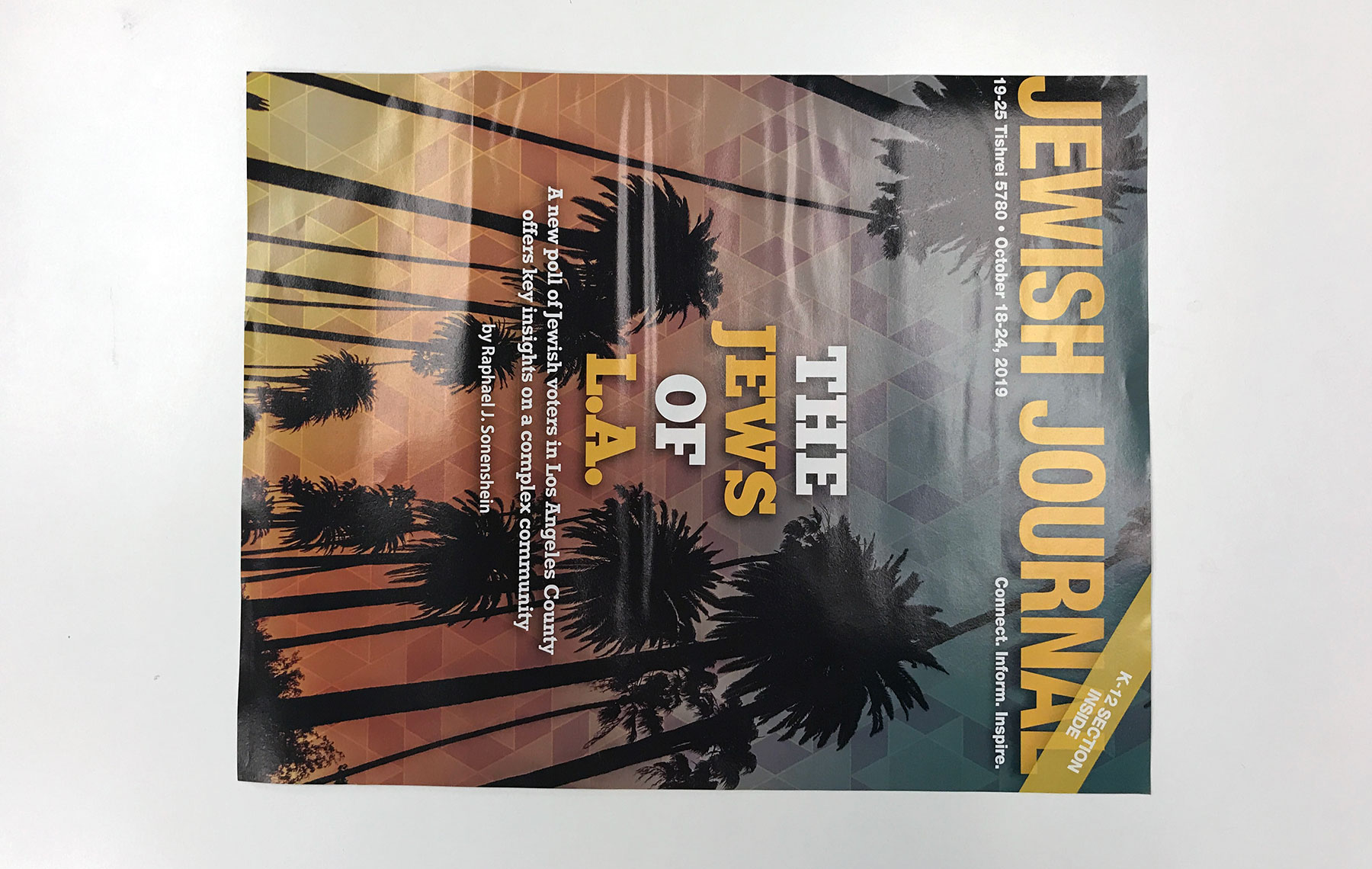
What do you do with your Jewish Journals after you’re done reading them? (Besides clipping out all my columns and putting them in a scrapbook, of course.) Before you deposit them in the recycling bin, make sure you save those covers first. You can repurpose them to make snazzy gift bags. The paper stock is thick and glossy, and the colorful designs lend themselves well for giftwrapping.
1. Remove the Jewish Journal cover from the rest of the issue and trim the edge next to the staples as straight as possible. Place the cover in front of you horizontally.
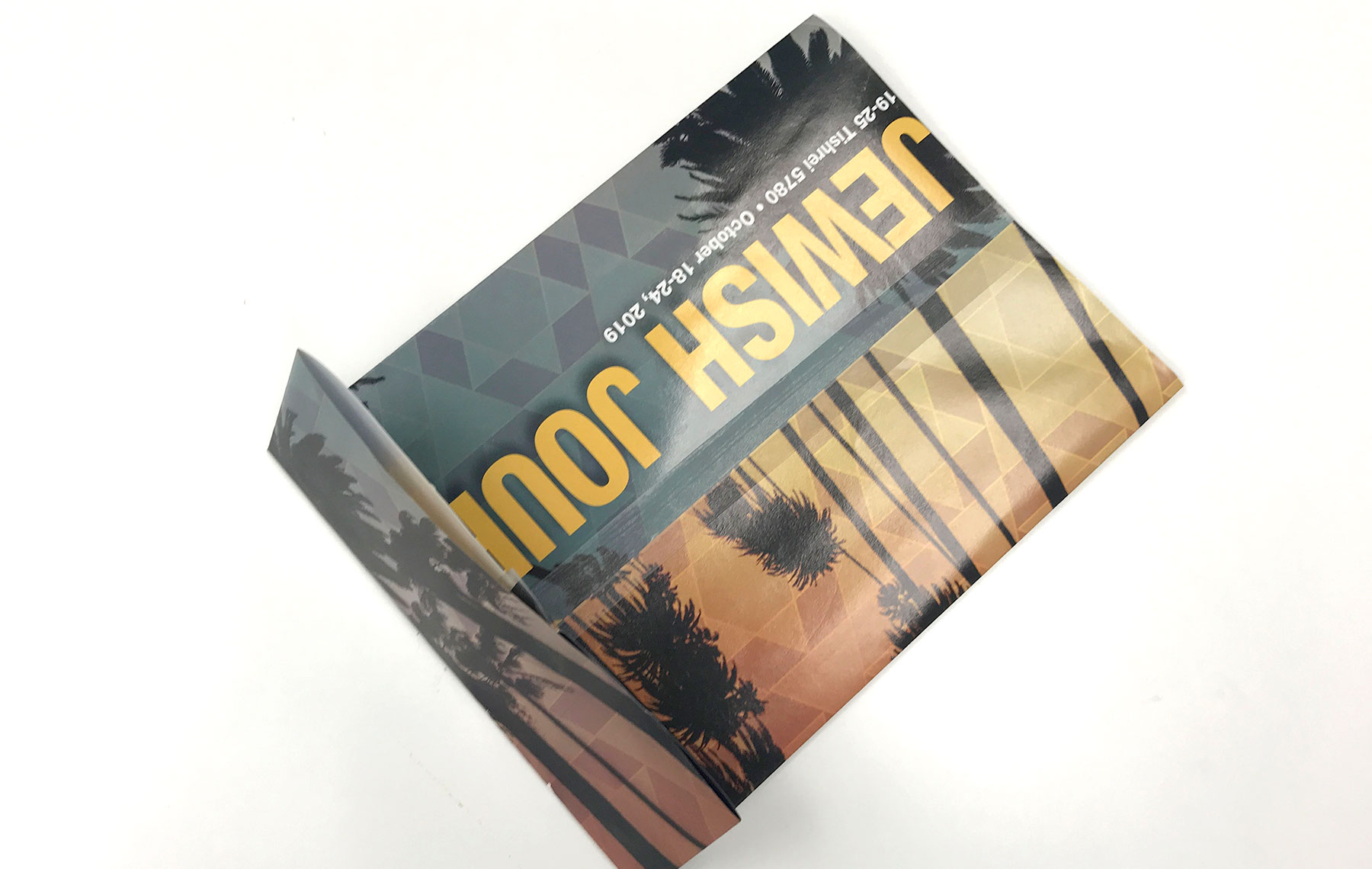
2. Flip the cover upside down. Fold the two ends toward the center so that the side with the Jewish Journal logo overlaps the other side by about a half-inch. Tape the two ends together.
3. We need to create a gusset on the bottom of the bag so it will not only hold more things but stand on its own. Start by folding a 2-inch flap on the bottom.
4. Open the flap at the bottom and flatten out the left and right sides to create two triangles. You should now have a hexagon shape at the bottom.
5. Fold the top and bottom edges of the hexagon into the middle, and tape the two ends together. Place your hand in the bag to expand the gusset.
6. To create an optional closing mechanism for the bag, fold the corners at the top inward and then fold down to create a flap of about 2 inches. Punch two holes on the flap and thread ribbon through the holes to secure the bag.
Jonathan Fong is the author of “Flowers That Wow” and “Parties That Wow,” and host of “Style With a Smile” on YouTube. You can see more of his do-it-yourself projects at jonathanfongstyle.com.
Benjamin David Bagno died on Oct. 8 at 91. Survived by wife Harriett. Mount Sinai
Lois Bloch died Oct. 7 at 79. Survived by daughters Janine (Thomas DeWit), Karen (William); 5 grandchildren; sisters Arlene Garfield, Marty (David) Uslaner, Bobbie Zwick. Mount Sinai
Clyde Blumin died Sept. 30 at 85. Survived by wife Lila; daughter Julia (Charles); sons Joel (Caroline), Jonathan; 4 grandchildren; brother Steven (Eileen). Hillside
Joseph Castiel died Oct. 3 at 69. Survived by wife Jessie; sister Mercedes; brothers David, Jacques, Elie, Simon. Hillside
Richard A. Cohn died Oct. 9 at 72. Survived by wife Hyla; daughter Lauren; son Samuel. Mount Sinai
Marco Esther died Sept. 29 at 95. Survived by daughters Wendy (Philip), Fran (Mike). Hillside
Jan Gold died on Oct. 4 at 57. Survived by sister Carol (Benjamin) Cotter.Mount Sinai
Eunice Goodnight died Sept. 29 at 85. Survived by daughter Susan; sons Gary, Darryl (Argeila), 2 grandchildren. Mount Sinai
Sylvia Gordon died Sept. 28 at 103. Survived by cousin Jonathan. Hillside
Dede Gorelick died Oct. 4 at 96. Survived by daughter Linda (George); son Barry; 7 grandchildren; 6 great-grandchildren. Hillside
Harriet Lee Guggenheim died on Oct. 10 at 82.Survived by daughter Lisa Fontanesi; son Ted (Brian Davis); 2 grandchildren. Mount Sinai
Sharon F. Janis died Aug. 6 at 75. Survived by husband Melvin; son Michael (Kimberly) Brooks; sister Ann Ellias; brother Terry Ellias; sister-in-law Leah Ellias. Groman Eden
Jerry Kaye died Oct. 3 at 78. Survived by wife Patricia; daughter Sara; son David (Dalia); brother Martin (Julia); mother-in-law Betty Reiser; 2 grandchildren. Chevra Kadisha
Barbara Kimel died Oct. 9 at 70. Survived by husband Ed; daughter Ashley (Barry) Dadon; son Matthew; 3 grandchildren; mother Ellen Braveman; sister Pamela (Chris) Taylor; brotherStephen (Wanda) Braveman. Mount Sinai
Deanie Kramer died Sept 28 at 77. Survived by son, Jason (Ali); brother Harley Shapiro.
Leonard Meshover died Oct. 1 at 89. Survived by daughter Wendy; 1 grandchild; 1 great-grandchild. Mount Sinai
Bernie Patrusky died Sept. 29 at 89. Survived by wife Suzi; daughters Stefani (Bruce) Langer, Pamela (Ron) Mass; 6 grandchildren.
Anne Raiken died Sept. 29 at 93. Survived by daughters Frances Cohen, Evelyn Lewis, Nancy, Clarisse (Bob) Kryloo; son Steve (Nina); 2 grandchildren. Mount Sinai
Saul Roisentul died Oct. 3 at 82. Survived by wife Ilene; sons Jerry (Gina), Gary (Diana); 2 grandchildren. Hillside
Jerry Shanks died Oct. 5 at 85. Survived by wife Socorro; daughters Lisa (Bruce) Shanks Thomas, Stephanie (Santino) Akuei, Wendy Scofield; 2 grandchildren. Mount Sinai
Victoria Shaw died Oct. 5 at 102. Survived by daughter Regina “Gina” (Myron) Crespin; 2 grandchildren. Malinow and Silverman
Michael Sher died Sept. 26 at 77. Survived by wife Andrea; sons Russel (Trista), Nicholas, Jonathan (Alens); 5 grandchildren; sister Faith (Leslie) Dektor. Mount Sinai
Carol Lois Sherman died Oct. 5 at 89. Survived by daughters Robin Adams, Susan Shapiro; stepdaughter Stephanie (Larry) Schwartz; stepson Dennis (Penny); brother Erwin Sattinger. Mount Sinai
Miriam DininSisk died Oct. 7 at 75. Survived by husband Jerome; daughters Shana, Rachel, Lisa (Benjamin); son Joel (Michelle); 6 grandchildren; sister Mala (Sam) Langholz; sister-in-law Glennie Dinin. Mount Sinai
Michael Stanislavsky died Oct. 6 at 89. Survived by sister Ronnie Bernstein; brother Paul (Ronnie). Mount Sinai
Lawrence Symons died Oct. 6 at 85. Survived by wife Janet; daughter Felicia (Jerome) Friedland; sons Kevin (Consuelo), Stephen; 4 grandchildren; sister Suzanne Ehrlich. Mount Sinai
Walter Uhrman died Oct. 12 at 78. Survived by wife Judy; daughters Julie, Amy (Diero) Longhi, Abigail (Israel), Betsy (Joel), Tammie (Joshua) Rapps; 12 grandchildren.Mount Sinai
Harold Weiner died Oct. 3 at 95. Survived by sons Lawrence “Larry” Stephen (Laura), Russell Garrett (Jennifer Gao), Jerrold Alan (Margaret); 4 grandchildren; 1 great-grandchild. Mount Sinai
Those of us in the baby boom generation used to warn one another not to trust anyone over 30. Now that many of us are twice that age or even older, we are going to need a new credo. Happily, Richard Siegel and Rabbi Laura Geller offer us exactly that in “Getting Good at Getting Older” (Behrman House),
Geller, of course, is a beloved and respected figure in our community. One of the first women to be ordained as a rabbi in the United States, she continues to serve as Rabbi Emerita at Temple Emmanuel of Beverly Hills. And her late husband, Richard Siegel, who co-wrote the book but did not live long enough to see its publication, was ≠one of the co-authors of the original “Jewish Catalogue: A Do-It-Yourself Kit,” a kind of Jewish counterpart to the “Whole Earth Catalogue.”
Appropriately, the book opens with Rabbi Geller’s recollections of her late husband, but there is nothing morose about “Getting Good at Getting Older.” Indeed, it is wholly upbeat, full of both wisdom and practical advice, suffused with good humor, but always willing to embrace the poignant and painful moments that come with the accumulation of years.
“When that moment comes for someone you love, I know that having thought about the issues this book raises will be as helpful for you as it was for me,” she writes. “But let me be clear: This is a book about life, meant to empower, delight, challenge and whet our appetite for whatever comes next.”
The book is deeply rooted in Jewish tradition, sometimes as it is enshrined in the Bible and sometimes as it is celebrated in popular culture. The authors ponder Psalm 90 — “Teach us to number our days so we may attain a heart of wisdom” — but they also quote Gilda Radner on the “delicious ambiguity” of life: “Life is about not knowing, having to change, taking the moment and making the best of it, without knowing what’s going to happen next.”
“Getting Good at Getting Older” is wholly upbeat, full of both wisdom and practical advice, suffused with good humor, but always willing to embrace the poignant and painful moments that come with the accumulation of years.
But Siegel and Geller do not expect their readers to acquire “a heart of wisdom” through inspiring words. Rather, they challenge each reader to “change your behavior” and “rewrite your brain.” The method is summed up in one of the cartoons, quotations and comic drawings that enliven each page of the book: “Yoga Doesn’t Work,” a signboard announces. “Psychotherapy Doesn’t Work. Drugs Don’t Work. You have to work.”
The work that the authors set out consists of daily practices that are intended to develop the traits we need to not only survive but to thrive in old age, including gratitude, forgiveness, humility, generosity and enthusiasm. For example, they encourage us to adopt the traditional Jewish aspiration of saying 100 blessings every day: “[S]top, look around, and notice some little miracle,” they write. “In all of these moments, saying a blessing — a traditional one or one you compose on your own — helps you notice what you are experiencing and enables you to find the good in it for which you can be grateful.”
The book is further enriched by contributions from poets, writers, teachers, rabbis and scholars on various subjects ranging from mindfulness to journaling to group encounters. Tiffany Shlain, for example, offers the example of what she calls “Tech Shabbat,” a day of unplugging from all of the electronic devices that distract and perplex us every other day of the week. “Life continues to speed up the older you get,” she writes. “My tool to slow things down is to turn things off.”
Creativity is a constant theme. We are invited to invent our own rituals, “something to nourish us at a particular milestone,” and we are encouraged to choose the time, place, participants, foods, music and objects to use in our rituals. Some of the events to celebrate are obvious — renewing marriage vows, regaining one’s health after an illness, a major birthday, a retirement — but others may be surprising. How about a “Separation Ceremony” when the last of your grown children has moved out of the house, or even the adoption of a new name: “A Jewish tradition teaches that everyone has three names: the one your parents give you, the one others give you (such as a nickname), and the name you acquire for yourself that reflects the essence of who you are.”
Health and fitness are among the essential goals that Siegel and Geller advocate. Here we find both inspiration and perspiration. The “Ruth Bader Ginsburg Workout” is a detailed list of 18 exercises, starting with five minutes on the elliptical machine and ending with “medicine ball tosses while standing up off a bench and sitting back down.” And just when you think you might be able to match Justice Ginsburg, you will notice that “all exercises include three sets of 10-13 repetitions.”
Some life passages are more likely to result in suffering rather than celebration, of course, and these are not overlooked. The authors present “Tips for Having the ‘Talk’ About No Longer Driving.” They offer highly practical advice on housing options when an aging individual can no longer live on their own. They urge us to encourage our adult children “to support their partner’s dreams, not ours,” even if it may mean no wedding or no grandchildren or a partner from a different faith. And a
contribution from William Cutter consists of instructions in how to perform the
mitzvah of visiting the sick, including what we should talk about and how we should act.
Just as every life inevitably ends with death, “Getting Good at Getting Older” goes there, too. “We are all a bit like a comedian who once quipped, ‘I’m not afraid of death; I just don’t want to be there when it happens,’ ” the authors write. “But avoiding the subject does not make it go away.” Indeed, they warn us against “[losing] out on the gratification of participating in our last act, as unpleasant as the planning may seem initially.” They even encourage us to write our own epitaphs, and they show a photograph of one such headstone, which consists only of the complete recipe for “Mom’s Christmas Cookies.”
The photograph sums up what Siegel and Geller have managed to achieve in their book — it is intimate and unflinching, often poignant and sometimes even painful, always full of both compassion and information, and enlivened by the sense of humor that is an essential quality for an aging baby boomer.
Jonathan Kirsch, author and publishing attorney, is the book editor of the Jewish Journal.
In 2008, Susan Hayden’s husband and creative partner, actor and writer Christopher Allport, died in a skiing accident, leaving her to raise their 11-year-old son. Looking for a place to heal and find a sense of belonging and to connect with others, the writer-performer-impressario created Library Girl, the monthly spoken-word performance/salon, which is currently celebrating its 10th anniversary.
The imputus came from two friends, John Ruskin and Mike Myers, who run the Ruskin Group Theatre by Santa Monica Airport, and the name for the show came from Hayden’s son, Mason Summit. The first time he saw his mother wearing glasses, he called her “Library Girl” and “Bookworm Beauty.”
Hayden told the Journal she always saw Library Girl as a gathering. “It’s a place for community,” she said. “It’s a place to hear people reading from their own work. People love to come and connect.”
It’s also a family affair. Her son, a singer-songwriter who has released four albums, opens every show with his new material. Each show is based around a theme — usually a lyric or song title. Other nights are tributes or memorials to writers Hayden admires — Sam Shepard, Eudora Welty, Charles Bukowski — or dedicated to local small presses. These are of particular importance to Hayden because, she said, it gives lesser-known authors a “place to be heard, sell their books and get exposed to a new audience.”
Authors are free to read whatever they wish and she doesn’t check the work beforehand. There are only two rules: Each author is limited to seven minutes, and they can’t read off a phone or a tablet. “Library Girl is the opposite of technology,” Hayden said. “The idea is to get away from a screen for a little while and connect with other people.” She compares it to the idea of Shabbat as a time to disconnect from the world and focus on community. The monthly show “is not unlike a congregation at a temple desirous of ritual and gathering as a way to find meaning.”
It’s something she picked up from her family, growing up in Encino in a kosher home and as members of Valley Beth Shalom synagogue. Hayden went to Hebrew school three times a week and spoke fluent Hebrew but found the Conservative congregation a little too constraining. “I couldn’t find my place at the temple, or the connection I was seeking,” she said. She quit as she was heading into the home stretch of her bat mitzvah training.
Her father was devastated, Hayden said, but recognized she was becoming her own person. She didn’t turn completely away from Judaism, spending summers at Camp JCA Shalom in Malibu, where the observance was more to her liking. “It felt like Judaism-lite. There was a guitarist and on Shabbat everyone wore white and held candles. It was beautiful.”
She also spent time as a teenager at the Jewish Community Center in North Hollywood. Even so, she said, “I’m more of a cultural Jew. I’m grateful for having been raised Jewish and have a greater understanding of it now.”
She also embodies the idea of tikkun olam. She makes no money producing her shows. Every dollar she takes in is donated to the theater.
With Library Girl’s 10th anniversary, Hayden is proud of the community she’s created.“We’re all looking for a place to belong,” she said, noting that Library Girl is “a place where people come to connect and hear each other’s stories.”
Library Girl is held the second Sunday of every month at Ruskin Group Theatre Co., 3000 Airport Ave., Santa Monica. For more information, visit her website.