For more stories go to themedialine.org.
Knock, knock. The sound every Iranian dissident learns to dread — not because it’s dramatic, but because it’s procedural. It usually comes with a second knock, then a third and then the moment when choices vanish.
Back in 2010, a small circle of journalists was invited to listen in on a private Skype call with Iranians living in the narrow space between fear and necessity. The connection was thin. The translation lagged. The voices clipped in and out. None of that mattered. You could hear what they were really describing: the daily calculation that the police could arrive at any moment.
That meeting took place in the home of a New York chef. A wall-sized screen filled the room. People leaned forward, the way you do when you suspect a sentence might be both fragile and important. Someone asked the simplest question a reporter can ask when borders are sealed and cameras are watched: Where do you get your information?
One participant answered with contempt that did not need explanation. “The Voice of America might as well have been run by the ayatollah himself,” he said.
So where, then?
Israel, came the answer — Israel’s Farsi-language radio service. And then a line that has stayed with me, especially now: “We have no fight with Israel.”
It is January 2026, and I find myself in that familiar posture again — waiting for a foreign voice to appear on Zoom, listening for the moment when the line goes silent and then, suddenly, a voice breaks through. What is happening inside Iran is larger and faster-moving than what I have seen in years of covering dissidents and diaspora networks. It is also harder to verify in real time, because the government is doing what it has done for decades when the streets begin to fill: It strangles the internet first, and then it moves in.
Over nearly two decades, in interviews conducted through unstable VPN connections and routed through intermediaries for safety, I spoke with activists tied to SOS Iran, a network designed to help organizers inside the country find one another and move information when communication becomes dangerous — or impossible. In the SOS system, people don’t use names. They use numbers. It isn’t branding. It is survival.
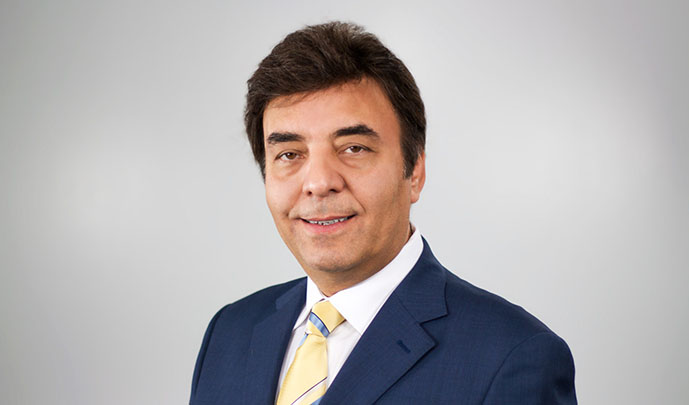
Dr. Iman Foroutan, chairman of the Board of Trustees of The New Iran and founder of SOS Iran, served as translator and conduit. Through him, I spoke with Hesam, the network’s director of civil disobedience based in Turkey, and with two protesters inside Iran — one, a university professor who identified herself as Hadis Najafi; the other, known only as Guard e Javidan 74.
What they described began where Iranian uprisings so often begin, because it is where the state cannot argue back: the cost of living. “When this thing started seven days ago from the bazaar, which is the big market in downtown,” Najafi told The Media Line, “people were really only protesting against the quality of life.”
Numbers were her proof — bread, wages, the poverty line — as if arithmetic could keep exaggeration out of the story. A loaf of bread, enough for “one, two, three people,” now costs “500,000 riyals, which is 50,000 tomans,” she said, estimating that in dollars it was about 50 cents. The poverty threshold, she said, was around “$650 a month,” while the average worker earned “much less than $100.”
At first, she insisted, people tried to keep it peaceful. They wanted “to just protest peacefully about the condition of life before things got to where they got.”
Then, the state changed the rules.
“Yes, the security forces are beating people up,” she said. “Unfortunately, they’re also shooting at people.”
A killing in Qom, she said, was carried out with a grenade. “Something sad happened yesterday in the city of Qom,” she said, “that they actually blew up a man … with a grenade, and he went into pieces.” In a country where the regime controls the official story, it is difficult to confirm every account in real time — especially during blackouts. But the pattern she described is one Iranians recognize: Violence is the message, and visibility is the enemy.
Guard e Javidan 74 told The Media Line he saw the same pivot, but in political terms. In his telling, it began with “the prices,” “the economy” and “inflation.” But “very soon,” he said, the chants turned into “what people really want,” which he described as “freedom and calling the name of their leaders.”
Najafi said she heard chants for Reza Pahlavi. “In Mashhad and other cities,” she said, people were chanting “the name of who they want, which is Reza Pahlavi.”
Fear is the regime’s oxygen. Her insistence was that it is thinning.
“They have no fear,” she said. “It seems like the whole country is coming all together and united towards this finality that they have been all looking for.”
Iran is not only a country of Persians, and the protest map can never be read as if it is. One widely cited breakdown, drawn from older U.S. government compilations of CIA World Factbook data, puts Persians at about 60%. Minorities, including Azeris, Kurds, Lurs, Arabs, Baluch, Turkmen and others are concentrated in border provinces.

Nir Boms, an Israeli academic and Middle East analyst specializing in Iran and Syria, told The Media Line he believes today’s protests again include those border communities, even if the picture is incomplete through blackouts and censorship. “First of all, I think that the Kurds very much joined the protests, and I think the minorities at large would very much like to see a change,” he said. “The fact that we’re not seeing everything does not mean that things are not happening.” Minorities, he added, “of course feel fragile.”
SOS exists for one reason: to outlast the regime’s favorite tactic, which is isolation. Foroutan described what he called the regime’s “playbook.” When demonstrations begin, authorities first weaken the internet, then cut it off entirely. He insisted the most brutal crackdowns often follow in those blackout windows, when people can’t show the world what’s happening and can’t coordinate across neighborhoods.
Hesam told The Media Line that organizers try to build protests that survive that reality: small groups, decentralized upload systems and networks designed to withstand arrests and disruption. Each group has a person responsible for uploading — short videos, quick reports — passed outward through designated individuals equipped with VPNs and prepared devices. “Once a clip hit Instagram, Telegram or similar channels,” Foroutan told The Media Line, information spread rapidly because “everybody around the world has access.” The goal is simple: prevent the regime from sealing each city off from the next.
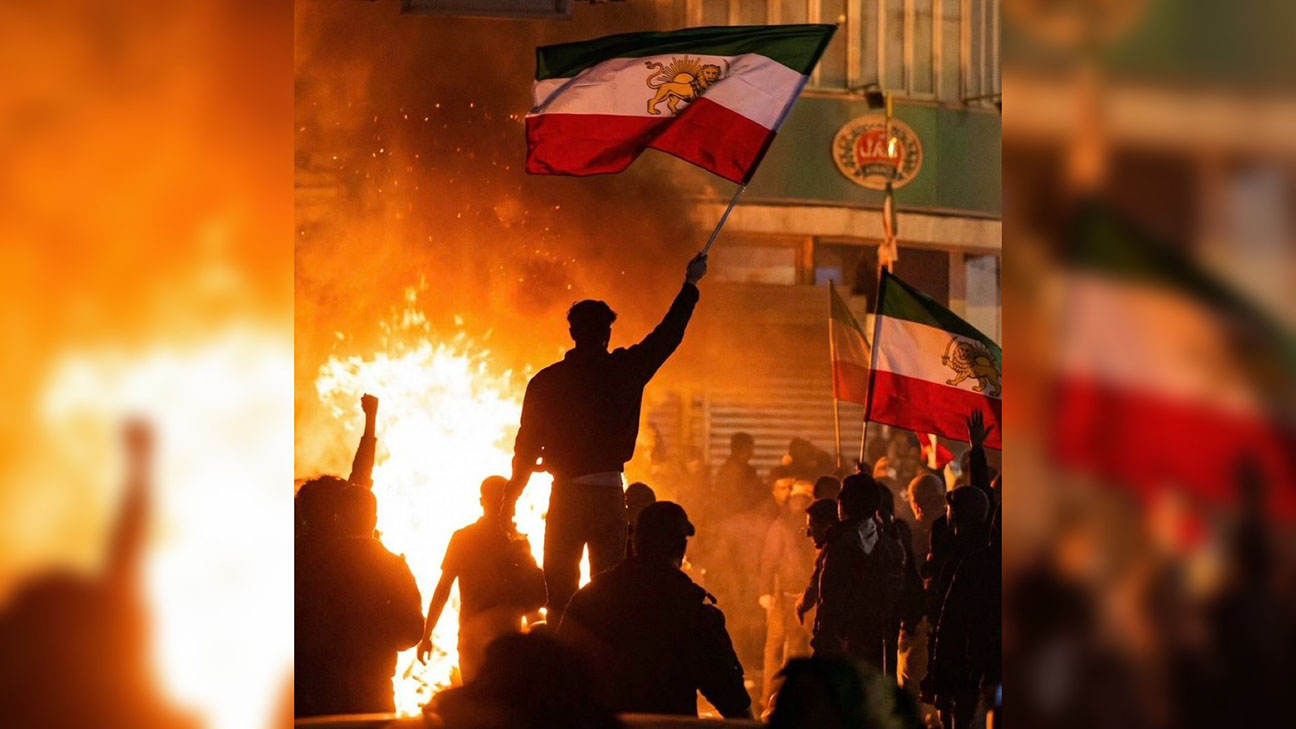
According to The New Iran members, demonstrations increased dramatically after the exiled crown prince, Reza Pahlavi, in a recorded message publicized online, urged Iranians to chant at 8 p.m. on Thursday and 8 p.m. on Friday. In retaliation, they said, the regime cut off internet access in many parts of the country. Water and electricity were unavailable in one town. As of Thursday evening, power outages were reported in East Tehran.
By Sunday night, Jan. 11, demonstrations were continuing across Tehran and had reportedly spread to dozens of major cities and hundreds of smaller locations nationwide. Casualty figures, they said, were rising rapidly, though precise numbers were impossible to confirm because of a sweeping internet and international phone blackout. The U.S.-based Human Rights Activists News Agency reported that at least 538 people had been killed and more than 10,600 detained, including 490 protesters and 48 members of the security forces, while acknowledging that communication restrictions made its tally incomplete. At the same time, a separate estimate circulating among activists and rights monitors put the recent death toll at more than 2,000 killed within a 48-hour period after authorities intensified their crackdown — an unverified figure reflecting a broader aggregation of reports that cannot be independently confirmed under current conditions.
Members of The New Iran also described motorcycle units attacking protesters and said shots were heard. Fatalities and injuries resulting from the firing had not yet been reported at the time they spoke, but they said protesters were seen fighting the motorcycle guards. One opposition source told The Media Line: “The people have the upper hand in most places.”
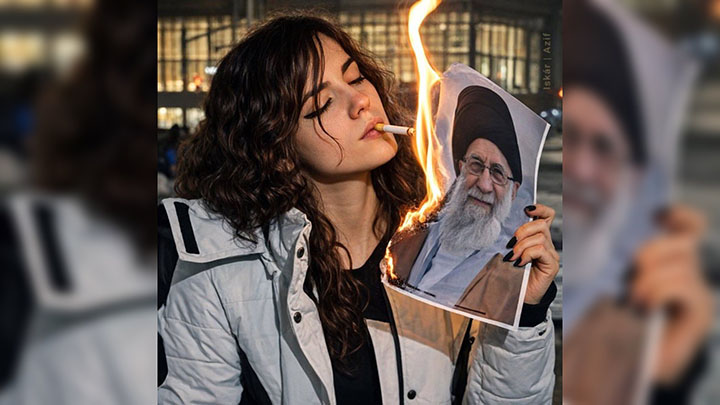
If that sounds like the kind of optimism that circulates in every uprising, it is worth remembering the other sentence Najafi repeated, the one that carries less triumph than resignation.
“We have no choice but to succeed,” she said. “We have taken our life in our hands as our weapon, and we’re in the streets.”
Iran has been here before — many times. To understand why this round feels different to the people describing it, you have to go back to the revolt that made the Islamic Republic possible.
By the late 1970s, the Shah’s Iran was modernizing rapidly and governing badly. Oil wealth brought growth, but also corruption, inequality and a widening gap between public expectations and political reality. Dissent had little legitimate outlet. Opposition parties were weakened, parliament became decorative and the security services — especially SAVAK — were feared.
Revolution toppled the Shah through a coalition held together by what it opposed — liberals, leftists, nationalists, clerics, students, Bazaaris — linked by a shared conviction that the monarchy had become detached and unaccountable. Ayatollah Ruhollah Khomeini’s advantage was not that he invented the anger, but that he became the symbolic center that competing factions could not match.
After the Shah left, the coalition fractured. Khomeini and his allies moved quickly to push rivals out, then crush them, while building institutions that fused ideology and coercion. The Islamic Republic learned a lasting lesson from its own birth: control the security services and the narrative, and you can survive upheaval that would topple weaker systems.
Since 1979, Iran’s protests have come in waves — 1999 student demonstrations; the Green Movement in 2009 after disputed elections; economy-driven unrest from 2017 onward; the 2019 fuel-price protests followed by lethal force and an internet shutdown; and the “Women, Life, Freedom” uprising in 2022 after Mahsa Amini’s death in morality-police custody. Each wave receded under repression, but the country’s political vocabulary shifted, and the fear threshold lowered.
That context matters because it frames what Boms and three analysts of Iranian descent told me in different ways: The economy may light the match, but it does not fully explain the fire.
Jonathan Harounoff, a British journalist based in New York who now serves as Israel’s international spokesperson to the United Nations, told The Media Line that outsiders repeatedly misread these eruptions as isolated events. “But it’s not … just about the economy,” he said. “It’s really a culmination of decades of unrest, of resentment towards the regime’s brutality, its corruption, its mismanagement of the economy, the environment, natural resources, gas, electricity, water.”
David Menashri, the founding director of the Alliance Center for Iranian Studies at Tel Aviv University, told The Media Line the immediate driver is bluntly material. “People are starving. People don’t have jobs. Inflation is high.” He described a regime that “cannot supply water, electricity, housing, basic medical services to the people,” and argued that a state failing at basic governance “cannot go on like this.” His deeper point was ideological. “In 1979,” he said, “Islam won.” Now, he argued, “nationalism won over Islamic ideology.”
Ashkan Rostami, an Iranian-Italian political analyst and member of the Iran Transition Council, told The Media Line he sees a generational rupture. In 2009, he said, people wanted the Islamic Republic to respect the vote. “Back then, I remember very clearly, our demands were that the Islamic Republic respect people’s vote — to elect the reformist candidate of the time instead of Ahmadinejad,” he said. “But today it is totally different. The young people … directly ask for the overthrow of the regime and even ask to return … to something none of us ever lived through — the times of the Shah.”
Will the regime fall? Menashri was emphatic and cautious: “There will be a regime change,” he said, but warned that declaring it “may be proven premature.” Harounoff’s caution is about posture: treating collapse as inevitable can lead to complacency, and the regime’s security forces, he said, have no qualms about using brutality to crush momentum.
In every modern revolution, there is a moment when street courage meets institutional math. Iran’s coercive institutions were designed to prevent the kind of military wobble that helped doom the Shah. The Islamic Revolutionary Guard Corps was created after the 1979 revolution as a counterweight to the regular army and as a principal defender of the new system. Over time, it became not only a military force but a political and economic power center with deep stakes in regime survival.
Boms framed defections as a hinge point, not a talking point. “The IRGC are the strongholds of the revolution. Their mandate is to protect the revolution,” he said. “And so when we heard, we began to hear of defections or of people who refused to shoot protesters. … Whether we’re going to see significant defections, particularly from the circles of the revolutionary guards, is one of the keys of all of this.” He described “public calls and … private calls asking to stay with the people, not with the regime,” then added the line that matters most: “I’m not able to tell you from here whether we’ll see more defections tomorrow.”
This raises the question hovering over every discussion of Iran: Israel.
Menashri warned against visible ownership. “This is Iranian-made protest,” he said, arguing that overt Israeli fingerprints become propaganda fuel, an easy way for Tehran to reframe domestic revolt as a foreign plot. Even if Iranians hate the regime, he said, they are still patriotic, and optics matter. His advice was sharp: “We Israelis should learn to speak less and do more.”
Harounoff was careful, too. Being anti-regime does not automatically mean being pro-Israel or pro-West, he said. But external actors can matter without claiming authorship — by supporting tools that keep people connected and visible, including VPNs and other ways to maintain access when the regime throttles the internet, and by isolating the regime diplomatically, including designating the Islamic Revolutionary Guard Corps as a terrorist organization.
Venezuela surfaced repeatedly in these interviews — an analogy the activists around Foroutan cited and Menashri rejected. “This doesn’t have much to do with Venezuela,” Menashri said. “These are two separate events.” He allowed one link: Venezuela, particularly under Hugo Chávez, aligned closely with Iran.
Rostami argued the episode mattered. “I was very happy about the strike in Venezuela — it was a truly wonderful operation,” he said, calling Venezuela “a puppet of the Islamic Republic outside the region.”
Foroutan called Venezuela “an appetizer” for Iran and speculated that “Putin probably will say, give me this so I will not support the Islamic Republic.” He added, “Hezbollah is gone. Hamas is gone. Venezuela is gone. Syria is gone,” and predicted: “Sooner or later, one night we’ll wake up, and we’ll see Khamenei has … left,” he said.
Harounoff’s frustration, meanwhile, was aimed at something that, in his view, should matter more than analogies: the silence of the international system. “The U.N. isn’t really doing much,” he said, and then he got specific. “Since the past week, they haven’t issued a single statement. The secretary-general hasn’t said anything. … There hasn’t been a single Security Council session convened. Why? I have no idea.”
Inside Iran, none of this is abstract. It is whether your message gets out before the internet dies.
Foroutan described SOS as a structure built to survive decapitation: no single leader to cut off, no one arrest to collapse the network. Hesam said he had identified and worked with dozens of local leaders “without them knowing one another.” Foroutan described preparations that were physical as well as digital, including distributing flags and posters through channels designed to keep material — and momentum — moving even when the regime tries to isolate neighborhoods.
In their view, the urgent needs were basic and immediate: free internet; outside help to blunt repression; and recognition of Reza Pahlavi as a leader figure because, as Hesam put it, people “truly only trust” him.
The leadership question is where Iran’s opposition story always becomes complicated, fast. The People’s Mojahedin Organization of Iran — better known as the MEK, or Mojahedin-e-Khalq — has spent decades presenting itself abroad as a ready alternative. Washington’s own paper trail captures the core facts: The MEK is an exiled opposition group that was designated by the U.S. as a Foreign Terrorist Organization in 1997 and delisted in 2012.
Yet “ready alternative” is not the same thing as “viable successor,” especially inside Iran. A Council on Foreign Relations overview of the MEK noted that it remains controversial, shaped by its history — including its alliance with Saddam Hussein during the Iran-Iraq war and persistent allegations of cult-like internal practices — and the fact that none of the competing factions has coalesced into a cohesive challenge on the ground.
Boms put it more bluntly, and in the language that matters most for a protest movement trying to claim legitimacy at home. “The MEK … in terms of the popularity inside Iran, not outside Iran … they’re not looked at as a system that is more open,” he said. “It’s trying to replace a system which has one tight structure with another system of tight structure. I think the call is to open Iran and not to leave it closed.”
What he fears is not merely an unpopular group winning by force; it is the fantasy — common in policy circles — that leadership can simply be imported. “I think we have learned from historical experiences in the past that it’s not easy to parachute anyone from the outside,” he said, invoking post-2003 Iraq as a cautionary example. “The dynamics are slightly more complicated and it’s not that a given structure can easily replace the previous structure.”
Menashri’s caution sits uncomfortably beside those demands. He does not dispute that many Iranians want help. He argues that even if people welcome support, they may not want that support to become the movement’s banner.
That may be the most honest tension running through all of this: People want help; they fear the cost of admitting it; they fear, too, what happens if no help comes at all.
Najafi placed herself inside that contradiction. She described sanctions as a tool that weakens the regime. “Absolutely, the sanctions have worked,” she said, arguing that cutting oil money means less cash “to suppress people and beat them up.” She described people “counting on Bibi Netanyahu’s promise to protect the people of Iran if they get out,” and counting on President Donald Trump’s message because “people cannot take it anymore.” She thanked the president and called it “fantastic” that his message gave her “the feeling that somebody outside, somebody powerful, is hearing their voice.”
At the end of our conversation, she returned to the line that has become, in these interviews, a kind of grim slogan.
“All we have is our life in their hands, is our weapon,” she said.
Then she closed with words that would have been unthinkable in public life for much of the Islamic Republic’s existence: “Long live Iran,” and “Javid Shah.”
I don’t know how this ends. Anyone who tells you they do is selling comfort, not analysis.
What I do know is the sound that opens this story — the knock at the door — is not metaphor in Iran. It is a method. It is also, increasingly, a risk the country’s protesters are choosing anyway, night after night, under blackouts and bullets and the long memory of failed revolts.
In 2010, a voice on Skype said something that sounded almost like a plea: “We have no fight with Israel.”
By 2026, the voices are not pleading for sympathy. They are describing logistics. They are asking for bandwidth. They are counting the dead. They are choosing aliases because names are liabilities.
Knock, knock.
This time, SOS is in action. The flags, the posters, the chants at 8 p.m. — all the visible signs — may matter less than the invisible thing the regime fears most: coordination that survives repression.
Soon we will know whether Iran’s newest uprising becomes another chapter in a long pattern, or the moment the pattern breaks.
For one thing is already clear in the voices I heard: Fewer people are asking for reform. More people are asking for a new Iran.
Postscript as Journal went to press on Tuesday:
I was supposed to interview Crown Prince Reza Pahlavi on Tuesday at an event at Mar-a-Lago but news of the latest events in Iran meant that he was called away to Washington DC for urgent meetings as a room full of Christians at breakfast prayed for the freedom of Iranians.
President Trump has announced that there will be no more negotiations and said that the time has come for protesters in Iran to take their institutions back. All meetings with Iran are canceled as Iran warns of war. Over 2,000 protesters have been butchered in the streets and Trump has said that the killers will pay a big price and that help is on the way.
Giorgia Valente contributed to this report.
Felice Friedson is president and CEO of The Media Line news agency and founder of the Press and Policy Student Program, the Mideast Press Club, and the Women’s Empowerment Program. She can be reached at ffriedson@themedialine.org.