fbpx

What If Government Can’t Solve This Problem?

[additional-authors]
February 21, 2018
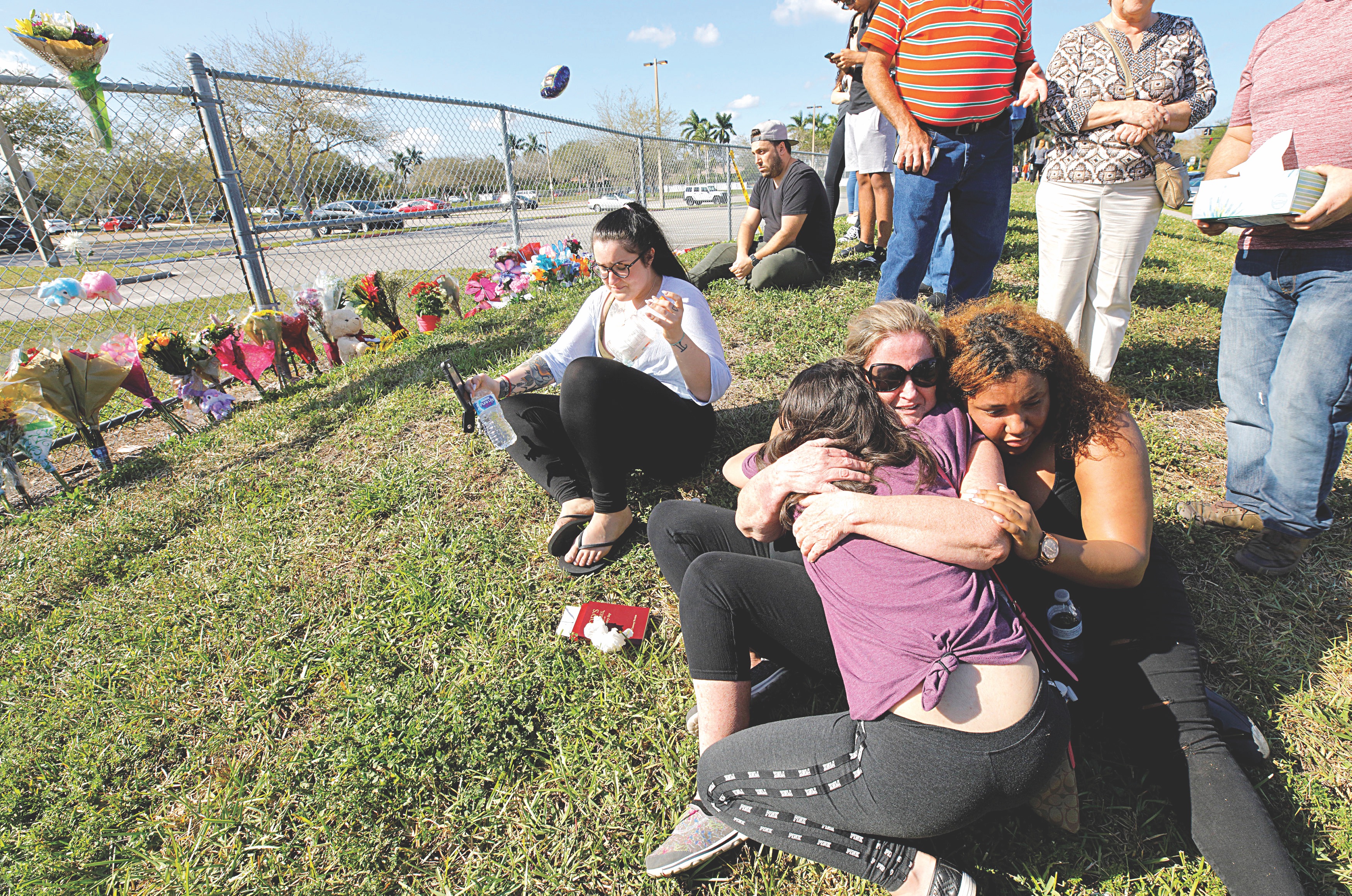
Community members console one another at Marjory Stoneman Douglas High School four days after the shooting, in Parkland, Florida, U.S. February 18, 2018. REUTERS/Jonathan Drake

Rabbi Yosef Kanefsky, B’nai David Judea

I am not a policy expert. Intuitively though, the correlation between the enormous number of guns (and their deadly capacities) that Americans own and the frequency of deadly mass shootings is just too powerful to not also be substantially causal.

What we learned from the governmental inaction after the 2012 school shooting in Sandy Hook, Conn., though, is that the American political system — as wonderful as it is in many other ways — simply doesn’t possess the necessary disposition or capacity to decide to more closely regulate gun ownership.

We cannot expect our government to solve this problem. The answer is neither in politics nor in legislation.

Rather, this task is in the hands of ordinary human beings. Daily, sometimes even hourly, our lives present us with choices. Situations continuously arise in which we can choose the paths either of confrontation or of constructive engagement, of litigation or of compromise, of opposition or of relationship.

Our choices create either a culture of combat, or a culture of peace-seeking. Either a culture in which we can — and routinely do — dehumanize one another, or one in which we are intuitively, profoundly and constantly aware of the humanity of the people around us.

Nothing and no one will stop a deranged, violent person who has already decided to commit mass murder from doing so. But a culture in which we daily, hourly cultivate the ways of love and of peace, may cut off murderous rages before they can begin.


Did you enjoy this article?
You'll love our roundtable.

Editor's Picks

Latest Articles

Post-Passover Pasta and Pizza

What carbs do you miss the most during Passover? Do you go for the sweet stuff, like cookies and cakes, or heartier items like breads and pasta?

Freedom, This Year

There is something deeply cyclical about Judaism and our holidays. We return to the same story—the same words, the same questions—but we are not the same people telling it. And that changes everything.

A Diary Amidst Division and the Fight for Freedom

Emma’s diary represents testimony of an America, and an American Jewish community, torn asunder during America’s strenuous effort to manifest its founding ideal of the equality of all people who were created in the image of God.

More than Names

On Yom HaShoah, we speak of six million who were murdered. But I also remember the nine million who lived. Nine million Jews who got up every morning, took their children to school, and strove every day to survive, because they believed in life.

Gratitude

Gratitude is greatly emphasized in much of Jewish observance, from blessings before and after meals, the celebration of holidays such as Passover, a festival that celebrates liberation from slavery, and in the psalms.

Freedom’s Unfinished Journey

The seder table itself is a model of radical welcome: we are told explicitly to invite the stranger, to make room for those who ask questions and for those who do not yet know how to ask.

Thoughts on Security

For students at Jewish schools, armed guards, security gates, and ID checks are now woven into the rhythm of daily life.

Can Playgrounds Defeat Antisemitism?

The playground in Jerusalem didn’t stop antisemitism, and renovating playgrounds in New York City is not likely to stop it there, either — because antisemitism in America today is not rooted in a lack of slides or swings.

More news and opinions than at a Shabbat dinner, right in your inbox.