fbpx

What the Second Amendment Does Not Guarantee

[additional-authors]
February 21, 2018
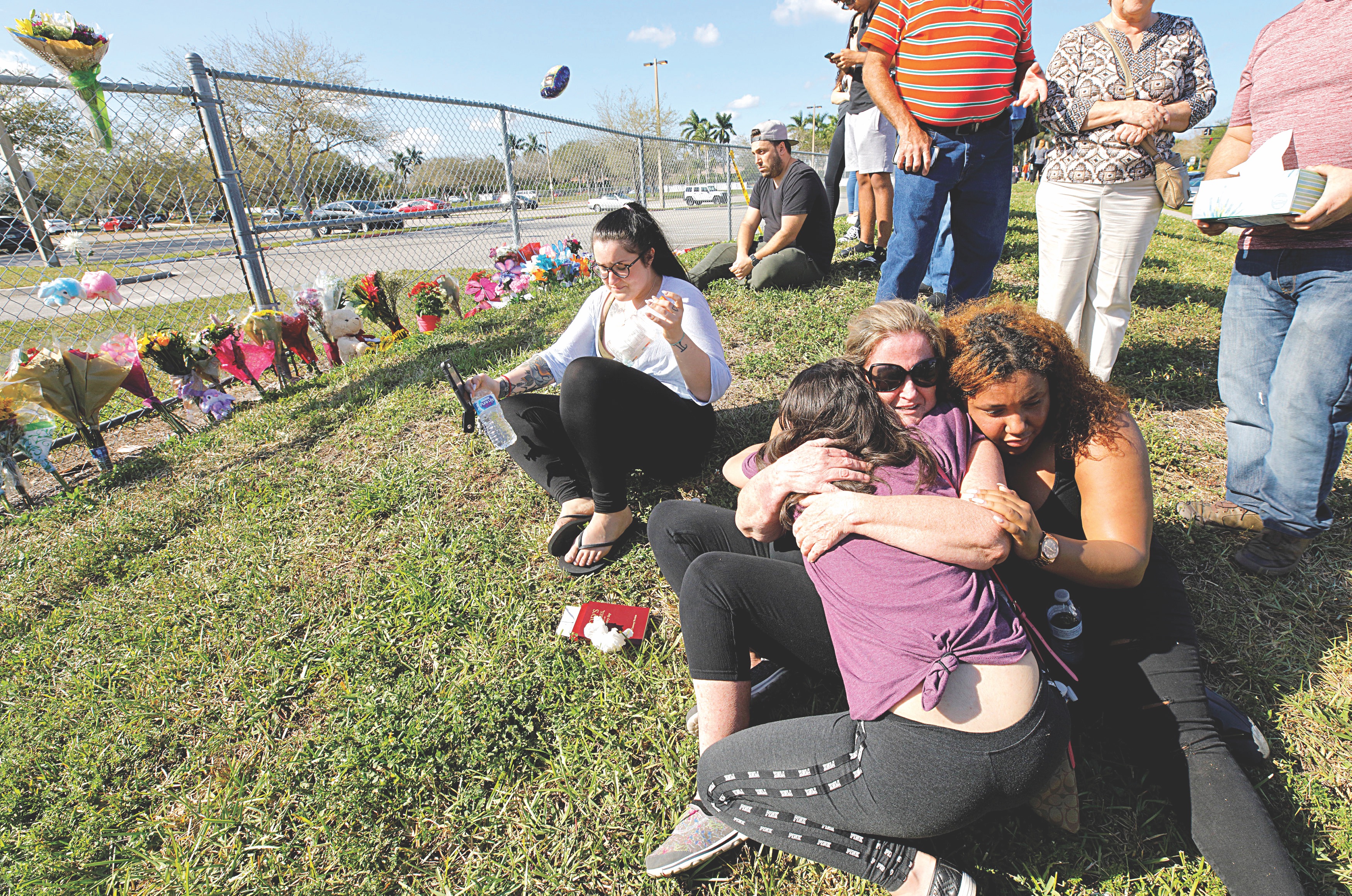
Community members console one another at Marjory Stoneman Douglas High School four days after the shooting, in Parkland, Florida, U.S. February 18, 2018. REUTERS/Jonathan Drake

David N. Myers, Sady and Ludwig Kahn Professor of Jewish History at UCLA

Benjamin Franklin once defined insanity as “doing the same thing over and over and expecting different results.”

In surveying the carnage from the mass shooting in Parkland, Fla., it is hard to resist the view that the repetition of this drama reflects a twisted and self-defeating distortion. The Second Amendment to the Constitution, addressing the Revolutionary War-era presence of a “well regulated Militia,” states that “the right of the people to keep and bear Arms shall not be infringed.” It does not state that Americans possess the inalienable right to own any and all firearms, including those capable of inflicting the massive loss of life that was perpetrated in Florida last week. At what cost to our collective well-being — to the lives of our precious kids — will we perpetuate this madness?

There is an alternative path. We can learn from others. Another society with a robust “live and let live” attitude stepped back from the brink and imposed restrictions on unrestrained gun ownership. In 1996, two weeks after a mass shooting that killed 35 people in Tasmania, the conservative Australian prime minister introduced the National Firearms Agreement, which imposed tight control on automatic and semi-automatic weapons, insisted on a waiting period before purchase, and prompted a national buy-back that collected 700,000 weapons. Since that time, there have been no mass shootings in Australia.

Is it not time for Americans to learn from this example? Should we not recall the Mishnaic principle that destroying a single life — especially of a child — is to destroy the whole world?


Did you enjoy this article?
You'll love our roundtable.

Editor's Picks

Latest Articles

Post-Passover Pasta and Pizza

What carbs do you miss the most during Passover? Do you go for the sweet stuff, like cookies and cakes, or heartier items like breads and pasta?

Freedom, This Year

There is something deeply cyclical about Judaism and our holidays. We return to the same story—the same words, the same questions—but we are not the same people telling it. And that changes everything.

A Diary Amidst Division and the Fight for Freedom

Emma’s diary represents testimony of an America, and an American Jewish community, torn asunder during America’s strenuous effort to manifest its founding ideal of the equality of all people who were created in the image of God.

More than Names

On Yom HaShoah, we speak of six million who were murdered. But I also remember the nine million who lived. Nine million Jews who got up every morning, took their children to school, and strove every day to survive, because they believed in life.

Gratitude

Gratitude is greatly emphasized in much of Jewish observance, from blessings before and after meals, the celebration of holidays such as Passover, a festival that celebrates liberation from slavery, and in the psalms.

Freedom’s Unfinished Journey

The seder table itself is a model of radical welcome: we are told explicitly to invite the stranger, to make room for those who ask questions and for those who do not yet know how to ask.

Thoughts on Security

For students at Jewish schools, armed guards, security gates, and ID checks are now woven into the rhythm of daily life.

Can Playgrounds Defeat Antisemitism?

The playground in Jerusalem didn’t stop antisemitism, and renovating playgrounds in New York City is not likely to stop it there, either — because antisemitism in America today is not rooted in a lack of slides or swings.

More news and opinions than at a Shabbat dinner, right in your inbox.