fbpx

Eyewitness to History: Nov. 29, 1947, in Jerusalem

[additional-authors]
November 29, 2017
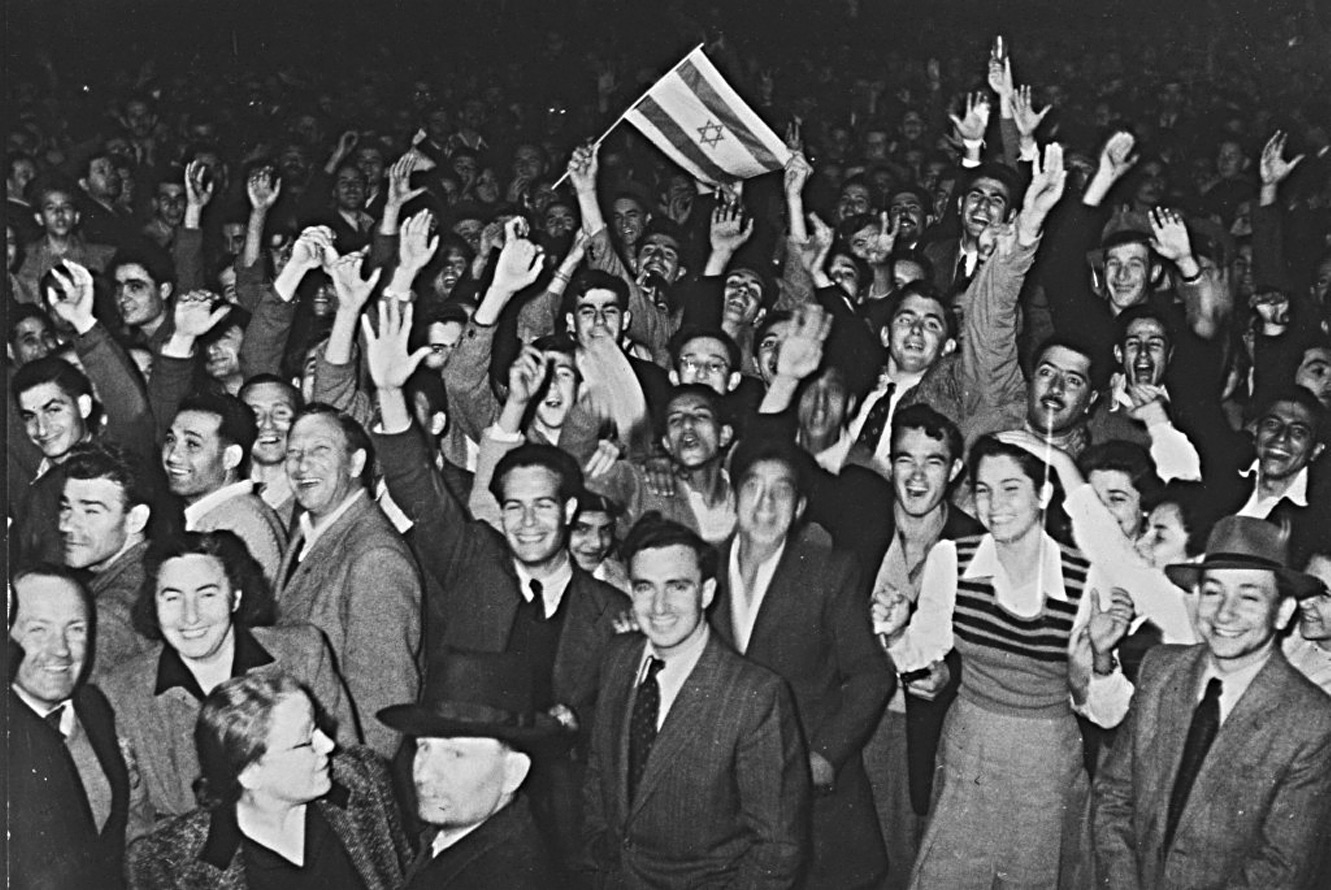
Crowds in Tel Aviv celebrate the U.N.’s vote for partition in 1947. Photo courtesy of the Government Press Office, Jerusalem. Photo by Hans Pinn

When the news broke in Jerusalem of the United Nations’ vote to partition Palestine, it was a Saturday night after sunset. I was 25 and a student at Hebrew University, taking a year off from my rabbinical program at the Jewish Theological Seminary. I was living with my grandfather, Rabbi Tzvi Pesach Frank, the chief rabbi of Jerusalem, in Kerem Avraham, a highly religious neighborhood.

That night, all of Jerusalem erupted into joy. People ran into the streets, shouting, singing and dancing in a frenzy. Grocery stores opened to hand out free bottles of wine to the celebrators. Cars and trucks roamed the streets, offering rides to anyone who wanted to whoop it up.

The growing crowds all headed toward the Jewish Agency building on King George Street, the unofficial headquarters of the underground Jewish government. Hundreds of people danced the horah and sang Hebrew songs with wild enthusiasm.

Suddenly, Golda Meir stepped onto the balcony overlooking the crowd and asked for silence. She expressed our feeling of joy for the fulfillment of our 2,000-year-old dream of re-creating a Jewish state in Israel. But she warned us that dreams came at a price. The United Nations was not handing us a state. We would have to earn it with our lives. We would have to defend it from our enemies, and many Jewish lives would be lost before the state would be born.

Everyone became very somber as the realization of her message took hold. One could sense a powerful resolve settling in.

And then the singing and dancing resumed.


Joshua Stampfer is rabbi emeritus at Congregation Neveh Shalom in Portland, Ore.

Did you enjoy this article?
You'll love our roundtable.

Editor's Picks

Latest Articles

Post-Passover Pasta and Pizza

What carbs do you miss the most during Passover? Do you go for the sweet stuff, like cookies and cakes, or heartier items like breads and pasta?

Freedom, This Year

There is something deeply cyclical about Judaism and our holidays. We return to the same story—the same words, the same questions—but we are not the same people telling it. And that changes everything.

A Diary Amidst Division and the Fight for Freedom

Emma’s diary represents testimony of an America, and an American Jewish community, torn asunder during America’s strenuous effort to manifest its founding ideal of the equality of all people who were created in the image of God.

More than Names

On Yom HaShoah, we speak of six million who were murdered. But I also remember the nine million who lived. Nine million Jews who got up every morning, took their children to school, and strove every day to survive, because they believed in life.

Gratitude

Gratitude is greatly emphasized in much of Jewish observance, from blessings before and after meals, the celebration of holidays such as Passover, a festival that celebrates liberation from slavery, and in the psalms.

Freedom’s Unfinished Journey

The seder table itself is a model of radical welcome: we are told explicitly to invite the stranger, to make room for those who ask questions and for those who do not yet know how to ask.

Thoughts on Security

For students at Jewish schools, armed guards, security gates, and ID checks are now woven into the rhythm of daily life.

Can Playgrounds Defeat Antisemitism?

The playground in Jerusalem didn’t stop antisemitism, and renovating playgrounds in New York City is not likely to stop it there, either — because antisemitism in America today is not rooted in a lack of slides or swings.

More news and opinions than at a Shabbat dinner, right in your inbox.