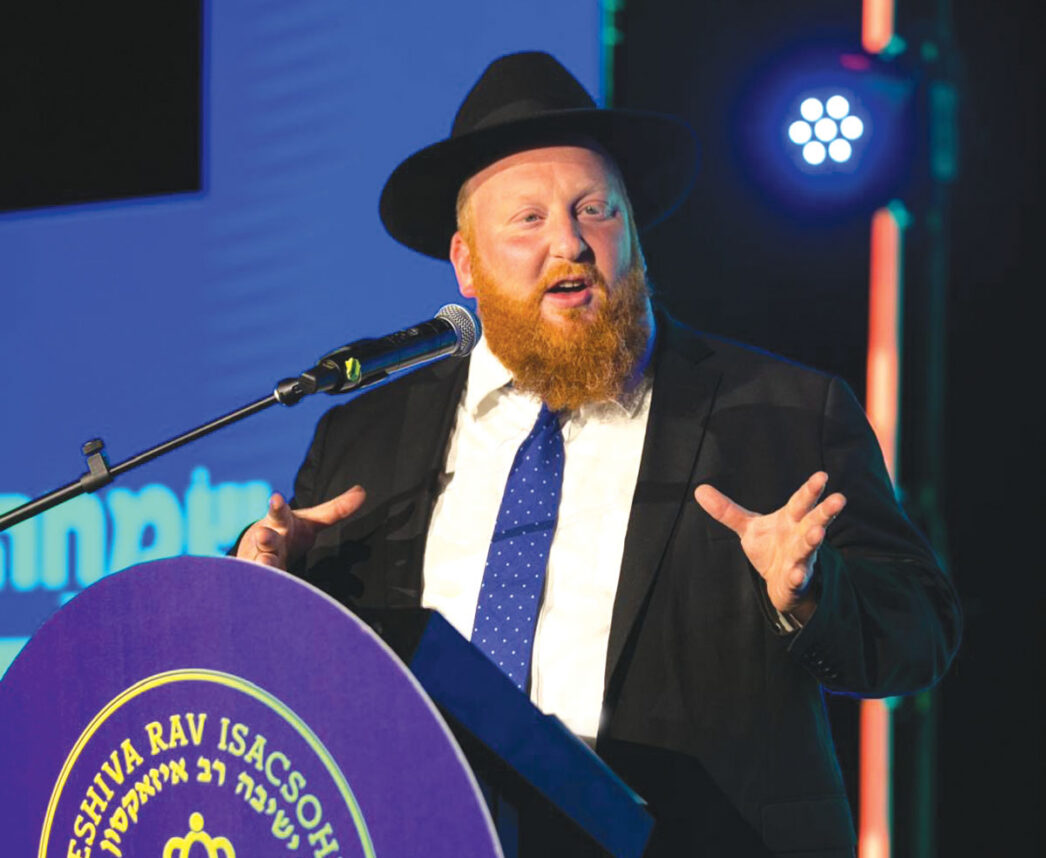

Rabbi Elchanan Shoff Always knew he would create his own yeshiva. After introducing The New Yeshiva High School of Los Angeles to Journal readers last week, he made a pledge: “We are going to create an institution packed with love of Torah and positivity and Jewish pride and a connection to Jewish learning. That is the entire purpose.”
The yeshiva, located at 1540 S. Robertson Boulevard (north of Pickford Street) is set to open in late summer, and Rabbi Shoff addressed the crucial question for many families: How much will it cost?
“Tuition is going to be less than $25,000,” he said. He admitted “it sounds absurdly high in one sense. At the same time the competition is coming in a lot higher. There are things the competition certainly offers, there are extracurriculars, magnificent buildings they maintain and offer to their students. They are really just charging what it costs.”
He discovered that tuition at local Orthodox schools ranges upwards from $30,000. In response, the rabbi firmly declared “number one, we are trying to come in low. But we also are making it clear the money is just not the concern. If somebody has less than that, they will pay less. A person has to pay their share to the best they can.”
The rabbi, who founded the Pico-Robertson congregation Bais Knesses Los Angeles in 2013, is doing a balancing act between costs of opening/leading a yeshiva and making the school affordable to the community. On the one hand, said the rabbi, “that just cannot be what the school stands for. The problem is, [the project] requires a lot of infrastructure, a lot of background.”
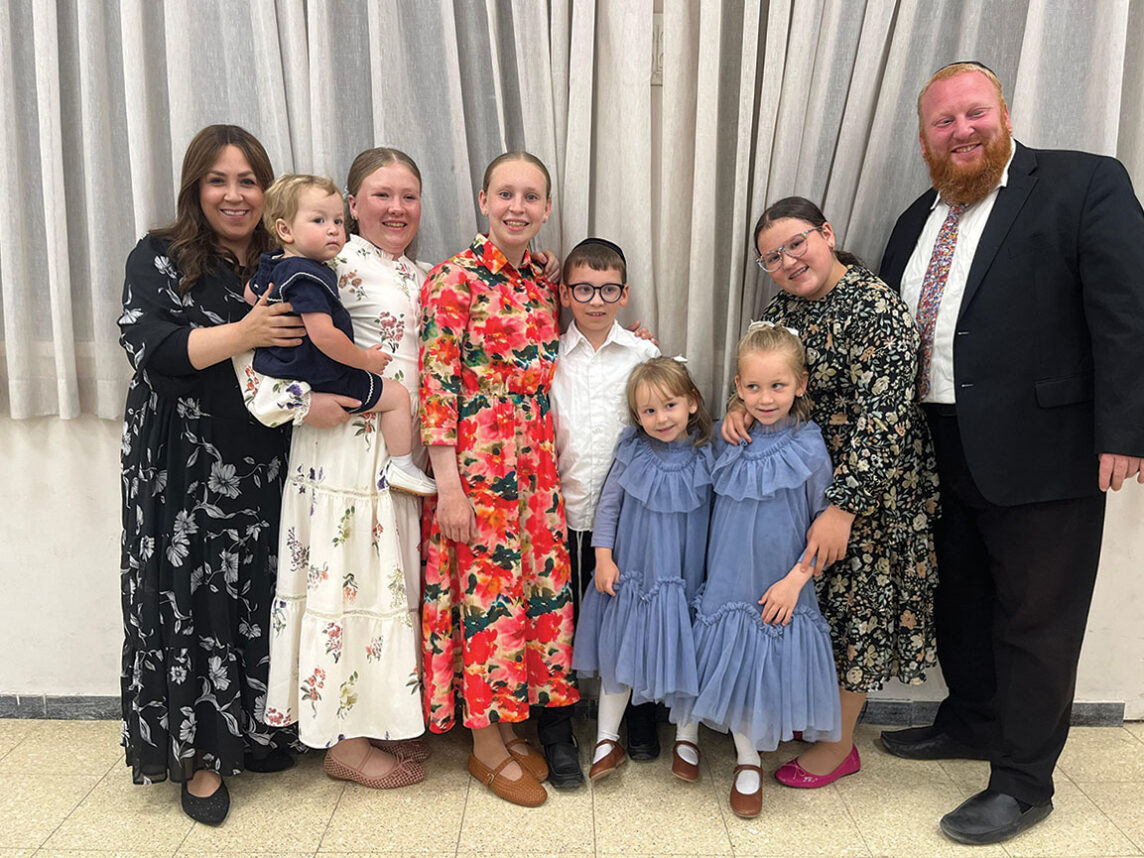
When he was approached with the opportunity to not be so concerned about the money and concentrate his attention where he could be most effective, “that was something I just could not turn down,” he said. And, as the father of seven, he understands why tuition should be affordable.
“When someone short of money applies, I can turn to our backers. To me that is an important ideal (though other schools do it, too). It is a very important ideal that you can’t make it based on money – at the same time, we have this real problem.”
The classically-educated rabbi learned a bedrock value: “One of my [yeshiva teachers] taught me that money never is the appropriate way to make a meaningful decision in life. If you have to go to the dentist because your mouth is in agony, you go. You will figure out the expense later. You just go.” So, “if it is the right thing, then it’s the right thing and you think about the money afterwards. If it’s not the right thing, what does the money matter anyway?
“If it is what is right, we have the faith and trust that God will give us the opportunity to pay those bills.”
Rabbi Shoff raved about the “beautiful building” that will house the first students, calling it “a beautiful, well-appointed space.” For the initially small student body, just a handful of classrooms are more than will be needed for the first year. “We will be able, at least in the beginning, until the school grows into those classrooms, we will be able to use one as a workout gym,” the rabbi said.
Shoff has other creative ideas in mind to make the experience pleasant for the boys. He glows when he lists some of the yeshiva’s assets: offices, a large kitchen/dining room and a sizable yard. It’s “a lovely building, property quite suitable for a high school.”
As the school grows he plans build it up into a couple of stories, “a much larger and well-appointed edifice.” The campus is two properties next to each other – a “very large” Bais Midrash, with the other half containing a number of classrooms, offices and a smaller Bais Midrash.
The yeshiva is expected to open with one grade, the ninth. “Essentially,” the rabbi explained, “we are looking at Los Angeles, and we see an opportunity to meet the needs of certain boys whose needs, I feel, are not being met.”
Setting up his next point, “the black hat community has some beautiful schools that are very effective. When it comes to the community outside of the black hat community, that still is Orthodox, the schools that exist now are beautiful properties that, from my assessment, are community schools.”
A wide range of students attend those schools, he said. “Some are from homes that are more meticulous about Shabbat and keeping kosher, some are less so. It’s a broad range in a way that is very beautiful. I mean, it’s nice there is a certain unity, and many students really thrive.”
There are other parents, he said “who feel very strongly that their children do better in a less exposed environment.” And there are even “elementary schools that are more limited in terms of their exposure, their environment and what sort of students are there. By the time they get to high school, they all sort of channel into the same schools.”
Rabbi Shoff described his ideal students: “Boys who are a little bit right of center, a little bit more from the observant homes where the parents would prefer the environment would be what I would call wholesome.”
He said the dress code and the population will not look like a black hat high school. Rather, the dress code will be similar to what you would find in YULA or Valley Torah. The boys are going to come from right-of-center Modern Orthodox homes or, in theory, from homes that are more in the black hat world — but the children need something a little bit outside of it. They may need a more rigorous General Studies program, or for sports to be a little more of a focus or certain extra-curriculars.
He then asked, “But what are we going to do?” He had the answer at the ready. “We will have a wonderfully warm, emotionally healthy place where it is a pleasure to come in. People are smiling and positive. The staff is picked with that orientation of warmth, positivity and also seriousness about Jewish learning and Jewish values. This is the most magnificent, beautiful way we can spend our time.”
When the bell rings, the rabbi expects to enroll 10 boys in the first freshman class of The New Yeshiva High School. “This is a very ambitious idea,” said Rabbi Shoff. “We have been overwhelmed with positive feedback.”