fbpx

March 6, 2026

Zevi Samet Leads YU B-Ball to a Round 1 Victory in NCAA Tourney Nailbiter

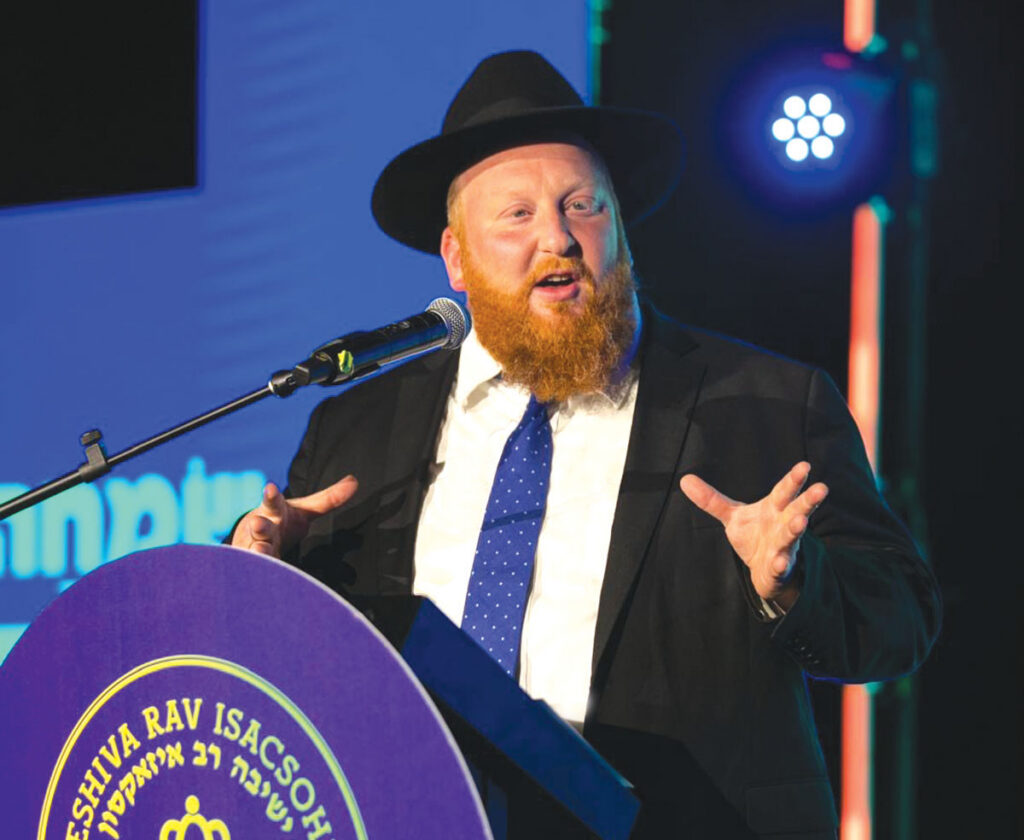
The Yeshiva University Maccabees edged the Bates Bobcats in the first round of the NCAA Division III Men’s Tournament in a nail-biting 71-69 victory, led by Zevi Samet’s 27 points.

Samet, a shooting guard from Monsey, New York, takes his nickname is honor of the Kobe Bryant but plays more like Steph Curry. Samet hit seven three pointers, including five in a short span in the first half.  And he broke past the defense for a layup to end the first half.

Samet had 21 points at halftime, and when play resumed, the Bates Bobcats clamped down on Samet making things tougher.  Athletic guard Jamari Robinson helped lead Bates to a second half comeback, and led his team with 19 points. Feisty guard Sean O’Leary had 13.

Though Samet tossed an airball from beyond the 3-point arc and  had a missed layup, with Yeshiva  trailing 67-66, Samet showed he did not want this to be his last game. The 6’2’’ guard, defended by 6’7’’ forward Babacar Pouye,  calmly stepped back to drill a three that gave YU a two-point lead. Bates College tied the score at 69,  but senior guard Max Zakheim took down a rebound and was fouled with only .2 seconds remaining. With the pressure on Zakheim sank the first free throw. It appeared as though he intentionally  tried to miss the second, it the ball went in. The Bobcats were unable to score. Samet finished with a game-high 27 points.  Forward Roy Itcovichi grabbed 12 rebounds and scored nine points.  Guard Yair Dovrat had 13 points, five rebounds and five assists. The YU defense forced 13 turnovers. Coached by Elliot Steinmetz, Samet and Zakheim showed poise and precision in clutch time.

In a post-game interview with a student reporter, Samet was humble about reaching 2,500 points –  an all-time YU record; he eclipsed legend Ryan Turell earlier in the season. Samet is the top scorer in the Skyline Conference and was the Conference Player of The Year for the second year in a row.

“These guys are special, we battled this season,” Samet said of the Macs who have now have a 15-game winning streak  and played tough nonconference opponents in NYU and Tufts University. “We played really tough teams. It’s very easy to lose confidence. We stayed together as a team. We came to March looking to win some games.

“You know a lot of us are just seniors and we’re just living the moment and we don’t want it to end,” Samet said …We want to play all the way to the final four to the national championship game…”

Earlier in the season, Samet set another school record, scoring 52 points in a game. He’s perfected an off-balance three-point shot but can also cut to the basket if defenders focus on denying him his outside shot. He credited it to health and God and the people around him.

“I mean, It’s definitely cool it’s all blessings to God,” Samet said. “At the end of the day, I’ve played over 100 games and I’ve been healthy every single game. It’s all blessings to God. I feel really appreciative to God. I think it’s more just showing up every day. I got amazing coaches another great captain, amazing teammates that believe in me, my parents, my trainers, and you know when you want to achieve anything, remember this line: ‘anything worth anything requires hard work…”

Zevi Samet Leads YU B-Ball to a Round 1 Victory in NCAA Tourney Nailbiter Read More »

The ‘Scream’ Franchise Is Back—Sans Antisemites.

Spoiler Alert: This article contains spoilers for “Scream 7.”

The seventh installment in the “Scream” franchise debuted in theaters on Feb. 26. On opening day, there was a small crowd at the theater, buzzing with excitement. The novelty Ghostface popcorn buckets and soda cups were sold out — although the concession was still fully stocked with “Melania” movie merch. The theater was only half full, but “Scream” fans of all ages sat excitedly, decked out in franchise apparel. There were even two moviegoers dressed as fully masked Ghostface killers, although nobody thought to charge to the front of the theater, feigning a stab wound (hello, Jada Pinkett Smith).

Scream 7” is the latest installment in the long-running franchise. Neve Campbell has been the franchise’s primary lead from the start. In her role as Sidney Prescott, she has been regarded as one of the most popular “final girls” in horror movie history. For 30 years, Sidney has fought and survived various Ghostface killers (the franchise’s antagonist), while also subverting the usual stereotypes of a “scream queen.” This film reintroduces us to a seemingly well-adjusted, middle-aged Sidney. The owner of a small town’s coffee shop, she now lives in Pine Grove, Indiana, with her wholesome police-chief husband and a sometimes angsty, but popular, teenage daughter. What could go wrong?

The film is filled with nostalgic callbacks to its most iconic predecessor, 1996’s “Scream.” The movie opens with a young couple vacationing at the first film’s murder house, now an Airbnb. We are introduced to Sidney’s teenage daughter, Tatum (Isabel May), when her high school boyfriend sneaks through her bedroom window — Billy Loomis style—for a late-night make-out session. Tatum herself is the same age Sidney was when the Ghostface saga began and is the namesake of Sidney’s childhood best friend, one of the first movie’s victims. When Pine Grove goes under curfew in response to Ghostface’s rampage, “Red Right Hand” by Nick Cave & The Bad Seeds plays in the background, just as it did in 1996. And the movie’s big finale even has Tatum tied to a chair in the family’s backyard, an homage to the franchise’s first on-screen victims, Steven Orth and Casey Becker.

Scream 7” is a movie that deliberately plays on nostalgia. But this would not have been the case if one firing and a series of resignations had not altered the film’s leadership, casting and creative direction. In 2019, Spyglass Media Group acquired the rights to the “Scream” franchise and, in partnership with Paramount Pictures, brought renewed focus to a reboot. After an 11-year hiatus, “Scream (2022) finally premiered, with Melissa Barrera and Jenna Ortega cast as the film’s new leading ladies. Campbell played only a limited role in 2022’s “Scream” and did not reprise her role at all in “Scream VI” the following year. It was clear that the films were going in a new, and unfortunate, direction compared to their predecessors. Campbell had taken a back seat and was passing the torch to a new generation of supposed “final girls.” This was until Barrera was fired by Spyglass Media in November 2023, following a series of antisemitic Instagram posts after the Oct. 7, 2023 attacks.

On social media, Barrera’s firing immediately caused an uproar. Some fans couldn’t possibly understand how her sharing content that accused Israel of genocide, ethnic cleansing and colonization, or likened the Gaza Strip to a concentration camp (among other posts) could possibly be considered antisemitic. Especially when these baseless attacks came mere weeks after the deadliest attack on the Jewish people since the Holocaust. Shortly after Barrera’s firing, her co-star, Ortega, and director Christopher Landon resigned. With “Scream 7” lacking a director and lead cast, the franchise thankfully turned back to its roots. The role of director was offered to Kevin Williamson, screenwriter for the first “Scream,” “Scream 2” and “Scream 4,” and a plot overhaul put Campbell back into the spotlight. The franchise was coming home.

The film’s world premiere took place at Paramount Studios in Los Angeles, one day before its release to the public. The red carpet was filled with actors and actresses of the franchise, both past and present. Among them were Skeet Ulrich and Matthew Lillard, the actors who played the original Ghostface killers in 1996, as well as David Arquette, who played the fan-favorite character, Dewey Riley, before his death at the hands of Ghostface in “Scream” (2022). But the “Scream 7” debut was not without its own scares when anti-Israel demonstrators arrived at the premiere touting the holy trinity of performative activism: keffiyehs, flags and greasy hair. They were still angry about Barrera’s firing and deemed the seventh installment in a horror movie franchise an effective target for advocacy efforts.

Ironically, there are some issues with the “Scream” franchise that these demonstrators could have been justifiably frustrated about. Perhaps, most notably, that Campbell stepped away from the series entirely in 2023, complaining that she was being low-balled by the studio after being the lynchpin of  the “Scream” franchise. Or they could’ve taken issue with how the Ghostface character, rather bizarrely, develops a more Michael Myers-like indestructibility with each passing iteration. Whether knocked over the head or shot multiple times in the chest, our supposedly human masked maniac, doesn’t seem phased in the slightest. But according to the protestors, the primary problem with the “Scream” franchise is that Barrera was not given free rein to spew antisemitic slop on her Instagram account.

Regardless of what these anti-Israel protestors hoped to accomplish, it doesn’t seem that their calls to boycott “Scream 7” and Paramount Pictures had any effect on the public. The film set an opening-weekend box office record, outperforming every other movie in the franchise. And although Rotten Tomatoes gave the movie a franchise-low 31%, audiences seem to disagree, as they rated it 76%. “Scream 7” has been a major success. It seems that Barrera – and those who followed her off set – may have inadvertently saved the franchise from itself. In getting back to basics, the film found a way to connect with audiences from both the past and the present. And it’s making a lot of money along the way.

Scream 7” is not a perfect movie, but it’s a lot of fun. Sure, the seventh iteration of the Ghostface killing squad seemed incredibly random, but this isn’t entirely uncommon for the franchise. It was difficult to follow when Jessica (Anna Camp) is revealed to be the film’s main Ghostface killer. While her performance was commendable, that a Pilates princess turned husband-killer ended up as a Sidney Prescott stan boggles the mind. But Jessica did get something right. She said that because Sidney Prescott wasn’t in universe for “Scream VI,” those Ghostface attacks don’t count. She couldn’t be more correct. “Scream” just isn’t “Scream” without its queen.

The ‘Scream’ Franchise Is Back—Sans Antisemites. Read More »

Holiness in the Heart of Hollywood: From Modeling to Meaning

It is possible to remain holy in the heart of Hollywood – but it takes emunah and a kind of inner strength that is often tested, for our own good.

Modesty came naturally to me. I’ve always been a deeply intuitive, mystical person. I’m aware of energy and how what we take in, what we wear, what we read, what we watch, shapes how we feel inside. Spiritual words move me easily. Even as a child, I felt drawn toward holiness not as an obligation, but as something very instinctive. I was raised in Los Angeles, which of course is what makes this story ironic. But I also come from a family whose lineage runs deep in Torah and tradition. My maiden name is Abehsera –  I share the same family name as Baba Sali (we are distant cousins). Over the years, we hosted his wife, Lala Simi, in our home, where she gave brachot to people who came seeking guidance. Simply being in her presence brought me to tears. I have photos with her from different stages of my life, and I’ve come to see those moments not as coincidence, but as conscience – a yetzer tov quietly guiding me back whenever I drifted.

So when I was first scouted to be a model at 18, my answer was immediate: no. It didn’t feel like me. Even then, with temptation and the yetzer hara doing its best, the idea felt disconnected from who I was and how I was raised. Then I was scouted again. And then a third time. And yes, third time’s a charm. Or in this case, a test of character. Eventually, I agreed. I told myself I could always walk away. What I didn’t understand then was that what you lose in certain environments isn’t obvious at first. It happens slowly, layer by layer, until you’re left with something far more costly than opportunity: a quiet loss of yourself.

The first time I saw myself on a billboard on Santa Monica Boulevard, one of the busiest streets in Los Angeles – I expected to feel proud. I stood there feeling oddly invisible. I remember staring at that billboard and thinking, Modeling for what? And then what? What does that make me? Not long after, I started making small choices that reflected that confusion. The first time I wore pants didn’t feel dramatic, but I knew. It wasn’t just about the pants. It was the beginning of stepping slightly outside of who I had always been. Wearing pants became normal. And while that may not seem significant to someone else, for me it marked a shift. I have always taken refinement and growth seriously. This didn’t feel like growth. It felt like drifting.

At one point, my agency would invite me to industry parties with celebrities. I remember standing in a room next to Paris Hilton and Adrian Grenier, watching people dance on tables. My cousin stood beside me, yet I felt completely alone. I knew, without question, that this was not my world. Modeling introduced something I hadn’t experienced before – not chaos, but misalignment. A quiet drifting away from my internal essence of who I was. When you aren’t living aligned with who you truly are, something inside you weakens. And when that inner compass weakens, your standards can slowly lower, not because you don’t have them, but because you’re no longer standing firmly in them. If you don’t stand for something strongly, you can begin allowing the wrong people into your life, which is how, at the early age of 22, I went through a divorce. And while I didn’t lose myself completely, I can see now how misalignment in one area quietly spills into others.

Still, even in the modeling world, I tried to hold firm boundaries. My contract stated clearly that I would not work on Shabbat, that I would not wear anything revealing, and that bikinis were not an option. I’m sure to them I was considered difficult and odd, but selling my soul was never an option. Many significant campaigns fell on Shabbat. At first, I tried not to care. But one opportunity – a Pantene Pro-V campaign abroad, finally had me distraught. Here was the opportunity to have a completely tzniut commercial for hair, and it once again, it fell on Shabbat. I cried, intuitively knowing this would be my cue to close that door. My father gently said, “It’s just not meant to be for you.” He was right. Looking back, I see it clearly: Hashem was protecting me.

Life moved forward. I remarried, Baruch Hashem, to a good, healthy mensch. Over the years, I moved through phases of skirts and dresses, then pants again. After Oct. 7, 2023, living in the States, I felt helpless. I hosted tehillem groups. I baked challah. I lit extra Shabbat candles. But internally, I kept asking: how do I deepen my connection to Hashem beyond gestures? In that searching, something stirred inside me. I returned to skirts and dresses. Months later, I slipped back into pants. But every time I wore them, something felt physically uncomfortable and spiritually off. I didn’t recognize myself. I didn’t feel feminine. I didn’t feel regal. I believe women are queens, and I never felt like one when I dressed in ways that contradicted my true self.

If there’s one thing children are masters at, it’s telling the truth. They are unfiltered and perfectly timed. How many times has your child told you that you have a booger in public? Or that your coffee breathe is stinky. No, they don’t edit. They simply say what they see. One cold day at home, I put on leggings, and my son looked at me and said simply, “Mommy, I can see your booty butt. Why are you naked?” I laughed, and then thought, wait a minute here. On Shabbat mornings, when I dressed in a feminine dress, my daughter would look at me and say softly, “Wow, Mommy, you look like a real princess.” And my son would say, “Wow, Mommy, you look so beautiful.” Different words. Same message. That was the moment it stuck.

I realized that the way I present myself is the version of womanhood my children absorb. I want them to think of their mother as regal, dignified, elegant and modest, not for appearance’s sake, but because how we carry ourselves reflects who we are. Children feel it. And even if they can’t articulate it, they understand it internally. Something in them recognizes alignment. I still wear pants to the gym. But even there, I cover up more than I used to with a sweatshirt around my waist and choose the back of the room. I’ve learned that I don’t thrive in being looked at, I thrive in being aligned. We are all works in progress. But in daily life, I no longer dress in ways that disconnect me from who I know myself to be. And something unexpected happened when I made that decision: my boundaries strengthened. My clarity sharpened. My alignment returned and I wasn’t becoming someone new. I was returning to who I had always been.

What I’ve learned is this: some of the strongest, boldest refinements we make don’t come from lectures or even shiurim. They can come from quiet places and mostly from our children who are pure and see what we sometimes miss, or choose not to see. If we pay close attention, they guide us back to ourselves. Even what feels like a small change, how we dress, how we show up – can move us closer to living in our full potential. Modesty isn’t about restriction. It’s about alignment. And when we dress like who we truly are, we don’t just look different, we live differently. We become the women we were always meant to be.


Rebekah Garfunkel is a writer, mother and former model who explores modesty, identity, motherhood and spiritual alignment through lived experience. She is the founder of a company that celebrates and honors mothers.

Holiness in the Heart of Hollywood: From Modeling to Meaning Read More »

Rabbis of LA | Plans for a New Yeshiva High School

Rabbi Elchanan Shoff Always knew he would create his own yeshiva. After introducing The New Yeshiva High School of Los Angeles to Journal readers last week, he made a pledge: “We are going to create an institution packed with love of Torah and positivity and Jewish pride and a connection to Jewish learning. That is the entire purpose.”

The yeshiva, located at 1540 S. Robertson Boulevard (north of Pickford Street) is set to open in late summer, and Rabbi Shoff addressed the crucial question for many families: How much will it cost?

“Tuition is going to be less than $25,000,” he said. He admitted “it sounds absurdly high in one sense. At the same time the competition is coming in a lot higher. There are things the competition certainly offers, there are extracurriculars, magnificent buildings they maintain and offer to their students. They are really just charging what it costs.”

He discovered that tuition at local Orthodox schools ranges upwards from $30,000. In response, the rabbi firmly declared “number one, we are trying to come in low. But we also are making it clear the money is just not the concern. If somebody has less than that, they will pay less. A person has to pay their share to the best they can.”

The rabbi, who founded the Pico-Robertson congregation Bais Knesses Los Angeles in 2013, is doing a balancing act between costs of opening/leading a yeshiva and making the school affordable to the community. On the one hand, said the rabbi, “that just cannot be what the school stands for. The problem is, [the project] requires a lot of infrastructure, a lot of background.”

When he was approached with the opportunity to not be so concerned about the money and concentrate his attention where he could be most effective, “that was something I just could not turn down,” he said. And, as the father of seven, he understands why tuition should be affordable.

“When someone short of money applies, I can turn to our backers. To me that is an important ideal (though other schools do it, too). It is a very important ideal that you can’t make it based on money – at the same time, we have this real problem.”

The classically-educated rabbi learned a bedrock value: “One of my [yeshiva teachers] taught me that money never is the appropriate way to make a meaningful decision in life. If you have to go to the dentist because your mouth is in agony, you go. You will figure out the expense later. You just go.” So, “if it is the right thing, then it’s the right thing and you think about the money afterwards. If it’s not the right thing, what does the money matter anyway?

“If it is what is right, we have the faith and trust that God will give us the opportunity to pay those bills.”

Rabbi Shoff raved about the “beautiful building” that will house the first students, calling it “a beautiful, well-appointed space.” For the initially small student body, just a handful of classrooms are more than will be needed for the first year. “We will be able, at least in the beginning, until the school grows into those classrooms, we will be able to use one as a workout gym,” the rabbi said.

Shoff has other creative ideas in mind to make the experience pleasant for the boys. He glows when he lists some of the yeshiva’s assets: offices, a large kitchen/dining room and a sizable yard. It’s “a lovely building, property quite suitable for a high school.”

As the school grows he plans build it up into a couple of stories, “a much larger and well-appointed edifice.”  The campus is two properties next to each other – a “very large” Bais Midrash, with the other half containing a number of classrooms, offices and a smaller Bais Midrash.

The yeshiva is expected to open with one grade, the ninth. “Essentially,” the rabbi explained, “we are looking at Los Angeles, and we see an opportunity to meet the needs of certain boys whose needs, I feel, are not being met.”

Setting up his next point, “the black hat community has some beautiful schools that are very effective. When it comes to the community outside of the black hat community, that still is Orthodox, the schools that exist now are beautiful properties that, from my assessment, are community schools.”

A wide range of students attend those schools, he said. “Some are from homes that are more meticulous about Shabbat and keeping kosher, some are less so. It’s a broad range in a way that is very beautiful. I mean, it’s nice there is a certain unity, and many students really thrive.”

There are other parents, he said “who feel very strongly that their children do better in a less exposed environment.” And there are even “elementary schools that are more limited in terms of their exposure, their environment and what sort of students are there. By the time they get to high school, they all sort of channel into the same schools.”

Rabbi Shoff described his ideal students: “Boys who are a little bit right of center, a little bit more from the observant homes where the parents would prefer the environment would be what I would call wholesome.”

He said the dress code and the population will not look like a black hat high school. Rather, the dress code will be similar to what you would find in YULA or Valley Torah. The boys are going to come from right-of-center Modern Orthodox homes or, in theory, from homes that are more in the black hat world — but the children need something a little bit outside of it. They may need a more rigorous General Studies program, or for sports to be a little more of a focus or certain extra-curriculars.

He then asked, “But what are we going to do?” He had the answer at the ready. “We will have a wonderfully warm, emotionally healthy place where it is a pleasure to come in. People are smiling and positive. The staff is picked with that orientation of warmth, positivity and also seriousness about Jewish learning and Jewish values. This is the most magnificent, beautiful way we can spend our time.”

When the bell rings, the rabbi expects to enroll 10 boys in the first freshman class of The New Yeshiva High School. “This is a very ambitious idea,” said Rabbi Shoff. “We have been overwhelmed with positive feedback.”

Rabbis of LA | Plans for a New Yeshiva High School Read More »

Rabbis of LA | Rabbi Shoff and Birth of a New Dream

In his 13th year as leader of Congregation Beis Knesses of Los Angeles, which he founded, Rabbi Elchanan Shoff is launching a major new project, a yeshiva on Robertson Boulevard.

“We have been overwhelmed by the positive feedback,” he said of The New Yeshiva High School of Los Angeles, due to open this summer.

Shoff, who teaches at Touro College of Los Angeles, explained the idea has been percolating for a quarter-century, “ever since I was a counselor in summer camps when I was a single person. I was 17 then, and now I am 42.”

The Venice native has been working with high school-aged students “all the way through — in various capacities.”

There never was a doubt about his career, or about the specific routes. “The boys in my bunk in camp when they were in the eighth grade, I kind of stuck with many of them,” he said. “I was just a young guy, and when they came to Israel to learn in yeshiva, living there and teaching, they would come to my classes. I became a rebbe of theirs, and for several of them, I officiated at their weddings.”

For Rabbi Shoff, teaching high school was a job he always felt connected to.

Steeped in Talmudic knowledge, the always frank rav did not disappoint when asked why he concentrates on high school and not on older students.

“I still am somewhat in touch with my immature side,” he said. “And so when I look in the mirror, I am absolutely astonished that I don’t look 17. ‘There’s got to be something wrong with this mirror,’ I tell myself.”

He explained the lure to upper grades.

“I always have connected to education,” he said. “The high school age has been strong for me because it’s a nice mix between the emotional connection, which you always must have with students, and there’s also an intellectual aspect as well. You can connect in a very different way with a 16- or 17-year-old than you can with a five- or six-year-old. Even though I value all education — it’s extremely important — I found that was the place I had the strongest ability to understand and to connect.”

Both halves of that response are crucial. “You can talk about ideas,” he said. He cites one of Rashi’s comments to Tractate Kedushin that says between the ages of 16 and 24, those are the years when people are most likely to be able to accept meaningful direction.

Referencing the Talmud, Rabbi Shoff expanded his reasoning. “When students are younger, their brain is not quite developed enough to have that kind of insight,” he said. “They are not that self-critical and willing to make adjustments. And when they are a little bit older, they are set in their ways. They don’t want to hear from anybody.”

The Talmud identifies the ideal learning stages as between 16 and 22 or 18 and 24.

To illustrate his point, the rabbi noted that post-high school, for example, when boys and girls go to Israel, oftentimes people will say ‘Oh, what is this? They should have gotten it by now.’ Post-high school is a really healthy age to be a little independent. But if you would send a bunch of 14-year-olds, they are not ready. Every age has its time.”

Another reason Rabbi Shoff concentrates on high school learners: He believes high school is “a critical, pivotal time in instilling real Jewish values. Skills you can get while your mind still is open to all that learning are very different from what you can develop later when you are an adult and trying to make up those years.”

Rabbi Shoff then turned to The New Yeshiva High School of Los Angeles.

“In many ways it can feel like a pipe dream,” he said. “This is a very expensive endeavor. Not until you have a really full school can you limit your losses. Financially, Jewish schools do not make sense. The money it costs – even within LAUSD where they have this massive amount of volume. In order to educate one child, it is close to what tuitions are in Jewish private schools. But we don’t have any of those benefits.”

Which is the greater challenge – finding enough students, or being able to financially support a project?

“Both are formidable challenges,” the rabbi said. “My skillset is more suited to building a student body –in a direction students and parents can buy into. My skillset is not necessarily the enormous amount of fundraising it would require – the millions you would have to lose to build a staff, to have an infrastructure, and a building when maybe in the first class you get – best-case scenario – 10 or 15 boys. To break even financially, in theory you would need to have full tuition from maybe 80 students.”

While expenses rise as another grade is added and more teachers are needed, Rabbi Shoff said “the basic infrastructure that’s required is challenging. Even the schools that are very successful in their student bodies still require enormous investment financially in terms of fundraising.”

He described Jewish education as an enormous value for the frum community. Rabbi Shoff arrived at the heart of the matter: “In the Orthodox community it is seen as an inviolate right that every single young Jewish person should have an opportunity to get a Torah education. If a family doesn’t have the money for tuitions, we take what they can pay. In the more liberal Jewish communities, a private school education is a luxury.” 

Fast Takes with Rabbi Shoff

Jewish Journal: Your favorite music?

Rabbi Shoff: Contemporary Jewish music, specifically like the Miami Boys Choir.

JJ:  Where do you go for news of the world?

RS: Fridays, outside of the men’s mikvah.

JJ: Your favorite Shabbat moment?

RS: That feeling after you have eaten the cholent on Shabbos day and you can’t move your body.

Rabbis of LA | Rabbi Shoff and Birth of a New Dream Read More »

The Evolution of Fear – From the USSR to College Campuses

When Izabella Tabarovsky immigrated to the United States from Siberia in 1989, she was overwhelmed by the sheer variety of food at the supermarket. There were 25 types of cheese to choose from and a nice selection of breads, while back home, there was just one of each. The choices were endless — and they were everywhere she went. At university, hundreds of courses were offered. It was mind-boggling.

“It really blew all our Soviet immigrants’ minds,” she recalled. “When you come from a society where everything is prescribed and choices are minimal, you just follow a certain path. Here you had to take charge of your life. It’s destabilizing, but it’s also, of course, incredibly freeing once you get adjusted.”

Another thing that impressed her 19-year-old mind was the freedom of speech. Journalists criticized the government, people with different political views debated openly. Nobody worried about being canceled, that term didn’t even exist then.  Back in the USSR, that would have been unthinkable.

“I remember thinking, wow! It takes a really confident country to air these kinds of disagreements and criticism out there,” she said.

But today, the landscape has shifted. On many college campuses, only one point of view is widely accepted, and it is often fiercely antizionist and critical of Israel. Students are afraid to speak openly or share opinions that deviate from the prevailing ideology.

“Universities today often expose students to only one set of ideas and everything else is demonized,” Tabarovsky said. “Young people aren’t given the chance to explore different perspectives and decide for themselves what they agree with.”

The first time she noticed the shift was at the start of the COVID pandemic in 2020.

“People were scared to say something wrong, and the social pressure alone could ruin you. You could lose your job. It was the same fear I thought I had left behind in the USSR.”

Unlike in the Soviet Union, where propaganda and censorship came directly from the government, in America today the pressure comes from society itself. On campuses, both students and professors enforce a rigid ideological conformity, creating an environment where Jewish students — or anyone who identifies as Zionist — often feel the need to stay silent, and keep their belief “in the closet.”

Tabarovsky, a pioneering scholar of Soviet antizionism and contemporary antisemitism, explores these issues in her new book, “Be a Refusenik: A Jewish Student’s Survival Guide.” Drawing a parallel between the propaganda she witnessed growing up in Siberia and the pressures faced by Jewish and Zionist students on today’s college campuses, she argues that young people must reclaim the courage to speak out without fear.

“I think the book serves multiple purposes. One is to give young people examples of how to stand firm when they disagree with society, showing that it’s both powerful and morally clear,” said Tabarovsky.  “Dissidents, in the Soviet sense, are people who hold a position of honor. I want readers to see the lineage of Jewish dissidents before them — they faced noble struggles similar to today’s challenges, and they won.”

Tabarovsky spoke with The Journal from her home in Jerusalem, where she has lived since making Aliyah five years ago, after living many years in Washington, D.C. This week, she is returning to the U.S. for a series of lectures, including one at Valley Beth Shalom.

Tabarovsky draws inspiration from the Jewish refuseniks of the Soviet era — those who fought to make Aliyah despite government restrictions. “I portray stories of refuseniks alongside young students today,” she said.

“It’s about relentless reclaiming — reclaiming Zionism, reclaiming your Jewish identity. Young people need to take charge themselves because often, the adults in their lives haven’t prepared them for the challenges they’ll face.”

Tabarovsky emphasizes the importance of role models and moral clarity. The book highlights heroes and leaders, like Natan Sharansky, who wrote the foreword to the book. Sharansky is perhaps the most well-known refusenik. Born in Ukraine, he spent nine years in prison for his efforts to emigrate and fight for Jewish rights.

She also critiques superficial “talking points” approaches. “In this war of ideas, young people need profound knowledge about who we are, what it means to be Jewish and Zionist, not just the right phrases to say. Once they have that, they’ll know what to do from experience, not reaction.”

Growing up in Siberia in the 1970s and 80s, Tabarovsky said she glimpsed freedom through packages of clothes and photographs sent back by friends and family who had emigrated to the U.S.

“They sent us photos of supermarkets that are fully stocked with a multitude of goods. It helps you understand that something works differently in that society,” she said. “We were being told that socialism and communism is the best system in the world, then why do we have to wait 20 years to get a new car?”

Seeing how people lived beyond the Iron Curtain made Tabarovsky dream of immigrating — an aspiration shared by many Jews in the Soviet Union. Even as a child, she sensed the vast gap between life under Soviet communism and the freedoms people enjoyed in the West. The propaganda she encountered at school and in the media did little to convince her of the government’s message.

“I was fortunate to have a father who understood the depth of brainwashing and hated Soviet power,” she said. “He always gave us counter-propaganda at home, and that helped me see that much of what we were told was just propaganda. I understood there was a better world out there, but the gap between the two systems was so vast and the Iron Curtain was so thick that you couldn’t really understand what it was like.”

Tabarovsky believes the response must begin with education — both at home and in Jewish schools. Parents, she said, need to help their children understand Jewish identity, Israel and Zionism in a deeper way, so that young people will not feel intimidated or pressured to hide their views once they arrive on campus. They also lack the knowledge and tools to respond when Israel is accused of being an occupier or committing genocide.

In her book, she pairs the stories of Soviet Jewish dissidents with those of contemporary Jewish students, drawing inspiration from the refuseniks who challenged the Soviet regime.

She argues that many Jewish students today feel pressure to distance themselves from Israel because they lack the knowledge and confidence to defend their identity.

“In many Jewish schools there isn’t enough deep learning about Israel,” she said. “Not in a formulaic way, but in a way that grapples with the complexity and teaches the stories of heroism that are missing.”

Tabarovsky also believes the Jewish community needs to move away from defining itself primarily through victimhood.

“We don’t need to compete in the ‘victimhood Olympics,’” she said.

Instead, she hopes the stories in the book will offer young people examples of courage and moral clarity — much like the Soviet refuseniks who refused to give up their identity and fight for freedom despite intense pressure.

The Evolution of Fear – From the USSR to College Campuses Read More »

Milken Teacher Wins National Milken Educator Award, JFSLA Homelessness Panel

On Feb. 24, the latest Milken Educator Award was announced during an all-school assembly at Milken Community School. Milken School teacher Ellen Dooley was recognized as the latest Milken Educator Award recipient.

Dooley, a social science instructional leader who at Milken teaches multiple subjects to sixth through 12th graders across the school—including modern world/Jewish history; U.S. history; and art history—accepted her prestigious award and its accompanying unrestricted $25,000 cash prize. She was surrounded by cheering students, colleagues, dignitaries and media.

Ellen Dooley thanks her students and colleagues with Lowell Milken, founder of the Milken Educator Awards, proudly looking on. Courtesy of Milken Family Foundation

Participants in the ceremony included Los Angeles Dodgers President and CEO Stan Kasten and Milken Educator Awards Founder Lowell Milken. At the start of the assembly, the two entered the scene with exciting news to share about a leader of their own. That leader turned out to be Dooley.

“Dr. Ellen Dooley inspires students to reach high levels of achievement,” Milken said. “Ellen understands that education is active, enhanced by rich curriculum, depth of thought and a connection to real-life events and experiences that shape students into compassionate, productive members of society. We are excited to welcome Ellen into the Milken Educator Network, and to see her continue to motivate positive change in her school, community, and across the nation.”

As a teacher at Milken, Dooley engages students in hands-on learning while cultivating critical thinkers who are curious about the world around them. She has also mentored students at various schools as a writing coach and supported teenage mothers pursuing high school diplomas. She earned her Bachelor of Arts in art history and religion from Trinity University in San Antonio, and a Master of Arts and Doctor of Philosophy in art history from USC in 2010 and 2015, respectively.

She is one of two California recipients to earn the Milken Educator Award this school year, and among up to 30 recipients nationally.

The inaugural Milken Educator Awards were presented by the Milken Family Foundation in 1987. Created by Lowell Milken, the Milken Educator Awards provide public recognition and individual financial rewards of $25,000 to K-12 teachers, principals, and specialists from around the country who are furthering excellence in education.


Spectrum Anchor Kate Cagle; L.A. County Supervisor Lindsey Horvath; Little Tokyo Service Center Peter Gee and JFSLA CEO Eli Veitzer.

“Breaking Point,” Jewish Family Service LA’s recent expert panel on senior homelessness, was moderated by Spectrum News 1 Anchor Kate Cagle and featured thoughtful discussion from Los Angeles County Supervisor Lindsey Horvath; Peter Gee, co-executive director of the Little Tokyo Service Center; and Eli Veitzer, CEO of Jewish Family Service LA.

Seniors over 65 are the fastest-growing segment of Los Angeles’ homeless population, and by 2030, an estimated one in five residents of L.A. County will be over 65, a significant demographic shift that is straining this city’s social safety net, according to JFSLA.

The timely panel, held Feb. 26, explored the trend of rising senior homelessness, the growing funding challenges to senior services, and pathways to a dignified future for L.A.’s aging population. JFSLA, a Jewish social services agency, supports thousands of older adults through five senior centers across Los Angeles, 13 senior meal sites, transportation to medical appointments, in-home and long-term care and emergency financial assistance to help older adults remain safely housed.

Milken Teacher Wins National Milken Educator Award, JFSLA Homelessness Panel Read More »

The Sweet Song of Survival

It was a short video clip that went viral. It showed a Purim party held in a bomb shelter, where a group of young Israelis danced and sang along to Gloria Gaynor’s disco classic “I Will Survive.” Gaynor’s lyrics, written about romantic heartbreak, took on a totally new meaning as Iranian missiles were flying overhead:

Did you think I’d crumble?

Did you think I’d lay down and die?

Oh, no, not I

I will survive…

Jews celebrate survival, and the first Jewish song is about survival. After seeing their Egyptian slavemasters vanquished at the Red Sea, Moses leads the people in song, calling out that “The Lord is my strength and song; he has become my salvation.” In Psalms, David sings, “I shall not die, but live, and declare the works of the Lord.”

Jews have always sung the sweet song of survival.

We sang this song of survival even during the Holocaust. In the Vilna Ghetto, 21-year-old Hirsch Glick wrote “Zog nit keyn mol,” a Yiddish song that became an anthem of survival. The song’s refrain is:

So, never say the road now ends for you,

Though leadened skies may cover over days of blue.

As the hour that we longed for is so near,

Our marching steps beat out the message: We are here!

The closing words, “mir zaynen do” (“we are here”), became a Jewish catchphrase. Despite all ‌the attempts to destroy the Jewish people, we had survived.

This theme has deeply influenced Israeli music. Ofra Hazah’s hit song “Chai,” which was written by the famed Israeli composer Ehud Manor, was the Israeli entry for the 1983 Eurovision contest. The contest that year took place in Munich, Germany. Manor wanted to make a statement about Jewish pride and survival, and wrote the following chorus:

Alive, alive, alive – Yes, I’m still alive!

This is the song which grandfather

Sang yesterday to father

And today I [sing]

I’m still alive, alive, alive

The people of Israel live

When the backup singers performed the song, they all wore yellow, the color of the hated yellow star, making it clear to Germany and the entire world: We are here.

Once again, Jews were singing the sweet song of survival.

Judaism sees survival as a sacred task. It is each individual’s first responsibility. Life is a gift from God; right after waking up each morning, we thank God for another day of life. We must cherish life, so much so that saving a life takes precedence over all other religious responsibilities.

But there is a second form of sacred survival: to survive as a nation. And that too takes precedence over everything.

After the Jews make the golden calf, God tells Moses: “Now, let Me be, that My anger may blaze forth against them and that I may destroy them, and make of you a great nation.” God is ready to destroy the entire nation. But Moses argues with God. At one point, Moses says that if God will not forgive the Jews, he wants to be erased from the Book of Life and punished along with the rest of the Jews.

That Moses is ready to argue with God on behalf of the Jews is in itself remarkable. But a comment from Rabbi Shlomo Ephraim Luntschitz in his Kli Yakar is even more dramatic.

As the Jews dance around the golden calf, Moses descends the mountain with the tablets that God had divinely inscribed with the Ten Commandments. When Moses sees them worshipping the golden calf, he smashes the tablets.

Why would Moses destroy these sacred tablets? The Kli Yakar offers a radical interpretation: Moses broke the tablets because he wanted “to join in with the rest of Israel in sin,” and thereby be no better than the rest of the Jewish people. Yes, Moses intentionally sins. This way, God would have to punish him if He punished them.

Moses would rather be a sinner and stand together with the Jews, then a saint and stand together with God.

This episode underlines that for Jews, survival is absolutely sacred. It offers a vision that is unique to Judaism: Peoplehood comes before religion. All spirituality begins with an absolute love for life and for the Jewish people.

It offers a vision that is unique to Judaism: Peoplehood comes before religion.

During the Holocaust, survival took on heightened spiritual importance. As the Nazis murdered millions of Jews, the survivors embraced life even more. Dr. Nathan Eck described life in the Warsaw Ghetto, explaining that, “Among the residents of the ghetto, there arose a powerful will to live, overflowing with hidden strengths, the likes of which could hardly be imagined in normal times … Against Hitler’s plot to annihilate and destroy, the Jews responded with a deep and determined desire to live.”

One of the rabbinic leaders in the Ghetto, Rabbi Yitzchak Nissenbaum, called this drive to survive “kiddush ha-chaim” or sanctification of life. This differed greatly from medieval practice, when Jews would choose martyrdom rather than abandon their faith, as an act of deep devotion to God.

Eck wrote that Nissenbaum preached:

“This is an hour of the sanctification of life, not of the sanctification of the Name through death. In the past, our enemies demanded our souls, and the Jew sanctified God’s Name by sacrificing his body. Now, the oppressor demands the Jewish body—and it is the Jew’s duty to defend it, to preserve his life. In the past, Jews upheld the sanctification of God’s Name; in our time, they are obligated to uphold the sanctification of life.”

Survival is sacred.

That is why we always cherish life and relish life. And we have always sung the sweet song of survival.

Life goes on in Israel’s bomb shelters. There were Purim parties and costume contests. There are singles events. And there are even underground weddings.

Lior and Michael planned to get married on March 1. Unfortunately, their wedding hall had to cancel because of the rocket attacks. But Lior and Michael decided they weren’t going to move the date; so they moved the wedding instead, to the minus four level of the Dizengoff Center parking lot in Tel Aviv. Yediot Achronot’s reporter offered this comment:

“Inside a parking garage and under the shadow of the sirens, the simple moments of joy and love took on a different meaning. The couple said that for them it was important to continue living and to celebrate their love, even during a challenging time.”

Lior and Michael’s wedding is part of a three thousand year-old story of survival. The pundits might predict from time to time that the Jews will crumble, or lay down and die, but Lior and Michael know better.

They know that we will survive. Am Yisrael Chai!


Rabbi Chaim Steinmetz is the Senior Rabbi of Congregation Kehilath Jeshurun in New York.  

The Sweet Song of Survival Read More »

Big Bear Dream Destination

A Big Bear Getaway: Nature, Luxury, and Restoration.

Imagine this:

The weekend is here, you have no plans, and Big Bear is calling. A winter wonderland just a few hours from your front door. Right now, Big Bear Lake is ringed by snow-dusted peaks, its pines catching the longer, late-winter light, with the lake glittering at the edges. It it is the kind of place that makes you wonder why you don’t come more often!

So grab your besties for a snowy weekend getaway, bring the family, or drive up for a solo weekend reset that city life simply cannot provide. Big Bear is the perfect destination for active adventures and ski days, yes, but also the deep-exhale restoration that busy, overscheduled people are increasingly seeking.

As the season shifts from deep winter into early spring, Big Bear is at one of its quietest, most beautiful moments of the year. The frenetic energy of peak ski season has softened. The trails are waking up and the mountain feels unhurried. It is, in the very best sense, the perfect time to go.

As you drive up, you will notice the city noise falling away behind you, and then Big Bear Lake appears through the pines like something from a storybook; frozen at the edges, glittering in the winter sun, ringed by peaks that look like they’ve been dusted by hand.

The Big Bear Transformation & Two Epic Properties:

Many travelers see Big Bear as a simple mountain getaway, but they could not be more wrong. Big Bear has matured into California’s newest wellness pinnacle. It offers a stunning beauty that rivals Ojai or Malibu, but with a sharper, more electric alpine edge. At 6,750 feet, the air acts as a natural training tool for athletes and a cognitive reset for the weary. It is a place where “forest bathing” isn’t a performance, it’s just the reality of waking up among towering pines.

Checking in.

While Big Bear is emerging as the ultimate alpine hideaway for a total reset, Sessions Retreat & Hotel and The Burgundy Inn are two reason why. These are two extraordinary properties that are quietly rewriting what mountain hospitality can look like.

Whatever your reason for coming to Big Bear, the accommodations you choose changes everything. Land at the right address, with hosts who see you, an atmosphere that holds you, and space to actually breathe, and you will leave restored in ways you didn’t know you needed.

Sessions Retreat: A Portal Between Realities.

Sessions Retreat, previously Wolf Creek Resort, completely reimagined, describes itself as “a portal between realities, a funky art playground that connects the modern explorer” to Big Bear’s natural magic. I’d say that’s exactly right. This boutique property is centered around art, wellness, and nature, and from the moment you walk in, you realize that this place has an attitude, and it wears it perfectly. Art installations are tucked between the pines, and Ram Dass’s “Be Here Now” appears in rooms not as décor but as a quiet suggestion. Spaces have been designed for the kind of genuine connection and deep rest that’s become its own form of luxury.

The Accommodation:

The Lodge has 10 private, pet-free rooms with ensuite bathrooms, walk-in closets, smart TV, and high-speed Wi-Fi. Perfect for solo travelers who want community energy around them, or groups booking out the entire building.

The Chalet has one-bedroom studio suites with a full queen bed, private bathroom, full kitchen, pull-out queen couch, dining area, smart TV, and, crucially, a fireplace.

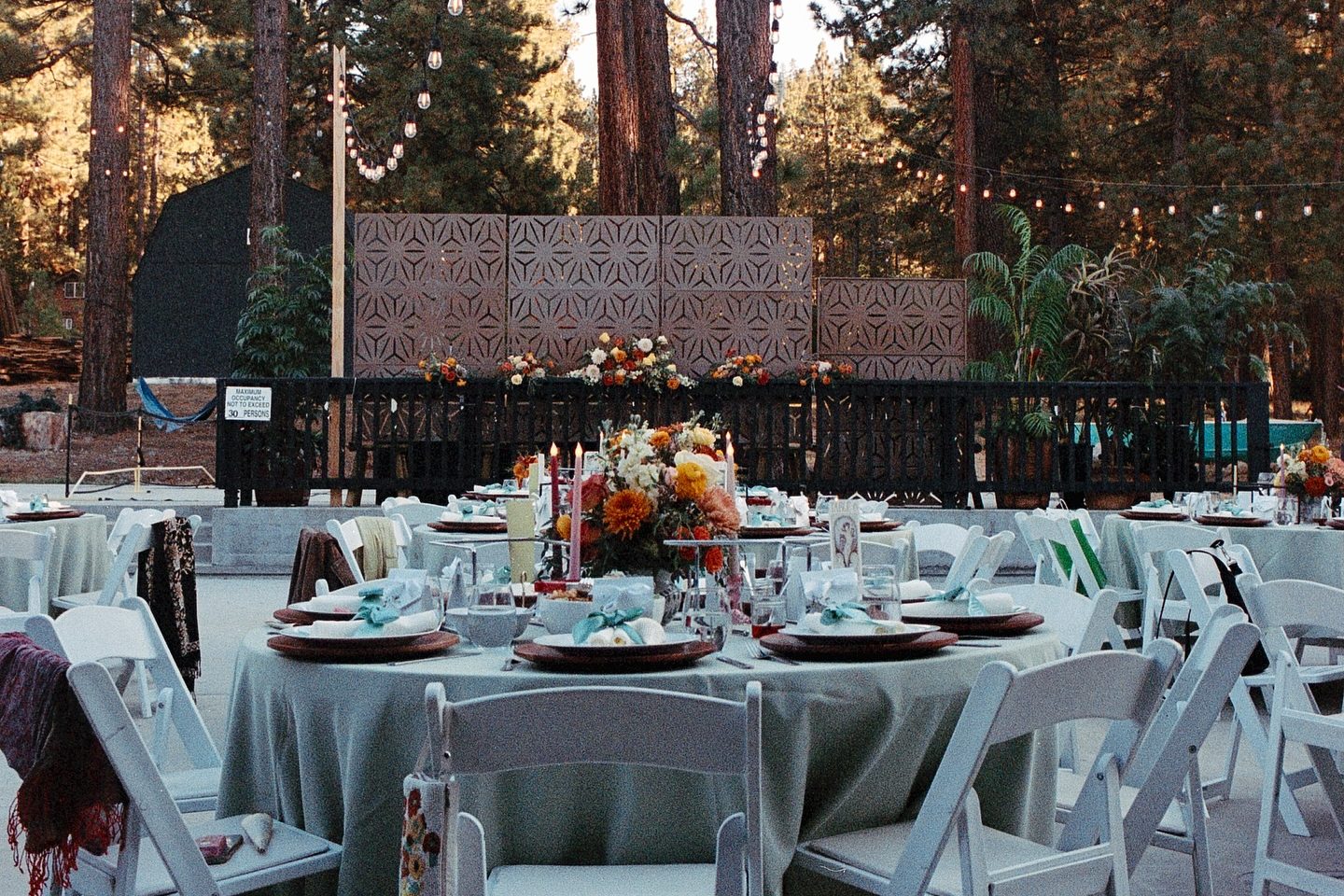
Create a custom “Mitzvah Campus” by pairing these sister properties: Use Sessions Retreat as your high-energy event hub, utilizing its 3,000-sq-ft modern hall and stage for a high-octane “club-style” reception. Meanwhile, boutique rooms at The Burgundy Inn offer a refined, quiet sanctuary for grandparents and extended family just steps away. This dual-property approach allows for a full “village takeover” vibe, keeping the party at Sessions and the peace at Burgundy.

Book Sessions Retreat → Sessions Retreat and Hotel

The Burgundy Inn: Retro Warmth, Genuine Soul.

The Burgundy Inn is pure, unrestrained joy. Inspired by the carefree spirit of 70s summer camps and reimagined as genuine alpine luxury, The Burgundy Inn describes itself as “your funktastic escape to a playful yesterday” and I couldn’t agree more.

The room wraps you in the warmth of amber light, highlighting the tactile grit of corduroy against smooth, dark timber and flickering brass details. The aesthetic is mid-century warmth done completely right: nostalgic without kitsch, retro without dated, cozy without frumpy.

Tucked among soaring pines and a short walk from the lake, The Burgundy sits in a rare sweet spot between personality and comfort. You arrive and immediately understand: this place knows what it is, and it leans into it with complete confidence.

The rooms and suites are individually crafted. Each one a small discovery, reflecting genuine thought and care. The Burgundy Inn is still being renovated, with Frank and his team valuing quality over speed. This evolution gives the property something manufactured perfection can’t buy: genuine character being written in real time.

The Accommodation:

The Burgundy Inn offers a mix of cozy studios, cabin-style suites, and spacious lofts, so you can match your stay to your group. Think everything from simple king and double-queen rooms to apartment-style cabins with full kitchens and fireplaces, plus larger lofts that sleep a crowd without feeling cramped. It’s the kind of place where couples, families, and friend groups can all find a room that actually fits how they travel, instead of squeezing into a one-size-fits-all layout.

For large celebrations The Burgundy joins forces with their sister hotel, Sessions Retreat & Hotel, which offers a full-service bar, spacious event hall, and added amenities so large groups can gather with ease.

Both properties are also pet-friendly, which for a meaningful percentage of guests immediately makes it the right choice. Book The Burgundy Inn →The Burgundy Inn

These properties provide exactly what the new luxury means in 2026: not ostentation, but substance and connection. Not just a beautiful space, but time… unhurried, unscheduled, and utterly yours.

The Hosts Who Make It Exceptional: Frank & Syd.

They remember names and they celebrate milestones with returning guests. This isn’t hospitality as transaction; it’s hospitality as relationship. Guests don’t check out and disappear; they return, refer friends, and stay in touch.

Their philosophy is values-driven in the most practical sense: always welcoming, environmentally conscious (partnering with Care for Big Bear, using largely thrifted décor to reduce waste), and deeply community-focused. Booking here means your dollars support an independent mountain business with real roots, not a faceless corporation. Their dogs Tootsie and Pepper are “co-owners” and will probably be a highlight of your trip.

The Glorious Dilemma: Stay In or Go Play?

Whatever you reason for driving up to Big Bear, whether chasing the slopes, craving the stillness, or simply needing a weekend that belongs entirely to you, Big Bear has more to offer than most people expect.

Go play…

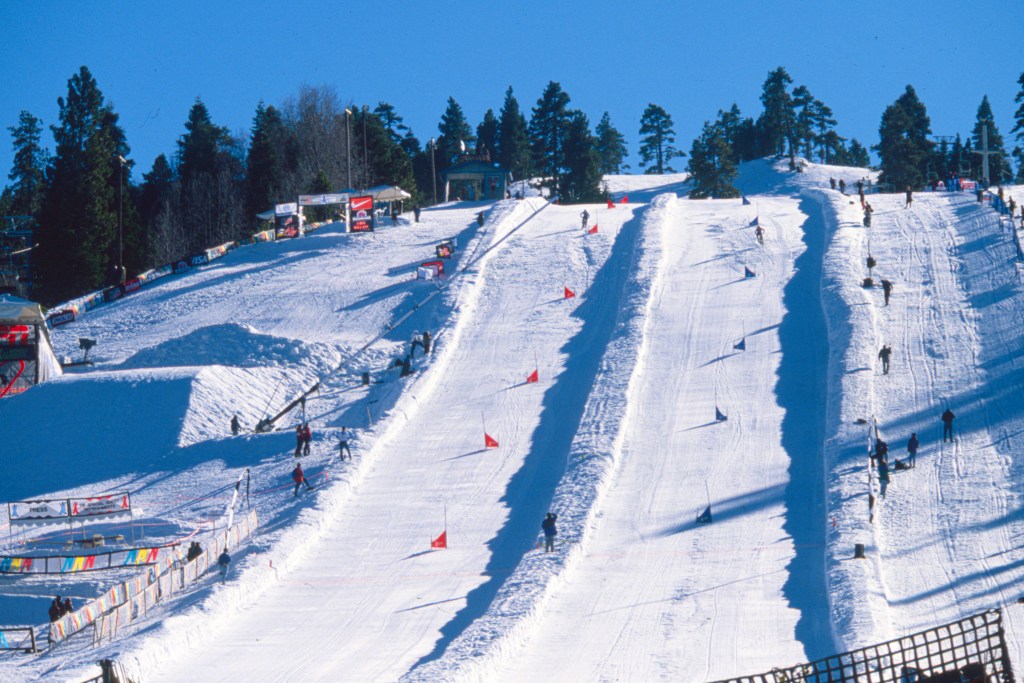
Bear Mountain and Snow Summit are two distinct ski experiences just minutes apart. Think rails, jumps, and features for skiers and snowboarders who want to play at bear Mountain.

Or stay In…

And then there is the other path, which I will be completely honest about: for the overscheduled, the overextended, the quietly depleted; the most restorative thing Big Bear offers has nothing to do with activity. It is the elegant, almost countercultural act of stopping.

A fire going, a warm beverage and a book that has been sitting on your nightstand untouched for three months. The kind of vast, velvet quiet that Big Bear Lake specialize in. An unobstructed Milky Way waiting for you when you step outside after dinner.

This is luxury in its most evolved form. Both Sessions Retreat and The Burgundy Inn are designed for exactly this kind of day. Spaces that hold stillness rather than disrupting it, where the entire atmosphere quietly insists that whatever felt urgent this morning can wait until Monday.

The Full Experience: VIP Add-Ons Worth Knowing About.

  • For the Foodie: Private chef experiences and mountain-to-table dining delivered directly to your property.
  • For the Restorative: Mobile spa services, including massage and recovery, or sound bath practitioners for your group retreat.
  • For the Athlete: Personal training sessions at the High Altitude Training Center and private trail guides who know the hidden terrain.
  • For the Senior & Family: Door-to-door ski equipment delivery and pickup, ensuring you never have to haul heavy gear through the snow.

What Restoration and Values Aligned Travel Actually Looks Like.

Wellness isn’t a buzzword when it’s this specific. It’s a tangible result you will carry home in your bones. Let them know what you’re dreaming about and they will build the itinerary.

Perhaps most importantly, choosing these properties represents a value-aligned decision. They support local community rather than faceless corporations. They offer meaningful experiences in an authentic destination rather than generic luxury in an interchangeable resort. It isn’t marketing or a mission statement. It’s how they live.


Contact me today to craft your personalized travel experience. With exclusive local partnerships, insider itineraries, and seamless logistics, I’ll transform your destination into your next unforgettable reality. Reach out to me at the email below. Alternatively, complete the form with your dates and interests for your (and or your loved one’s) upcoming trip. These memories will warm your heart for years to come.

Complete the form below for more information about booking your trip, or email me at Contact@luxetravelpartner.com. You can also find more information about my agency at www.luxetravelpartner.com

A Big Bear Getaway: Nature, Luxury, and Restoration. Read More »