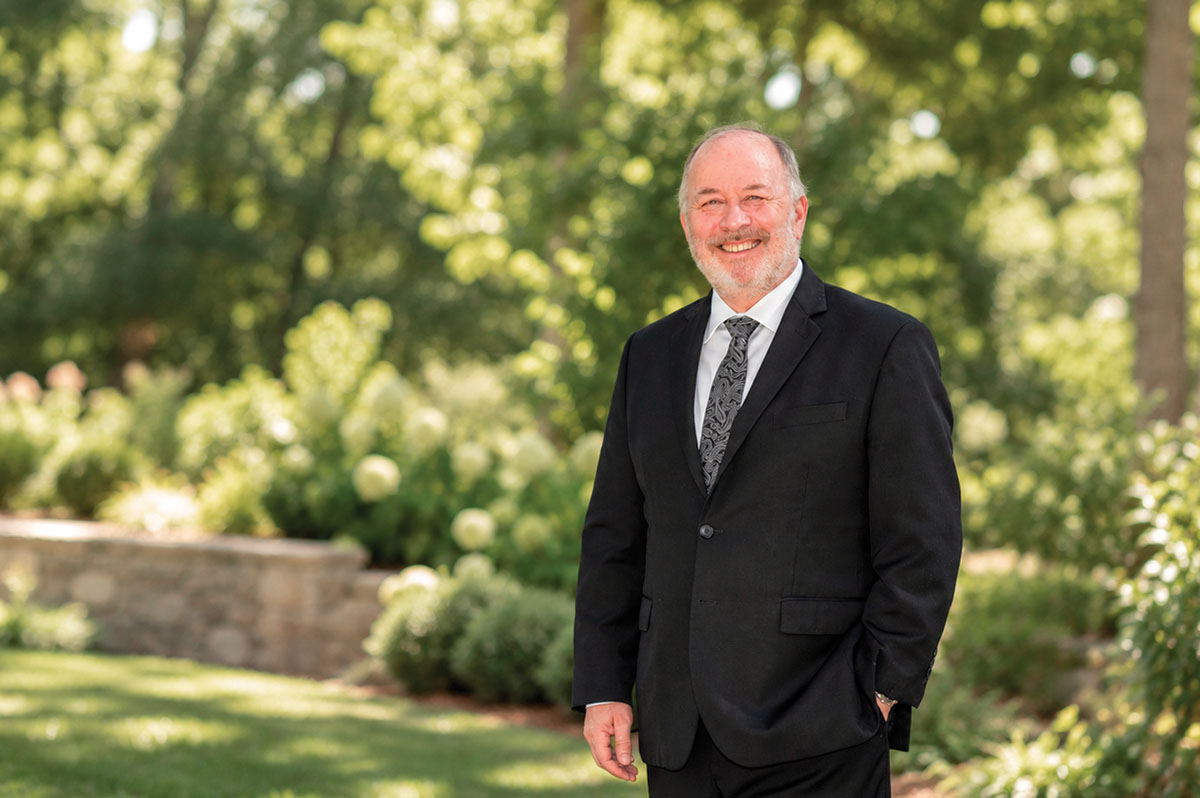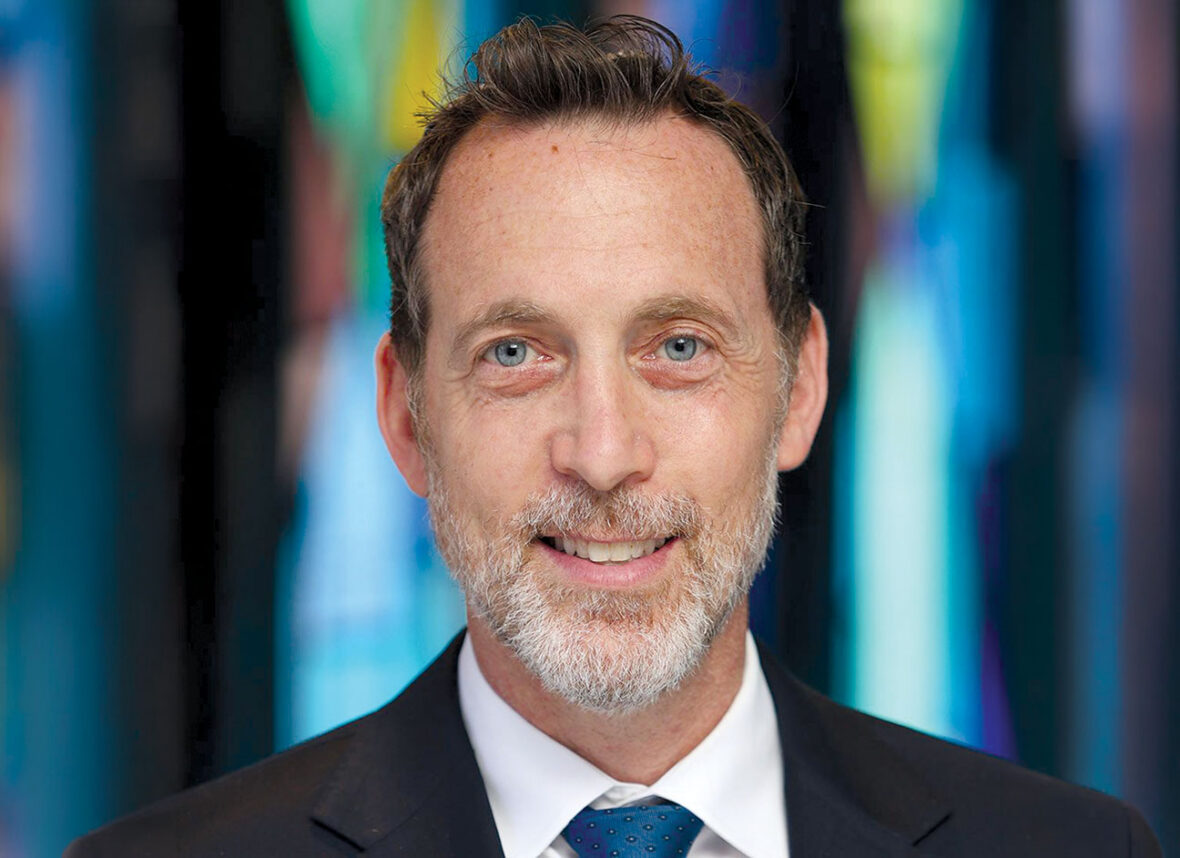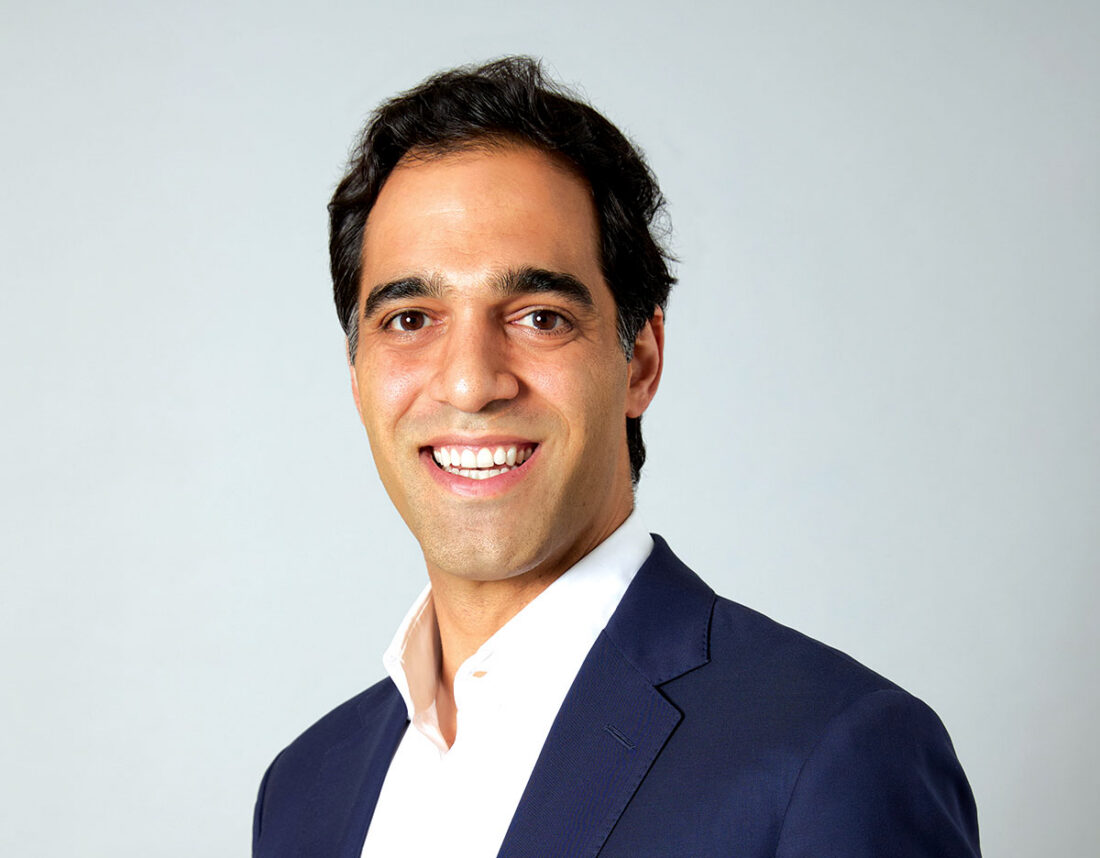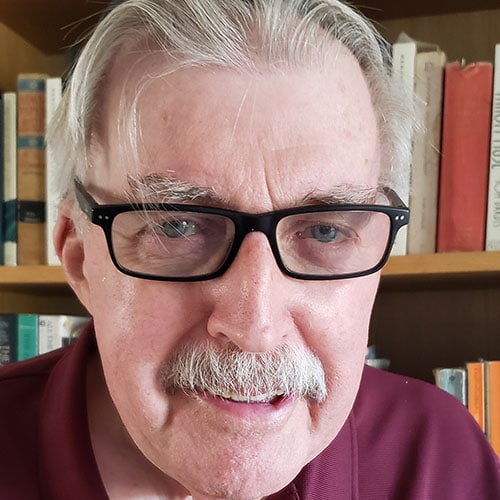

As he celebrated his fourth anniversary of leadership at Beth Shir Shalom, Rabbi Alex Kress beamed. It’s a look of happiness mixed with the well-earned pride of a man who has faced personal issues, but is exactly where he wants to be.
It didn’t always feel that way.
The Philadelphia native was ordained at Hebrew Union College in Los Angeles. His first job, on New York’s Long Island, was a bumpy experience. “You come out of school as an idealist,” Rabbi Kress said. “You want to implement your big ideas.” But when he tried, the senior rabbi instantly squelched it. “This is what we do here,” he was told. “We are not looking for new things.”
That job did not last long. Moving back to Los Angeles, he said, was “particularly attractive coming back from that experience. … “I had lived a Jewish life here that was vibrant, constantly evolving. I was seeking new iterations. I wanted to find a (pulpit) job here.”
Finding no openings, he spent a couple of years at UCLA Hillel, which he called “a great experience,” even though he started there around the start of the COVID pandemic. About the same time, Rabbi Kress was diagnosed with testicular cancer. He modestly described it as “a really crazy period.” He was cautious when discussing his prognosis. “I am still cancer-free at the moment although I am in surveillance and I still go for screening.”
He was still looking for a congregation. There were two shuls he turned his attention toward: Beth Shir Shalom and the Santa Monica Synagogue, where the rabbis were nearing retirement.
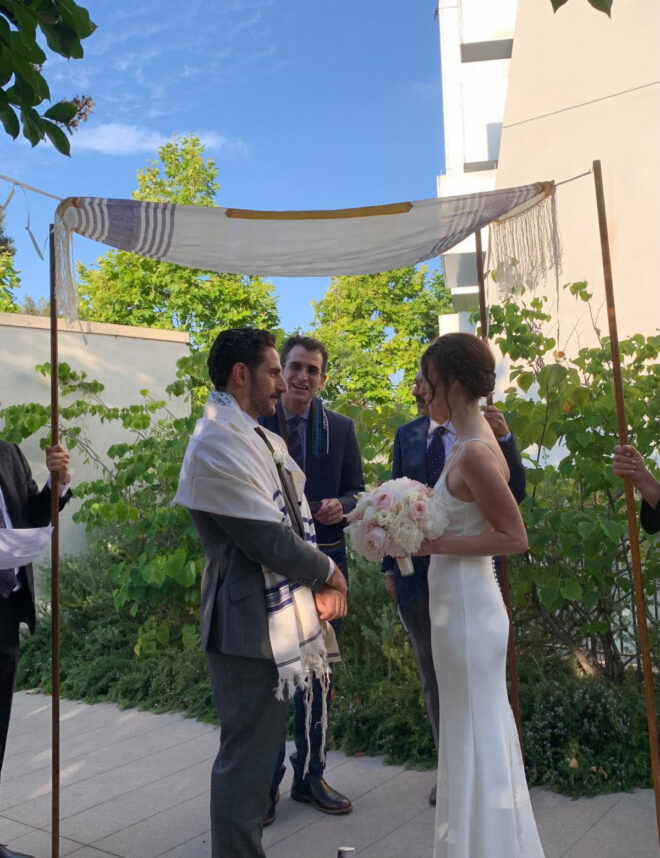
Beth Shir Shalom, which dates back more than 80 years, posted first. He immediately applied. “This place has been so wonderful, a blessing to me, so supportive of me when I have gone through cancer, gone through family struggles, all I have gone through. And I just got married on June 21. It’s amazing.” What impressed him most were the sense of community. Beth Shir Shalom, he said, “is incredibly down to earth. The people who come to Beth Shir Shalom are just caring of each other. I stepped into a community that really cared about each other. It seems we have attracted more people who just want to be in community. There’s not much pomp and circumstance. It’s made up of people – especially in the past couple years, since Oct. 7 – just wanting to be together.” Many in the congregation live within walking distance of the Santa Monica synagogue, and a lot who drive a decent way to come here.”
He feels a great sense of gratitude for the congregation “Stepping into a community like this, I didn’t know what I was stepping into. I got very lucky.”
“Some communities, he said, “can be judgmental – especially when a rabbi goes through life challenges, like divorce. I never felt that. They were so supportive. Life happens. One of my closest friends said ‘It’s okay for rabbis in the 21st century to have texture.’ I just love that. There’s a sense of rabbis being on a pedestal, being pure and perfect. I fought back against that before I was the rabbi who had the texture and the challenges.”
In his first few years at BSS, he said, “what people most connected to was vulnerability, sermons about going through divorce, sermons about making mistakes, about not being flawless, about not knowing everything, not knowing the path forward, just doing my best. That vulnerability really resonated.”
While his predecessor, Rabbi Neil Comess-Daniels, has been known for his outspokenness, Rabbi Kress is not – though he has explored the territory. Rabbi Kress was “very outspoken” when he attended UCLA. Beth Shir Shalom is a different experience.
Choosing his language carefully, he said “professionally, in a place like this where you are the only person, you are trying to rebuild and create trust. Today everything is political. You can’t say anything without offending somebody.” Often what you do say is not what they are struggling with but what you don’t say. “In many ways, the climate now is lose-lose,” said Rabbi Kress. “I appreciate anybody speaking out on anything because I know when they make comments, they will be attacked by somebody.”
Does that attitude influence Rabbi Kress’s sermons? “I would say I am not scared to speak up when I am rock-solid.”
A recent public incident sprang to his mind. “I upset some people when there was talk of President Trump ethnically cleansing Gaza,” he said. “I was among many rabbis who signed a letter that was headlined ‘Jews Say No to Ethnic Cleansing,’ and that ended up in The New York Times.”
That should have been “an obvious win,” he said. But the part he didn’t consider “was the people who sent it to me – whom I generally respect. They don’t have [malicious] intent toward Israel … I was standing up at that moment against my government doing something in a region that deeply impacted Israel and Gaza. I thought it would be horrible for the Jewish State, horrible for the Jews in America and immoral regardless of your religion.”
In this complicated moment with Israel, he tries not to be divisive from the bimah. “There is a famous saying about rabbis – afflict the comfortable and comfort the afflicted. I really have tried not to afflict. I have urged much more gently than afflicted in moral ways to move us.”
Reflecting on life inside the Jewish community, especially since Oct. 7, Rabbi Kress said that “divisiveness from the pulpit has resulted in an inability to create community. There’s no longer a tolerance for disagreement. It’s ‘I’ll find another shul.’”
At Beth Shir Shalom, they happily stay.
Fast Takes with Rabbi Kress
Jewish Journal: What was your favorite childhood experience?
Rabbi Kress: I grew up with the Junior Jewish Basketball League in an era of games being like 12-8. At the end once, I hit a buzzer beater to win for our side. That league was a wonderful safe space.
J.J.: What is your next goal?
RK: To be the home of Jewish life in Santa Monica.
J.J.: What is your favorite moment of the week?
RK: I say the priestly blessing over my (two) children, every week.