David Rubin, chairman of the board of Yavneh Hebrew Academy in Hancock Park and president of YULA girls’ high school, pleaded guilty in federal court in New York on Dec. 30 to wire conspiracy and fraud involving proceeds from municipal bonds. Beverly Hills-based CDR Financial Products, which Rubin founded and runs, pleaded guilty to related antitrust charges.
Rubin, 50, could face a sentence of up to 20 years in prison and millions of dollars in fines. CDR could face a fine of $100 million. Rubin will be sentenced April 27.
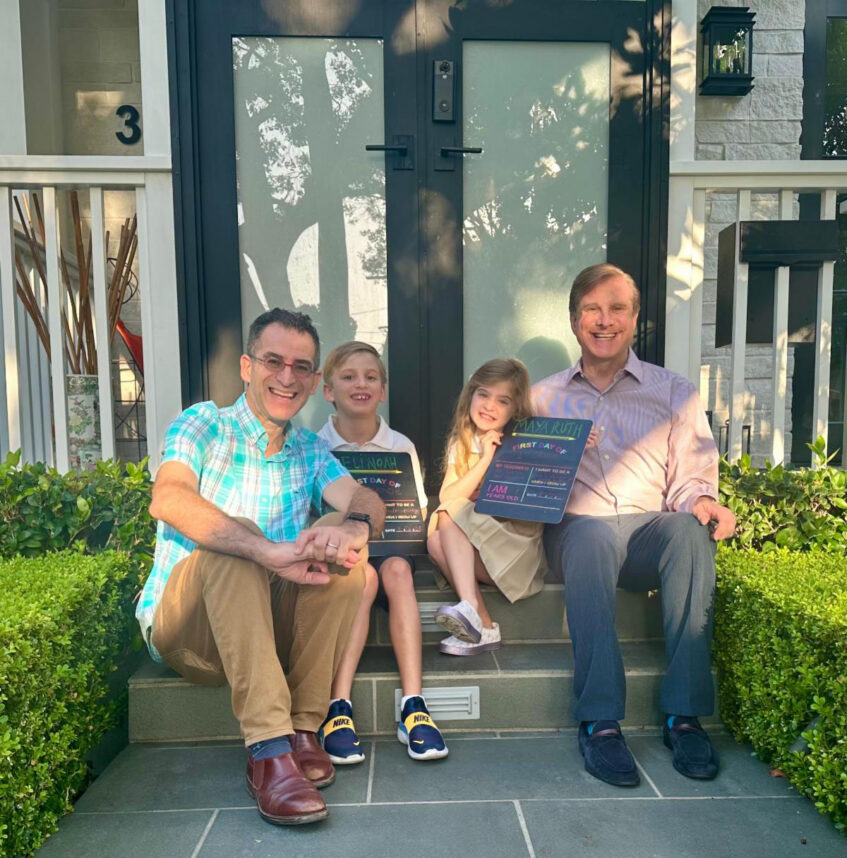
Rubin had been scheduled to go to trial in New York on Jan. 3. He had asked U.S. District Judge Victor Marrero to delay the trial so he could care for his wife, Gitel, who has pancreatic cancer. The Rubins, who live in Hancock Park, have seven children, ranging in age from 2 to 24.
When the judge denied the request for a continuance and Rubin lost that motion again on appeal, Rubin opted to plead guilty so he could be home focusing on his family rather than in New York for the trial.
According to a close friend who declined to be identified, Rubin has maintained his innocence throughout the legal proceedings, and had wanted to stand trial to fight the charges. But friends and family convinced him to agree to a plea that will likely keep Rubin out of prison.
At the end of the hearing, when the judge wished Rubin’s wife well, Rubin burst into tears, the friend said.
CDR had developed a niche as a broker helping state, county and local agencies invest money raised from bonds.
In pleading guilty, Rubin admitted that, from 1998 to 2006, his Beverly Hills-based firm awarded lucrative contracts to investment management firms that paid CDR. Prosecutors said CDR did not run a fair, competitive bidding process, but instead channeled information that would aid money managers who paid to play, according to the Department of Justice. CDR also solicited intentionally losing bids, and signed certifications that contained false statements regarding whether the bidding process complied with relevant Treasury Department regulations, according to a statement from the Department of Justice.
The actions cost taxpayers money because the contracts did not always go to the firms that would offer the best returns, according to the Justice Department.
Rubin’s attorney could not be reached for comment, but Rubin’s friend said the case is complex and involves a government sweep of an industry that for years has been operating according to widely held practices.
Rubin had been confident he could beat the charges, the friend said.
Rubin, along with Zevi Wolmark, the former chief financial officer and managing director of CDR, and Evan Zarefsky, a vice president of CDR, were indicted in October 2009. Wolmark and Zarefsky began trial on Jan. 3.
“Mr. Rubin and his company engaged in fraudulent and anticompetitive conduct that harmed municipalities and other public entities,” said Sharis A. Pozen, acting assistant attorney general in charge of the Justice Department’s Antitrust Division. “Today’s guilty pleas are an important development in our continued efforts to hold accountable those who violate the antitrust laws and subvert the competitive process in our financial markets.”
Rubin is the 10th individual to plead guilty in an ongoing federal investigation into the $3.7 trillion municipal bonds industry, under President Barack Obama’s interagency Financial Fraud Enforcement Task Force that coordinates the efforts of the Department of Justice, the FBI and the IRS.
So far, the Justice Department has filed charges against 18 former executives of financial-services firms. With Rubin, 10 have pleaded guilty. JPMorgan Chase, USB, Wells Fargo and GE have paid $743 million in restitution and penalties.
Rubin has donated hundreds of thousands of dollars to Democratic candidates in the past decade. He was a fellow of the Wexner Heritage Foundation in the late 1990s and has been an activist and philanthropist in the area of Jewish education. He was the driving force behind moving Yavneh into the former Whittier Law School building on Third Street and Las Palmas Drive in 1998, and improving the school’s academic and religious standards. He also has been involved in revitalizing the lay leadership at YULA girls’ school. Friends estimate that over the last 10 years, he has given more than $10 million to Jewish institutions.