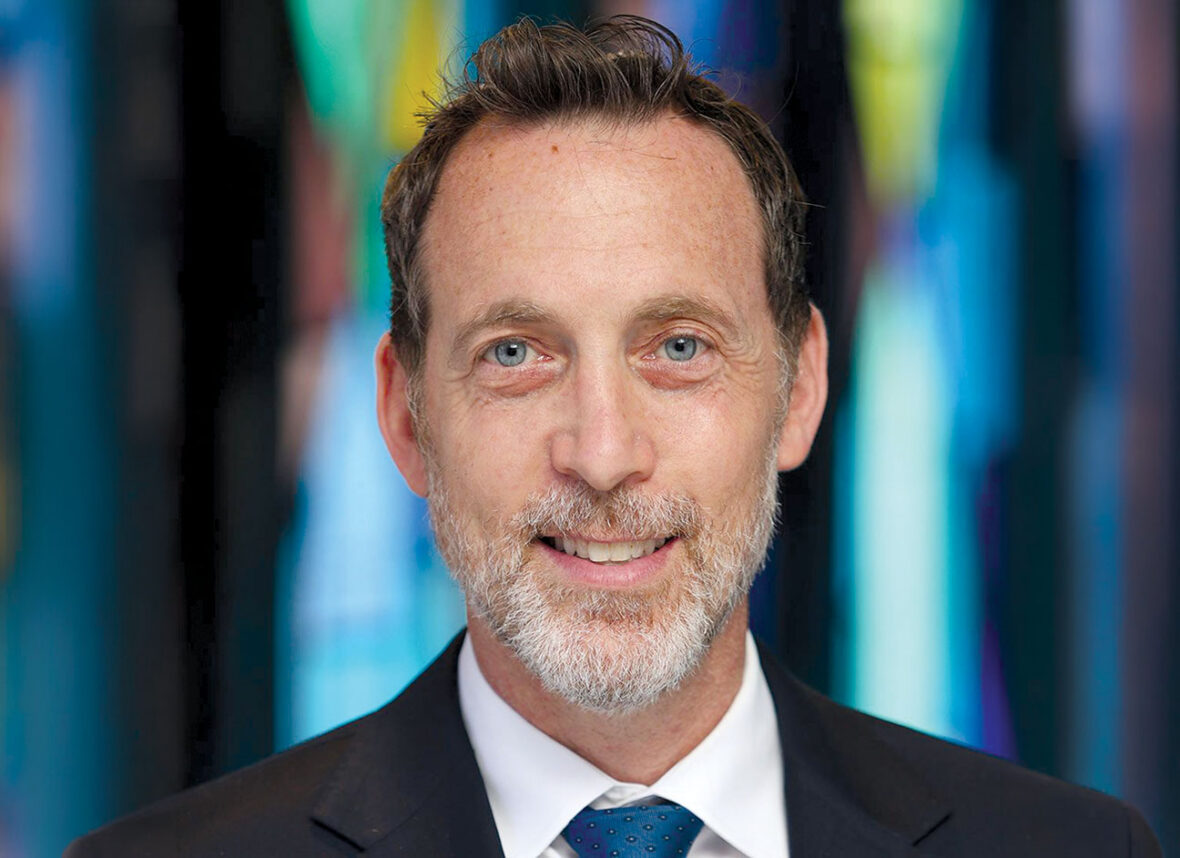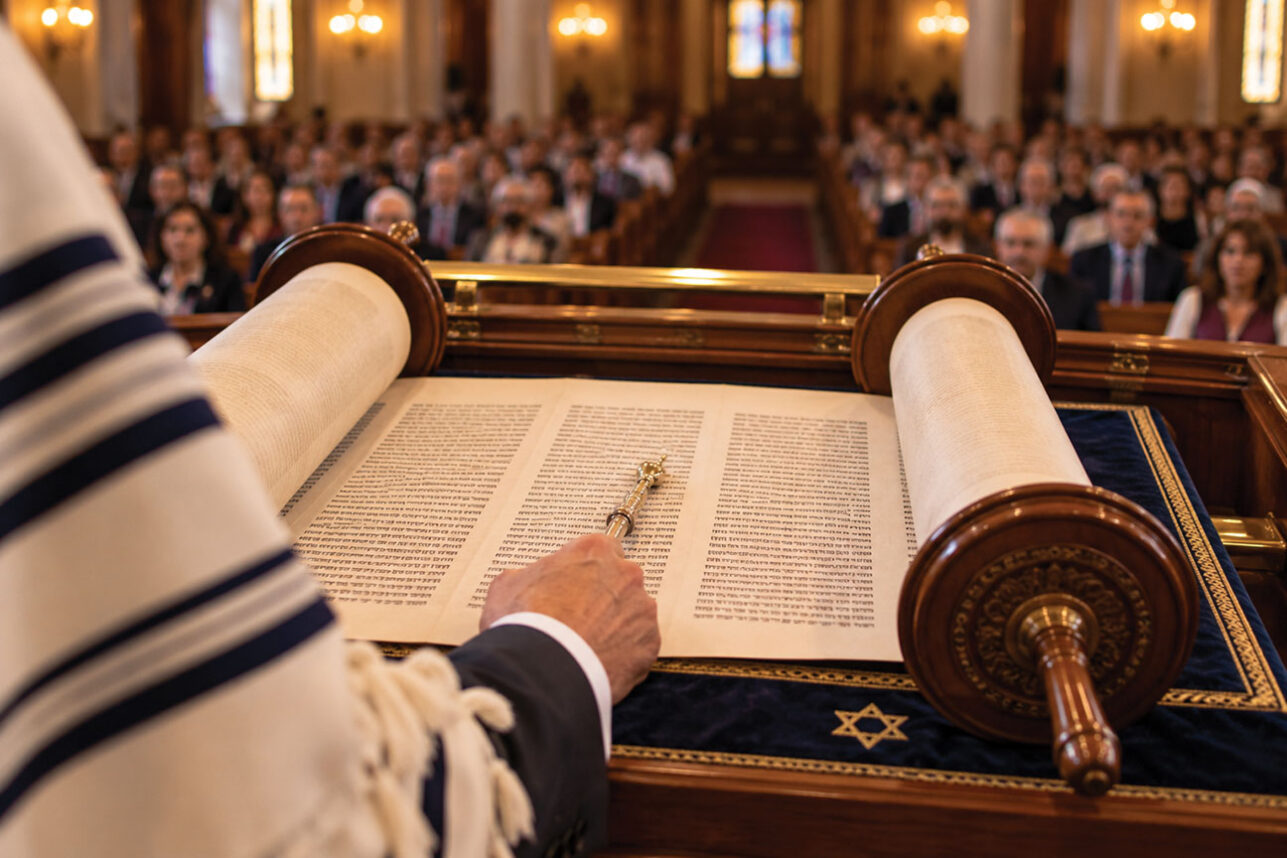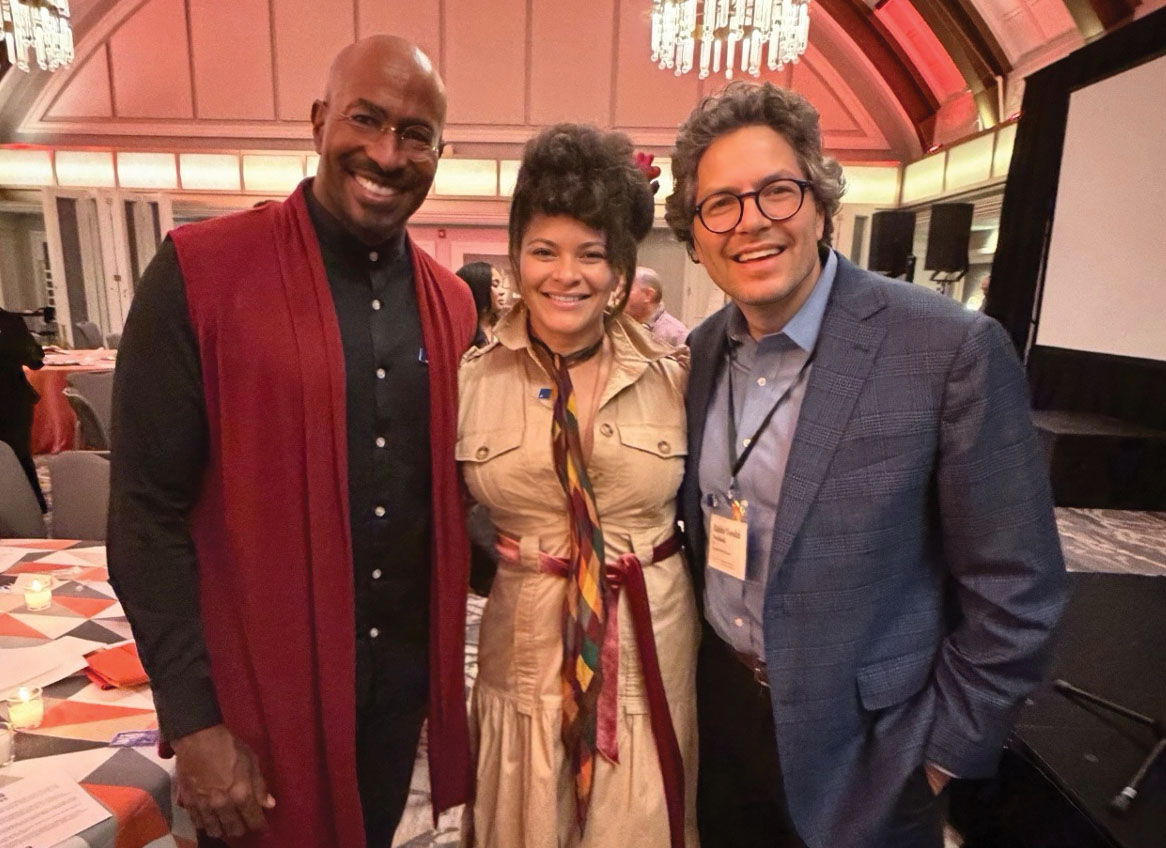

Rabbi Capers Funnye with Cantor
Judy Greenfeld, the founder and
spiritual leader of the Nachshon
Minyan.
Obama’s Rabbi Visits L.A.
The man whom many are calling “Obama’s rabbi” paid a recent visit to Los Angeles to pray with local Jews. Rabbi Capers Funnye Jr., cousin to first lady Michelle Obama and spiritual leader of Chicago’s Beth Shalom B’nai Zaken Ethiopian Hebrew Congregation, attended Encino’s Nachshon Minyan on April 4. It was a prescient invitation, since Funnye made national headlines the following day when he was featured on the cover of The New York Times Sunday Magazine. As in that article, Funnye shared with the community his journey from a disenfranchised African American Jew-by-choice to a nationally respected rabbinical figure. A frequent lecturer on conversion to Judaism, Funnye is spreading a message he hopes will unite all Jews of diverse origins.

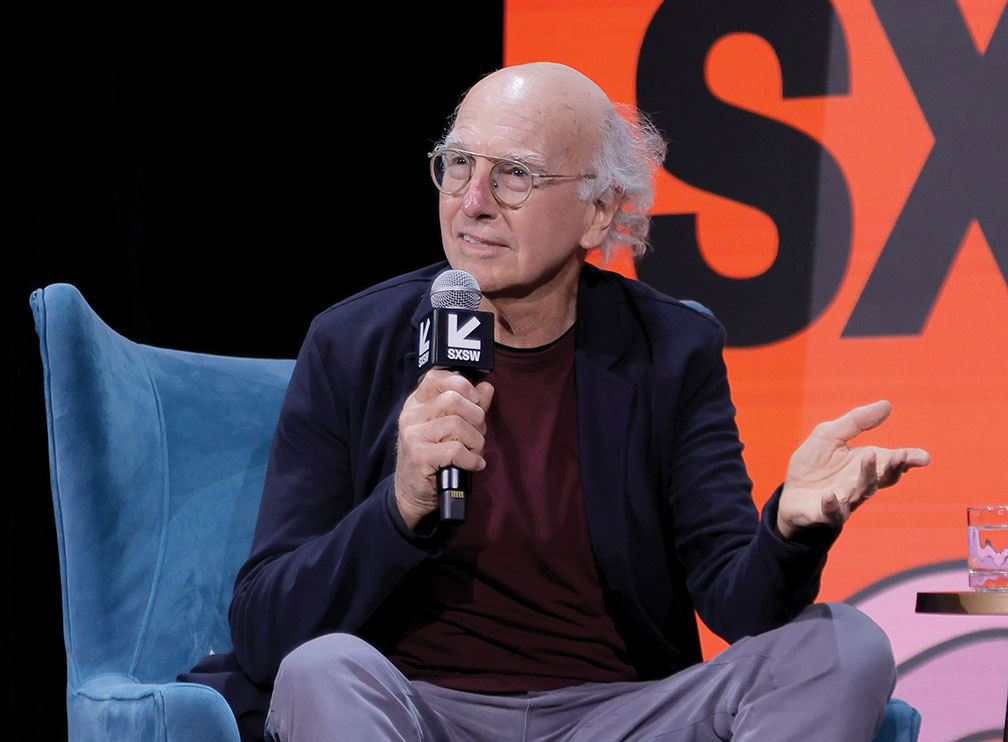
Robert Redford and Lee Bycel
Sundance’s Social Action Man
Fresh from his tenure combating global injustice with American Jewish World Service, former Hebrew Union College-Jewish Institute of Religion (HUC-JIR) dean Lee Bycel is turning to art. Well, sort of.
Bycel will assume the first-ever executive director position of The Redford Center, a public advocacy arm of Robert Redford’s Sundance brand, which along with the cutting-edge independent film festival will include a forum for social action initiatives. With Bycel at the helm, leaders and artists will collaborate in developing action-based solutions to the most compelling civic, environmental and social challenges. The center will be based in San Francisco, but will offer a wide range of events and programs hosted at the Sundance Preserve in Utah.
Prior to traveling to Darfur and Chad where he addressed issues of genocidal conflict, Bycel worked in other influential circles. He holds a doctorate of applied theology from the Claremont School of Theology, is an ordained rabbi and a graduate of the University of California at Berkeley. In Los Angeles, Bycel served as HUC-JIR’s dean for 15 years and was also president of The Brandeis-Bardin Institute. He was a senior adviser of Global Strategy for the International Medical Corps and a senior moderator of Leadership Seminars at the Aspen Institute.
Upon Bycel’s appointment, Redford had encouraging words for him: “In Lee we have found a dynamic leader whose entire career has been devoted to community building and shaping programs that empower people to make social change.”
“I am particularly excited about the impact of his international and community experience and the global perspective as the center navigates the 21st century. Lee’s life work has shown he is not averse to risk or looking at new ways of doing things and that will serve us incredibly well,” the Sundance founder said.

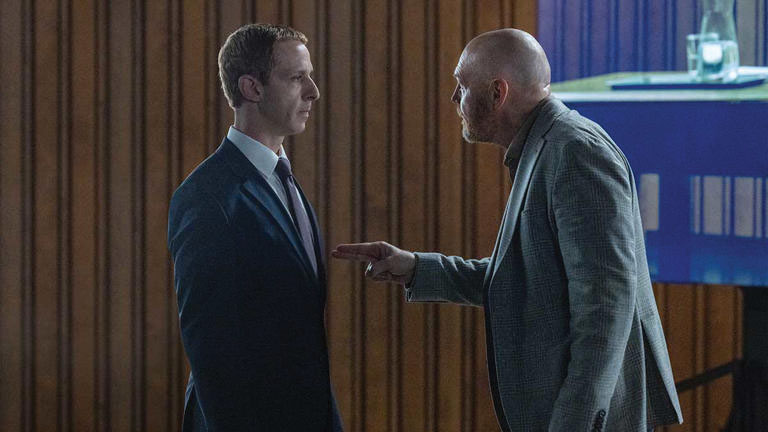
(From left) Steven Nichols, chair, Major Gifts;
Nicole Mutchnik, chair, Anti-Defamation League
Pacific Southwest Region;
L.A. Times columnist Tim Rutten;
and ADL Regional Director Amanda Susskind.

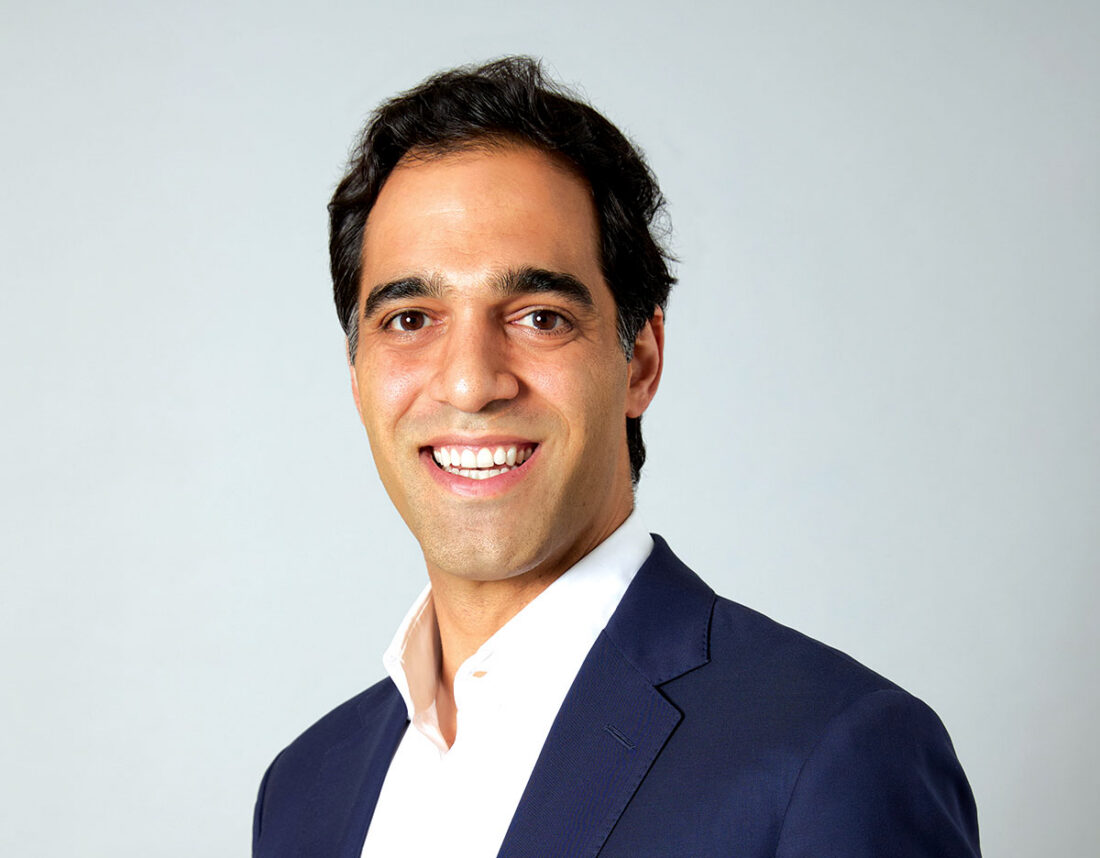
Shirley and Ralph Shapiro
Tim Rutten Lectures at ADL Briefing
The Anti-Defamation League invited their largest donors to a private briefing at the new Beverly Hills Montage Hotel in March. The topic? Judeo-Christian relations under Pope Benedict XVI, as demystified by L.A. Times columnist Tim Rutten, who lectured on the topic. Rutten was previously awarded the Anti-Defamation League’s annual First Amendment prize.
Hard Times Equal Giving Times For Shapiro Family
Despite economic hardships that have decreased otherwise ample portfolios, Ralph and Shirley Shapiro are giving — and giving big. In the past year, The Shapiro Family Charitable Foundation has donated more than $6 million to establish endowed chairs in the dental, medical and law schools at UCLA, the couple’s alma mater.
Last September, the Shapiros’ $1.5 million gift to endow a chair in public interest law helped launch the UCLA School of Law’s $100 million endowment campaign. In April 2009, the Shapiros pledged another $1.5 million for an endowed chair in honor of the law school’s current dean, Michael H. Schill. Last December, they committed $2 million to the Geffen School of Medicine and in March 2009, another $1 million to the Dental School in honor of its dean, No-Hee Park.
As UCLA leaders note, this kind of private endowment enables an institution like UCLA to operate at an optimum level even when higher education enrollment is down across the country.