While restaurants, hotels, and businesses have Yelp to rate them, the Rabbinical Council of California (RCC) is now being reviewed on a different type platform — Rate My Beit Din — and it may not be their favorite.
According to the app, the RCC in Los Angeles ranks among the lowest-rated rabbinical courts in the U.S. with average overall rating of two out of five stars.
A quick glance at reviews reveals that many users gave the Beit Din between one or two stars. Only 31% said they would recommend it, and 56% reported feeling pressured by the court to give something up.
“There needs to be a Beit Din in Los Angeles that is yashar [honest], one that seeks to make shalom between individuals and rules based on Torah values — not favoritism or financial motives,” wrote one reviewer.
Another shared: “They cater to the man. I was told I couldn’t bring anyone with me for support. They kept trying to convince me to agree to my ex’s demands instead of simply facilitating the get [Jewish divorce]. It was an awful experience.”
A third reported: “The rabbi was cold and unemotional to me yet kind and considerate to my ex-husband. I felt like he just wasn’t understanding how emotionally scary it is for a woman to go through.”
Orit, who asked to be identified by her first name only, is an Israeli-American who has lived in Los Angeles with her husband and children for nearly 20 years. She married in Israel but filed for divorce through the RCC five years ago — it took months for them to respond.
“They basically ignored me,” she said. “No one called me back, emailed or even sent a letter. Eventually, they told me they wouldn’t open a case unless both of us appeared before them. It took eight months to get my now ex-husband to agree to show up, but even then, the delays continued.”
Orit described endless bureaucratic roadblocks and poor communication with the rabbis. The person she credits for helping her is Esther Macner, a former senior trial attorney in Brooklyn’s Domestic Violence Bureau. After relocating to Los Angeles, Macner founded ‘Get Jewish Divorce Justice,’ a nonprofit organization dedicated to preventing get abuse.
“Thanks to her I was able to open a case in the Rabbinical Court in Israel,” said Orit. “She has connections with Jewish organizations that assist women like me—for free. I’m not sure I would have ever received my get otherwise.”
In an interview with the Journal, Macner explained the core issue: “If someone wants to get divorced in California, the Beit Din often tells her, ‘There’s nothing we can do unless the husband agrees, because he has to agree to it freely.’”
She added that many times, women are asked to sign binding arbitration agreements that award custody, finances, and other matters to the husband, just to obtain a get. “Otherwise, she remains an Aguna” — a woman chained to a marriage under Jewish law, unable to remarry, and whose children with another man would be considered mamzerim (illegitimate).
“Even if they’ve already finalized everything in civil court, the Beit Din can reopen the case and rule according to Halachah,” said Macner. “They don’t recognize marriage as an economic partnership, which is how civil law sees it.”
In response to these widespread issues, Shoshanna Keats Jaskoll of Chochmat Nashim announced the launch of the Rate My Beit Din website in May 2022.
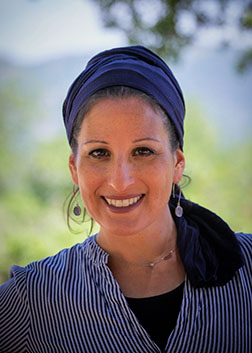
What had driven her was her own family’s ordeal. Her aunt was denied a get by a husband who refused to appear in court. “It took 14 years to free her,” Jaskoll said. “And in that time, I witnessed apathy, chaos and even malpractice,” by the Rabbinical Court.
That experience became a catalyst for change. Together with GettOutUK and the Organization for the Resolution of Agunot, Jaskoll created the Beit Din Experience Survey, gathering responses from nearly 400 individuals in seven countries. The data revealed many issues: long delays, unanswered messages, dismissive treatment and a complete lack of understanding about abuse.
Nearly half of respondents said the process harmed their mental health. Many were pressured to give up money, custody, or property to receive their get. “These statistics do not reflect the biblical call for justice,” she said.
To push for reform, Chochmat Nashim launched a public review platform where rabbinical courts are rated on transparency, professionalism, sensitivity, and responsiveness. Each court is evaluated, and the hope is that low-scoring courts will want to improve.
“The RCC has a particularly bad reputation,” said Jaskoll. “If the man doesn’t want to divorce, they won’t take the case. For a long time, they were the only option in California — and they left women with no recourse.”
“If you ask one of the Beit Din judges, they’ll often say something like, ‘What do you expect us to do? The man is refusing. Our hands are tied.’ But that’s an absurd response,” said Jaskoll. “What they can do is summon him to court. If he refuses to show up — that’s one thing. But if he does appear, the rabbis have an opportunity, a responsibility even, to speak with him and say: ‘It’s a Torah obligation for you to give your wife a get.’ And yet, they often don’t.”
According to Jaskoll, there are two main reasons for this inaction. “First, they’re afraid of exposing their own powerlessness. If they push hard and the man still refuses, it’s embarrassing — it proves their lack of authority. Second, they cling to the idea that a get must be given freely, but that concept is flexible. What does ‘freely’ even mean? A man can want to do the right thing deep down, but his yetzer hara — his evil inclination — gets in the way.”
She believes that rabbinical courts can and should exert moral and communal pressure. “No one is saying to force a get, but if a man refuses to give one, he shouldn’t be made to feel comfortable. They could say, ‘You’re not welcome in our synagogue.’ They could boycott his business. That’s not coercion — that’s a community standing up for justice.”
Jaskoll’s team hopes to contact each Beit Din and work with them to improve their score and practices. “Some of them don’t even have a website, a listed procedure, or clear fees. Imagine if courts followed up with users like hotels do and asked, ‘Did you get the help you needed? Were you treated respectfully?’ and so on.”
In an effort to prevent get refusal and protect spouses from becoming agunot (chained women), major rabbinical organizations — including the Rabbinical Council of America (RCA) — recommend that all couples sign a halachic prenuptial agreement before marriage.
The RCA has formally mandated since 2016 that any of its member rabbis who officiate a wedding must ensure the couple signs such prenup. This agreement, drafted by the Beth Din of America, imposes financial consequences on a recalcitrant spouse, thereby reducing the risk of get refusal. According to advocates like Jaskoll, implementing such agreements is one of the most effective tools to protect women, yet they are still not universally adopted.
To share your own experience or view ratings of rabbinical courts, visit chochmatnashim.org/rate-my-beit-din/