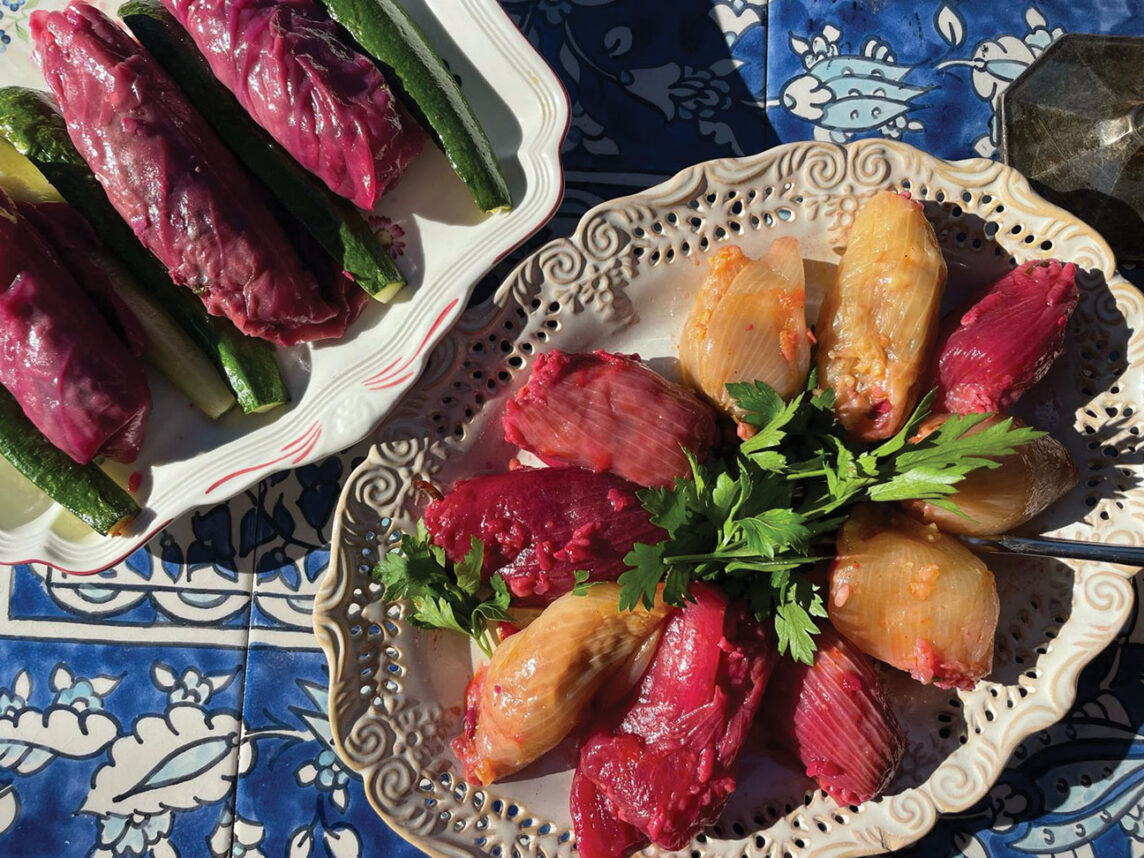
Attempting to fuse Jewish and Black culinary traditions, a menu at a recent community seder included za’atar-seasoned salmon, parsnip-and-potato kugel, brussels sprouts and carrots dressed in tahini and, for dessert, a challah bread pudding.
It was the inaugural “Soulful Seder,” organized by Challah and Soul co-founders Shonda Walkowitz and Judi Leib.
Conceived in 2021 as a one-off luncheon for Black and Jewish mothers, Challah and Soul one year later became a full-fledged nonprofit organization with a mission of reigniting the Black and Jewish alliance by highlighting shared experiences of oppression, resilience and social justice advocacy. The organization uses food and storytelling as a bridge-building tool.
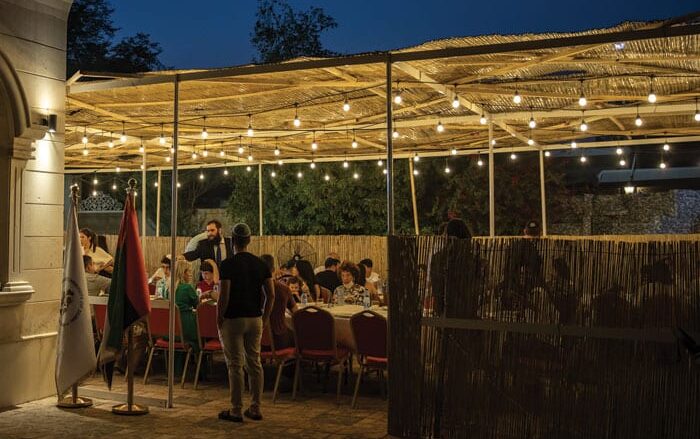
Held on April 8 at the Skirball Cultural Center, the “Soulful Seder” was full of both. The event celebrated the historic Black-Jewish relationship and the diversity of the Jewish world by featuring leaders from the Jews of Color community while offering a creative, pareve and tasty selection of Passover-themed bites.
The evening brought together more than 150 attendees.
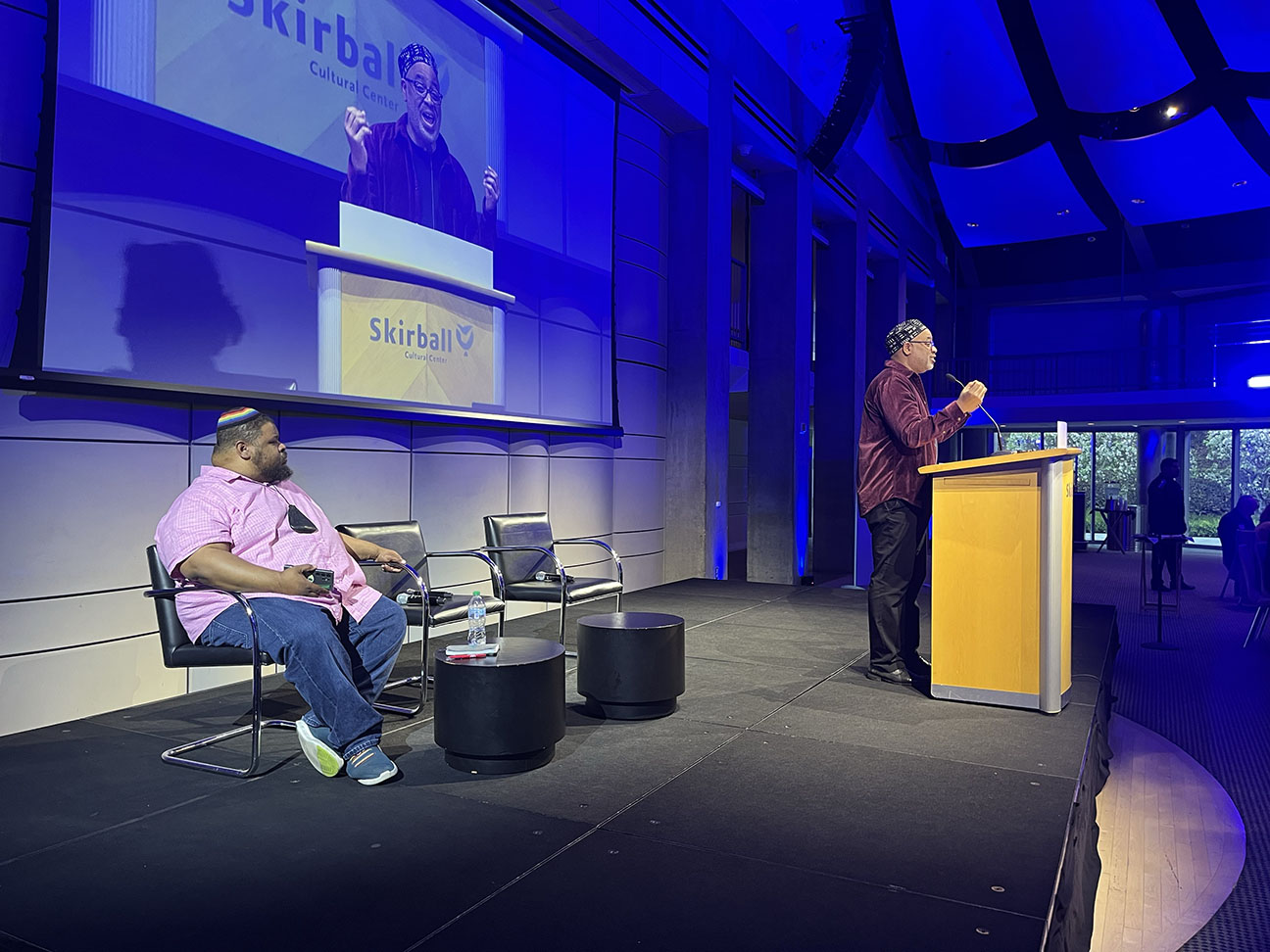
Speaking guests emphasized how the Exodus story resonates with both Jewish and Black communities. They included Michael Twitty, a Black American Jewish chef, as well as Adrian Miller, a non-Jewish and Black culinary historian who calls himself the “Soul Food Scholar”—Miller’s catchphrase: “Dropping Knowledge Like Hot Biscuits.” At the Skirball, Miller’s topic was “The Theology of Soul Food.”
During a panel discussion, Twitty and Miller spoke about their upbringing and the connections between culture and food. Miller discussed the ways he was influenced by his mother’s cooking. At church potlucks, he said, members of the congregation were always seeking out whatever dish his mother had cooked.
At one point during their panel, Twitty noted how unusual it was for two people of their backgrounds to be having such a conversation with one another.
“How many times have you seen a Black Jewish man and a Black Christian man having this dialogue?” Twitty, author of the award-winning memoir, “Koshersoul: The Faith and Food Journey of an African American Jew,” said from Skirball’s Ahmanson Ballroom stage. “You can thank Challah and Soul for that.”
Additional guests included Los Angeles City Councilmember Bob Blumenfield, who presented Walkowitz and Lieb with a certificate from the city. Offering brief remarks, the elected official from the San Fernando Valley, who is married to an African American woman from St. Thomas, said events like “Soulful Seder” reminded him of his own family seders.
Throughout the evening, clergy from the local community—including Calabasas-based Rabbi Paul Kipnes of Congregation Or Ami—recited the various blessings of the seder.
Additionally, Black Christian singer Bobby Newt performed the feel-good gospel tune,
“You are Enough.”
Midway through the program, writer, actor and educator Joshua Silverstein, an African American Jew, led the crowd in the reading of the Haggadah, which was made available as a digital download via a QR code displayed above the stage. The Haggadah was filled with images and anecdotes highlighting instances of Black-Jewish solidarity, including Martin Luther King Jr. and social justice icon, Rabbi Abraham Joshua Heschel, marching together during the civil rights movement.
Silverstein punctuated his presentation of the Haggadah with interactive prompts and writing exercises. One asked everyone to reflect about an ancestor who had done something that had made a resounding impact on their lives. Then, Silverstein asked participants to share about that ancestor with the person seated next to them.
Miller, the culinary historian, spoke with this reporter about how his late mother had always been his cheerleader.
Over the course of the night, the guests feasted on both bread and matzah; because it was held several days before the start of Passover, the evening wasn’t bread–free.
Each of the tables was decorated with a seder plate as well as an orange. According to several educational resources, it was Susanna Heschel, feminist scholar and daughter of Rabbi Heschel, who introduced the concept of including an orange on the seder plate as a nod to gay and lesbian Jews. Historically, LGBTQ+ Jews were not accepted in the mainstream Jewish community, and the inclusion of the orange was a way of correcting that omission.
On Tuesday night, the “Soulful Seder” showed just how far the community has come in embracing the marginalized.