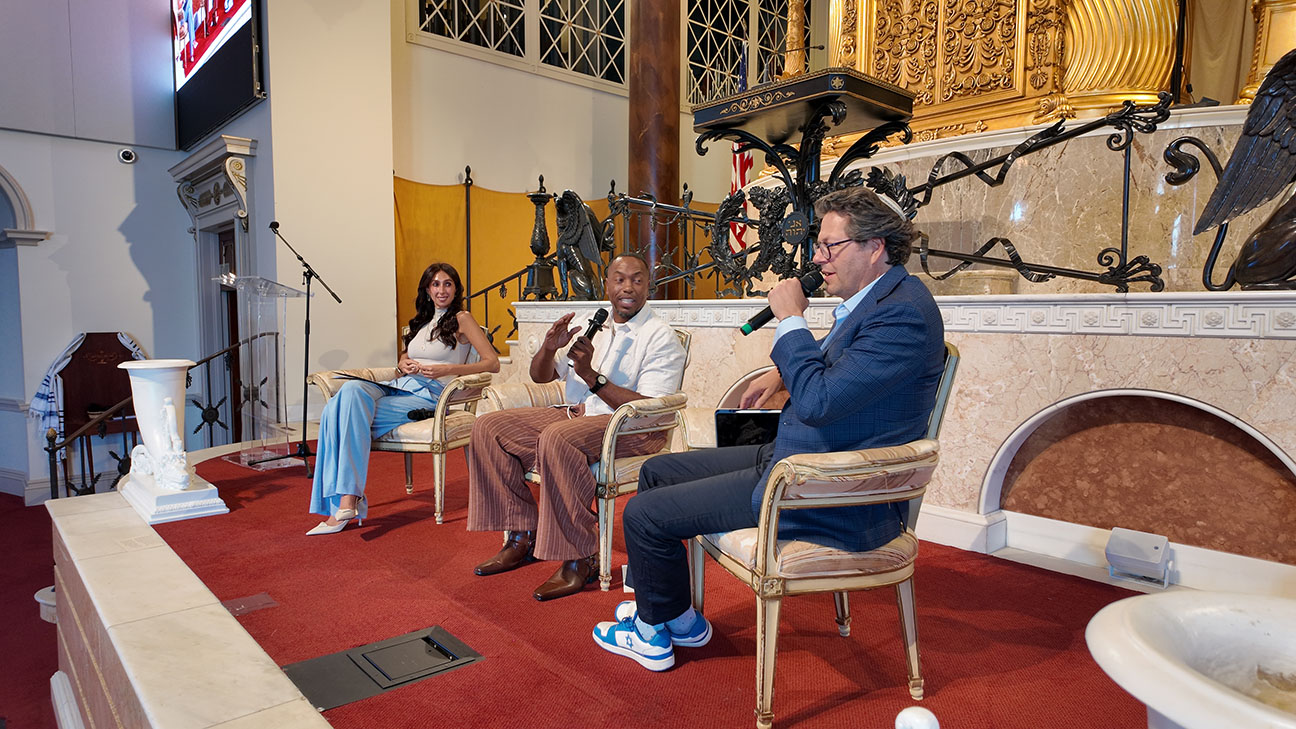
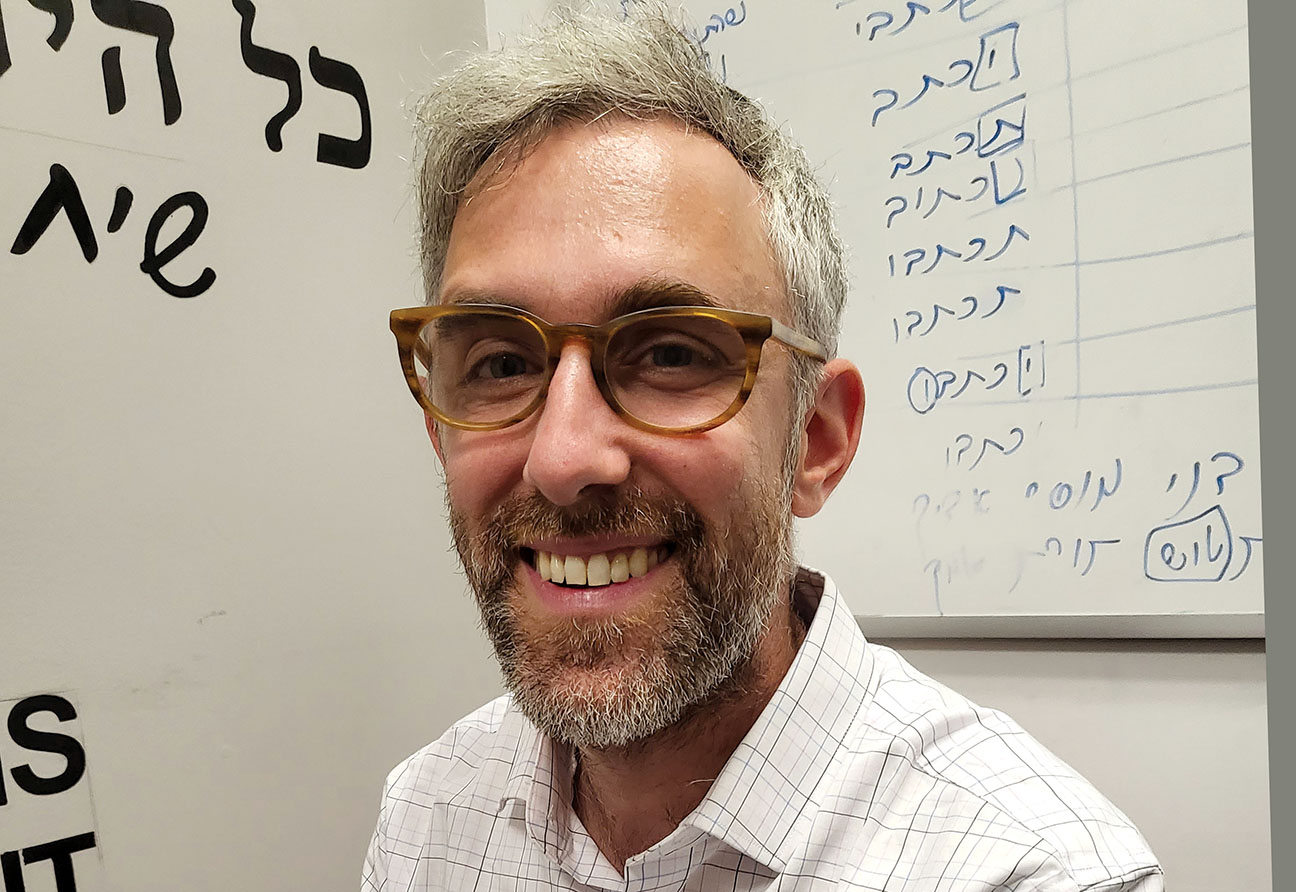
You can call David Stein B’nai David-Judea’s new assistant rabbi, but the only thing new is his title. The Chicago native has been a familiar face at the Modern Orthodox synagogue in the heart of Pico-Robertson, davening and teaching there for a dozen years.
That familiarity made the decision to take the position easy. “Earlier in my career,” he told The Journal “I worked in shuls, and it was hard for me because I didn’t know the people I was working with. What’s really special to me about B’nai David is that instead of being in a community where I don’t have relationships with people, this has been much more organic, much more natural.”
Since 2012, when Stein and his psychologist wife, Dr. Talya Stein, moved to L.A. from New York, Rabbi Stein has been building relationships and teaching at B’nai-David. And his new role does dovetail nicely with being the Dean of Academic Affairs at Shalhevet High School. What makes the two jobs particularly stimulating are the ways they complement each other.
“At B’nai David,” he explained, “there is no one particular topic or class I have, I have been able to do a whole range of roles and topics on issues that have come up. At Shalhevet, though, I play a more focused role, specific classes, specific administrative roles.” His unique value to senior Rabbi Yosef Kanefsky and the synagogue is that “I have been able to step into whatever the shul has needed.”
He places a great value on professional relationships. “When I came here to Shalhevet in 2012, I was working in a school where I got to watch kids grow up. I got to work with their parents. I got to help with the development and with the families, which is very meaningful.”
In 2015, Rabbi Kanefsky hired Rabbanit Alissa Thomas-Newborn as the first woman rabbi at an Orthodox synagogue in Los Angeles. After she moved east, the presumption was a woman would succeed her. Rabbi Stein said that “it was really just a conversation with Rabbi Kanefsky” that led to his hiring. “I knew the shul was looking for someone to help Reb Yosef. This is a big shul.”
Regarding the pursuit of a successor to Rabbanit Alissa, Rabbi Stein clarified that “my role is in addition to that, not instead.” He said that B’nai David’s ongoing search is for “a female clergyperson who can serve the needs of this community more broadly, and represent the leadership.” He left no doubt the synagogue is committed to finding a woman for that role. It’s not just desirable, but crucial.
“Certainly the shul and the community view the importance of female leadership, female scholarship,” he said, calling it “essential to our community.” The frum world is changing, he suggested. “We are living in a time where the Orthodox world is able to engage and have more of that.”
Turning back to his duties, Rabbi Stein left the window open wide. “My purview is to serve the needs in any way I can,” he said. “As the assistant rabbi, my primary role is to help Reb Yosef.”
This means he will be overseeing youth and teen programming, “especially because of my roles at the school. So many of our Shalhevet students and their families daven at B’nai David.” As Rabbi Stein noted, “there is a beautiful synergy here. I work and teach the students here at Shalhevet during the week, and on Shabbat I work with them in shul.”
“There is a beautiful synergy here. I work and teach the students here at Shalhevet during the week, and on Shabbat I work with them in shul.”
Asked about the recent protests in front of neighboring Adas Torah, Rabbi Stein chose his words carefully when discussing B’nai David’s position. “B’nai David does not just share a block with Adas Torah,” he said. “We share values with Adas Torah. We are one community with Adas Torah in the sense that our commitment is to Torah, to our heritage, to our tradition. On the one hand,” he said, “we share so much with shuls throughout the community — whether they are Reform Jews or kind of on the spectrum of Orthodoxy. It is important now that we share that.”
Was there an aha moment the rabbi experienced in recent weeks, realizing this was the time to embrace a new position? He smiled and exhaled. “There was an ahh moment,” said the rabbi, “in the sense that my connection to B’nai David and my relationships with the community have felt natural. I thought, ‘Ah, this is the right fit for me.’”
Then there are the dozen years of relationships “with the community and Rav Yosef. The Rav, Stein said, “has modeled for me what communal leadership looks like, the shul’s values I share as my own, the commitment to Torah learning, Israel and Zionism, mitzvot, halacha and also to engage in being open to a wider range of congregants.”
Joining the rabbinate was not initially Stein’s ambition; he wanted to be a mechanical engineer. What changed his mind? “I have grappled with that for years,” Stein said. “The two interests were kind of simultaneous. In high school I developed an interest in building and designing.”
As a college student in New York, Stein dealt with his both mechanical engineering desires and his religious life. “I spent a lot of time going back and forth from Columbia to Y.U. [Yeshiva University],” he said.
After he graduated, in his brief but worthwhile engineering career, he helped design what was then the greenest skyscraper in America. He found mechanical engineering was “not where my heart was … Much as I was able to do wonderful things in engineering, I learned I wanted my meaningful experience to be elsewhere.”
Taking it from a different angle, he said, “engineering is about having a vision, executing it. This is what I brought to my rabbinate, to Shalhevet and B’nai David.”
Fast Takes with Rabbi Stein
Jewish Journal: What do you do in your spare time?
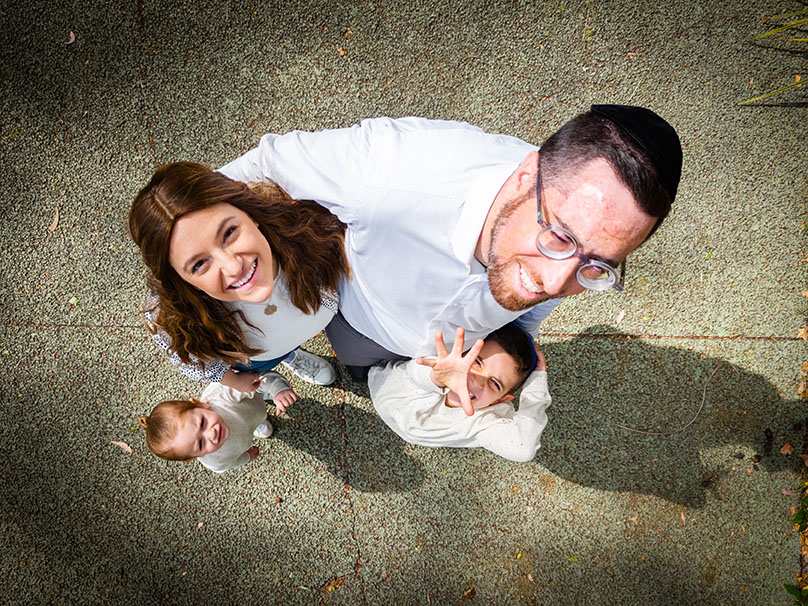
Rabbi Stein: I am blessed with three young children (12, 10, 7). My wife, Talya, is a psychologist. She matched out here for her internship, and if it weren’t for her, none of this would have been possible. We moved here from New York in 2012 when our first son was six weeks old. The move has brought us a lot of blessing.
JJ: Your favorite Jewish food?
RS: I like to make cholent. I really enjoy cooking although I am not as good at it as my wife is.
JJ: Your favorite place to travel?
RS: To be in Israel, anywhere in the country. Meanwhile, this summer, we are planning to take our kids on a road trip across America.