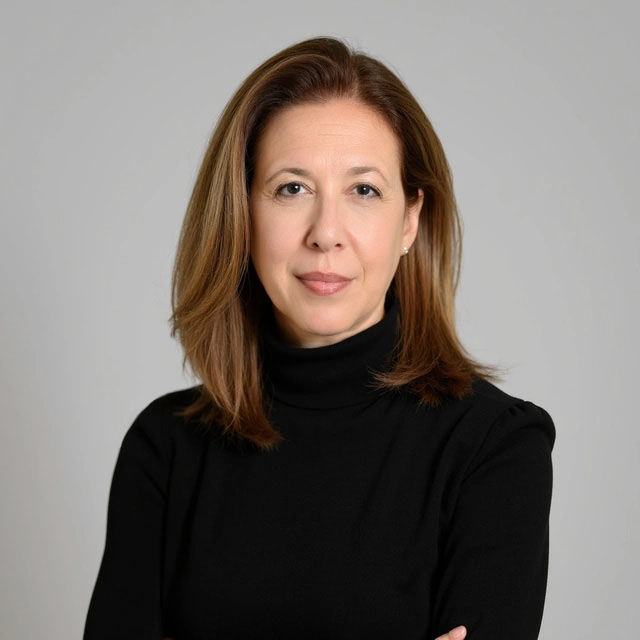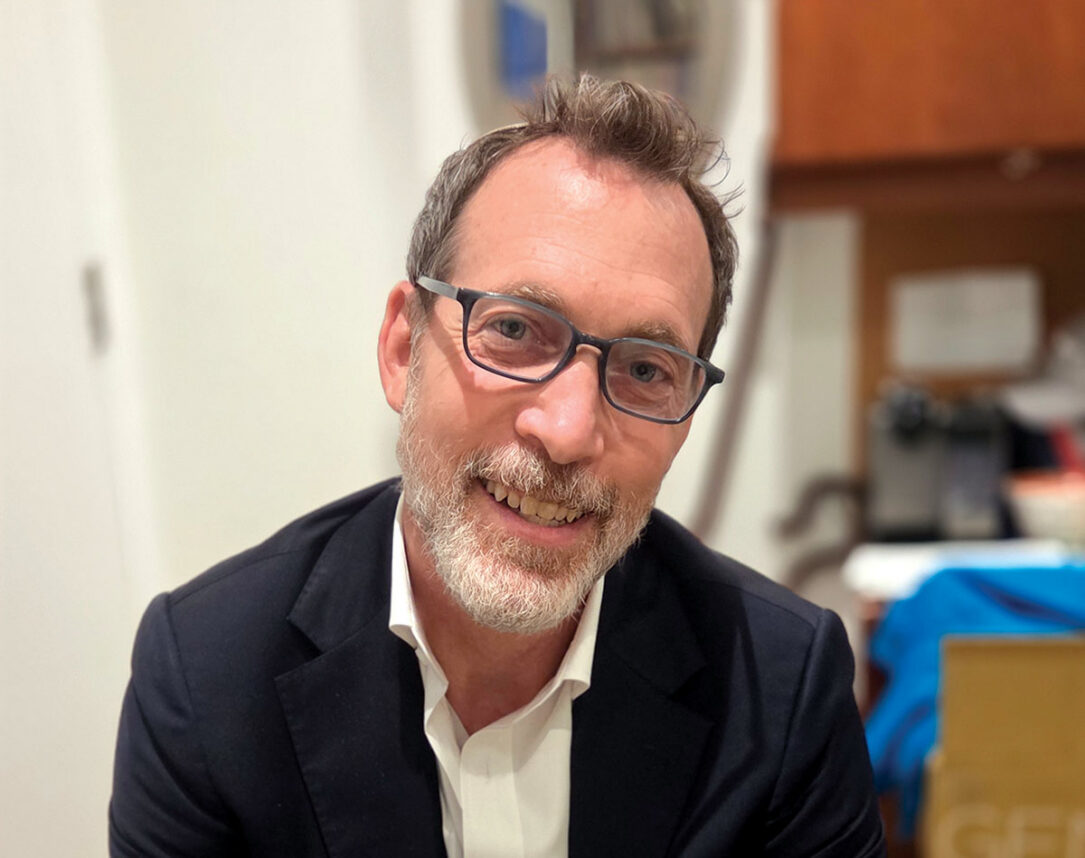
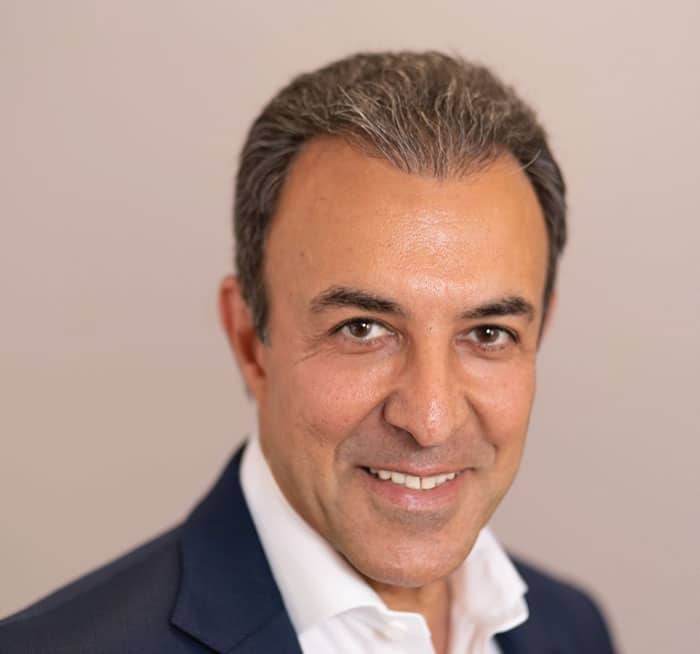
When David Nahai was growing up in Iran, people in his community would wash their faces in local bodies of water. They would then experience scarring as the organisms in the polluted water ate away their skin.
“The condition was so common that there was a name for it: salak,” he said. “Salak is a common skin disease in Iran that results from unsanitary environmental conditions such as polluted water.”
Even as a child, Nahai was concerned about what this meant. “It always struck me that this was a dereliction of duty on the part of the government,” he said. “There had to be a pact between the government and the people that at the minimum, they would be provided with a livable environment, like clean water and clean air.”
As Nahai got older, he became increasingly interested in the environment, reading about it at the British boarding schools where he was educated. “I came to learn more and more about what human beings were doing to the environment,” he said. “It fueled a passion in me to do my small part.”
Nahai took on work in the energy sector, and in 2007 was appointed the chief executive officer and general manager of the Los Angeles Department of Water and Power (LADWP), the largest municipal utility in the country.
While at LADWP, he made historic reductions in water consumption in L.A. With his team, he led a public education and outreach campaign asking people to cut back on their water consumption, and passed city ordinances like making it illegal for people to excessively water their lawns or for restaurants to automatically serve water to patrons.
“We’re nowhere near where we want to be, but we’re a little better than we used to be,” Nahai said. “We need to find new ways to reduce water usage. We can do more conservation and recycle our wastewater. Israel recycles 80 to 90% of its wastewater. We are nowhere near there. We can do more.”
Today, Nahai works as president of his own company, David Nahai Consulting Services, and his law firm, David Nahai Associates. He is also a board member at the Los Angeles Regional Water Quality Control Board, a position he was reappointed to by Governor Gavin Newsom in 2021. Newsom was the fourth California Governor to appoint Nahai to the board, where he was the former chairman.
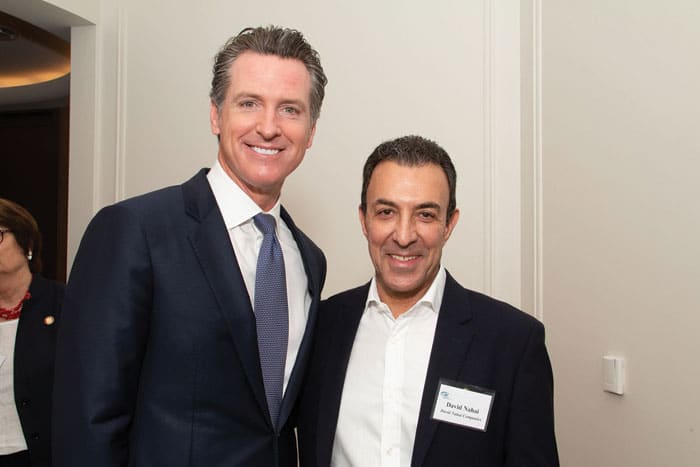
“Being on the board was a natural extension of what I wanted to do,” Nahai said. “It’s been a privilege for me to serve on it.”
Along with his public service on the board, Nahai is dedicated to the Jewish community. He served on the board of The Jewish Federation of Greater Los Angeles, The Jewish Community Foundation and The Iranian American Jewish Federation.
“It’s important as a Jew to be involved and ensure that we continue to keep our sense of community, our bonds and our Jewish identity,” he said. “Being involved gives me the sense that I’m giving something back. It keeps me connected and it’s very rewarding.”
“We have to go forth and do good in the world to save it.”
– David Nahai
He said that the concept of tikkun olam guides him in his work. “We have to go forth and do good in the world to save it,” he said. “As human beings, we have a responsibility to the world. We can’t pray for a healthier environment. We have to work for it. Our Jewish faith teaches us this. While faith and prayer are encouraged, action and work are what truly get things done.”
Nahai encourages people to take environmental issues seriously not only for the sake of the planet, but because it can benefit communities, too. He said that bad water quality disproportionately affects communities of color, and that if L.A. invests in sustainability, jobs will be created and it’ll spur economic activity.
“There are huge plusses to taking care of our environment from an environmental and economic point of view,” he said. “But we have a lot of work ahead.”
Still, even though things could always be better, Nahai doesn’t want others to feel like the small efforts they make every day are futile.
“There is so much we can do in our daily lives that when put together, can have a tremendous global impact.” – David Nahai
“Let’s not think that way because it leads to paralysis and apathy,” he said. “There is so much we can do in our daily lives that when put together, can have a tremendous global impact. I truly believe this.”