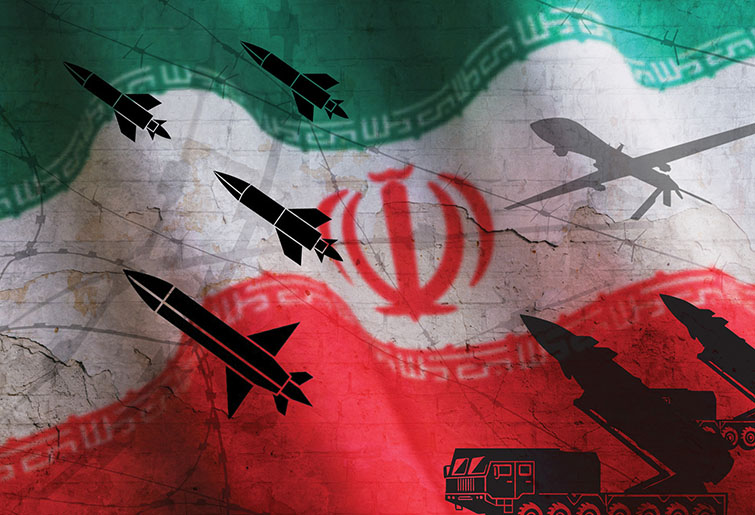
The Iranian Jewish community in Los Angeles is reacting to a U.S. intelligence report that Iran halted its nuclear weapons program in 2003 with emotions ranging from deep suspicion to utter disbelief.
A sampling of often-opposed activists in the largest Iranian Jewish concentration in the United States, who stay in constant contact with their former homeland and are familiar with the mentality of its leaders, yielded opinions that differed mainly in emphasis and nuance.
“People here were flabbergasted by the latest National Intelligence Estimate [NIE],” said Sam Kermanian, the veteran secretary-general of the Iranian American Jewish Federation. “The report gives Israel and the Arab Gulf States a lot more to be afraid of. These countries were looking to the American administration to keep forceful pressure on Iran, but that force has now been weakened.”
In addition, the report will give China and Russia an excuse to oppose, or go easy, on future economic sanctions against Iran, Kermanian warned.
“If you read the fine print, the NIE itself states that at this point, Iran could develop a nuclear weapon by 2010 or 2015,” he said. “That’s only a little more than two years away.”
Jimmy Delshad, mayor of Beverly Hills, noted that “I am very familiar with the culture of Islamic fanatics, and they believe that it’s perfectly all right to lie in order to get what they want. They have lied for 10 years, and I really don’t believe that their nuclear program is for peaceful purposes.”
Delshad pointed out that Iran has more than enough oil to meet its energy needs but has failed to build enough refineries to process the crude oil.
“If Iran needs more energy for civilian use, why go the expensive nuclear route instead of building more refineries?” he asked.
George Haroonian, editor of the Farsi-English Unity magazine, questioned the believability of the new intelligence assessment.
“If Iran doesn’t have a nuclear weapons program, why don’t they admit international inspectors?” he said. “The regime hasn’t changed. It is still supporting Hezbollah and Hamas terrorists, and it is still building ballistic missiles that can carry nuclear warheads.”
Frank Nikbakht thinks that the NIE is more of a political than an intelligence statement designed to convince Europeans that economic sanctions and other pressures forced Iran to discontinue its nuclear weapons program.
“But what we and the Europeans must realize is that Iran can resume its nuclear weapons development at any point,” said Nikbakht, who heads the Committee for Religious Minority Rights in Iran.