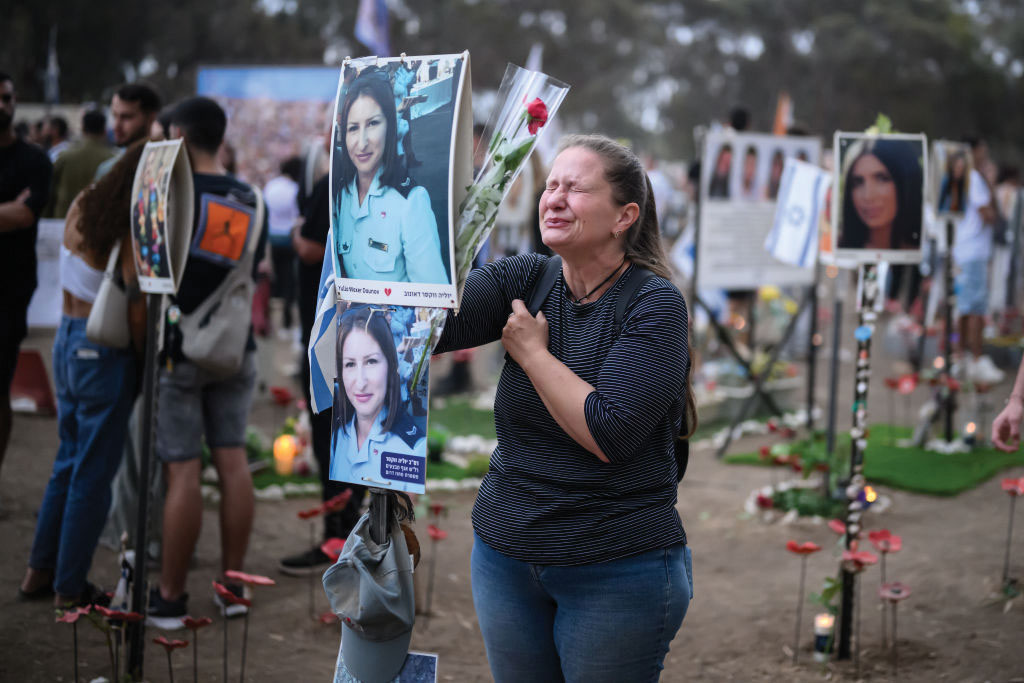
Armed with stacks of petitions and fueled by the anger and sadness he’s carried ever since his daughter, Robbyn Sue Panitch, was brutally murdered by a deranged, homeless man, 81-year-old Allan Panitch returned to Los Angeles recently to gather signatures for his campaign to block her killer’s parole.
“The pain is not so immediate,” said the Seattle resident. “But every time something triggers those memories, I start to hurt all over again. I just don’t think there’s any such thing as closure.”
These days, the trigger that re-ignites his grief is the thought that his daughter’s slayer, David Scott Smith, could soon be paroled as a result of hearings scheduled next week in San Luis Obispo. In February 1989, Robbyn Panitch, a 37-year-old psychiatric social worker, was stabbed 30-plus times by the psychotic Air Force veteran at her county Health Department office in Santa Monica.
The divorcee had been aware of Smith’s violent temper and had him committed for an evaluation. But L.A. County, facing heavy budget cutbacks in 1989, started closing facilities, and released Smith days before the attack.
Panitch was murdered at her desk, while talking on the phone to her fiancee, recounted her father.
“He heard the attack,” Panitch said of the fiancee. “He heard her shout, ‘No, David, no.’ And he heard her screams as Smith stabbed her. I can’t even imagine what he felt.”
At the time, the county’s mental health clinics had no meaningful security protocols. But after the murder, the county installed metal detectors and panic buttons and assigned guards. When Panitch was in Los Angeles handing out petitions to block the parole, he said he saw clinic security measures that would have saved his daughter.
Her former boss confided to him: “There would still be no security if your daughter had not been attacked.”
Smith pleaded not guilty by reason of insanity, but was found competent to stand trial and convicted of murder in February 1991. His sentence was 26 years to life.
Panitch said he and his wife, who died in 2003, went to court every day during the two-month trial.
“I felt so angry,” he said. “I was just glad I didn’t have a weapon with me.”
The murder and subsequent trial generated a great deal of publicity. The family’s suffering escalated, when the parents started receiving anti-Semitic hate mail at their Palos Verdes home.
One piece featured a swastika superimposed over Robbyn’s face and a picture of Smith in uniform. Under his picture it read, “David Scott Smith is an American hero the Aryan race can be proud of.”
The hate campaign continued for more than a year, and the Panitches finally moved to Seattle. The FBI opened an investigation; Panitch bought a gun for protection.
Ironically, the Panitches may have moved closer to the perpetrators. The hate mail ended after a bloody shootout between the FBI and an Aryan gang in Washington sate.
Smith’s first parole hearing is scheduled for Aug. 25. He’s being held at the California Men’s Colony, a medium-security prison in San Luis Obispo. Under state law at the time of his conviction, Smith must serve at least two-thirds of his minimum 26-year sentence, making him eligible for release in 2006.
The L.A. County District Attorney’s Office will oppose the parole.
“I believe that based on his crime, which was a particularly vicious, heinous and bloody murder, this individual is far too dangerous to be allowed back into society,” said David Dahle, head deputy of the District Attorney’s Office Lifer Hearings Program.
Dahle added that Smith has been receiving medication and attention by psychologists, but “he is still a real threat to kill again.”
Dahle said the hearing process is likely to be lengthy, explaining, “It’s broken into two parts. First, they will review the crime and his criminal record, his personal history and they will probably question him about those issues.”
In addition, he said, the board will review Smith’s institutional record, reports by staff and a mental health evaluation.
“They will also want to know what kind of plan he has to live, work and continue therapy on the outside, should he be paroled,” Dahle said.
Panitch has forwarded his petitions to the parole board. He’s also ready to appear in person.
“I’m going to tell the board how her murder changed our lives,” Panitch said. “I still see Robbyn’s ghost everywhere.”
Â