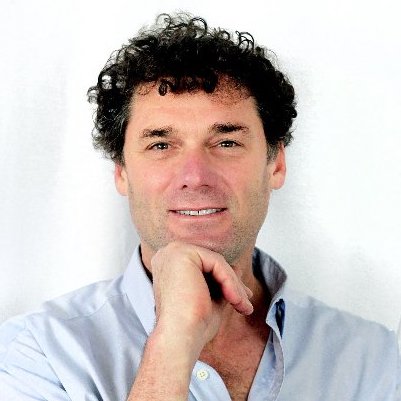
“Jews are just stupid. I’m telling you Rob, they’re just stupid.”
“Can I quote you on that, rabbi?”
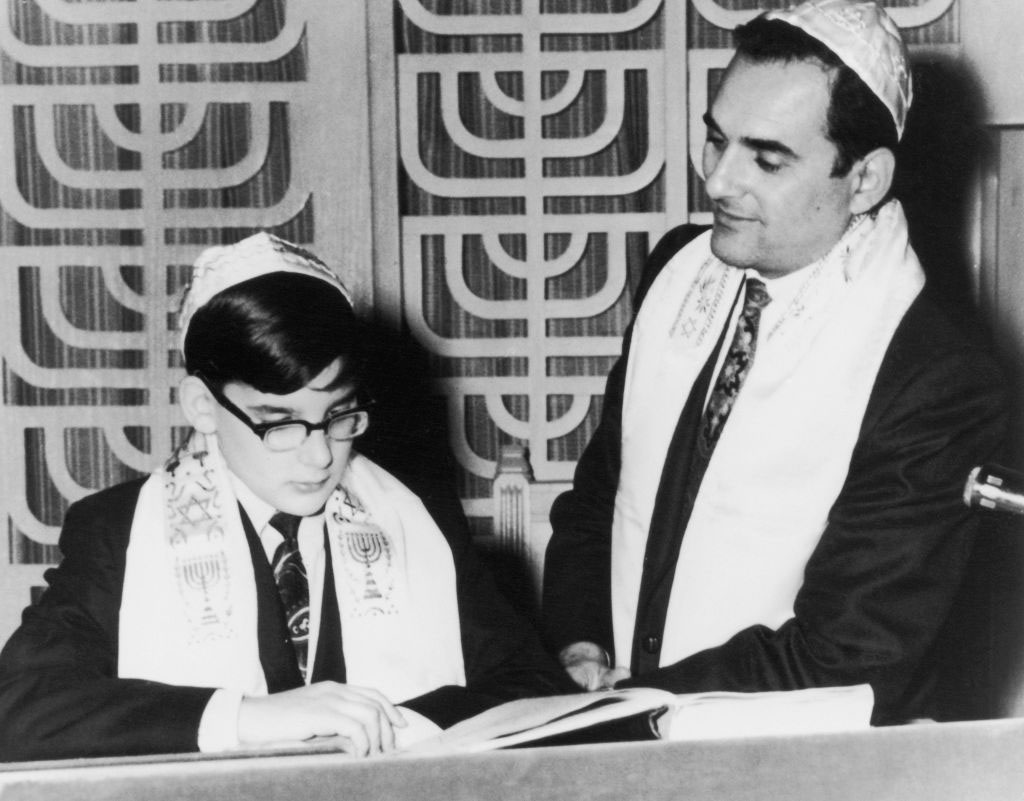
Rabbi Harold Schulweis hesitated a second, then said, “Sure, you can quote me.”
Of course, he wasn’t talking generally. Some of the rabbi’s best friends are Jews. He is passionate in his love of Judaism, second to none.
That’s why it sends him into a rage to see how the Jews — from the leaders of his Conservative movement to the man and woman in the street — deal with converts and the whole issue of conversion.
And he’s right.
At 81, frail of body but sharp-tongued and wise, Rabbi Schulweis has made it his mission to preach the gospel of conversion to the Jews. That is we, as individuals and as a people, must seek and embrace converts. Doing so will not only improve Jewish life but improve our own lives as Jews.
Here’s the second half of his quote:
“Jews are losing such an opportunity to enrich their lives,” Rabbi Schulweis said. “I want them to see the blood transfusion into the veins of the people. Converts are the most articulate and dedicated Jews I have met in a long time. For the life of me, I don’t understand why there should not be a proactive effort to accept converts.
“It’s a mitzvah to embrace these people.”
On June 1, Schulweis’ synagogue, Valley Beth Shalom (VBS) in Encino, held a Shavuot service welcoming converts within the community. The holiday has special meaning for converts. On it, we read the Book of Ruth, the story of a non-Jewish woman whose love for God and Torah led her to convert to Judaism.
To coincide with the VBS event, the synagogue created and distributed “Your People, My People: Journeys,” a 36-page booklet compiling the personal stories of 27 converts. I didn’t get to the service, but I did get the book.
What’s inside are the kind of heartfelt, moving stories of personal transformation that Oprah would kill for.
Cheryl Gillies had little religious upbringing and was out searching for a meaningful tradition when she read about the VBS outreach program. She walked in and found a tradition that matched her inner yearnings. “Judaism,” she writes, “places emphasis on the deeds and actions one performs in this world, and the accountability hit home.”
Chris Hardin fell in love with Jennifer Rea, who was studying for conversion at the time they met. He attended some classes with her and grew to feel he belonged. “Judaism,” he concluded, “is the best kept secret in the world.”
Elisabeth Kesten was raised a devout Protestant in Germany, the step-granddaughter of a concentration camp officer. As she read more about Judaism, she resisted the feelings that drew her toward it.
At 13, she decided to learn Hebrew; at 14, she was confirmed in the Protestant church. “Being Jewish didn’t seem like an option to me,” she writes, “but God wasn’t giving me the choice.”
She stopped going to church and joined the small Jewish community in Nuremburg. She informed her parents she was converting.
“A protestant evangelical minister told me I would go to hell for rejecting Jesus. I asked him if all Jews murdered by the Germans would go to hell. He said, ‘Yes,’ and I said, ‘Then I’ll be with them, and that would be fine with me.’ Only when I am Jewish,” Kesten writes, “am I truly happy.”
And yet … Jewish organizations and synagogues refuse to make conversion more of a priority.
There are several reasons Jews treat conversion like kryptonite, all of them bad. In Roman times, according to the historian Salo Baron, Jews who proselytized were beheaded. Under the Emperor Constantine, converts were burned alive. Eventually, their punishments became our aversion.
Today, with no such threats hanging over our heads, why do we still desist?
My guess is twofold: blatant ignorance and subtle racism.
In order to reach out to others, we must first know what we are talking about, and most of us don’t. Why be Jewish? What does it mean? What does it offer, and what does it require?
If only we could answer these questions for ourselves (go ahead, try it), much less discuss them with non-Jews.
Jewish leaders who oppose widespread conversion efforts often use this very reason: There is so much education to be done among our own, why go outside?
But Rabbi Schulweis has found that engaging his congregants in conversion efforts actually increases their own understanding.
“One cannot have outreach without inreach,” he said. “And you can’t have inreach without outreach. Jews can only learn when they can teach. The only way they learn is to do something with their learning. They have to discover what is so important about Judaism. Our outreach program complements our inreach program.”
The other barrier to such programs is nastier. Many Jews cling to their identity as a status marker — it makes them feel different and special. To admit the multitudes is, in their minds, to dilute the brand, to fling open the gates of the country club. This is a message too many Jews never fail to convey to spiritual seekers from other faiths.
“They are scared of us,” said Schulweis of those seeking to learn more. “They are scared of the synagogue, because they have been told to be a Jew is a racial matter. They’re told it’s a matter of birth, and you can’t come in, because you will not be trusted and not be embraced.”
Few groups are bucking this trend. A Web site — www.convert.org — exists to make it somewhat easier, and VBS is leading the way among synagogues.
At his shul, said Rabbi Schulweis, prospective converts “are overwhelmed by the greeting. They know the rabbis of VBS love these people.”
As for the critics who say VBS is wasting too much time and money on outreach: “When they became us,” said Rabbi Schulweis, ” they are no longer them.”
For information on how to receive a copy of “Your People, My People” e-mail Jane Jacobs at Valley Beth Shalom synagogue: < href="mailto:jjacobs1@vbs.org">jjacobs1@vbs.org