The morning I began to write this column, my son used the phrase, “Hello darkness, my old friend’’ while playing a video game. I asked him if he knew where it was from, and he shrugged. So I played the song “The Sound of Silence” for him. He tried to go back to playing the game, but the quiet beauty of Simon & Garfunkel’s 1964 song kept pulling him over. Listening to the words with him, I thought: Here’s an exquisitely beautiful dissection of the human condition — without a word of overt politicization.
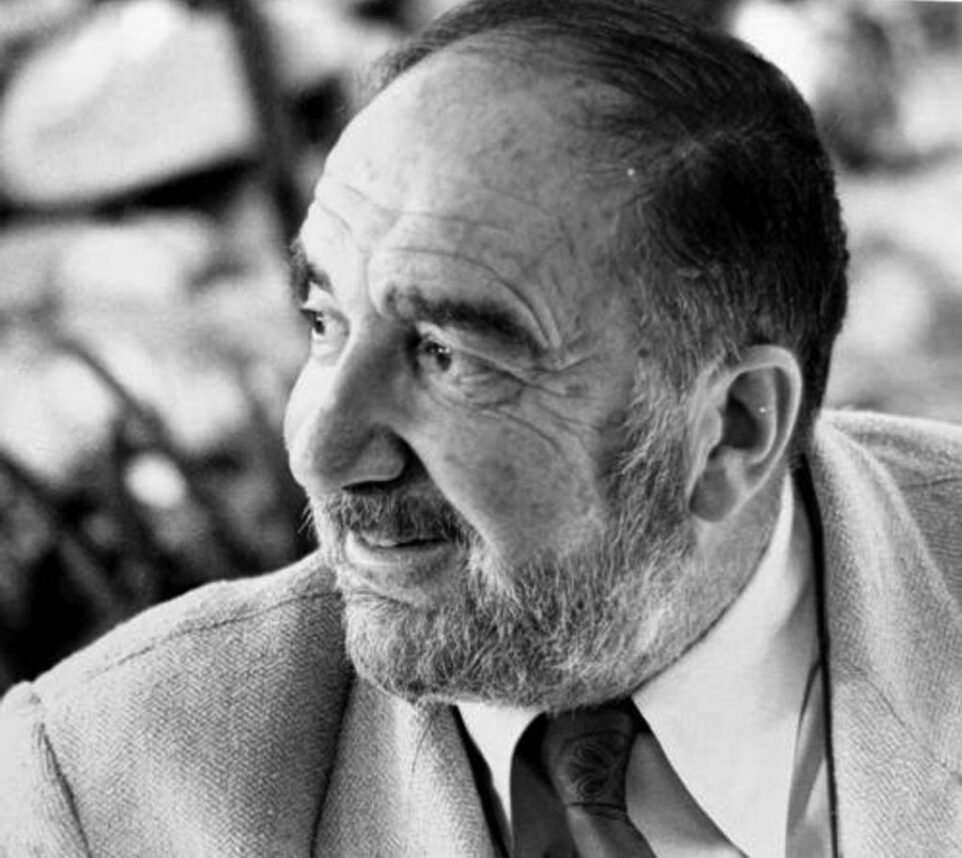
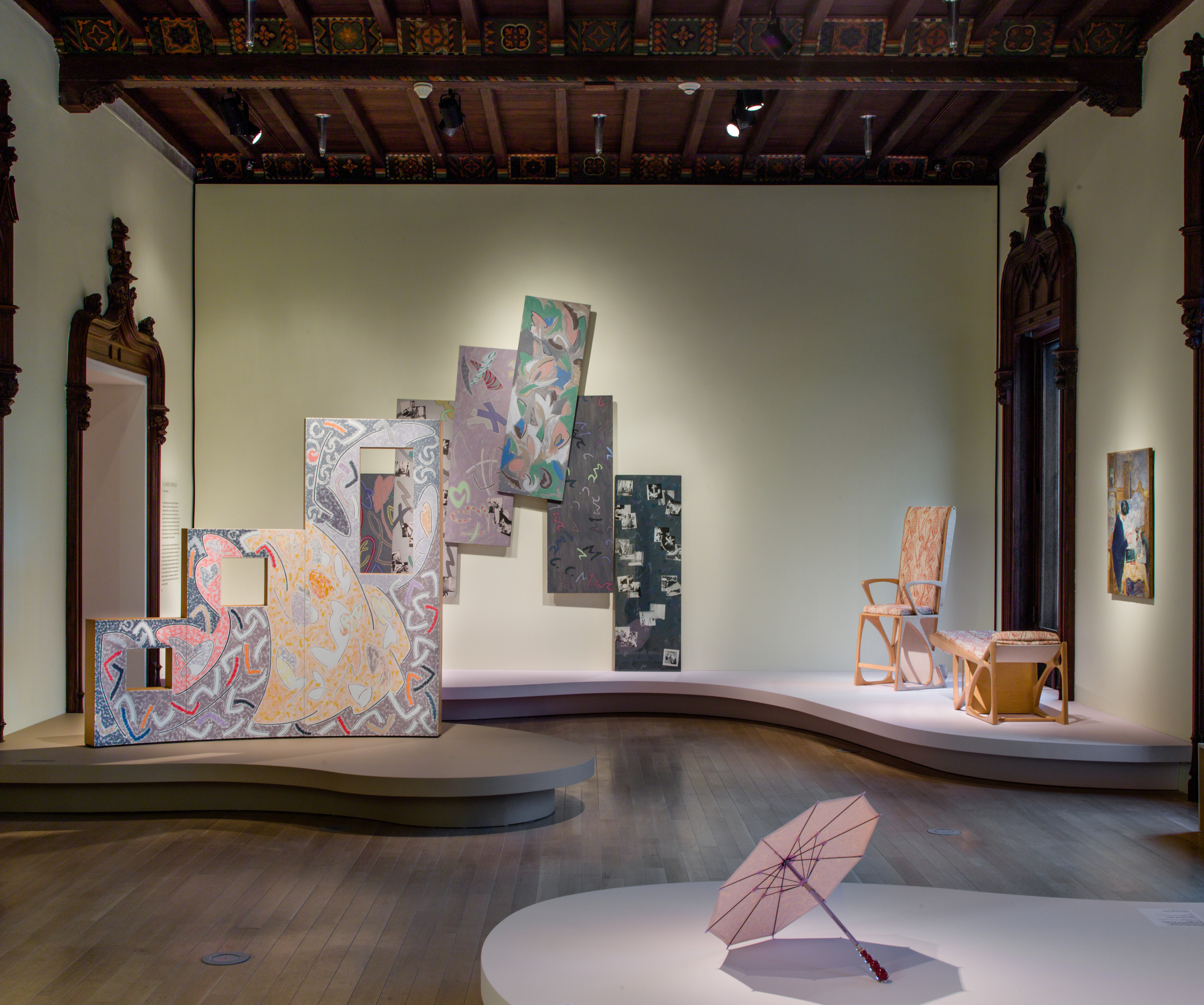
Politicized art has been trending for decades, of course. So it was with great joy to discover the colorful, whimsical work of Marc Camille Chaimowicz, on view at the Jewish Museum in New York until Aug. 5. Chaimowicz was born in postwar Paris to a French Catholic mother and a Polish-Jewish father, but he lived most of his life in London. “Your Place or Mine …,” which explores ideas of domesticity through life-size room installations of furniture, ceramics, collages, wallpaper, textiles and sculptures, is the first solo survey of the artist’s work in the United States.
Because the Jewish Museum is housed in the former home of Felix and Frieda Warburg, which was designed in the French Gothic chateau style of 1908, the building provides Chaimowicz’s art with a unique, ornate interior. And the first thing that pops out is how well the artist’s subdued yet colorful designs mix with the building’s breathtaking detail; timeless pieces fuse well.
Chaimowicz’s work challenges traditional distinctions between interior décor and high art, between the realms of the masculine and the feminine. In his first flat in London in 1974, he designed wall patterns, draperies, bedcoverings, folding screens, tables and chairs. His home became known in London’s artistic circles as an ever-evolving “total work of art.”
As Chaimowicz’s career came of age during the postmodern rejection of soulless modernism, he was heavily influenced by French critic Roland Barthes, who believed that pleasure — jouissance — was one of the responsibilities of form. And objects in the home, Chaimowicz added, can be objects of pleasure.
“My mind was drawn to left-wing ideology, but the left-wing practice produced art that I could not enjoy.” — Marc Camille Chaimowicz
Barthes radically argued that it was OK to lose oneself in art, that not every aspect of art needs to be “read” and analyzed. Said art historian Roger Cook, a friend of Chaimowicz, “We all have a tendency, intellectually, to want black-and-white answers to things. … But when we use our senses, we experience things sensually, without these overriding oppositions.”
And thus we have Chaimowicz’s persistently joyous sense of color, his whimsical patterns, his magical array of objects. We discover his soul through layers of poetry, not through a blatant political message. “My mind was drawn to left-wing ideology, but the left-wing practice produced art that I could not enjoy,” Chaimowicz said. “It was lacking in pleasure, color and sensuality. All the things that matter to me.”
His father escaped Poland and married his mother in France. His father’s family disappeared, and no one ever talked about the war. Raised Catholic, he said, “I have no connection with the Jewish faith whatsoever.” And yet, at any point in his career, he could have dropped the Chaimowicz — Marc Camille is a great stage name — but he chose to keep it.
“He enfolds his rebelliousness in beauty,” curator Kelly Taxter writes.
Indeed, like many post-Holocaust artists, Chaimowicz chose beauty, perhaps unconsciously to undermine philosopher Theodor Adorno’s famous statement: “There can be no poetry after Auschwitz.”
Chaimowicz’s work is a joyous reminder that darkness can be combatted only with light, that, as 1960s American folk singer Phil Ochs put it, “In such ugly times, the only true protest is beauty.”
Sadly, the Jewish Museum itself needs to get off the political bandwagon. “This aesthetic of pleasure and leisure that Marc Camille Chaimowicz adheres to is actually a political position,” the museum’s audio tour states unequivocally. “It’s saying: We need pleasure.”
Yes, we need pleasure, but no, pleasure is not political, as the entire exhibition demonstrates so well.
Karen Lehrman Bloch is a cultural critic and author.