fbpx

March 21, 2018

The Eternal Debate on the ‘Idea’ of Israel

We are still arguing among ourselves over whether the two-state solution is dead, but here’s a question that is rarely, if ever, asked: Exactly when did the idea of peaceful co-existence between a Jewish state and an Arab state first enter the international diplomatic conversation?

The surprising answer is 1936, 12 years before the State of Israel was declared. That’s when the British government, which then ruled over all of Palestine, proposed the so-called Peel Plan, which would have carved out a Jewish state between Tel Aviv and the border with Lebanon, reserved Jerusalem and Nazareth to Great Britain, and turned over the rest to the Arab community. Even then, the plan immediately sparked a rhetorical civil war among Labor Zionists, Revisionists and religious Zionists that is all too familiar to us today.

So we learn in Michael Brenner’s “In Search of Israel: The History of an Idea” (Princeton University Press), a timely and useful survey of the differing and sometimes diametrically opposed points of view that have been asserted by men and women who all regard themselves as good Zionists. He allows us to see that the core idea of Zionism has always been situated somewhere between two poles — the aspiration toward a sovereign Jewish state “like any other” state, and the belief that the Jewish state is destined to be exceptional, a divine gift bestowed on a Chosen People and “a light unto the nations.”

“[Our heart] … lies with the heart of the Jewish people in Eretz Israel and the Diaspora in fearing the royal commission’s conclusion regarding partition of the Land of Israel, which amputates our land, cuts off entire limbs and robs us of Jerusalem,” declared one group of Hebrew writers in a public manifesto when the Peel Plan was first proposed.

Brenner, the Seymour and Lillian Abensohn Chair in Israel Studies and director of the Center for Israel Studies at American University, and a professor of Jewish History and Culture at Ludwig Maximilian University in Munich, points out that the debate goes all the way back to the first stirrings of political Zionism in the 19th century, when Theodor Herzl offered his own solution for the “Jewish Problem” in “The Jewish State.” Notably, Herzl did not regard the Holy Land as the only place to create one. Herzl believed that “[if] a Jew is refused a normal life in Paris or Vienna, then he or she has to create a path to normality elsewhere, and in a Jewish society — be it in Palestine or in Argentina,” Brenner explains.

The core idea of Zionism has always been situated somewhere between two poles — a sovereign Jewish state “like any other” state and one destined to be exceptional.

The tension between normality and exceptionalism, as Brenner shows us, is a thread that runs throughout the history of Zionism. Early Jewish socialists like Jakob Klatzkin believed that only by working on the land and in the factories of a Jewish state would the Jews “leave behind elitist Jewish traits and become a real people.” The Jewish state should not only include “peasants and craftsmen but also soldiers and armies,” as Brenner writes. Thus did Yosef Trumpeldor famously fall in the defense of the Jewish settlement of Tel Hai in 1920 with stirring words on his lips: “It is good to die for our country.”

Of course, the Labor Zionists were not alone in embracing secularism. Vladimir (Ze’ev) Jabotinsky, Trumpeldor’s comrade-in-arms and the founder and leader of the Revisionists, “expressed his conviction that the fight for a Jewish state would not be decided through prayer or negotiation, but only through a bloody struggle,” Brenner writes. Jabotinsky, who is the founding father of the movement that now finds political expression in the Likud party, wrote a hymn that captured his vision of how the Jewish state would come into existence: “From the pit of decay and dust / With blood and sweat / Shall arise a race / Proud, generous and cruel.”

While Brenner’s book is essentially the history of an idea, it is enlivened and enriched by the fascinating details and incidents that he has retrieved from the historical record. He recalls that Herzl himself did not believe that Hebrew could become the national language of the Jewish state: “Who amongst us has a sufficient acquaintance with Hebrew to ask for a railway ticket in that language?” Herzl famously observed. Brenner points out that the name of the Jewish state that was declared in 1948 was a matter of much debate — Zion, Judah, Canaan and Eretz Yisrael were all considered and rejected in favor of State of Israel. And David Ben-Gurion, the first prime minister of Israel, insisted on regarding the Jews of the Diaspora as nothing more than raw material: “We have turned human dust, gathered from all over the world, into an independent, sovereign nation, occupying a respectable place in the family of nations.”

Even when the “human dust” is gathered in, however, Zionism is faced with another vexing and often heartbreaking problem: Who is a Jew? The Law of the Return, which assures citizenship to any Jew who reaches Israel, has been the occasion for a long and continuing debate. “[A] person might be considered a Jew by a rabbi even though he had converted to another religion, but the same rabbi would not consider him a Jew when he was called to the Torah in the synagogue,” explains Brenner, citing the writings of Avishai Margalit.

As Brenner explores the contradictions and contentions that make up the history of Israel, he encourages us to see the commonalities, too. Religious Zionists demanded “a state based on religious principles,” for example, while Labor Zionists embraced “the notion of a Zionist movement under entirely secular leadership and with a secular language.” Yet even Labor Zionism can be seen as “a secularized version of traditional messianism,” and “the socialists’ talk of the redemption of the soil provided the basis for claims by some in the Labor Party after the Six-Day War that the whole of the Land of Israel was sacred.”

Ben-Gurion embraced something of the same idea: “In Israel, in order to be a realist, you must believe in miracles.” Brenner quotes Rabbi Bradley Shavit Artson, vice president of the American Jewish University, for the proposition that “Israel’s existence is a miracle.” And so, when Brenner ends his book with a series of provocative questions about the future of Israel (“Will it be a democracy with equal rights for all its citizens or an ethnocracy that favors one group over another?” “Will the society remain a dominantly secular one, or will religious groups make more inroads?”), we are left with the notion that even something as miraculous as a two-state solution is not yet entirely out of the question.


Jonathan Kirsch, author and publishing attorney, is the book editor of the Jewish Journal.

The Eternal Debate on the ‘Idea’ of Israel Read More »

Braff an ‘Übermensch’ in Return to TV Comedy

Best known as the star of the medical sitcom “Scrubs” from 2001 to 2010, Zach Braff has branched out as a writer, director and producer, with films such as “Garden State,” “Wish I Was Here” and, most recently, “Going in Style.” A new ABC comedy series, “Alex, Inc.,” which debuts March 28, brings him back to television as its star, executive producer and director of four of its 10 episodes.

In the workplace and family comedy, Braff plays Alex Schuman, a Jewish character based on “StartUp” podcaster and Gimlet Media co-founder Alex Blumberg. “He’s an übermensch. He’s a very sweet guy who’s a great husband and loves his kids more than anything,” Braff said, explaining why the role and the show’s premise appealed to him.

“I didn’t think I was going to go back to broadcast TV,” he added. “I thought if I did do TV, it would be something edgy, on cable. And then this came up, and it was so entertaining to me. It’s a family show that parents and kids can enjoy together, like ‘Modern Family’ or ‘Black-ish.’ An 8-year-old can watch it, but a parent won’t cringe. I’m hoping people who grew up with ‘Scrubs,’ who are now parents themselves, will love the tone.”

Braff and executive producer Matt Tarses “both came from ‘Scrubs,’ and there were things we wanted to [replicate] that we both loved — that mix of heart and comedy — but without the fantasies and stuff that went too broad,” he said. “ ‘Scrubs’ was pretty risqué.”

Braff said he sees himself in Alex and relates to his TV alter ego’s risk-taking ambition and tenacity.

“I wear so many hats on my projects,” he said. “It reminds me of me, jumping into something I might not know how to do yet and figuring it out, come hell or high water. With ‘Garden State,’ I’d never made a movie before. But I was going to write, direct and star in this movie even though everyone in town had passed on it. When I commit to something, I go all in.”

“I’m hoping people who grew up with ‘Scrubs,’ who are now parents themselves, will love the tone.” — Zach Braff

Nevertheless, he found his latest project “harder than everything I’ve ever done,” because he was acting, directing, supervising post-production and working on story ideas in the writers’ room, he said. “It demanded more than anything I’ve ever done before. It became 100 percent of my life.”

Braff, 42, grew up “kosher and Conservative” in South Orange, N.J. His mother, a clinical psychologist, had converted to Judaism before marrying his father, a trial attorney, but they divorced and married others. His bar mitzvah had a Broadway musical theme.

Today, he describes himself as “culturally Jewish, pretty secular. I appreciate the culture and humor, and I love the traditions and the holidays. I identify as a Jew.”

“Garden State” and “Wish I Was Here” — which he wrote, directed and starred in — have Jewish protagonists and themes. “Garden State,” with co-star Natalie Portman portraying his love interest, earned Braff an Independent Spirit Award, and a Grammy Award for its soundtrack album.

Braff said he gets equal pleasure from acting and directing. “You spend a lot more time on a project if you’re directing it, maybe three years if it’s a feature. When you’re just acting, you have more time to do different things. But whenever I’m directing something I’m not in, I wish I was in it.”

“Alex, Inc.” has been his sole focus this year, but he looks forward to his next endeavor. “I’m going to wait for it to air, and then I’ll sit down and write something,” he said.

Braff’s resumé also includes theater, most recently a starring role on Broadway in “Bullets Over Broadway the Musical” in 2014. “It was one of the scariest things I’ve ever done,” he said. “But it was a lot of fun.”

He’s not one to run from his fears.

“I got my pilot’s license because I was afraid of flying,” he said. “Do one thing every day that scares you — I aspire to use that as a mantra.”

“Alex, Inc.” premieres at 8:30 p.m. March 28 on ABC.

Braff an ‘Übermensch’ in Return to TV Comedy Read More »

Artist Turns Love of Light Into Project for Africans

After more than a decade, Berlin-based artist Olafur Eliasson has returned to Los Angeles to exhibit his latest works with light and to promote his efforts to brighten the lives of people in Africa.

Eliasson’s exhibition, “Reality projector,” at the Marciano Art Foundation building in Windsor Square, floods the building’s expansive Theater Gallery with huge, projected blocks of sheer cyan, magenta and yellow that slide across the front wall and ceiling rafters of the repurposed former Scottish Rite Masonic Temple.

The show features a film, which shares the exhibition’s title, that Eliasson created out of hundreds of photos of the Marciano building while it was being renovated and repurposed before opening as a gallery in May 2017. Eliasson also worked with musician and sound artist Jónsi to create the film’s soundtrack, which resembles ambient outdoor noise.

“Reality projector” makes a person aware of how much we take light for granted — both the sunshine of Los Angeles and the electric light illuminating where we live, work, play and travel.

Eliasson, who spoke to the Journal at the show’s March 1 opening, said he was taken aback when he learned how many people on the planet don’t have access to electric light. He held up a yellow plastic lamp, about the size of a bagel and shaped like the sun. He sells these pendant lamps as part of an enterprise called Little Sun that he founded in 2012 along with engineer Frederik Ottesen. Little Sun sells the pendant lamps at a low price to local merchants in African countries, enabling these micro-entrepreneurs to resell them at an affordable price and still earn a profit.

“I wanted to take my interest in light and make it work where people have few resources.” — Olafur Eliasson

“I traveled in East Africa a lot, and you’d sit in a house and have a kerosene lantern burning right up into your face,” said Eliasson, who grew up in Iceland and Denmark. “Kids are sitting next to that, doing their homework. It’s the equivalent of sitting next to 20 cigarettes. I wanted to take my interest in light and make it work where people have few resources.”

Little Sun runs the Little Sun Foundation, which gives away the lamps to schools and to people living in refugee camps. Little Sun also works to spread awareness about the importance of sustainable energy and the problems that lack of light can bring. Lack of light prevents children from studying after dark, for example, and limits the hours that adults can safely work.

Little Sun has sold 600,000 of the little lamps all over the world and has worked with more than 600 African entrepreneurs. The lamps are available at the Marciano Art Foundation gift shop.

As with his art, Eliasson said he wanted the little lamps to be relevant to people from all communities. “For me as an artist, what matters is what we have in common,” he said. “We all want to have a good life and have beautiful design in our homes.”

“Reality projector” runs through Aug. 26 at the Marciano Art Foundation, 4357 Wilshire Blvd., Los Angeles. To learn more about the solar pendant, visit littlesun.com.


Wendy Paris is a writer living in Los Angeles. She is the author of “Splitopia: Dispatches From Today’s Good Divorce and How to Part Well.”

Artist Turns Love of Light Into Project for Africans Read More »

Spot the Celeb at Annual Spago Seder

Why is the seder at Spago, Beverly Hills different from all others?

For starters there is the menu, which includes shallot and thyme matzo, homemade gefilte fish, carp and pike, and cookbook author Judy Gethers’ matzo balls, prepared with carbonated water for extra lightness. Chef de cuisine Tetsu Yahagi and executive pastry chef Della Gossett are the culinary masterminds behind the selections.

Then there is the iconic and glitzy setting in the heart of Beverly Hills, where celebrities are an everyday sight.

On top of all that, the event raises funds for MAZON: The Jewish Response to Hunger, a national nonprofit working to end hunger among all faiths and backgrounds in the United States and Israel. The restaurant’s 34th annual seder is set for March 31, the second night of Passover.

Barbara Lazaroff, co-owner of Spago, Beverly Hills, who came up with the idea of holding a seder at her partner and ex-husband Wolfgang Puck’s restaurant, said organizing the event for customers, who are like her second family, is a priority.

“Many people experienced their first seder at Spago — where they get a sophisticated introduction to Jewish cuisine.” — Barbara Lazaroff

“This night means a lot to me. It is so many years of my life in the community. You experience everybody’s family growing up, people being born and dying, and we take note of all that, like you would with your own family,” Lazaroff said. “A restaurant is kind of like an extended family.”

Lazaroff created the seder 34 years ago when she and Puck were still married, because she was interested in accommodating those who did not have family around for the holiday. But the renowned chef and restaurateur was not easily convinced.

“I remember the first year, [Puck] said, ‘Nobody is going to come.’ I said, ‘Wolf, if you don’t do it, I am going to get another chef to do it,’ ” Lazaroff said.

The rest is history. The event draws a diverse group of showbiz types as well as a large number of non-Jews, Lazaroff noted.

“Guests are more than 40 percent non-Jewish. Many people experienced their first seder at Spago — where they get a sophisticated introduction to Jewish cuisine,” she said. “I feel if you open your traditions and celebrations to all, no matter your religion, background or customs, it fosters tolerance, greater harmony and closer understanding among all people.”

The event is not cheap — $195 per adult and $80 per child age 12-and-under — but the restaurant ultimately loses money on the venture, Lazaroff said. And while Spago’s seder is not strictly kosher, the service hews to convention. “The service is traditional without being exhausting,” she said.

Leading the service this year will be University Synagogue of Irvine’s Rabbi Arnold Rachlis and his wife, Cantor Ruti Braier. The West Los Angeles Children’s Choir will perform.

In addition to the multicourse meal, Spago’s wine director, Phillip Dunn, will offer a variety of Israeli wine pairings. Attendees will be given a box of oven-baked matzo and macaroons to take home.

To those planning to attend the event, Lazaroff had a piece of advice: Be prepared for some powerful horseradish.

“It is knock-your-socks-off horseradish,” she said. “I am always going around the tables saying, ‘Be careful.’ ”

The Passover seder takes place at 5:30 p.m. March 31 at Spago, Beverly Hills, 176 N. Canon Drive. Guests can make reservations by calling Spago at (310) 385-0880 or booking online at exploretock.com/spagobeverlyhills.

Spot the Celeb at Annual Spago Seder Read More »

Genetic Testing Could Be Life-Saving for Ashkenazi Jews

When Cedars-Sinai Medical Center OB-GYN oncologist Dr. Beth Karlan was a student at Harvard University in the early 1980s, she was doing her rounds and presenting the case of a Jewish woman in her 30s who had ovarian cancer. The woman suddenly sat up and pointed a finger at Karlan and said, “What right do you have to stand there and pursue your dreams to become a doctor and I’m going to sit here and die?”

It was one of those seminal moments that helped lead Karlan down the path to a career in OB-GYN oncology. “I went into [the field] almost as a challenge because of that young woman,” Karlan said. “It’s the Yom Kippur question of who shall live and who shall die, and it really challenged me. ‘Why did she have this ovarian cancer and I didn’t?’ ”

Today, as director of the Cedars-Sinai Women’s Cancer Program at the Samuel Oschin Comprehensive Cancer Institute, and after decades of research, Karlan has just launched the BRCA Founder Outreach Study (BFOR), which is offering BRCA genetic testing at no cost to 4,000 eligible men and women, ages 25 and older, of Ashkenazi (Eastern European) Jewish ancestry.

The pilot study is being launched in New York, Boston, Philadelphia and Los Angeles, and each city is looking to sign up 1,000 participants. According to research, Jews of Ashkenazi descent are 10 times more likely to carry the BRCA1 and BRCA2 inherited gene mutations than the rest of the population, which can lead to breast, ovarian and other cancers.

Photo courtesy of Dr. Beth Karlan.

“Knowledge is power. [BFOR testing for Ashkenazi Jews] could save your life.” — Dr. Beth Karlan

As Karlan progressed in her career, she began to recognize family clusterings in OB-GYN oncology. “I would see these clusterings of sisters whose moms had died,” she said.

Karlan also treated Gilda Radner, who died of ovarian cancer in 1989, and she launched the Gilda Radner Hereditary Cancer Program in 1991. The BRCA1 gene would not be discovered until 1994, with the BRCA2 gene being discovered a year later.

“As the BRCA genes were discovered, our lab continued to work on what goes awry in a cell due to a mutated BRCA gene,” Karlan said.

She is excited about the launch of the BFOR study, which has been two years in the making. The Ashkenazi Jewish mutation for BRCA1 and BRCA2 is a “founder mutation,” Karlan explained. “When a population stays relatively insular, any genetic alteration will be amplified within that population.”

The outreach part of the BFOR program is designed to let Ashkenazi Jews know this testing is available through a simple blood draw. “It’s also about letting people decide if they want to participate and what it means,” Karlan said.

What does it mean?

“It’s letting people know that men are equally likely to carry a BRCA gene as women,” Karlan said. “That they too are at risk for cancers, and that there are things they can do to reduce those risks. [It’s letting them know] not everybody who has a BRCA gene gets cancer, and that if you do have the gene, you should let your family members know.”

Karlan said it’s estimated that 90 percent of carriers don’t know they are until someone in their family gets cancer. “But for every carrier we identify, 50 percent of their blood relatives will also be carriers.”

Outreach also includes access to educational videos, signing a consent form and filling in a family history. Participants must be at least 25 years old and have one grandparent of Ashkenazi Jewish heritage.

If people choose to go ahead with the free testing, the blood draw will be done at a Quest lab and then they can choose to receive their results from their medical provider or from one of the geneticists involved in the study in their home city.

The BFOR testing “lets people who may be afraid or may not have had the resources get the education and then have the results disclosed by a medical professional,” Karlan said, adding, “Knowledge is power. It could save your life.” While discovering new cancer treatments is always a great thing, she said, “What’s better than a new treatment and cure is prevention.”

As a result, Karlan said if the BFOR test comes back positive, there are plenty of things people can do to lower their risk of getting cancer. For women with the gene mutation, their risk of getting breast cancer is five times greater than the population’s, with an 80 percent chance of getting it in their lifetimes. “Depending on your family history, you should be screened with both MRI and mammography, and there are medications you can take to reduce the risk,” she said.

The risks of ovarian cancer in those with the gene mutation is 20 times that of the general population, Karlan said. “If women act, their overall risk can be reduced by over 80 percent. Some of these preventative methods include taking birth control pills, or having their fallopian tubes removed, because it’s thought most of these cancers arise in the fallopian tubes,” she said, noting that women can still have children through in vitro fertilization even if they have their fallopian tubes removed.


Other risks of being a carrier include melanoma, “so you can go to a dermatologist and have your skin tested,” Karlan said. There are also higher risks of pancreatic cancer, and screening can be done for that, too. For men, there is an increased risk of pancreatic cancer, melanoma, breast cancer and prostate cancer.

Karlan said she believes her secular Jewish upbringing informed her decision to help people. “I grew up in New York and tzedakah and tikkun olam were in my DNA. It’s part of our core values of who we are as people.”

She recalled an ongoing joke in her home when she was growing up on Long Island. Her father, who was an attorney, worked in Manhattan near Wall Street and would need a new coat three or four times every winter. “My mother would say, ‘Stanley, are you crazy? You’re losing your [coats]!’ But he’d see someone homeless on the street and give them his coat.”

As the first physician in her family and the oldest of three girls, Karlan said her decision to become a doctor had a lot to do with the fact that her father always wanted to be a physician but there was no night school that he could attend. “And I also had a crush on Dr. Kildare,” Karlan said, laughing about the TV character played by Richard Chamberlain.

The first female oncology fellow at Cedars-Sinai, Karlan has been at the forefront of a lot of firsts. She was the only female in her medical school class at Harvard MIT, and throughout her career “there were times you learned to work harder,” she said. “To be accepted, you had to do better. You learned to have a thicker skin. When I was doing a surgery rotation, men were surprised I could stand in the operating theater for long hours. They’d say to me, ‘Are you tired? Do you need to sit down?’ Or I’d come out of the [operating room] and they’d say to me, ‘Who picks up your dry cleaning?’ ”

But her hard work has paid off. Now, she’s focused on the BFOR study and hopes those who fit the criteria will consider taking part in the study.

“I urge people, as we approach Pesach and celebrate our freedom, that they recognize that knowledge discovery is part of that, and it may be a good time to think about family history, to think about things that run in your family and ways to make the world a better place by keeping people healthy.”

To learn more about the BRCA genetic mutation testing, visit bforstudy.com.

Genetic Testing Could Be Life-Saving for Ashkenazi Jews Read More »

Chaplaincy Program for Jewish Inmates Faces Uncertain Future

For the past five years, chaplain Rabbi Avivah W. Erlick has been counseling Jewish inmates at three Los Angeles County jails. Last year, a second chaplain, Deborah Schmidt, was hired, adding chaplaincy coverage for the estimated 100 or so Jews in correctional facilities. But with the recent end of their grant provided by The Jewish Federation of Greater Los Angeles, Erlick, Schmidt and their partner, Dr. Joel L. Kushner of Hebrew Union College-Jewish Institute of Religion (HUC-JIR), are worried about this program’s future.

“People often ask, ‘There are Jews in jail?’ Yes, there are,” Erlick said. “In a nutshell, these are people whose lives have completely, utterly fallen apart.”

Erlick provided the Journal with a few inmate profiles. One person, homeless after her family kicked her out for being transgender, has been in jail (on the gay and transgender floor of the facility) for at least a year. Another man, involved in a hit-and-run accident resulting in a motorist’s death, has been in jail for two years awaiting trial. Erlick noted “how grateful they are to the Jewish community for caring about them. I know that this leads them to reconnect with their families and communities, with Beit T’Shuvah and other Jewish support organizations, and with hope.”

In 2017, Erlick and Schmidt — both of whom are board certified by the Association of Professional Chaplains — saw 835 inmates in three facilities, Century Regional Detention Facility (L.A. County’s women’s jail), Twin Towers and Men’s Central Jail, Kushner said. There also were another 130 “attempted visits,” meaning a chaplain arrived for a requested meeting and the inmate wasn’t there, didn’t want to come out, or guards were unavailable to escort the inmate to the meeting. Another 328 inmates requested meetings last year, “but because of our lack of capacity, they were never able to see a Jewish presence before they were transferred or discharged,” Kushner said. One inmate submitted no fewer than 25 requests before she was able to meet with Schmidt.

The process of gaining access to the correctional facilities is intensive. Potential chaplains — volunteers from the correctional facilities’ perspective — need to pass a background check before being permitted to go on accompanied visits with an approved chaplain. Unescorted access requires six months of shadowing an approved chaplain, after which that chaplain can recommend a status upgrade to the Religious and Volunteer Services Unit of the L.A. County Sheriff’s Department.

“People often ask, ‘There are Jews in jail?’ Yes, there are. In a nutshell, these are people whose lives have completely, utterly fallen apart.” — Rabbi Avivah W. Erlick

Erlick originally was hired by the Board of Rabbis of Southern California (BRSC), an independent nonprofit organization with offices in the Federation building. After the BRSC was absorbed into Federation, Erlick said, the program was shifted to Federation’s Caring for Jews in Need Committee. Kushner, director of HUC-JIR’s Kalsman Institute on Judaism and Health, provided nonprofit status for the program and applied for grants.

Approximately 95 percent of the two-year Federation grant of $41,000 went to pay chaplains’ salaries for 50 hours a month; the rest covered special holiday-related food and books. At the end of the grant period in December 2017, Kushner was told the grant would not be renewed.

“The Federation isn’t a funder,” Federation President and CEO Jay Sanderson said. “We partner with organizations on our priorities.”

Sanderson said Federation has been moving out of chaplaincy over the past few years after “a thoughtful, strategic discussion” that included considering the presence of other organizations that do related work, naming Beit T’Shuvah, the Jewish addiction recovery center on Venice Boulevard.

“We only have so many resources. People need to understand that the Federation is very focused on our priorities and can’t be in every single area,” Sanderson said. He named those priorities as vulnerable seniors and Holocaust survivors, people with special needs, and supporting those who struggle with self-sufficiency. “We’re solidly in those three areas of need and want to make an impact.”

Another organization, the Chabad-run Aleph Institute, also refers local inmates to Rabbi Yankee Raichik, a Jewish chaplain for the Los Angeles Department of Corrections, who works independently of Schmidt and Erlick but shares inmates’ names and requests with them. He told the Journal that he helps the male inmates put on tefillin — once through the bars of a jail cell. He also shares words about the weekly Torah portion, arranges for holiday observances such as lulav and etrog for Sukkot and megillah reading for Purim, distributes reading material and does “a lot of counseling.”

“I have a goal of seeing every Jewish inmate once a week,” he said, “a goal I’ve never accomplished because there’s an issue somewhere and someplace, but that’s my fantasy.”

While some inmates have the appearance of people you’d sit next to in synagogue, others challenge assumptions about what Jews look like. Inmates of color, those raised in Jewish foster homes, those who have tattoos — or names that don’t sound Jewish — might be assumed to be not Jewish and therefore ineligible for Jewish chaplaincy services.

“Other organizations may say, ‘We would see everyone,’ ” Kushner said. “Yet my chaplains tell me that some inmates are not seen because they have been determined to not be Jewish. Our chaplains have a different opinion, so I guess it comes down to how you define the question of who is Jewish.”

Without funding, the future for the chaplains is uncertain. Kushner is compiling a case for funding, to aid in pitching potential funders. The project still needs a 501(c)(3) tax-emempt organization to receive donations and pay employees, but Kushner is willing to step aside if a new leader emerges. He just wants the project to continue.

“I want the two chaplains to continue to have employment and inmates to have this vital life-saving service continue. It’s a lifeline to these people who aren’t treated like human beings,” Kushner said. “They can’t speak for themselves, so who speaks for them? It’s a powerful question. Who’s more in need than Jews in jail?”

Or as one inmate wrote to Erlick: “Lost and forgotten are we. The wayward and the downtrodden. But we are able to see a glimmer of hope and compassion through your outreach to us! Please don’t allow anyone to take you away from us, please. Without you, we would be totally lost.”

Chaplaincy Program for Jewish Inmates Faces Uncertain Future Read More »

Children’s Books for Passover and Beyond

A new family haggadah and a cute redo of a classic Passover picture book are available now in time for Passover. And for springtime reading, we recommend two award-winning Jewish-themed novels for older children, along with a recent picture book about Purim that could possibly become a year-round favorite.

Haggadah
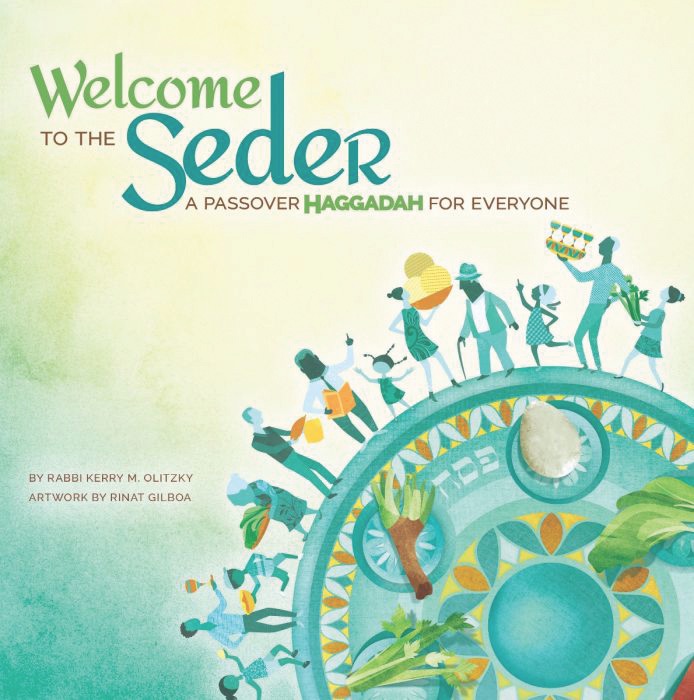
“Welcome to the Seder: A Passover Haggadah for Everyone”
By Rabbi Kerry M. Olitsky. Illustrated by Rinat Gilboa. Behrman House, 2018.

This appealing new haggadah is targeted at families who enjoy including seder guests from other ethnicities and cultural backgrounds. Written by Rabbi Kerry Olitsky, founder of Big Tent Judaism, the haggadah includes traditional Passover texts and rituals, and adds poems and stories that highlight a universal message of freedom. Relevant quotes are interspersed within the text, including thoughts from Nelson Mandela and Confucius, along with wise, present-day rabbis. Occasional sidebars offer acceptable versions of blessings from other religious traditions that would make a multicultural seder more inclusive. Most of the haggadah is in English, with a lot of transliteration, along with the more important blessings presented in Hebrew. The thoughtful design includes pleasing watercolor artwork and a large amount of white space. This haggadah should prove to be a hit with families searching for ways to include interfaith and multicultural traditions at their Passover tables.

Picture Books
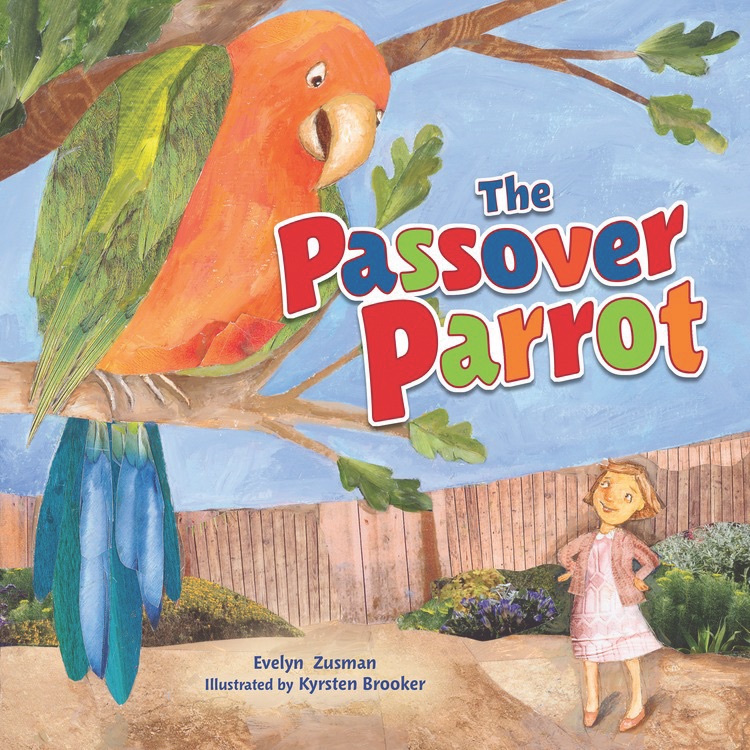
“The Passover Parrot”
By Evelyn Zusman. Illustrated by Kyrsten Brooker. Kar-Ben, 2018.

Those who enjoyed the 1984 classic story of the parrot who steals the afikomen and the little girl who cleverly gets it back will be pleased to see this new 2018 revision. Hametz is the colorful and talkative parrot who arrives in the Brooklyn home of Lily and her large family right before Passover. No one seems to have time to hear Lily practice the Mah Nishtanah, so she recites the Four Questions in front of Hametz, who is “never too busy to listen.” The parrot cleverly shows off his newfound knowledge at the right moment in the seder but then steals the afikomen and won’t drop it from his beak. Lily saves the day by singing the first Hebrew question, knowing that Hametz will have to open his mouth to supply the answer. This revised edition is appealing and fun for kids due to the mixed collage art and large print. Plus, the illustrator has assured that this gem of a story is suitable for families of all observance levels due to the inclusion of kippot on the heads of all Jewish boys and traditional depictions of home holiday observances.

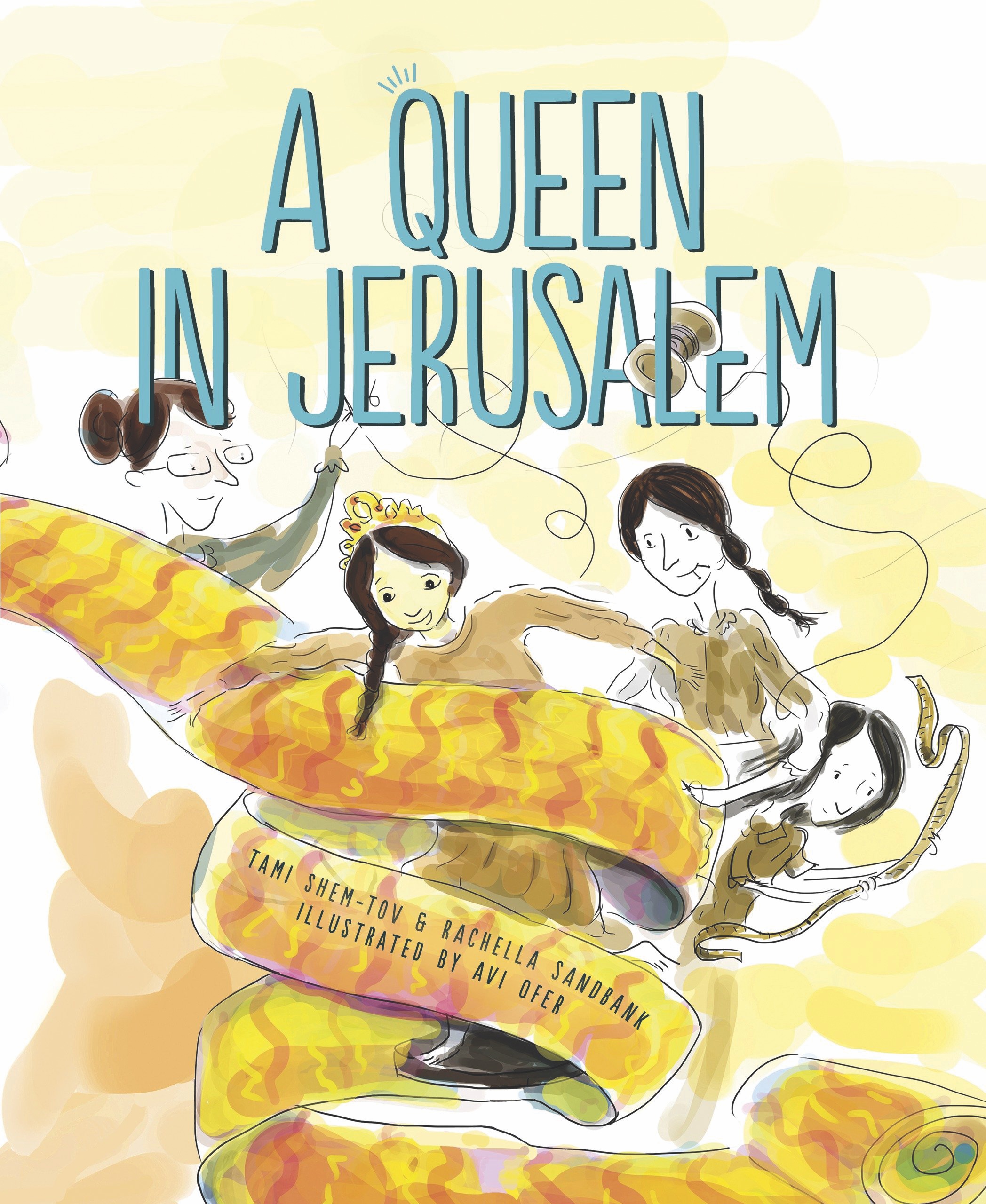
“A Queen in Jerusalem”
By Tami Shem-Tov and Rachella Sandbank. Illustrated by Avi Ofer. Kar-Ben, 2018.

“A Queen in Jerusalem” is about Purim, not Passover, but it’s too significant to omit from this list of new books. It is rare enough for a modern English-language children’s book to take place in Jerusalem, but rarer still to provide British Mandate Palestine as the setting. The name of the main character, Malka, means “queen” in Hebrew, and young Malka wants her mother to make her a Queen Esther costume for Purim. She is disappointed to find that her mother is just too busy. Malka angrily storms through the old city until she encounters a man chiseling stone into a statue. She enters his studio and discovers weavers who create for her a beautiful robe, goldsmiths who create a regal scepter and crown, and artists who find inspiration from her regal costume as she sits on a throne before them. Although the place seems magical, we learn that the man is Bulgarian immigrant Boris Schatz, and Malka has stumbled upon the beginnings of the Bezalel Academy of Art in Jerusalem, a place that has existed for more than 100 years. This is one of the few Hebrew-language children’s books to be translated into English, possibly because the dual authors are well known among Israel’s children’s literature scene. This charming read-aloud book will appeal to children who love to dress up (don’t they all?), with the bonus of getting a short introduction to Jewish art and history upon reading the author’s note at the end.

Middle Grade Novels for Older Children
“Refugee”
By Alan Gratz. Scholastic, 2017.

As a recent winner of both the Sydney Taylor Award and the National Jewish Book Award, Gratz’s novel, for grades 5–7, has become a bit of a phenomenon that also presents a super-timely narrative. The different journeys of three young refugees — a boy from Nazi Germany (on the ship St. Louis), a girl from 1990s Cuba and a boy from present-day Syria — are seamlessly woven together by the author to create a historically accurate and highly engaging experience for the reader. The three children and their families battle their restrictive governments with bravery, and eventually make daring escapes in the hope of remaking their lives. Although the time periods are different, the gut-wrenching decisions these children are forced to make span time and place and serve as examples to readers as to what the process of migration entails. An adventurous, suspenseful read that sheds light on the reality of a desperate global situation.

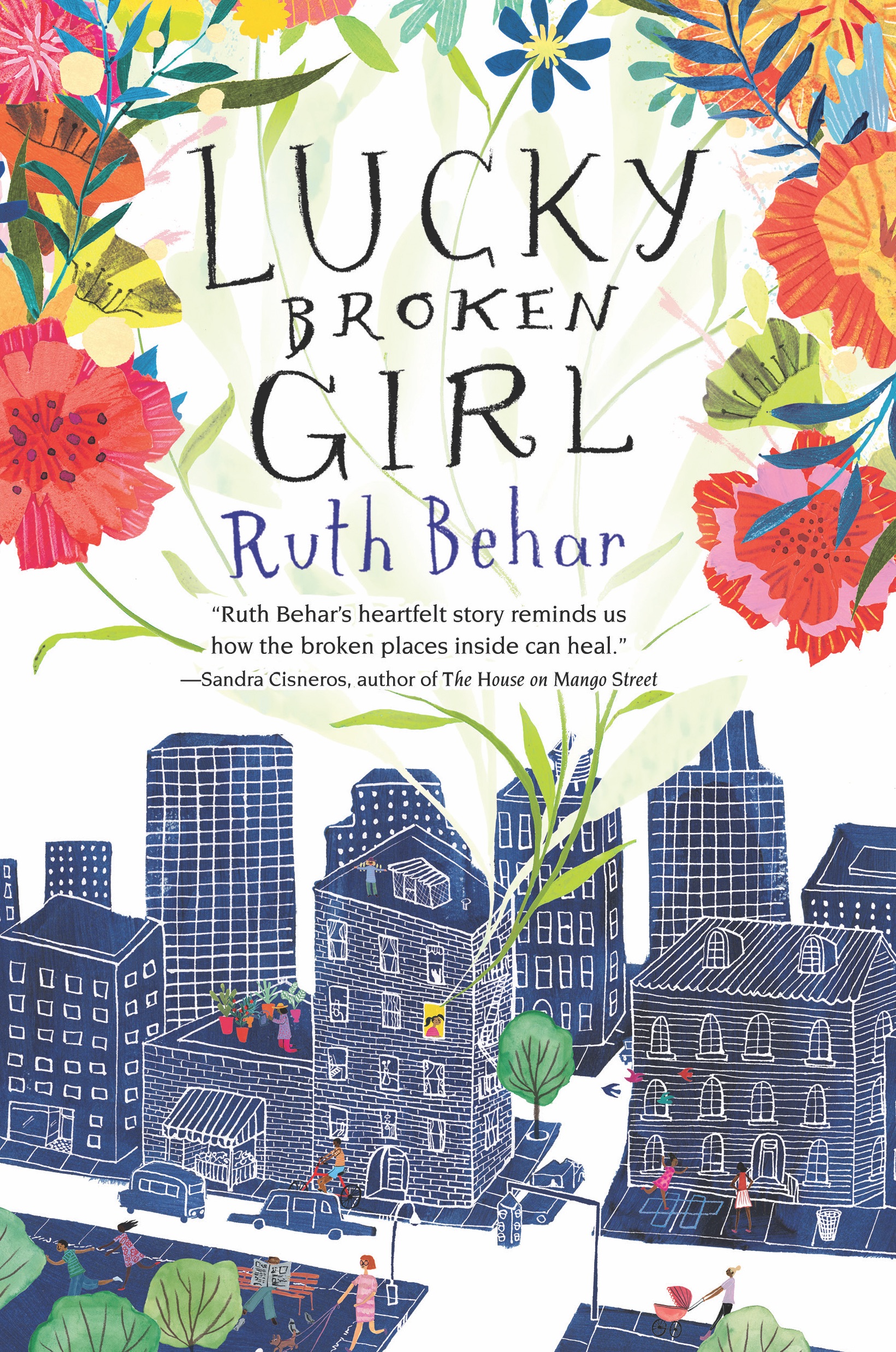
“Lucky Broken Girl”
By Ruth Behar. Nancy Paulsen Books, 2017.

Ruth Behar, a Jewish Cuban-American cultural anthropologist and poet, escaped the Castro regime with her family when she was 5 years old. She has based this poignant and lyrical tale on her own difficult immigrant childhood growing up in New York City. Just as young Ruthie endeavors to learn English and the confusing ways of America, a devastating car accident leaves her in a full-body cast for a very long time. It seems as if her dreams are broken along with her body, but Ruthie’s story of crossing multicultural boundaries turns out to be a story of resilience and hope that speaks so well to today’s young readers. It is also delightful to see a middle-grade novel that features a proud Sephardic Jewish protagonist. This book was a deserving finalist for the National Jewish Book Award for Young Readers.


Lisa Silverman is the director of the Burton Sperber Jewish Community Library located at American Jewish University.

Children’s Books for Passover and Beyond Read More »

‘Breaking Matzo’ Celebrates Magic of Passover

By day, Andy Goldfarb is a busy venture capitalist in Brookline, Mass. By night, or when the divorced dad of two daughters has a free moment, he focuses on Breaking Matzo, his 15-year-old passion project.

Breaking Matzo is a website (breakingmatzo.com) designed to help people have more enjoyable Passover celebrations. It includes recipes, DIY projects, a glossary of Passover terms, and educational articles and videos.

“As a venture capitalist, I invest in the dreams of entrepreneurs and delight in the fruition of their vision,” Goldfarb, 50, told the Journal. “That’s one kind of magic. But as a father, I believe in another kind of magic. The magic of sharing holidays and life events with my children.

“I believe that by making the holiday magical, memorable and meaningful for all generations, we increase the likelihood of families continuing the Passover tradition generations into the future.”

Growing up, Goldfarb spent Passover with his great-grandfather Max Fish in Baltimore. He looked forward year-round to the celebration with his family. Breaking Matzo is full of traditions from Goldfarb’s family, information from Jewish books and materials that friends have sent to Goldfarb over the years. Goldfarb said he chose the name for several reasons: It refers to the classic Passover game in which adults break the afikomen and then the kids search for it; it’s a twist on “breaking bread,” which is about gathering with friends and family and sharing a meal; and, according to the website, the name made people laugh.

Breaking Matzo also has a thriving Facebook fan page (facebook.com/breakingmatzo), with more than 39,000 followers. Some of the recent recipes posted include a chocolate matzo mousse cake, Piedmontese charoset and “Grandma Boody’s Brisket.”

If readers want to DIY their way through a Pinterest-like Passover, they can make a Passover Gnome Garden complete with parsley (karpas) sprigs, which look like plants growing in a garden. There’s also a page devoted to creating painted wine glasses for Eliyahu and Miriam.

Goldfarb’s daughter, Caroline, a senior at Harvard University, said she is a huge fan of her father’s website. Every Passover, she cooks with her father, and she has made every DIY project on the site.

“It’s been truly incredible watching my dad grow Breaking Matzo,” she said. “Activities and recipes that I used to make as a child are now being made by kids all over the country and all over the world. I love seeing photos and stories from hundreds of people about their traditions, and learning how they have used the information, recipes and activities on Breaking Matzo to make their holidays even more special.”

Breaking Matzo also has a thriving Facebook fan page. Some of the recent recipes posted include a chocolate matzo mousse cake, Piedmontese charoset and “Grandma Boody’s Brisket.”

Another avid reader of the site, Shelby Ward of Mississippi, said Breaking Matzo has helped her and her Christian partner connect with the Jewish faith. They follow the Facebook page and make the recipes. Because the site also has separate web pages that cover general information on various aspects of Jewish life, Ward and her partner also use it to learn more about Judaism.

“Since my knowledge of Judaism was limited until three years ago, social media has been a valuable tool in my quest to learn more,” Ward said.

Goldfarb said he is planning to expand Breaking Matzo to add Shabbat as the next holiday. “Some day,” he added, “I hope to compile it all into a cookbook.”

For now, he’s focused on making the upcoming Passover as special as possible. He will invite his usual 25 to 30 friends and family members, as well as people who have never celebrated Passover.

Everyone will eat his family’s classic recipes, as well as read about Rosa Parks, Martin Luther King Jr. “and other incredible people who have fought for justice and equality, even in the face of grave danger,” Caroline said. “The Passover meal gives us a special time to reflect on the meanings of justice, hope and equality, all while gathered with family and friends.”

‘Breaking Matzo’ Celebrates Magic of Passover Read More »

Charoset Sampler From All Over the World

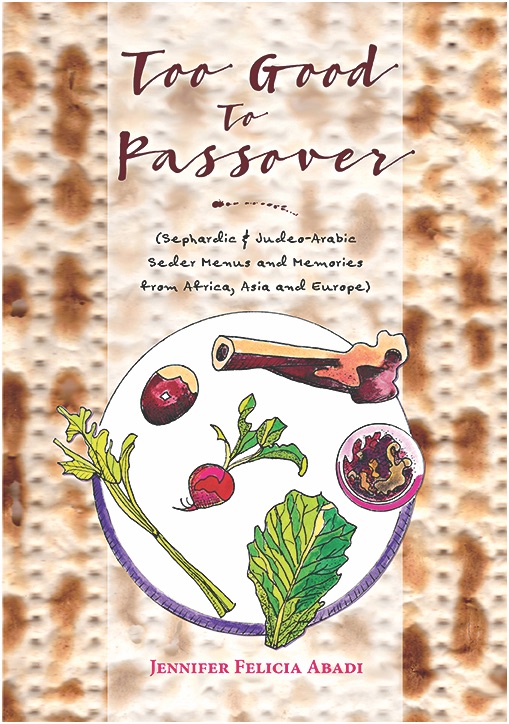
While planning for Passover, my favorite family holiday celebration, I received an email from Jennifer Abadi about her new Passover cookbook, “Too Good to Passover: Sephardic & Judeo-Arabic Seder Menus and Memories From Africa, Asia and Europe.”

I met her many years ago, a young food writer, teacher and cookbook author living in New York. We continue to correspond because I always am amazed at her accomplishments, teaching, stories, recipe research and cooking special dinners. She now has written an amazing cookbook about her Sephardic heritage, which she admits has taken her nine years to complete.

A compilation of more than 200 Passover recipes from 23 Jewish communities, this cookbook-memoir provides a historical context to the ways in which the Jewish communities of North Africa, Asia, the Mediterranean and Middle East observe and enjoy this beloved ancient festival.

In addition to full seder menus and Passover-week recipes, each chapter opens with memories of friends and family.

“Too Good to Passover” is a versatile and inspiring reference cookbook, appealing to those who may want to introduce a different “food theme” during the holiday.

One of the mainstays on the seder plate is charoset, usually a mixture of fruits, nuts, wine and spices. Depending on the ingredients available, the mixture is ground together to resemble the mortar that was used by the Jews when they were slaves in Egypt.

We love the concept of new food ideas for Passover, always adding interesting items to our menu. During the seder, we have a charoset tasting that includes examples that Jewish communities around the world serve during the holiday. Each guest receives a plate containing several charoset options with small flags identifying the country that they represent.

We love the concept of new food ideas for Passover, always adding interesting items to our menu.

I was amazed that more than 20 charoset examples were included among her Passover recipes, and this year we have included some of the traditional Sephardic charoset recipes that I have adapted from Jennifer Abadi’s new cookbook.

AFGHANI CHAROSET
1/2 cup raw whole almonds
1/2 cup walnuts
1 cup cashews
1/2 teaspoon ground cinnamon
1 1/2 to 2 teaspoons ground cardamom
1/8 teaspoon kosher salt
1/2 cup black raisins
10 small dates, pitted and coarsely
chopped (about 1/2 cup)
6 tablespoons applesauce
4 teaspoons sweet kosher-for-Passover wine
2 tablespoons orange juice

Pulse nuts, cinnamon, cardamom and salt in food processor until coarsely ground, about 30 seconds.

Add raisins and dates and pulse 30 seconds, then add applesauce, wine and orange juice and blend until mixture is thick and chunky.

Serve at room temperature in a bowl. Store in refrigerator bring to room temperature 1 hour before serving.

Makes about 2 cups.

TURKISH STYLE APPLE-DATE CHAROSET
1 8-ounce red apple,
peeled, rinsed, cored and
cut into 1/2-inch cubes
(about 1 1/2 cups)
8 ounces Medjool or regular dates, pitted
and coarsely chopped
2 cups water
1/4 cup pine nuts, dry toasted in a small
skillet, cooled and finely chopped
1/3 cup walnuts
2 tablespoons sweet kosher wine or
cider vinegar

Combine apples, dates and water in a medium saucepan and bring to a boil over high heat. Reduce heat to medium-low and simmer 30 minutes, stirring every 10 minutes to prevent burning, until mixture is thickened like a chunky compote.

Remove from heat and combine with remaining ingredients in a medium bowl. Chill until ready to serve. Before serving scoop into small bowls and bring to room temperature.Makes about 2 cups.

BULGARIAN STYLE CHAROSET
1 pound (about 24 large) Medjool dates,
pitted and cut in half
1 cup water
1 2/3 cup walnuts
1/4 cup freshly squeezed lemon juice,
red wine or grape juice
1/2 cup finely chopped or coarsely
ground walnuts (for garnish)

Bring dates and water to a boil in a small saucepan over high heat. Reduce to medium-low heat (so as not to burn) and steam dates, covered, until soft, 5 minutes.

Blend the walnuts in a food processor for about 30 seconds. Add the cooked dates and lemon juice and pulse until very smooth.

Cool to room temperature and serve in bowls sprinkled with chopped walnuts. Store in an air-tight container in the refrigerator for up to 1 week or the freezer for up to 1 month.

Makes about 2 cups.

GREEK-STYLE CHAROSET
2 cups black raisins
6 ounces peeled red apples, cut in 1-inch cubes (about 1 cup)
3 cups walnuts
2 teaspoons orange juice

Blend raisins, apples, walnuts and orange juice in a food processor until thick and smooth.

Measure 1 level tablespoon of mixture at a time, and roll into smooth balls about 1-inch in diameter. (Mixture will be soft, so roll gently). Place in a bowl or container and refrigerate for 1 hour or up to 1 day in advance.

Makes about 2 cups.


Judy Zeidler is a journalist, cooking teacher and cookbook author, including “Italy Cooks.”

Charoset Sampler From All Over the World Read More »

An Eight-Day Love Affair With Vegetables

Sure, Passover presents an opportunity to contemplate the various meanings of freedom and oppression, historically and in our own lives, yet many of us find ourselves fixating instead on all the things we can’t eat. “How is it Shabbat without chocolate-chunk pretzel challah?” we lament. Or, “No bagels for a week? Look, this is how I shall crawl to my ending!”

We can become like slaves to our love of leavened breadstuffs, to pizza and brownies, to turkey-and-cage-free-egg-white sandwiches from Starbucks. Even those who eschew wheat may find themselves viewing this holiday as little more than an enforced, short-term breakup with their beloved gluten-free morning coffee cake.

Often, we overcompensate by indulging in unhealthy meats and unleavened starches in a weeklong fit of deprivation-fueled pique. It’s easy to get so wrapped up in what we can’t eat that we forget about all of the wonderful things that are still on the menu.

This year, let’s switch the focus from forgoing bread to actively embracing the other fruits of the earth — as in fruit. And vegetables. Passover is an opportunity to explore the bounty of vegetables, the one food group that never shows up on studies as the culprit behind ailments such as heart disease or stroke.

This spring-cleaning holiday, this festival of liberation is the perfect time to free ourselves from what can be mindless, unhealthy eating habits — the chewy granola bars in the car, the Cinnabon at the airport. Eating more vegetables is a way to care for our bodies, a mitzvah itself. Cramming ourselves with chocolate-covered potato chips and processed products with names like “Smokey Flavor Xtra Long Snack” is not a mitzvah, even when they’re kosher for Passover.

It’s easy to get so wrapped up in what we can’t eat, that we forget about all of the wonderful things that are still on the menu.

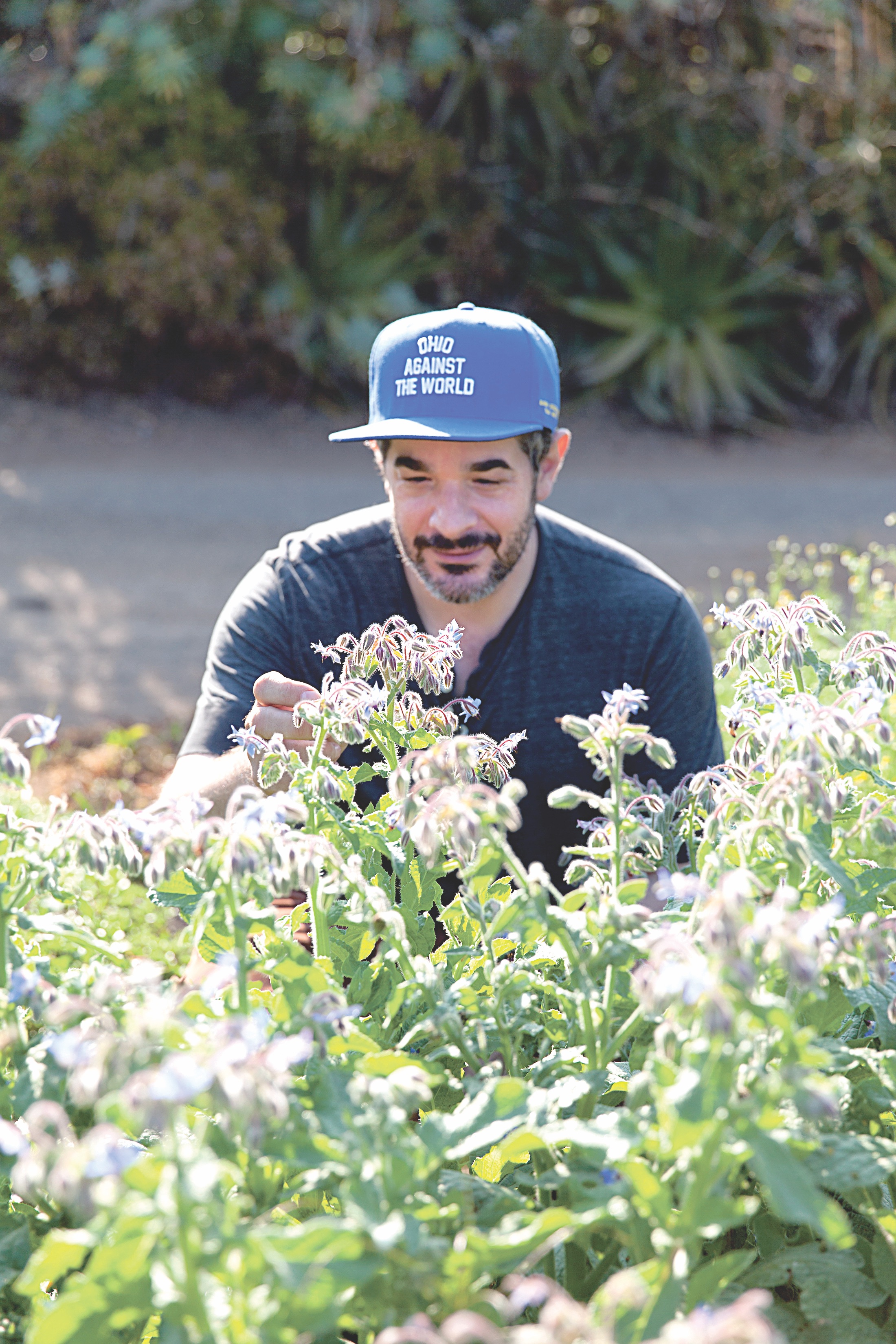
Jeremy Fox, chef at the Santa Monica restaurants Rustic Canyon, Esters Wine Shop & Bar and Tallula’s, is a master of farmers market cooking. He’s also the author of the recently released ode to things that grow, “On Vegetables: Modern Recipes for the Home Kitchen” (nominated this month for the James Beard award). This beautifully illustrated book has 150 recipes showcasing his “seed-to-stalk” style of gourmet vegetable cooking — including some from items found on many Passover tables, such as horseradish, potatoes and beets.

Jeremy Fox. Photos by Rick Poon.

Fox is in the process of developing a salad based on the iconic Passover flavors in charoset for his next restaurant, Birdie G’s. The new salad will have apples, walnuts and horseradish, dyed with beets. “It’s just an idea right now, but I’d like to work with these classic Jewish flavors and techniques. I’ve always wanted a venue to do that,” he said.

Birdie G’s is slated to open next year. In the meantime, for your vegetable-based Passover dinner, Fox advises thinking in terms of a mezze-style meal of many small plates, rather than creating a vegetarian entrée and side dishes. Include a variety of textures, and consider the flow of flavors across the whole evening. “I would start the meal a little lighter, more acidic and bright, and then get a little richer and heavier as you go,” he said. “So start with bright, raw crunchy salads and then move into roasted and caramelized flavors, things that are richer, or something with a grain. With the hot food, I like to have creamy and crunchy in tandem with each other. If it’s just crunchy, it feels dry.”

Great tasting vegetable dishes also depend on who grows the produce, and how. In “On Vegetables,” Fox lists the farmers he sources from and offers an A-to-Z guide to choosing well. We’re lucky in Los Angeles to have farmers markets every day of the week. This Passover, consider visiting one of them for your seder table.

Here’s a recipe for Passover, adapted from “On Vegetables”:

GOLD BEETS AND NECTARINES WITH HAZELNUTS AND OREGANO
16 baby golden beets (beetroots), greens removed and reserved for another use
3 nectarines
1/4 cup fresh orange juice
1 tablespoon champagne vinegar
1 tablespoon extra-virgin olive oil
1/4 preserved lemon
16 blanched hazelnuts, halved
32 fresh oregano leaves

Preheat the oven to 350 F.

Wash and dry beets. Place in a 12-by-6-inch baking dish with the whole nectarines and orange juice. Cover with foil. Bake until the beets are tender, about 30 to 45 minutes. Let cool uncovered, then peel and halve beets. Toss beets with the champagne vinegar, olive oil and salt.

Halve and pit the nectarines and puree with preserved lemon in blender. Taste and adjust seasoning.

To serve, place nectarine puree around each plate in 8 dollops. Lay a halved beet on each dollop, cut-side up. Place another small dollop of puree on top, followed by a hazelnut half and oregano leaf.

Makes 4 servings.


Wendy Paris is a writer living in Los Angeles. She is the author of “Splitopia: Dispatches From Today’s Good Divorce and How to Part Well.”

An Eight-Day Love Affair With Vegetables Read More »