I miss boredom. I don’t mean social boredom; I mean political boredom. That thought hit me the other night during the Democratic presidential debate. The high-anxiety candidates looked as if they had ingested triple espressos right before coming on stage.
Eager to appear relevant, they had to breathlessly inform us how terrible and unjust America has become and how they will rescue our dying republic.
“You would never know from listening to these candidates that the United States is just about the most opportunity-filled, fairest, and most rewarding country in history — not an oligarchical hellscape,” Jay Nordlinger of National Review tweeted after the debate.
What a boring thought.
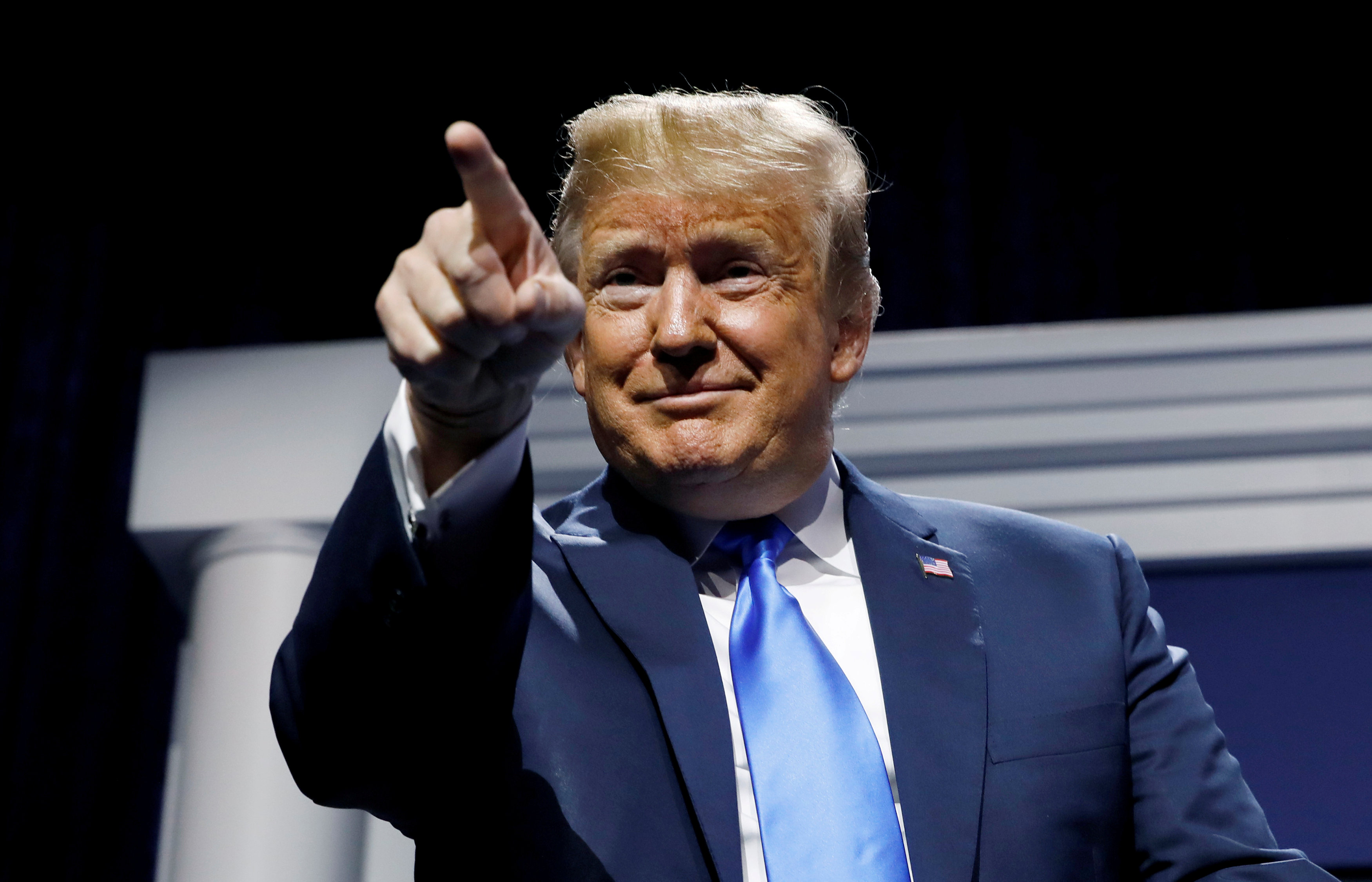
Apparently, to conquer the Orange Menace in the White House, the candidates think they have to match his hyperactivity—as if the antidote to a hyperactive president is a hyperactive candidate.
This is a blunder. The antidote to Trump is not ideological hyperactivity but stability, decency and moderation. After three years of the Trump Show, most Americans are approaching a collective nervous breakdown. They don’t need frantic appeals for another “transformation.” They need a break for sanity.
Instead, we’ve been getting from Democrats what Victor Davis Hanson calls “the most far-left Democratic agendas in modern memory: Medicare for all, health care for illegal aliens, the Green New Deal, open borders, a wealth tax, a 70-90 percent top income tax rate, slavery reparations, free college tuition, and late-term abortions if not permissible infanticide.”
These policy ideas make President Barack Obama look like a diehard Republican. If Democrats choose that path, guess who’s more likely to return to the White House?
As Peggy Noonan wrote in the Wall Street Journal: “Poised to defeat an unpopular president, the Democratic Party picked itself up—and placed itself outside the mainstream of American politics… They branded themselves not as what they had to be—a sophisticated party with a working-class heart—but what they couldn’t be—extreme left-wing progressives.”
How could they misread things so badly? It’s too easy to blame the far-left wing of the Democratic party that has made so much noise since the party recaptured the House of Representatives in 2018. That’s only part of it.
There’s also the human angle. Politicians have outsized egos. They need crises to tackle; they need to promise they can “change the world.” Indeed, our last two presidents—Obama and Trump— won the grand prize by promising us the moon, the stars and the sun.
On top of that impulse, there is the pathological hatred of Trump, which does weird things to people, like assault their nervous systems. You can’t combat someone you consider a monster by acting calm. You must be highly agitated to show how serious you are about taking him down.
Connect those dots—pressure from an angry left, large egos and contempt for a leader who must be vanquished—and you have hyperactive candidates flirting with radical ideas that turn off precisely the independent voters they need to turn on.
And let’s not forget this other dot– the economy is hardly in a state of “crisis.” As Noonan writes, “The share who say they are better off financially since 2016 is 57%. That is a powerful number. When people have peace and prosperity, they don’t like to make a change at the top.”
Maybe this explains the rising popularity of moderate candidates like Pete Buttigieg and Amy Klobuchar, and the continued strength of old-school relic Joe Biden. Despite serial episodes of awkwardness and incoherence, “Sleepy Joe” is still leading the pack.
As Frank Bruni of The New York Times wrote after the debate: “Biden reasserted the fundamental generosity of spirit that separates him from Trump and is like a tall, cold glass of water to Americans thirsty for decency.”
Independent voters especially are telling us something: Good economy or bad economy, they’re exhausted by Trump’s crudeness and divisive rhetoric and by the never-ending chaos and acrimony.
The radical ideas of candidates like Bernie Sanders and Elizabeth Warren promise only more division and acrimony. You’ll never hear a moderate like Biden tell 150 million Americans that he’ll take away their health insurance. The man hasn’t even given up on bipartisanship, as he said at the debate: “I refuse to accept the notion, as some on this stage do, that we can never, never get to a place where we have cooperation again.”
The Democratic road to the White House runs through such moderation and decency, not through extremism and hyperactivity.
It sounds boring, I know, but at this moment in history, it’s the party’s best hope for change.