A throng of young Palestinians charge the stage with what could easily be seen as malicious intent – if their vigorous stampede hadn’t been in sync with a performance of Dabke, the traditional Arabic folk dance that literally translates as “the stamping of the feet.”
Former Israeli soldiers and Palestinian militants, who once viewed one another down the barrel of a gun, are now turning their combined crosshairs to the fight for coexistence. Combatants for Peace, together with the Sheikh Jarrah Solidarity Movement, gathered together in the West Bank Arab town of Beit Jala on Thursday, Sept. 22 – the eve of what was expected to be an historic day for the Palestinians, with their president, Mahmoud Abbas, set to make a formal request for full membership of the U.N, a move that would make the Palestinian people the world’s 194th nation state.
Abbas has vowed that he will not be satisfied with observer status likely to be granted through the General Assembly, and would take his case to the Security Council on Friday, despite increasing efforts by Israel, the U.S. and European allies to find a way out of an impasse that will inevitably end in a U.S. veto.
As the sun sets over the Arab Orthodox Sports Club in Beit Jala, a dozen kids retreat to the playground, the dancing youngsters, drunk on happiness and hope, leave the stage to the night’s speakers, all simultaneously translated from Arabic to Hebrew and vice versa. The orators mostly comprise politicians from both sides, including a Fatah member, the governor of Bethlehem and former Israeli government minister Yossi Sarid, who begins his comments with a declaration that an independent Palestinian state depends on when, not if.
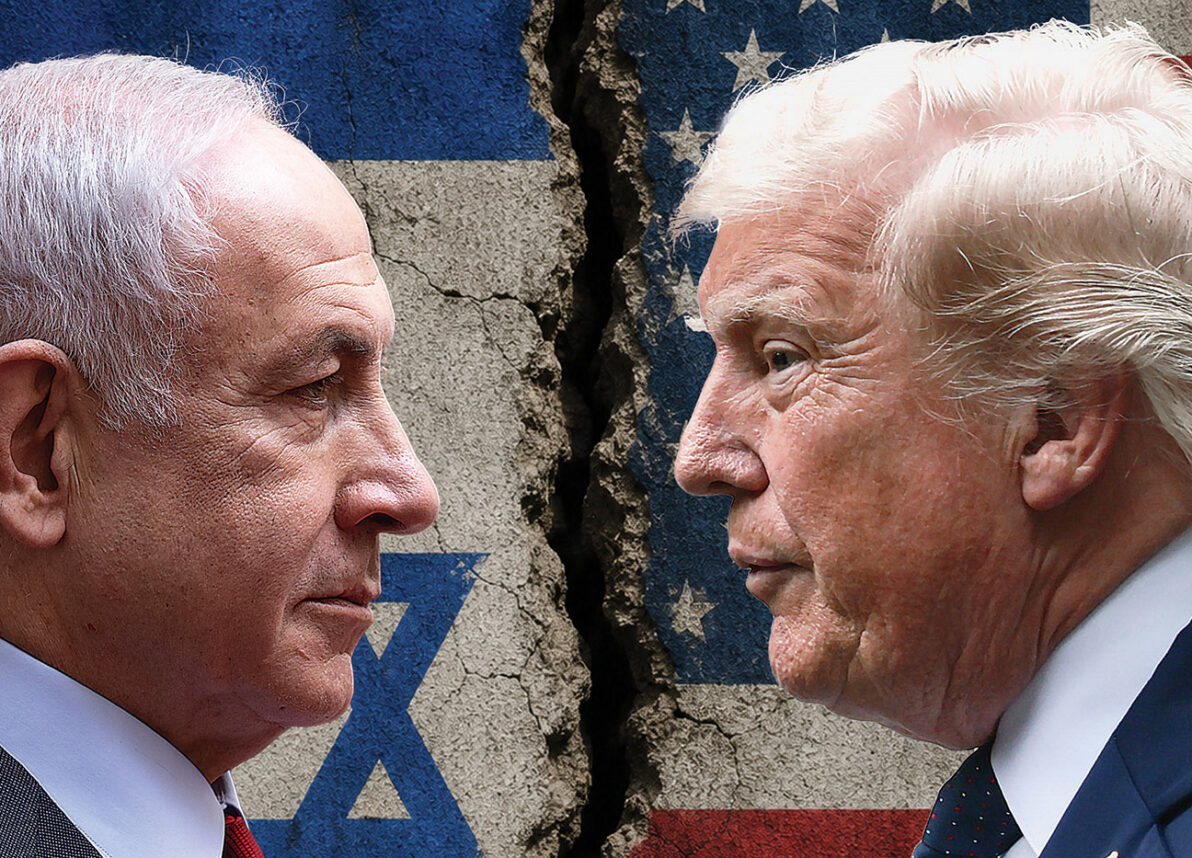
“Do not let Benjamin Netanyahu, Avigdor Lieberman and Barack Hussein Obama discourage you,” Sarid urges the audience. “The path is long, and the rhythm is slow, but we are progressing, and the end of occupation is near.”
Even though this statement is met with standing ovations and people are smiling, a cloud of uncertainty hovers in the open space; it’s a loud but ultimately worried celebration.
“Tomorrow will be a failure, and result in an American veto, but we see it as a very important psychological act for the Palestinians. They will simply try again. The act itself is symbolic. Tonight we’re celebrating the willingness, the courage to go before the UN and demand a country, even in the face of failure,” says Erez Krispin, the Israeli special project coordinator for Combatants for Peace, a group of former Israeli soldiers and Palestinian fighters who have laid down their arms and now work together to end the decades-long conflict.
Abed Khamil, the governor of the West Bank town of Bethlehem, takes to stage with praise for Mahmoud Abbas’ courage and honesty, and wishes him luck at the UN. In Bethlehem, a massive sign in front of the Church of the Nativity reads:
“Yes we can
Yes we will
Palestine State 194”
Elsewhere, not everyone has even that gritty optimism. In the Old City of Jerusalem, Palestinian Muhammad Abdallah, 70, is arguing whether any praise is due.
“It’s nothing but morphine for the region, and just a carrot for Mahmoud Abbas. Nothing’s going to change on the ground. There is no solution.”
And inside the Western Wall compound, the holiest Jewish site, Israeli tour guide Yosi Ya’ari, 61, also commends Abbas, but he too sees this as an act of desperation that will yield few concrete results. Peace in this region, he says, will be achieved by leaders who can talk to one another, and who don’t resent one other.
“We’re waiting for the leaders. Netanyahu is not courageous enough to do it, and it’s too late for Mahmoud Abbas. He’s exhausted, he’s tired himself out.”
He instead draws a comparison with Prime Minister Yitzhak Rabin’s respective peace efforts in the 1990s with Palestinian leader Yasser Arafat and Jordan’s King Hussein.
“It wasn’t Rabin and Yasser Arafat who came to terms, but Rabin and King Hussein,” he says of the three late leaders. “You didn’t even need to listen to them, all you had to do was watch their body language. Rabin was nearly choking trying to shake hands with Arafat. He couldn’t stand the guy, and they never reached an agreement. The peace with Jordan took less than a year to write.”
The same is true of Egypt’s Anwar Sadat and Israeli PM Menachem Begin, he maintains. The two, although never meeting in an embrace, shared a common language and in 1979 signed a peace agreement.
Youthful pessimism
Palestinian high school student, Yazan Ghnaim, outside his father’s shop in the Old City, conveys a newfound respect for Mahmoud Abbas as a patriot and not the underdog of the U.S., but ultimately expresses disillusion. He, too, is not holding his breath for a positive UN vote.
“But for Abbas to go in front of the U.N. is better than wasting time on negotiations. Negotiations don’t change my daily life.”
The Palestinian people have had enough, he says. Listing the checkpoints, attacks by settlers, no freedom of movement or freedom to choose a place to live. He fears that if the international community does not allow the Palestinians their freedom, it could ignite a new violent uprising.
“If I could choose, I’d live in Ramallah, but without seeing settlements right outside my window, fearing attacks. I just want safety.”
But even if the Security Council does grant Palestinians statehood, he says, it won’t tear down the separation wall or the checkpoints. And an entirely different issue would arise, because what will happen with the blue identity cards that grant East Jerusalem Palestinians entry to Israel if East Jerusalem becomes the capital of the new state?
“Will I be able to go to Tel Aviv?” he asks.
Spectre of violence
But at the gathering in Beit Jala, Yael Kenan, one of the Israeli organizers of the event, reiterates the speakers’ vow of non-violent resistance. This new tactic seems to be working in the international arena, with Israelis increasingly viewed as aggressors and oppressors, and the Palestinians as the victims.
“Non-violence is an immensely powerful weapon. And if Mahmoud Abbas and the Palestinians are smart enough to keep this momentum, then there’s no greater threat to the occupation.
“They [Israeli soldiers] know what to do when they’re faced with children throwing rocks, or even terrorist attacks, but non-violence will be much more of an embarrassment to the Israeli government, and will garner much more support from the Israeli public.”
But the Israeli army is girding for clashes in the coming days, and heading for the West Bank settlement of Ma’ale Adumim, army trucks can be seen ferrying Merkava battle tanks to the nearest military base. In the settlement’s main shopping mall, mother of three Ofra Shimoni shows both fear and hostility.
“If we don’t give them all the things they want, so Intifada 3,” she says, using the Arabic word for uprising, long part of the Hebrew lexicon. “Things will get worse, they won’t change for the better. I don´t believe they [the Palestinians] should be here, nor that they have a right for a state.”
Back in Beit Jala, tired from the dancing and the adrenaline rush, the Palestinian crowd heads out into the night and the Israelis file onto buses to go back through the army checkpoints to Jerusalem.
Muhammad Farid and Muhammad Musa, a medical student in Cairo and a student of engineering in Hebron respectively, reiterate that even though Friday’s UN gathering will most likely result in a veto, the Palestinians will try again, and again, until they win their independence.
And on the chances of a satisfactory outcome on Friday, which will ultimately be determined by the international community, not least the U.S., they both are still sanguine. Together they chorus: “Inshallah!”