“I hope you die and never come back!” the woman screamed at her husband as he left for work. Although the couple loved each other, it didn’t stop them from having the occasional quarrel. That morning’s quarrel, however, was worse than usual.
As fate would have it, the man never made it to work. He died of a heart attack shortly after leaving the house. We’ll never know if the argument contributed to his death, but it doesn’t matter. The woman, widowed now for 10 years, lives with the regret that she and her husband gave such ridiculous importance to their disagreements.
She now knows, all too well, that the nastiest disagreement is utterly insignificant when compared with the awesome finality of death.
I came across this story in a manuscript for a new book written by my friend Rabbi Benjamin Blech, with the working title “Why We Shouldn’t Fear Death.” The book is full of these little stories and anecdotes, mixed in with the spiritual musings of one of the leading lights of Modern Orthodoxy.
Blech himself spent many months fearing death after a routine doctor visit in February 2010. “There is no known cure,” his doctor told him, after announcing he had a rare fatal disease called cardiac amyloidosis. Amyloids are proteins that can attack different parts of the body. If they invade the brain, the result is Alzheimer’s. Blech’s problem is in his heart. The amyloids are hardening the heart muscle, making it more difficult for the blood to be pumped to the rest of the body.
For nearly four decades, as a community rabbi, Blech would counsel and comfort congregants as they approached death. Now he had to do it for himself. He wasn’t sure how. He found something on Google that suggested he had six months to live. He went to two specialists who were more careful with their prognosis: Intensive research is being done on the disease, they told him, but no one can predict what the lifespan will be.
So Blech is banking on meds, prayers and attitude.
It’s the attitude part that’s been the biggest challenge. After many months of “just being scared,” he decided to start writing again. Only this time, instead of working on a book (he has published 12 books on various Jewish themes), he wrote short columns for Aish.com. The reason was simple: If he doesn’t know how long he has to live, better not start a book he can’t finish.
Then, four months ago, Passover came.
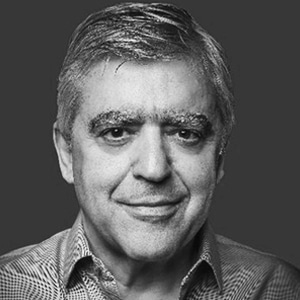
“It was like a fire came over me,” he told me last week at a café in the neighborhood where he lives with his wife on the Upper West Side. Blech might be 77, but he has the face of a bright-eyed child who sees his first rainbow. He seems to always be amazed.
“I got this incredible urge to write a book about death,” he said. “To dive into it and see what would happen.”
Right after Passover, still unsure of how much longer he had to live, he sat down to write. The words just poured out. He finished the book in two months.
The result is an intelligent and soulful exploration of the unknowable. Blech doesn’t try to conquer death or “spin” it or sugarcoat it. He’s amazed by death, but not fazed by it. He looks it squarely in the eye, turns it around, peels back the layers, and, ultimately, infuses it with meaning.
Blech finds meaning in death by discerning divine meaning in life. If God is eternal, and we are created in God’s image, then we share in that eternity. Our physical bodies might die, but our little piece of God — our individual souls — never die.
Our souls live on in everything we have done in this life, in every person we have touched, every word we have shared, every song we have sung. Living with that awareness helps us fulfill our purpose in life.
Rabbi Blech says he doesn’t fear death, and I believe him. Many years ago, my rabbi, Manis Friedman, asked me if I knew what people feared most. I mentioned the obvious: Loss of health? Loss of livelihood? Death?
“No,” he said. “The biggest fear people have is that their life has no meaning.”
On that basis, I can see how Rabbi Blech has lost his fear of death. His diagnosis, he says, was “God’s way of telling me to write this book, to complete my mission. I would never have written a book about death otherwise.”
He’s right. Blech is too sweet and optimistic a man to think of writing a book about death. Ironically, it was the hardening of a muscle in his heart that led him eventually to take a hard and honest look at this most difficult of subjects.
By transforming a fatal diagnosis into a moment of purpose, Rabbi Blech has re-energized his life. Now, because his condition has “not worsened,” he’s wondering if there is still more he can do to fulfill his mission on earth. He’s looking for another sign from God.
In the meantime, one thing you can bet he won’t do is argue with his wife.