Just a month ago, two new reports cast light on the complex and contradictory nature of Israeli society. The first was the Pew Research Center’s survey of Israel, which exposed “deep gulfs among Jews, as well as between Jews and Arabs, over political values and religion’s role in public life.” The second was the World Happiness Report, which ranked Israel #11 in the world in terms of the level of contentment of its citizens.
To anyone who has spent time in Israel, the two reports capture the confounding nature of the country. How can a place be so happy when its residents fiercely disagree on so many matters large and small? Within the Jewish majority alone, the differences on core issues among the four groups surveyed– Charedi (ultra-Orthodox), Dati (Orthodox), Masorti (Traditional), and Hiloni (Secular)—are striking. For example, the Pew survey revealed a wide chasm between Orthodox and non-Orthodox groups about whether Israel should be more Jewish or more democratic.
It is this question of Jewish vs. democratic that will shape the contours of Israeli society over the next half-century. And it is this question that pushes to the fore the status of Israel’s large Arab minority.
Here the Pew results reveal rather disturbing trends among all sectors of the Jewish population. The survey showed that a plurality of Israeli Jews support the proposition (48-46 percent) that “Arabs should be expelled or transferred from the country.” A majority of Charedi, Dati, and Masorti Jews were in favor of this statement, while 36 percent of Hiloni Jews were, as well. There has been much discussion around this conclusion, with one of Israel’s leading experts, sociologist Sammy Smooha, casting doubt on the validity of the figures. Smooha, who has spent his entire career surveying Jewish and Arab attitudes toward the other, suggests that somewhere between one-quarter and one-third of Israeli Jews oppose co-existence with Arabs or would like to see them leave the country.
But even these lower rates raise alarm bells about growing intolerance. In light of this, I was interested to know how Palestinian Arab friends in Israel interpreted the Pew results. What is it like when a high percentage of your fellow citizens regard you as unwelcome in your own country?
I spoke first to a young friend, Nabeel Aboud Ashkar, who does extraordinary work as co-founder and artistic director of the Polyphony Foundation, which brings Jewish and Arab kids together through classical music. When I asked Nabeel about the Pew survey, he admitted that his first response was to say to himself that he should just take leave of the country and go to a place where his talents are appreciated — such as Germany, where he has pursued his own musical training as a violinist. Upon reflection, though, he reversed course and said to himself: “No, this is my country. The country does not belong to the intolerant. It belongs to those who believe in living together side by side respectfully. If everyone who is intimidated by extremism decides to leave, then the extremists achieve what they want. And that is not my vision of the future.”
I also spoke to Fathi Marshood, another friend and colleague, who runs the Haifa office of Shatil, one of Israel’s leading and most effective social justice organizations. Fathi labors indefatigably to insure that all residents in Northern Israel — Jews and Arabs alike — receive equal access to state medical and welfare resources. When I asked Fathi about the Pew survey, he said that it made him feel deeply uncomfortable about his place in society. The survey results reflected, he said, an unmistakable trend toward intolerance on the part of the “hostile majority.” The Pew survey made clear to him that his ideal polity was not a Jewish state or a state of the Jews, but a fully democratic state that grants equal rights to all of its citizens, without discrimination.
Notwithstanding the alarming currents in the Pew survey, Fathi vowed to continue his work. He was not optimistic about significant structural change in the near or intermediate term, certainly not under a Netanyahu government. But he did express appreciation for one political figure in Israel today, President Reuven Rivlin, who has been outspoken at every turn in condemning anti-Arab racism.
I look on with great admiration and empathy at my friends. How would Jews feel if nearly half, or even a quarter, of America’s population favored our removal? The response by Nabeel and Fathi to the Pew results is neither self-pity nor flight, but rather redoubled commitment to work for the betterment of all in peaceful and constructive ways. Understandably, they are not going to be singing “Ha-Tikvah” any time soon. They are, after all, both children of the land, whose ancestors lived on it just as Jews began to act on the desire to return after a 2,000-year hiatus. And yet, remarkably, their “hope is not yet lost.” Therein lies a glimmer of light in an otherwise dark tunnel.
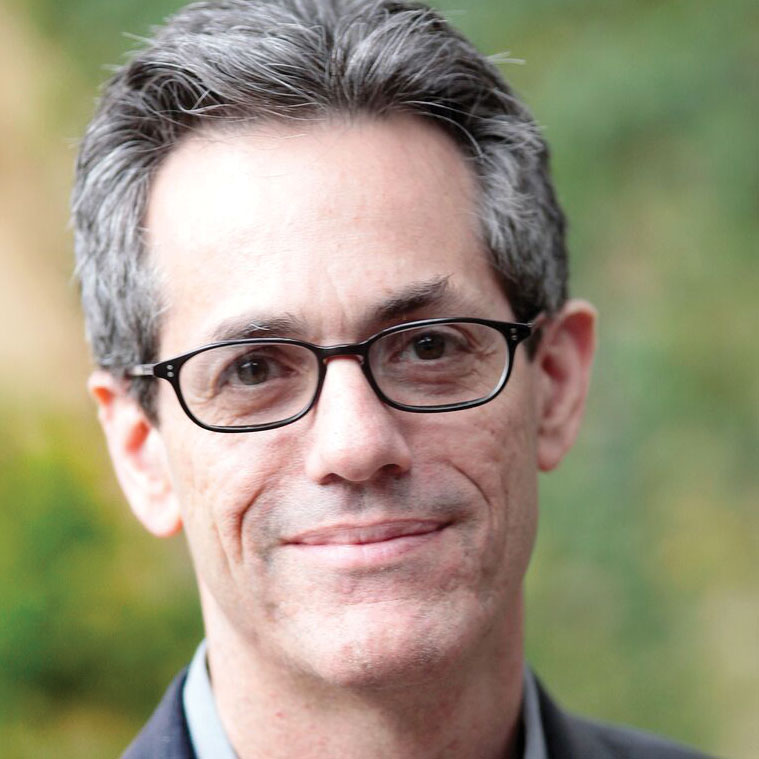
David N. Myers is the Sady and Ludwig Kahn Professor of Jewish History at UCLA.