Can an alcoholic who was poisoned with his father’s anti-Semitism use a moment of naked exposure to confront his bigotry? Can he ever hope to cleanse himself of this deeply-seated
hatred or is he forever doomed?
Will he turn his life around and begin using his celebrity and wealth to combat the anti-Semitism he now eschews? Is the adage, once an anti-Semite, always an anti-Semite, unshakeable?
As a Jewish people, these are some of the questions we all personally confront in different forms during the month of Elul, the 30-day period preceding the better-known 10 days of penitence (Rosh Hashanah through Yom Kippur).
For some of us, combating anti-Semitism has replaced the teachings of our faith on compassion as a new form of religion. I meet many Jews who are not religious, don’t keep the Torah, but let anyone dare insult the name of our people, and they are the first to condemn him.
That may be the beginning and the end of Jewish identity for some. But I believe such a reactive mentality neglects the foundations of our faith and its teachings on redemption.
Mel Gibson made a tepid but widely reported expression of remorse and a call to begin dialogue with rabbis after spewing anti-Semitic comments. In response, I invited Gibson to publicly apologize before my congregation on Yom Kippur, the Day of Atonement.
Our faith does not believe in vicarious atonement and requires direct action to the injured party, coupled with one’s apology. The media mistakenly reported my letter to Gibson as an offer to speak, not as an offer to apologize. It furthermore omitted the key precondition of a face-to-face meeting. Should that meeting ever come to pass, I would use my 30 years of rabbinical experience, 20 of them spent in the entertainment and arts community, to evaluate Gibson’s sincerity.
I would begin by requiring him to adhere to the same four steps of repentance that I set as a guideline for myself. Firstly, he must admit his act and acknowledge that it is not a new phenomenon.
Secondly, he must make a confession of the terrible slander he uttered at a time of defensive war and great sensitivity for the Jewish people. When he declared “the Jews start all the wars,” he was pointing an anti-Semitic finger at the Jewish state, instead of at the true culprit, Hezbollah Islamo-fascism and its call for Israel’s destruction.
How would he respond to his Malibu church and home being bombarded and his children being kidnapped? Gibson needs to comprehend and fully own the scope of that libel. Individual apologies to the families of fallen Israel Defense Forces soldiers would be an appropriate start.
Thirdly, he is required to express his sincere contrition and directly ask forgiveness of the injured party. Sometimes the place you choose for such an act can send an important message.
I recently returned from Poland, where I attended a memorial ceremony at the Auschwitz death camp led by Pope Benedict XVI. During our personal exchange, he told me why he had come to that place of horror. It was, he said, “to make a statement as the leader of world Catholicism and as a son of Germany.” His humble presence and words of comfort spoke volumes.
Gibson’s father denies the Holocaust, and Gibson must now clearly and unequivocally denounce that perverted view. I urged him to stand before the Jewish community, with his children at his side, and break the intergenerational cycle of hatred.
Lastly, any sinner is required to make a, “tikkun,” a viable act of repairing the injury. Gibson should sponsor an annual seminar on combating all forms of religious, ethnic, sexual and racial hatred. Real soul repair requires time and work but it must begin.
Once these concrete steps have been undertaken, we, as a people who pride ourselves at being “the compassionate children of compassionate ancestors,” must open to accept his contrition. While we may remain skeptical, we must be prepared to forgive.
According to the prophet Isaiah, in the final days, the children of those who despised Israel will come to worship with us in the temple of Zion. (Isaiah 60:14) The objective here is not religious conversion, but rather that the persecutor shares in the perspective of the persecuted.
The world is too full of blind hatred of our people, and if we can respond to one anti-Semite is it worth the effort? Rabbinic tradition narrated that some of our worst enemies became instructors of Torah.
The great Rabbi Meir of the second century was a descendant of the Roman emperor, Nero. The offspring of Sennacherib, who sacked Jerusalem, came to teach Torah in public. These were none other than Shemaya and Avtalyon, two of the most distinguished members of the rabbinic chain of tradition. They were also the teachers of the renown sage, Rabbi Hillel, who asked, “If I am not for myself, who will be for me, but if I am only for myself, of what worth am I, and if not now, when?”
Gibson is currently in alcoholism rehabilitation, and I have postponed the invitation for a later date. The time to begin, however, is now, and these 30 days of soul-centered repentance are the opening for his anti-Semitic rehabilitation to begin and for us to ask questions about our dearly held assumptions.
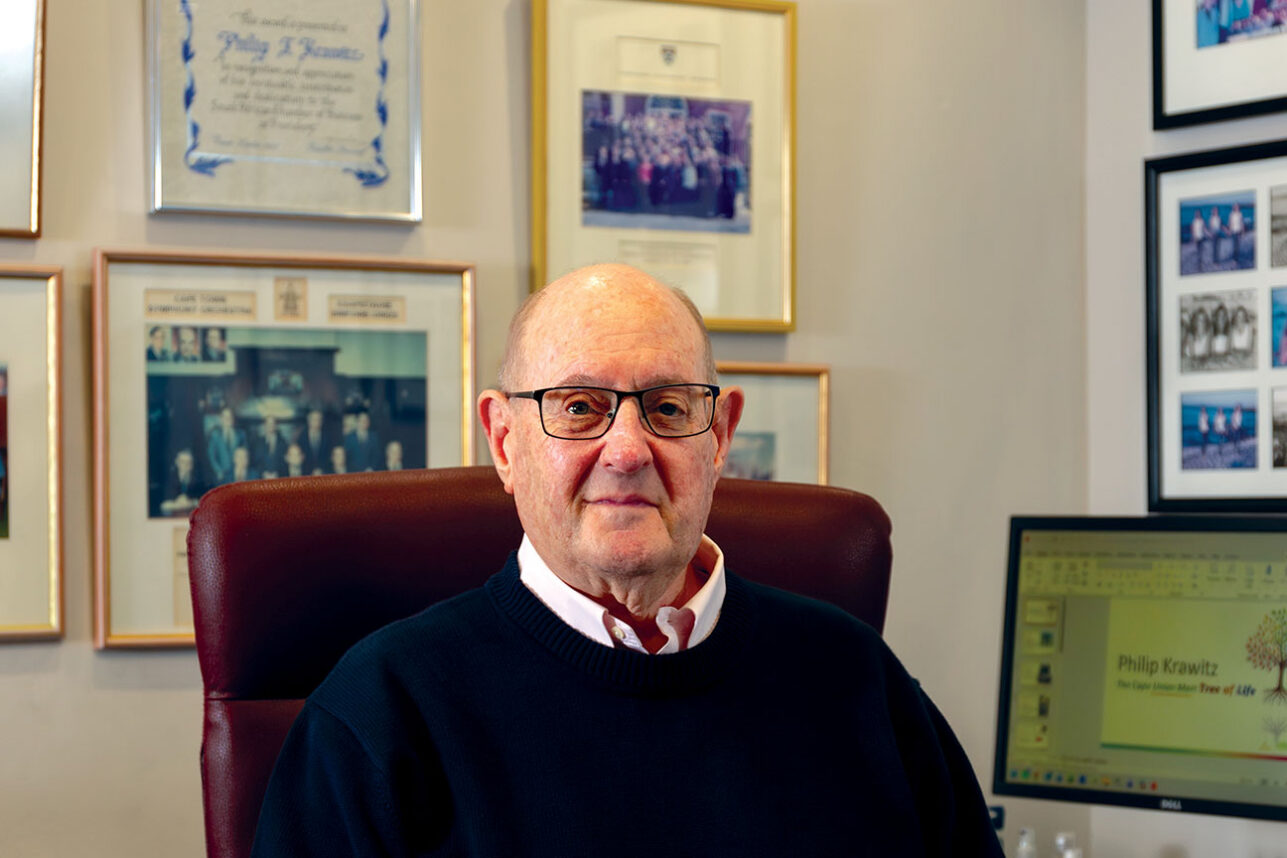
Rabbi David Baron is the spiritual leader of Temple of the Arts. He is the author of the “Sacred Moments” prayer book and “Moses on Management: Leadership Lessons in Business and Life” (Simon & Schuster). He produced a nationally televised Yom Kippur program for the homebound which airs on PAX TV.