For as long as I can remember, the Holocaust has represented, among other things, the complete and utter absence of physical freedom. I’ve seen Holocaust films where Jews fought back, found meaning in the smallest things, tried like hell to maintain some dignity and Jewish customs, used their talents to improve their survival odds, and so on.
But until I saw “The World Will Tremble” Sunday night at an LA Jewish Film Festival premiere in Beverly Hills, I had never seen a Holocaust film where Jewish prisoners manage to actually escape from the clutches of the Nazis.
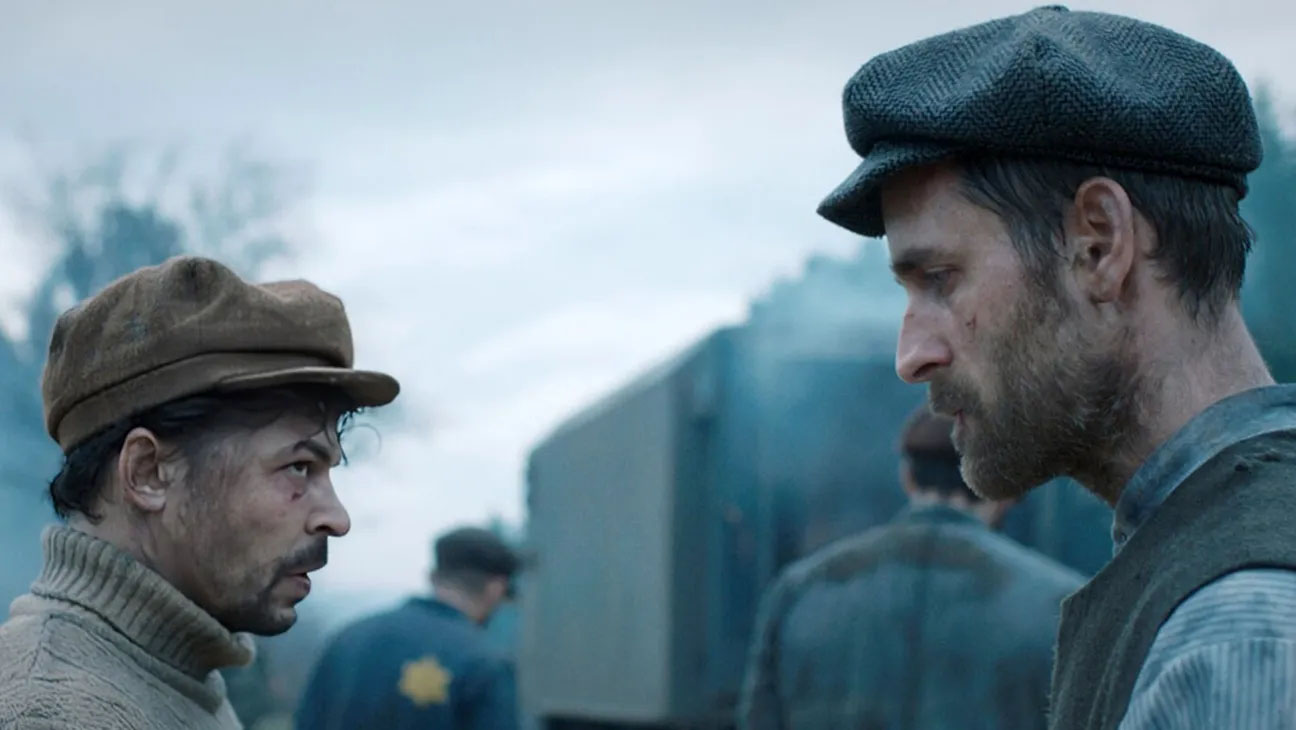
I won’t spoil the story for you, but how the film came to be made is a story in itself. Israeli director Lior Geller, who was at the screening, shared with the audience his 12-year journey of “investigative screenwriting” to excavate this little-known story of two Jews who miraculously escape the Chelmno extermination camp in Poland in 1942. We learn that Chelmno is the first instance of a camp devoted exclusively to the mass murder of Jews.
Geller needed years of digging because the details of the story were so hard to come by. With the help of Holocaust museums, Holocaust scholars and others, he eventually dug into enough archives and talked to enough people to write a screenplay that would do justice to the story.
The hair-raising drama of the escape drives the film, but that still can’t take the edge off the scenes of human carnage. The horror itself is what I usually take away from a Holocaust film. The horror and the distance. The horror is all the way there, and I am all the way here, a free man, a universe away.
In “The World Will Tremble,” I took away something new. It wasn’t just the unbearable pain of tragic struggle. It was also the tantalizing possibility of real freedom; the idea that those two starving Jewish prisoners running from Nazis in a freezing Polish forest were crossing a universe and trying to come to me.
They were running and swimming and cycling and inching and coming to that quotidian happy place we call freedom.
The difference is that while we gorge on freedom all day long, our two heroes scrounge with hawkish eyes for any tiny sliver of freedom that might come their way. A little blade here, a ripped canvas there, a lucky swim in a frigid river, a chance encounter with a benevolent Polish woman, finding a helpful rabbi in a deserted village, and so on. Those were tiny slivers of freedom, yes, but it was still freedom, precious freedom.
Because this is still a Holocaust movie, we find ourselves at the end with familiar feelings of betrayal and bitterness at the world’s unforgivable failure to rescue the Jews before we lost 6 million.
But here again, the film offers a twist. The story it tells of the efficient murder of Jews through the crude use of trucks as portable gas chambers was a precursor to the infamous concentration camps. The escape story, then, had a second layer: the escapees wanted the story itself to escape the Chelmno death camp and ring alarm bells. As much as they craved personal freedom, they craved even more the prospect of alerting the world to the unspeakable tragedy that was about to hit the Jews. Knowing what eventually happened (and didn’t happen) doesn’t make it any less painful.
By the time the story of Chelmno made its way from the Warsaw underground to London and finally to the U.S., only one American newspaper put it on its front page. It was not the Jewish-owned New York Times. As Geller informed us, it was an African-American paper, the Pittsburgh Courier.
Evidently, the only journalists who “trembled” before the massacre of Jews were those who knew never to take even tiny slivers of freedom for granted.