

With all the quality time between Thanksgiving and New Year’s, some family drama is bound to occur. But I trust that we all fared better than poor Adam and Eve with their sons, Cain and Abel. While the Torah is replete with cases of sibling rivalry – Joseph’s brothers sold him into slavery, Jacob stole Esau’s birthright – fratricide is another matter.
Why did Cain kill Abel? The story goes that G-d favored Abel’s offering of lambs over Cain’s offering of his harvest and that so angered Cain that he murdered his brother in a jealous rage.
The Torah then goes on to provide an explanation for Cain’s behavior: “sin is crouching at the door; it desires you, but you must master it.” (Genesis 4:7) Evil was waiting to pounce, and Cain succumbed to its temptations.
Is sin really waiting for a moment of weakness to strike in each of our lives, even to the detriment of our loved ones? According to Genesis 8:21, “the human mind inclines to evil from youth onward.” That passage is the source of the phrase yetzer hara, the inclination to do evil, which can be contrasted with its opposite, yetzer hatov, the inclination to do good.
“Free will,” a topic debated by philosophers and theologians for millennia, suggests that we have the power to choose between the two. We can follow the “better angels of our nature,” as Abraham Lincoln so memorably put it in his first inaugural address, or like Cain, we can submit to our baser instincts, falling prey to evil.
I am confident that most of us seek to do the right thing. And when we fall short, we take stock, and vow to try harder the next time. But that assumes that we know the difference between good and evil.
I wish that were always true. I suspect that some who scream about globalizing the intifada (which would rid humanity of Jews) believe that they are trying to make the world a better place. But they are embracing evil under the guise of goodness.
An especially painful example comes to mind. Perhaps you read about the Hamas terrorist who, using the phone of an Israeli woman he had just murdered, called his parents to exclaim: “Look how many I killed with my own hands. Your son killed Jews! … I killed her, and I killed her husband, with my own hands I killed 10 … Their blood is on my hands” he told his father.
His parents were overjoyed. “My son, may God protect you,“ his mother said. “I wish I was with you,” his father added.
Earlier this fall that particular terrorist was eliminated by IDF forces. Am I succumbing to evil impulses by admitting that I hope his parents were with him to share in his demise? If so, that is a sin I am willing to accept.
It is other sins I lament. And the conclusion of 2025 is an excellent occasion to step back and reflect on our failings.
Two years ago I wrote a Jewish Journal column about a tradition my wife and I have had for over a decade. Following the suggestion of Rabbi Steven Stark Lowenstein from Am Shalom synagogue in Glencoe, Illinois, every Shabbat I write down the most important events of the week, both good and bad. And on New Year’s Eve, my wife and I read them aloud and select a dozen or so that best represent the past year. When we review the summaries from previous years, it is as if we are opening a time capsule, reminding us of the joys and the sorrows that might otherwise be lost to memory.
This year we will once again focus on the choices we have made. When did we embrace yetzer hatov – doing the right thing for our family, friends, and community – and when did we fail to do so? After acknowledging our shortcomings, we will vow to do better in the year to come.
May 2026 be a year in which the Jewish people as a whole, and each of us as individuals, leave sin and evil crouching behind a door that is securely locked. Let us contribute to the joy of others and welcome the goodness that abounds.
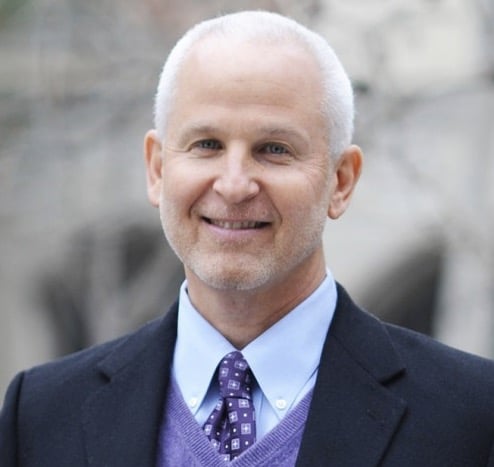
Morton Schapiro served for more than 22 years as President of Northwestern University and Williams College. He taught almost 7,000 undergraduates over his more than 40 years as an economics professor.
































