
Princeton professor Michael Walzer’s contribution to Kabbalat Shabbat prayers seems especially relevant today, and not just because of last month’s celebration of Pesach. “Standing on the parted shores of history we still believe what we were taught before ever we stood at Sinai’s foot; that wherever we go, it is eternally Egypt …”
I know a rabbi who considers this his least favorite part of Friday night services – he finds it depressing and defeatist. For him, it is not “eternally Egypt.” To the contrary, he says, we should revel in our freedom and accomplishments since those terrible times when we were slaves to Pharaoh.
But if we moved on, why does it say in the Haggadah that “Now we are slaves; next year may we be free?” Or that it is our duty to regard ourselves as though each of us went forth from Egypt?
If we are supposed to relive our centuries as slaves, must we also relive Oct. 7, the darkest day in post-Shoah Jewish history? Will it be like the movie “Groundhog Day,” in this case awaking every morning from a peaceful slumber to learn that it is once again Oct. 7, and that our world has been shattered?
Jay Levy, former Senior Rabbi at The Sephardic Temple in Los Angeles, argues that recalling the past can be an impetus both to action and to understanding. Imagining that we are slaves in Egypt, he says, reminds us not only to be grateful for today’s privileges but to have empathy for those less fortunate.
What an inspiring way to think of the world. So many label the State of Israel – and all Jews – as oppressors, but we shouldn’t lose sight that we have long been among the most oppressed of all peoples, and whenever we are in a position to address the suffering of others, it is a moral imperative that we try to do so. That isn’t an easy task while the future of our ancient homeland is at stake, and I agree with those who point out that when experiencing severe turbulence, put your own oxygen mask on first. Nonetheless, doing the right thing while you are in a tenuous place seems to matter even more than doing it when you feel safe and secure.
Rabbi Levy raises another consideration that accompanies thinking of ourselves as still being in bondage: that we be vigilant and prepared. He knows families throughout the Jewish Diaspora who have survival bags at the ready, with money, food and passports packed should they be required at a moment’s notice. Asking whether each day is Oct. 7 is like asking whether each day is Kristallnacht. Must we live in fear that they will come for us next?
Let’s think ahead to after the war in Gaza ends. We, and Israel, will undoubtedly be forever changed. Is the legacy of the Hamas invasion that we will build reinforced saferooms, either physically or metaphorically, or is it that we are more willing than ever to offer our assistance to those who most need our help? In my view, it should be both.
Returning to the Haggadah, there is no denying the words “For more than once have they risen against us to destroy us; in every generation they rise against us and seek our destruction.” If younger Jews thought that those days were long past, Oct. 7 surely shocked them out of their complacency. And if that threat still seems distant, visit a local college campus to bring it closer to home.
Just as the Bible admonishes us to remember what Amalek did during the exodus from Egypt, violating any semblance of the laws of war with his ruthless barbarity, we must never forget Oct. 7 – not to relive it each day in a terrifying loop, but to know that the price of vigilance shouldn’t be a loss of humanity.
My favorite paragraph in the Haggadah puts it beautifully when we praise G-d for bringing us “out from slavery to freedom, from anguish to joy, from sorrow to festivity, from darkness to great light.” Seeking that light during these darkest of days is an enormous task, but one worthy of our past and of our future.
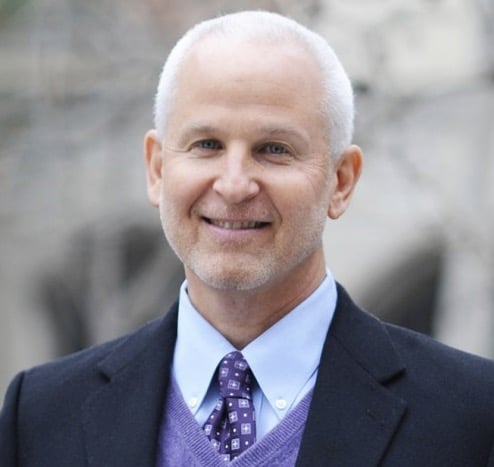
Morton Schapiro is the former president of Williams College and Northwestern University. His most recent book (with Gary Saul Morson) is “Minds Wide Shut: How the New Fundamentalisms Divide Us.”