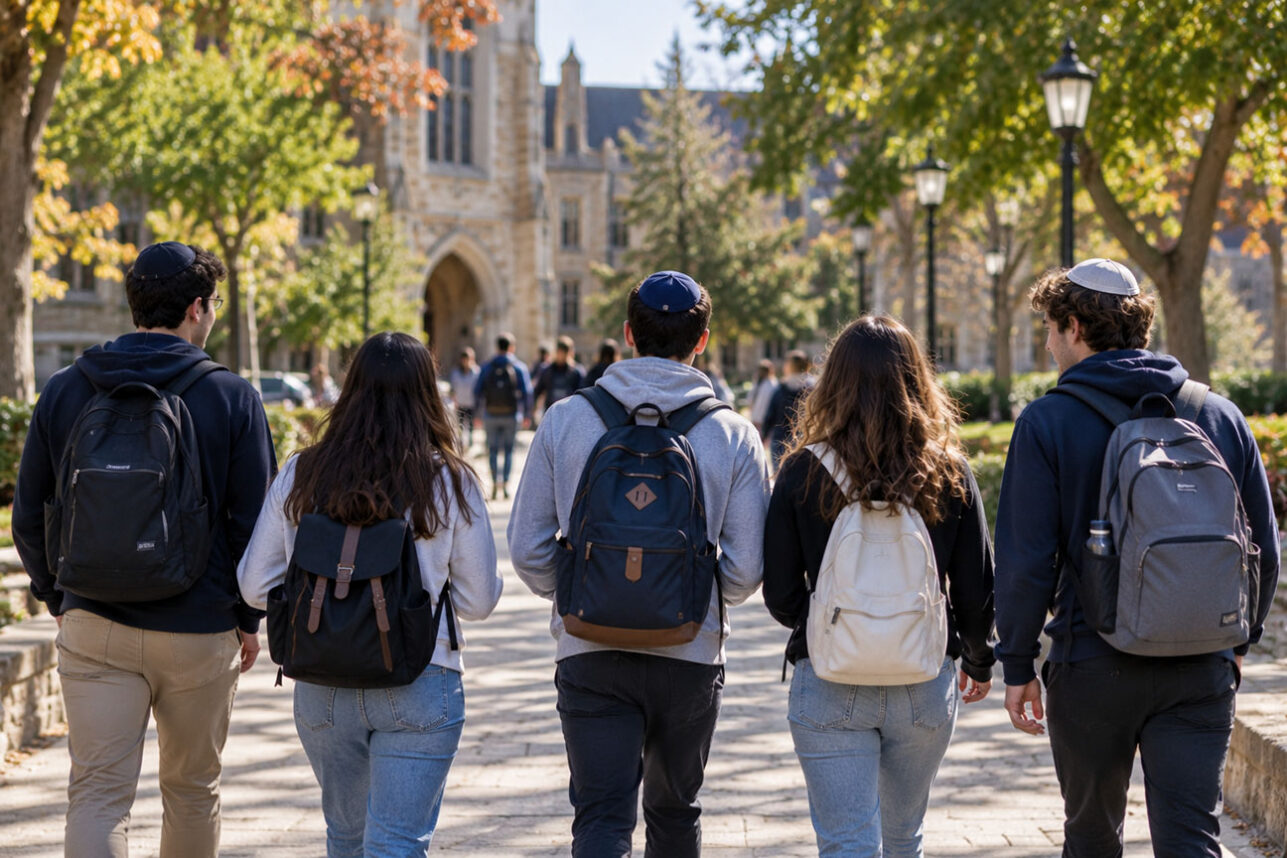
My husband Daniel and I often host non-religious Jews for Friday night dinner. Many of them have never done Shabbat before. They also don’t keep kosher or celebrate all the holidays.
“I’m a bad Jew,” some of them say, as if they’re in a confession booth with us.
“Forgive me Moses, for I have sinned.”
I have to remind them that I’m not their rabbi. I’m not their parent. I’m not God.
Just because I’m Orthodox, it doesn’t mean I care if they’re religious. I’m not judging them. Their level of religiosity is between them and God.
But people think that because I’m a religious Jew, I’m keeping tabs on their observance. That I think they are less of a Jew.
A Jewish friend once told me, “I don’t like those Hasidim in Williamsburg. I just feel like they’re judging me. They think I’m not really Jewish.”
The truth is that most observant Jews are only paying attention to their own relationships with God – and perhaps their families’ as well. It’s nice when people want to take on more and foster a deeper connection to God, but if they don’t, we don’t look down upon them for it.
It makes me feel good when my non-observant friends come over and they’re excited to say the blessing for washing their hands or they hum along to the benching. I’m happy when they like my cooking and learn that hey, kosher food is actually quite delicious.
And if they decide to take on more, I get excited. I believe it’s healthy to want to feel spiritual, in whatever way that manifests for them. I love showing them my world and the beauty in how I live.
When they like it, it’s also validating for me. Orthodox Jews often get a bad rap in the media, and sadly, our fellow Jews sometimes put us down. They think we’re crazy and brainwashed for living this way.
But I’m convinced that if they saw how we live up close and personal, they’d realize it’s the exact opposite of what they’ve been told. Living as an Orthodox Jew is incredibly fulfilling, comforting, meaningful and fun. I enjoy life to the fullest. I’m having an absolute blast.
When you look at an outreach organization like Chabad, the shaliach rabbis and rebbetzins are hardly there to judge non-observant Jews. Instead, the shaliachs help them perform mitzvot, if that’s what their visitors want. They know that every mitzvah, every good deed, matters.
I’m aware of how hard it is to hold onto religion in a society that is increasingly moving away from it. I’m also aware of how tough it can be to become observant; it took me six years to fully observe Shabbat. Putting away my phone every Friday night is still a challenge.
I acknowledge the fact that many times, people who were once religious move away from it because of some trauma in their past, like family abuse.
There is a lack of education on what Judaism really entails, too. When you learn the Torah when you’re really young, and you don’t dive deep into the commentary, but instead take the Torah at face value, it can seem harsh. God is angry all the time? He constantly needs our praise? That doesn’t seem like a God I want to worship. However, once you go beyond the surface level, the Torah is fascinating. The stories and laws start to make sense. You understand why people are observant.
It would be amazing if everyone in the Jewish community returned to God. I truly believe being observant is an amazing way to live. But that doesn’t mean I think any less of my fellow Jew for not being like me.
The beautiful thing about our Jewish community is that it is so diverse. There are secular Jews, Orthodox Jews, Israeli Jews, Jews in the diaspora, converts, Ashkenazi Jews, Sephardic Jews, Black Jews and so much more. The variety is what keeps the Jewish people interesting.
I see the value in everybody, no matter how religious, or not religious, they are. There are no “bad Jews.” There are only opportunities for Jews to decide if they want to become more connected.
I see the value in everybody, no matter how religious, or not religious, they are. There are no “bad Jews.” There are only opportunities for Jews to decide if they want to become more connected. More connected to their communities, to their souls and, above all else, their loving Creator.
Kylie Ora Lobell is the Community and Arts Editor of the Jewish Journal.