
President Donald Trump’s reactions to the recent massacre by a white nationalist in El Paso came to mind the other night at my local minyan. Whenever I’m there, I teach a short lesson between minchah (the afternoon service) and ma’ariv (the evening service). We are proceeding, one paragraph at a time, through Maimonides’ Laws of Repentance. Our pace might or might not put us on target to finish around the High Holy Days in October. We are now in the second chapter, which moves from a Temple-oriented conception of atonement to a conception of repentance much more focused on the actions of the individual penitent. The first chapter is built around the notion of sacrifices and atonement — and ultimately the scapegoat that carries off the sins of Israel — though admittedly, the rationalist Maimonides works hard to minimize the almost magical power of the scapegoat and sacrifices, and insinuates personal penitence into the equation.
In the second chapter, the focus is completely on personal penitence. It begins with a definition of what “complete repentance” is, and moves on to the parts of the process of repentance and the attitude and practice of the penitent. In the third paragraph of the chapter, Maimonides excoriates one who confesses a sin but does not cease committing that sin. He uses a rabbinic analogy to explain the deep problem of confessing a sinful practice that one has no intention of abandoning. Maimonides says it’s like one who bathes in a mikveh / a ritual bath while holding a sheretz / a creature which holds peak impurity. A sheretz and a corpse are equally impure. They are both called the “aboriginal impurity.” One who bathes in a mikveh while still grasping a sheretz is using a practice of purity for its performative value while essentially missing the point. The person is still impure. So too is the “penitent” who performs the confessional act of repentance with no intention of ceasing their bad behavior. That person has performed penitence in the worst way, while not having reformed at all.
As if on cue, the events of the day supplied me with a perfect example of how this would look in real life. After the massacre in El Paso, carried out by a white nationalist whose manifesto echoed much of the rhetoric of the Trump campaign and Trump himself over the last months and years — invasion, infestation, criminals and on and on—Trump made a public statement decrying racism. If one had been asleep for the last two years, one would be excused for thinking that the president was actually denouncing racism and white nationalism.
However, the sheretz never left his hand. Almost immediately after his on-script performance of the speech in which he denounced the racism and violence he himself has incited—a speech in which he sounded somewhat like a political prisoner reading a list of his imperialist crimes at gunpoint—Trump again equivocated in his condemnation of right wing extremists. He was against all extremists. Those who massacre people and also those who try to stop those who want to massacre people.
Maimonides cites a verse as a source of his view: “He who covers up his faults will not succeed; He who confesses and gives them up will find mercy.” Proverbs 28:13. The word translated as faults is the Hebrew word pesha, which in modern Hebrew means crimes. Maimonides is reading the second half of this verse as saying that only one who confesses and gives up his bad deeds will find mercy. Trump has obviously not done this. Coincidentally, the first half of the verse seems to be also prophesying about the president. To which we can only add: Speedily and in our days.
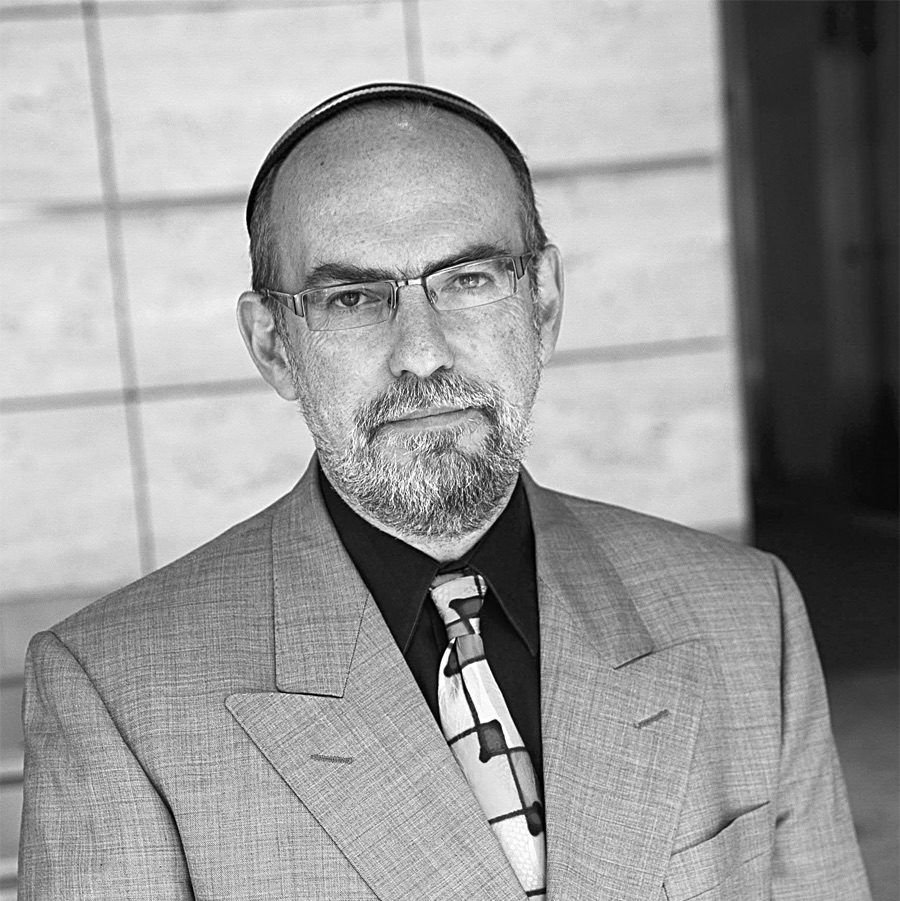
Aryeh Cohen is rabbi-in-residence for Bend the Arc: Jewish Action in Southern California and Professor of rabbinic literature at the American Jewish University.