

The president of the United States laced this year’s State of the Union with references to anti-Semitism. He invited a Holocaust survivor of Dachau and an American World War II veteran who liberated the camp to the address. He acknowledged last year’s horrific massacre at the Tree of Life synagogue, honoring a survivor and a first responder who was injured terribly in the attack. Good, right? Then why are so many Jews so very, very angry?
Because, in the context of this speech, to think about the Holocaust is to think about the St. Louis, the ship transporting hundreds of Jewish refugees in 1939, turned away from the United States and sent back to Europe, where many passengers eventually died in the Holocaust. It is to remember that Jewish refugees were slandered as invaders and cultural polluters by the politicians whose slogan was “America First.”
So when President Donald Trump pairs invocations of the Holocaust with calls to militarize our southern border against refugees who are fleeing horrendous violence in their own countries — the social breakdown of which is attributable directly to the lingering effects of American intervention on behalf of brutal dictatorships — Jews get angry. Because the same calumnies that Trump is aiming at immigrants of color were aimed at us.
Because, to honor the courage of Judah Samet, who survived the Holocaust and the Tree of Life massacre is to remember why that massacre was perpetrated. The suspected killer of 11 Jews in Pittsburgh made it clear in writing that he was especially incensed at HIAS, the Jewish agency that assists them, writing, “It’s the filthy EVIL Jews. Bringing the (sic) Filthy EVIL Muslims into the country!! Stop the kikes then Worry About the Muslims!” Yes, this killer was angry at Trump for not being racist enough — but woven throughout his rants are tropes derived from Trump.
As Pittsburgh’s Bend the Arc Moral Minyan put it, “We will not let you use the Holocaust, our most painful history, to distract us from the real dangers at hand — the dangers you yourself have nurtured with your racism and xenophobia …. There are refugees seeking safety in America today, just as our Jewish parents and grandparents did during the Holocaust, yet once again America is calling them dangerous .… There are internment camps at our southern border and thousands of children separated from their parents by your administration.”
Trump’s pre-emptive deployment of outrages visited on the Jewish people only served, for many of us, to bring into sharp focus the great danger that his movement represents. We have seen what happens when demagogues whose actual policies favor corporate wealth and lead to an ever-greater gap between rich and poor evoke the “working class” in order to divert the anger of struggling workers away from the wealthiest and aim it at the most vulnerable: at a racial and religious other.
As Stacey Abrams observed genuinely working class-friendly policies not only address such issues as health care, student loan debt and wages that don’t rise with the cost of living (not a mention in the president’s speech), they also speak to the different histories and cultures within the working class. They address embedded and systemic racial and gendered and religious inequality. They certainly do not seek to pit one group of workers against another.
In response to the SOTU, Abrams addressed the precariousness of all working people’s lives in the United States today and managed to do that while honoring the particular struggles of people who have to persevere against additional obstacles because of who they are. The contrast between those speeches and Trump’s performance demonstrates why “populism” is such a useless descriptor.
Trump has indulged in a coy flirtation with neo-fascism throughout his presidency. This is the person who was able to discern “fine people on both sides” of a clash between neo-Nazis and their opponents; who did not use the State of the Union address to issue a firm denunciation of white nationalism. Bend the Arc is right. Keep our people out of your mouth.
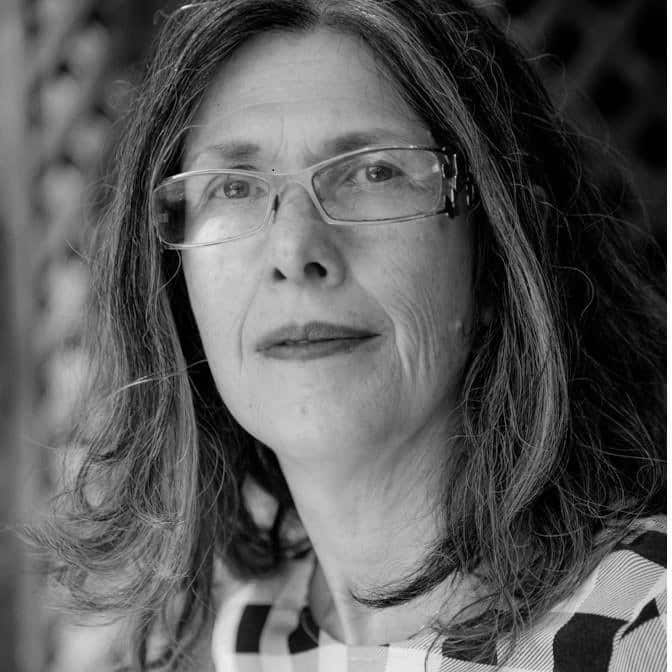
Rabbi Robin Podolsky teaches at Cal State Long Beach, writes for Shondaland. She serves as a Jewish Community Engagement Fellow at J Street.

































