fbpx

February 13, 2019

Rep. Omar to CNN Reporter: ‘Are You Serious?’

Rep. Ilhan Omar (D-Minn.) lashed out at CNN reporter Manu Raju on Feb. 13 when he asked her questions about her recent controversies, saying to him, “Are you serious?”

According to Raju, he asked Omar to comment on President Trump calling on her to resign after she tweeted that AIPAC [American Public Affairs Committee] buys off politicians to support Israel, and she declined to comment. When Raju was about to ask her again later on, Omar said, “Are you serious? What’s wrong with you?”

Omar eventually said, “Yes I tweeted, and there’s a response. You can run that.”

Omar was likely referencing her tweet from earlier in the morning, when she said to Trump, “You have trafficked in hate your whole life—against Jews, Muslims, Indigenous, immigrants, black people and more. I learned from people impacted by my words. When will you?”

On Feb. 11, Omar was asked by reporters if she had learned anything from her controversial tweets and if she regretted them; Omar referred them to her statement addressing the matter. Omar also said she was “always surprised” by the criticism and she was “absolutely not” worried about losing her seat on the House Foreign Affairs Committee:

Rep. Omar to CNN Reporter: ‘Are You Serious?’ Read More »

Letters: Carr Seat, Abortion and Halachah, West Bank Annexation

Carr Seat
Kudos to the Jewish Journal for its front-page article on the appointment of Elan Carr as Special Envoy to Monitor and Combat Anti-Semitism (“Meet Elan Carr, The New Anti-Semitism Envoy,” Feb. 8). President Trump made a wise choice in appointing Carr. When Henry Waxman retired from Congress, Carr ran for his seat in District 33 and unfortunately lost to a Democrat. If the Jews in District 33 had been more supportive, Carr might have had that seat. Carr would’ve been one more supporter of Jewish values and support for Israel in Congress, instead of his opponent whose party willingly tolerates Jew haters in Congress.
Marshall Lerner, Beverly Hills

Abortion in Halachah and Reality
I am often perturbed by the liberal trope that restricting abortion is necessarily an imposition of male authority on a woman’s body, and as such cheapens the very necessary calls to action over true chauvinism and sexual violence. I thus empathize with the desire to clarify the traditional Jewish position (consistent with many other religious schools of thought) that our bodies, regardless of gender, are divinely created vessels in our care but not ownership.

I am nonetheless profoundly disappointed by the Rabbinical Council of America’s (RCA) recent statement on the Reproductive Health Act (“Open Debate: Is N.Y.’s Abortion Law Halachic?” Feb.  8). Almost all religious authorities, even outside Orthodoxy, oppose “abortion on demand.” But determining what constitutes a serious enough physical or psychological threat to the mother leads to a wide diversity of halachic opinions. Civil law does a terrible job at honoring such subtly when it encroaches upon the issue. Though I am not a fan of Roe v. Wade’s language, it correctly established that legislating such personal and religious matters is a constitutional problem — and I would add, a Jewish problem as well.

It bears mentioning that the Orthodox Union wisely sidestepped the issue entirely. What does the RCA hope to accomplish by publishing its statement? Will it cause Democratic interest groups to rethink? Will it decrease abortions of convenience? I fear instead that it will only strengthen the liberal trope I bemoaned at the start: that well-meaning voices of caution on the issue of abortion are nothing more than groups of right-wing men out to impose their will on women’s bodies.
Michael Feldman, Los Angeles

The debate continues in this issue, on page 16.

No Illusions
Shmuel Rosner was spot-on in his article (“Anti-Semitism and Jewish Illusions,” Feb. 1) when he wrote, “… Jews cannot even control anti-Semitism. … They have never had the power to tame anti-Semitism. … This does not mean that Jews should stay silent when anti-Semitism is on the rise.”

I would urge the Jewish Journal to publish a list of those members of Congress who voted in opposition of the anti-BDS (boycott, divestment and sanctions) bill. Their excuses of “First Amendment concerns” were flimsy at best. We should encourage true supporters of Israel to write to them, letting them know that they do not represent us and that we will not support their bids for re-election. I highly doubt that our letters will change their core beliefs, but as politicians they need our votes.
Miriam Fisher, Via email

West Bank Annexation
The most common, two-fold argument against Israel annexing areas of the West Bank doesn’t hold water (“Annexation Is a Pernicious Issue for Israel,” Feb. 8).

First, the demographic argument often has been disproved, as current Arab population figures are greatly inflated and their current birthrate is below that of the average Israeli, let alone the Charedi sector of Israel’s society.

Second, who cares if annexation may anger our allies in the European Union? There is absolutely nothing we can do that will appease their centuries-old anti-Semitism and bias against Jews and now the Jewish state. There will be no change in their policies toward us whether we act on annexation or not. Every excuse they use to threaten us and try to delegitimize us is just a pretext they employ to hide behind their own insidious and discriminatory behavior.

It’s time Israel does what’s best and safest for its citizens regardless of who it might upset. And it behooves individual Jews, so eager to be accepted by the non-Jewish world, to learn the same lesson and to speak and act accordingly in support of our homeland.
Allan Kandel, Los Angeles 

Whose Donkey Gets Help
If you don’t mind (or even if you do), I’ll help my friend’s donkey first (Table for Five, Feb. 1).
Stephen J. Meyers, Woodland Hills

Sneaky Anti-Semitism
In David Suissa’s column, (“Fighting Sneaky Anti-Semitism,” Jan. 25), he decries the “sneaky” anti-Semitism of left-wing anti-Israel extremists who masquerade as “social justice” advocates.

Actually, they aren’t sneaky at all.

Louis Farrakhan dehumanizes Jews as “termites” — pests to be exterminated.

Michelle Alexander’s New York Times column falsely smears Israel and brazenly claims Rev. Martin Luther King Jr. — a proud Zionist who praised Israel as “an oasis of brotherhood and democracy” — as an anti-Israel fellow traveler.

Tamika Mallory says Jews “uphold white supremacy” — denying the leading role of Jews throughout the American civil rights movement, from NAACP co-founder Henry Moskowitz and President Joel Spingarn, to King’s close friend Stanley Levinson, and Michael Schwerner and Andrew Goodman, two young civil rights organizers who were murdered in Mississippi in 1964.

Linda Sarsour insists Zionism is incompatible with feminism — ignoring Israel’s role as a glowing example of women’s rights — while Israel’s neighbors condone honor killings, marital rape and female genital mutilation.

Rep. Rashida Tlaib (D-Mich.) accuses Jews who support America’s ally Israel of dual loyalty.

Rep. Ilhan Omar (D.-Minn.) says Israel has “hypnotized the world” and Jews have bought off its supporters. These people aren’t sneaky about their anti-Semitism. They’re unabashed bigots.
Stephen A. Silver, San Francisco 

Thanks, No Thanks
If we had never heard of Donald Trump until the State the Union address, perhaps we would have felt the same way David Suissa did in his online column. While we agree that the courageous Americans recognized at the State of the Union are deserving of our praise, we feel strongly that Trump isn’t one of them.

Trump campaigned for president using anti-Semitic imagery and tropes, omitted any mention of Jews in his first Holocaust Remembrance Day statement, and proudly identified himself as a “nationalist” — a term that has been used in association with white supremacy and Nazism. Trump equivocated condemning white supremacists who marched in Charlottesville and likened neo-Nazis to those protesting them. He has emboldened anti-Semites and done little to combat the unprecedented rise of anti-Semitism in the United States in the past two years.

Jews have no obligation to issue perfunctory praise of Trump’s choreographed, hollow words, even those that were specifically devised to pander and appeal to our community. We judge the president on his record as opposed to 82 minutes of carefully scripted theatrics, and we feel no obligation to say “thank you.” Until he proves in both word and deed that the last two years were an aberration, our values compel us to hold our applause for President Trump.
Ada Horwich and Halie Soifer
Horwich is a board member and Soifer is executive director of the Jewish Democratic Council of America.

Rabbi Eckstein Memories
Thank you, Debra Nussbaum Cohen, for your beautiful obituary on Rabbi Yechiel Eckstein (jewishjournal.com and this issue, page 56). I have fond memories of sitting with him in Daf Yomi with Rabbi Yosef Gavriel Bechoffer giving the Shiur at Bnei Rueven in Chicago. We had 20 people and we would debate the Gemara.
Mitchell Morgenstern, Via email


Now it’s your turn. Don’t be shy, submit your letters to the editor. Letters should be no more than 200 words and must include a valid name and city. The Journal reserves the right to edit all letters. letters@jewishjournal.com.

Letters: Carr Seat, Abortion and Halachah, West Bank Annexation Read More »

What’s Happening: Ladino Concert, Oscars Preview

FRI FEB 15

Frieze Los Angeles Art Fair
The inaugural Frieze Los Angeles contemporary art fair opens on the New York City backlot of Paramount Pictures Studios with works from more than 70 galleries from around the city and the world. Check the event’s website for the schedule of artists talks, music, films and “Frieze Projects.” Through Feb. 17, $20 adult, $10 students, $5 children 2-12. Paramount Pictures Studios, 5515 Melrose Ave., Los Angeles. (323) 956-1777.

Tio Chorinho

Jacob Do Bandolim Tribute 
Celebrating the 101st birthday of Brazilian-Jewish mandolin virtuoso and composer Jacob do Bandolim, the Toronto-based ensemble Tio Chorinho performs Bandolim’s ragtime and jazz-influenced music at the Skirball Cultural Center. Los Angeles songstress Kátia Moraes performs with Tio Chorinho, led by mandolinist Eric Stein. Bandolim’s music is regarded as a precursor to samba and bossa nova. Seven-string guitarist Fabiano do Nascimento opens the program. 8 p.m. $20 general admission, $15 members. Skirball Cultural Center, 2701 N. Sepulveda Blvd. (310) 440-4500.

Noa Dori

Ladino Shabbat
Come hear Ladino music and stories at “Shabat de Ladino Magico,” featuring Sephardic Israeli singer-actress Noa Dori and flamenco guitarist Fredy Schiftan. 7:30–10 p.m. Free. Valley Beth Shalom, 15739 Ventura Blvd., Encino. (818) 788-6000.

SAT FEB 16

“Do Jews and Romance Mix?”
Young Jewish professionals are invited to discover the Jewish roots of love during a joint program of Hollywood Temple Beth El and the Iranian-American Jewish Federation. Rabbi Norbert Weinberg leads a discussion that examines the love life of Adam and Eve, Lemech and his two wives, Jacob at the well and the biblical obligation to satisfy a wife’s desires. Enjoy coffee, snacks and learning. Shabbat services follow. 9:30 a.m. Free. Temple Beth El, 1317 N. Crescent Heights, West Hollywood. (954) 920-8225.

SUN FEB 17

Stand-Up Comedy Showcase 
Comedians Monica Piper and Sue Kolinsky headline the Comedy Showcase for the Whizin Center for Continuing Education. Kolinsky, who co-hosts a morning radio show in New York, is a producer and writer known for TV shows such as “Top Chef,” “The Osbournes” and “Sex and the City.” Piper, an Emmy-winning comedy writer, has written for “Roseanne,” “Mad About You” and “Rugrats,” and is an artist-in-residence with the Jewish Women’s Theatre. 4 p.m. $25. American Jewish University Familian Campus, 15600 Mulholland Drive, Bel Air. (310) 476-9777.

Ted Lieu

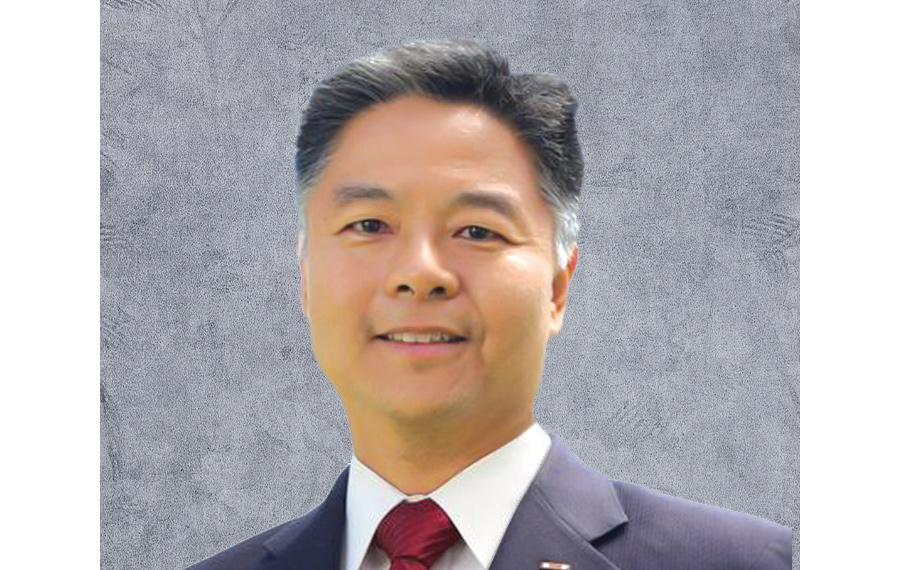
Congressman Lieu Discusses Gun Reform 
U.S. Rep. Ted Lieu, an advocate of gun law reform, discusses gun violence and potential gun-reform legislation with Temple Emanuel of Beverly Hills Rabbi Sarah Bassin. The Democratic congressman, who represents the Westside and South Bay, will address the link between guns and hate crimes, the types of gun laws he believes should become the standard, and what gun-reform legislation has a chance of passage this year. 12:30 p.m. Free. Temple Emanuel of Beverly Hills, 8844 Burton Way, Beverly Hills. (310) 288-3737. .

“Truth Telling”
Rabbi Jason Weiner, chaplain of Cedars-Sinai Medical Center, addresses one of life’s delicate questions, “Truth Telling: Revealing Painful Medical Truths to Family Members,” in a lecture at Kehillat Ma’arav. Weiner addresses questions such as: How much information should be shared with the patient and how much with members of the family?; What if a patient wants to know everything, but friends and relatives fear the patient cannot handle it?; How are such decisions made? 10 a.m. brunch. 11 a.m. lecture. Free. RSVP to Kehillat Ma’arav, 1715 21st St., Santa Monica. (310) 829-0566.

Shlomo Katz
Happy Minyan’s Shabbaton concludes with a concert from Israeli singer/guitarist Shlomo Katz. Joined by the Yehuda Solomon and Duvid Swirsky of the band Moshav, Katz will perform his contemporary religious music — think folky pop with a Jewish accent — mixing his own songs with those written by his family and by Rabbi Shlomo Carlebach, the late “Singing Rabbi” whom Katz considers a “Jewish national treasure.” 8:30 p.m. $25, available at the door. The Happy Minyan, 9218  Pico Blvd., Los Angeles.

MON FEB 18

Yiddish Lessons
Learn to converse comfortably in Yiddish by attending the monthly “I Love Yiddish” series at Kehillat Ma’arav. Instructor Jack Roth demystifies familiar but not quite clear expressions. 11 a.m. Free. Library at Kehillat Ma’arav, 1715 21st St., Santa Monica. (310) 829-0566.

TUE FEB 19

Oscars Preview
Six days before the Academy Awards ceremony, two veteran Hollywood reporters share their predictions for the winners at “Oscars Preview” night at Temple Judea. Senior CNN producer David Daniel moderates the discussion with Glenn Whipp of the Los Angeles Times and Nicole Sperling of Vanity Fair Hollywood. 7:30 p.m. Free. Temple Judea, 5429 Lindley Ave., Tarzana. (818) 758-3800.

WED FEB 20

“Keeping Kids… Kids”
Gail Dines, an author, feminist and activist, as well as a professor at Wheelock College in Boston, discusses how the hypersexualization of modern culture and the accessibility of pornographic content on the internet affect children, in conversation with Rabbi
David Wolpe at Sinai Temple. 7–9 p.m. Free for Sinai Temple members and
Sinai Akiba Academy parents, $25 general. Sinai Temple, 10400 Wilshire
Blvd., Los Angeles. (310) 474-1518.  

Medicare-For-All Forum
Mari Lopez of the Healthy California campaign and National Nurses United discusses her local and national work as an organizer to extend Medicare to Americans of all ages. 7–8:30 p.m. Free. Temple Judea, 5429 Lindley Ave., Tarzana. (818) 758-3800.

“Jewish View View of Food”
Leah Hochman, who teaches food ethics and other subjects at Hebrew Union College–Jewish Institute of Religion, explores the Jewish view of food in the first of four weekly lectures at Wilshire Boulevard Temple. In the series, titled “The Real World: The Jewish View of Food, Sex, Money and Politics,” Hochman discusses the historical, religious, cultural, social and health implications of each subject. 10 a.m. $9 for each class, $36 for all four. Wilshire Boulevard Temple, Irmas Campus, 11661 Olympic Blvd., Los Angeles. (213) 388-2401.

THU FEB 21

Protecting Women’s Health
Nearly five decades after Roe v. Wade, protecting access to women’s health
remains hotly debated. Sue Dunlap, president and CEO of Planned Parenthood Los Angeles, discusses this topic at Temple Isaiah. 7 p.m. wine and cheese reception, 7:30 p.m. lecture. Free. Temple Isaiah, 10345 W. Pico Blvd. (310) 277-2772.  

Bernard-Henri Levy

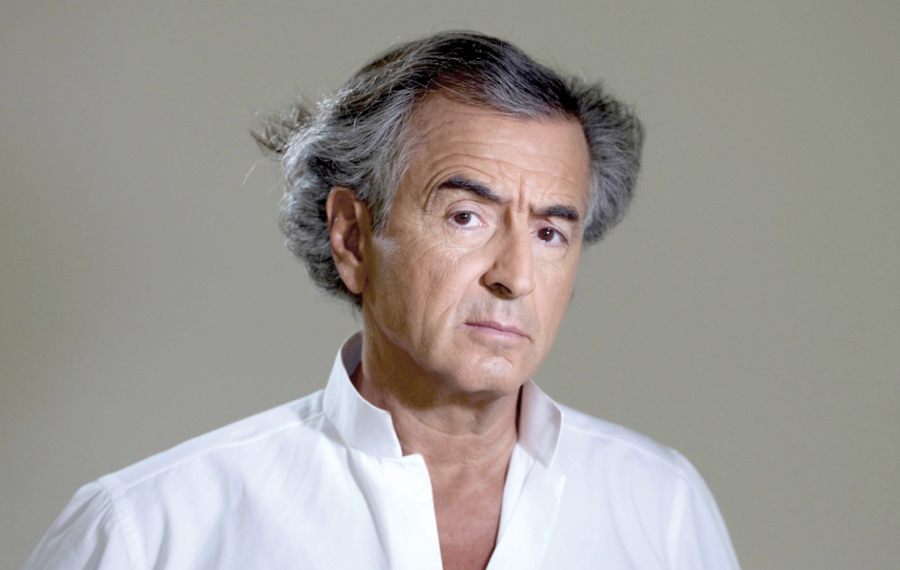
America in Retreat?
Philosopher-author Bernard-Henri Levy, who believes America’s retreat from its traditional global leadership role is imperiling the world, speaks at Stephen Wise Temple. Arguing that the retreat did not begin, nor will it end, with the Donald Trump presidency, Levy says the reduction of U.S. influence has opened the way for Russia, China, Turkey, Iran and Sunni Arabs to undermine the West’s liberal values. Levy’s program takes its name from the latest of his 30 books, “The Empire and the Five Kings: America’s Abdication and the Fate of the World.” 7 p.m. $15 temple members, $20 general. Stephen Wise Temple, 15500 Stephen S. Wise Drive. (310) 476-8561.


Have an event coming up? Send your information two weeks prior to the event to ryant@jewishjournal.com for consideration. For groups staging an event that requires an RSVP, please submit details about the event the week before the RSVP deadline.

What’s Happening: Ladino Concert, Oscars Preview Read More »

House Unanimously Passes Motion Condemning Anti-Semitism

The House of Representatives unanimously passed a motion on Feb. 13 condemning anti-Semitism and re-affirming Israel’s right to exist: 424-0.

The motion states that is imperative for the United States to combat anti-Semitism because it violates America’s values of “tolerance, pluralism and democracy” and that there is an “urgent need” to defend the Jewish community.

The motion added, “It is important to the national security interest of the United States to maintain strong bipartisan support for Israel, the only democracy in the Middle East, all attempts to delegitimize and deny Israel’s right to exist must be denounced and rejected.”

Rep. David Kustoff (R-Tenn.), the author of the resolution, argued it was necessary in light of the rise in anti-Semitism worldwide.

“The United States must remain a global leader, not only in speaking out against anti-Semitism, but in holding those who enable those vile beliefs accountable,” Kustoff said.

Rep. Eliot Engel (D-N.Y.), the chairman of the House Foreign Affairs Committee, spoke out in support of Kustoff’s resolution.

“Anti-Semitism is a scourge. It’s a scourge in humanity, it’s a scourge in this country, and needs to be fought just as prejudice of any kind needs to be fought,” Engel said.

AIPAC [American Israel Public Affairs Committee] tweeted out praise for the motion’s passage:

House Unanimously Passes Motion Condemning Anti-Semitism Read More »

AIPAC Gala, Jewish Nonprofit Grants

The 2019 American Israel Public Affairs Committee (AIPAC) gala was held at the Dolby Theatre in Hollywood on Jan. 27.

About 1,300 attendees enjoyed a program that featured Israeli world champion rower Moran Samuel, 36, who had a promising basketball career in Israel prior to being paralyzed in her lower body after she suffered a rare spinal stroke at the age of 24. 

The event honored the memory of past AIPAC Chairman Larry Weinberg, who died earlier this year after a years-long battle with bone marrow cancer. His wife, Barbi, and 14 members of the Weinberg family attended.

Also in attendance was Evie Steinberg, whose son Max died during the 2014 Gaza war as a lone soldier. Max’s brother, Jake, who works for AIPAC in the San Fernando Valley, shared remarks while joined onstage by the Steinberg family. 

The keynote presentation was a bipartisan conversation between Sen. Ben Sasse (R-Neb.) and Sen. Amy Klobuchar (D-Minn.), who announced her 2020 presidential bid on Feb 10. The conversation was moderated by AIPAC Regional Director Wayne Klitofsky.

AIPAC is a lobbying group that advocates for pro-Israel policies in Washington.


The Silverlake Independent Jewish Community Center, one of the four organizations to receive an inaugural Next Stage Grant from the Jewish Community Foundation of Los Angeles. Photo courtesy of Silverlake Independent Jewish Community

The Jewish Community Foundation of Los Angeles has announced the start of its 2019 Next Stage Grants program, which will award grants of up to $250,000 over a three-year period to Jewish nonprofit organizations looking to climb to their next level of success. 

A mandatory workshop for grant-seekers to learn about the application process will be held on March 12. An August deadline will be set for submission of applications. More information about the program is available on the foundation’s website at jewishfoundationla.org/next-stage-grants.

Since launching the grants program in 2017, the foundation has awarded more than $1 million to Creative Community for Peace, ETTA, Friendship Circle of Los Angeles and the Silverlake Independent Jewish Community Center. 

“Next Stage Grants were conceived to offer additional support to Jewish nonprofits so that they could learn, grow and more effectively impact our diverse community,” Jewish Community Foundation of Los Angeles President and CEO Marvin Schotland said in a statement. “We’ve seen how this funding has helped our inaugural cohort of grantees. They’ve developed strategic business plans, redesigned their infrastructures and expanded their fundraising efforts. All this leads to more clients being served and overall organizational growth. We’re excited to invest in a new group of nonprofits and help them reach the next stage of their development.”   

Established in 1954, the foundation manages charitable assets of more than $1 billion, partners with donors on meaningful philanthropic activities and distributes grants to nonprofits across a diverse spectrum of services. 


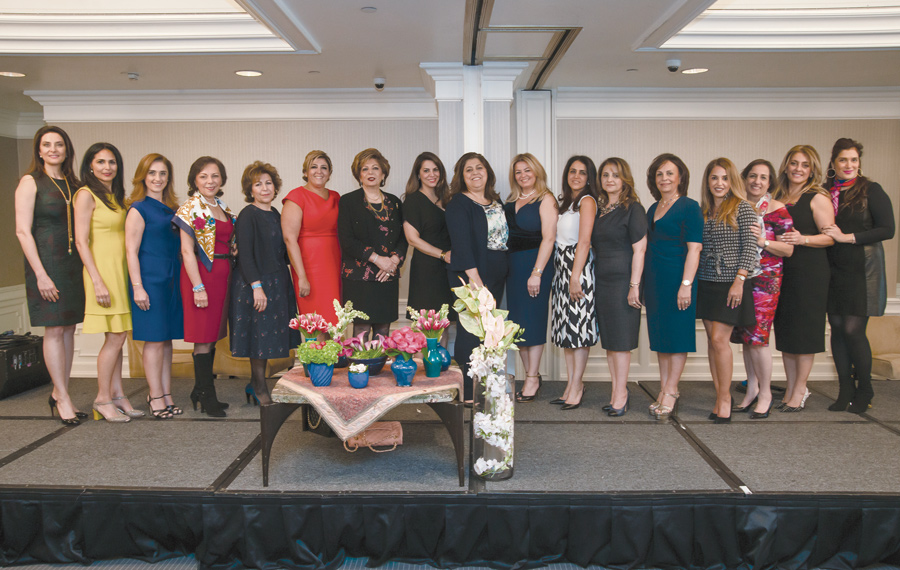
Volunteers from the steering committee of the 2019 Persian American Women’s Conference.
Photo by Kaveh Mobayeni

Iranian author and women’s rights activist Masih Alinejad demanded an end to the compulsory wearing of the hijab, or the women’s head covering, in Iran at the sixth annual Persian American Women’s Conference (PAWC) at the London hotel in West Hollywood on Jan. 29. 

“Compulsory hijab is the biggest symbol of oppression for the women of Iran,” said Alinejad, who has lived in exile in New York since 2014 and whose “My Stealthy Freedom” campaign has more than 2 million followers on social media. 

The event, chaired by Haleh Kohan, drew 400 attendees, most of them Iranian-American Jews, and featured an all-female panel discussion based on the theme, “Resiliency: Your Inner Voice.”

The conference also recognized community leaders Sima Baravarian, former UCLA undergraduate president Arielle Mokhtarzadeh and Nicole’s Kitchen founder Nicole Dayani. 

PAWC’s Spotlight Award recognized Nicolette Gabay Hanasab and her partner, Brigitte Kashani, founders of the fine jewelry line August and June, for innovation in entrepreneurship.

Founded in 2012, the nonprofit PAWC is composed entirely of volunteers. 

Tabby Refael, Contributing Writer


From left: “Unorthodox” hosts Mark Oppenheimer, Stephanie Butnick and Liel Leibovitz, who appeared at Adat Shalom this month for a live recording of their podcast. Photo courtesy of ARJE

“Unorthodox” hosts Mark Oppenheimer, Stephanie Butnick and
Liel Leibovitz appeared on Feb. 8 at Westside L.A. congregation Adat Shalom to record an episode of their podcast, now available on the Tablet magazine website.

About 250 people — including Adat Shalom Rabbi Nolan Lebovitz and fans of the podcast who traveled from Detroit, West Virginia, North Carolina and even Brazil — attended the taping. 

Guests on Episode 168, “Unorthodox Loves L.A,” were Rachel Sumekh, founder and CEO of Swipe Out Hunger; actor-writer-producer Laura Miller Rogen, who created the Alzheimer’s-focused charity Hilarity for Charity; and veteran TV writer and producer Jonathan Groff, the show’s “Gentile of the Week.”

Sumekh talked about her organization’s efforts to feed college students who can’t afford meals, and about being an Iranian Jew working in a predominately Ashkenazic Los Angeles.

Rogen spoke about the inaccuracies of comic portrayals of Alzheimer’s. Her latest Netflix film, “Like Father,” was inspired by her real-life experience in taking care of a parent with Alzheimer’s.

Rogen also discussed encountering anti-Semitism in her hometown of Lakeland, Fla., among people ignorant about Jews. “Now I have been in Los Angeles for 15 years and am surrounded by people who are only like me,” she said. 

— Erin Ben-Moche, Journal Digital Content Manager 


Want to be in Movers & Shakers? Send us your highlights, events, honors and simchas.
Email ryant@jewishjournal.com.

AIPAC Gala, Jewish Nonprofit Grants Read More »

Report: Minnesota Jewish Leaders Were ‘Very Troubled’ After Meeting Rep. Omar in 2018

A new report from the Twin Cities Pioneer Press states that Rep. Ilhan Omar (D-Minn.) met with local Jewish leaders in her congressional district in 2018 about anti-Semitism, and they were “very troubled” by her answer.

Minnesota Democratic State Sen. Ron Latz told the Pioneer Press that he and several other Jewish leaders discussed their anti-Semitism concerns with Omar for over two hours, which included their concern over Omar’s tweet that Israel has “hypnotized the world.”

We shared with her our concerns for things, including language that has references and meanings beyond just the meanings of words,” Latz said. “Tropes, dog whistles — call them what you will. We explained to her how hurtful, and factually inaccurate, they were.”

Latz added that the majority of the Jewish leaders she met with, himself included, were “very troubled by the answers we received.”

“I was not convinced she was going to give a balanced approach to policy in the Middle East, and I was not convinced … where her heart is on these things,” Latz said.

For instance, Latz told Jewish Telegraphic Agency (JTA) that when they shared their concerns with Omar about her Israel hypnosis tweet, “she didn’t seem to recognize the seriousness of the trope.”

Omar had publicly defended her tweet at least three times before saying in a Twitter thread that she didn’t know that she had used an anti-Semitic trope.

Latz told the Pioneer Press that he had hoped that Omar would be more “careful” with her rhetoric, however, her most recent tweets accusing AIPAC [American Israel Public Affairs Committee] of buying support for Israel shows that “she keeps repeating her mistakes, if you can call them that.”

At some point, it becomes a little tired to hear her say she’s being ‘educated,’” Latz added.

Omar said in a statement to the Pioneer Press, “I value the close relationship I have with leaders throughout the 5th District, including members of the Jewish community.”

“I look forward to continuing a relationship based on open dialogue, mutual respect, and combating hatred and intolerance towards all persecuted communities,” she added.

Report: Minnesota Jewish Leaders Were ‘Very Troubled’ After Meeting Rep. Omar in 2018 Read More »

Géza Röhrig: The Hungarian, Orthodox Jewish Movie Star

If Géza Röhrig’s trajectory is an anomaly in his native Hungary, it is even more so in Hollywood. The former boxer and punk rocker was teaching Judaic Studies to kindergartners in Brooklyn when an acquaintance offered him the starring role in the Holocaust drama “Son of Saul,” in which Röhrig portrays an Auschwitz crematorium worker. It went on to win the Oscar as the best foreign language film of 2015. 

Röhrig’s latest role is in the film “To Dust,” where he portrays a Chasid grieving for his lost wife. The indie dark comedy and buddy film co-stars Matthew Broderick.

Born in Budapest and orphaned as a child, Röhrig was adopted when he was 12. His grandfather was a Holocaust survivor who died when Röhrig was 16. When he memorialized his grandfather in a poem titled “Kaddish,” the piece earned him the first of many publishing credits. Röhrig later adopted his grandfather’s Hebrew name, Rafael Zvi, as his own. 

Rohrig, 51, spoke with the Journal by telephone from his home in New York about the intersection of his personal history and his acting.

Jewish Journal: What are some of the influences on your work as a screen actor?

Géza Röhrig: I was a boxer at 18 until someone broke my nose. The punk thing had a bigger effect on my life. It was before the Berlin Wall collapsed. That was a great preparation for acting, to be the lead singer and perform in front of big audiences. My band was called HuckRebelly [sic]. They kicked me out of high school because of it. When the band [broke up], I went on solo, unplugged, just me and the guitar, all the way until I moved to Israel. I lived there for two years.

JJ: Your grandfather’s survival also impacted you. 

GR: At 18, I traveled to Auschwitz without a game plan. And I felt, at the end of the first day, I am just not done. I rented a room — not an apartment — nearby. It was snowing very heavily. It was not very touristy, as it later became with the liberation of Poland from the Soviets. Days went by and I felt it did a lot of good for me. It was healing.

JJ: How so?

GR: I felt this was reality. This is what we can do to each other. All the cheap humanism they were teaching in school somehow fell apart. I kept going back. I never ate inside the camp. It would have been inappropriate. I only ate in my room at night. I was not writing poetry and not praying. I was just being.

JJ: How did the Poles respond to your being there every day?

GR: After some time, the authorities viewed me suspiciously. They asked what I was doing. I spoke Polish because I was studying in Warsaw. I explained to them, “I have a connection to this place and if it’s OK, I will stay until I feel like the place lets me go.” And lo and behold, after 20-some days, I felt the time had arrived to leave.

JJ: What prompted that?

GR: There is a story in the Talmud about Choni Hame’agel, Choni the circle drawer. He drew a circle in the [desert] because there was no rain and he gave an ultimatum to HaShem: “I am not coming out unless you bring rain.” It rained but they wanted to excommunicate him because that is not how you talk with God.

I remembered the story and drew a circle in the snow. I really wanted to know my next step. After a while, I felt like I was not alone in the circle. That was a lovely feeling. I started singing. I knew it was my last day. It was a beautiful sort of thing you can’t ever forget.  My thinking was, I can’t be more than one, let alone 6 million, but I can stand in the place of one. Because overwhelmingly, it was the religious, the Orthodox, who were murdered.

JJ: When did you realize the role of Shmuel in “To Dust” was right for you?

GR: I read scripts all the time and you always know where they are heading. In this case, you are deep in the script and you still don’t know what is going to happen next. It touches your heart and it has a light touch to it.

JJ: As an observant Jew, what do you enjoy about this film and portraying a Chasid?

GR: This is a lovely film, a first feature, [the director is] a wonderful friend. It brings together dimensions that don’t usually end on up the canvas together: science, religion, death and humor. It’s really funny, cathartic, profound and deep. It doesn’t fit any genre.

JJ: How does the film succeed in exploring grief?

GR: One of the things that helps with the tension and the tragedy is laughing with it if you can. Oftentimes, you don’t feel it is permitted. Shmuel’s friendship with Albert means stepping out of our comfort zones. It is really nothing less than a story of healing. By the end of the movie, you see Shmuel gets through the worst. He is behaving as a father again and he is beyond the madness of grieving.

JJ: What about acting appeals to you?

GR: Cinema is an extremely powerful form. It is a unique vehicle as it brings together every other art: sound, picture, literature, acting. All of this, in good hands, can truly become magic.


Lisa Klug is a freelance journalist and the author of “Cool Jew” and “Hot Mamalah: The Ultimate Guide for Every Woman of the Tribe.” 

Géza Röhrig: The Hungarian, Orthodox Jewish Movie Star Read More »

Botanical Clothespin Paint Brushes

Once upon a time, people actually used clothespins to hang damp clothes out to dry. While a few old-school laundry enthusiasts may still do so, clothespins are nowadays likely to be used for more creative purposes. Case in point: these clothespin paint brushes. Each brush features a different leaf or cutting, and the clothespin acts as the handle. They’re certainly more eco-friendly than new brushes, and they create interesting and unexpected brush strokes thanks to the different textures of the botanicals. 

This is a great project to share with the kids, especially on rainy days when they’re stuck inside looking for something fun to do.

What you’ll need:
Leaves and cuttings
Clothespins
Tempera paint and paper

1. Forage in your yard and neighborhood for leaves and other plant cuttings that would make appropriate brushes. Look for stiff, hearty foliage that will hold its shape when dipped in paint. 


2. Attach a clothespin to each botanical. 


3. Dip the botanicals in tempera paint (the water-soluble paint used in schoolrooms), and watch the magic happen with your brush strokes.


Jonathan Fong is the author of “Flowers That Wow” and “Parties That Wow,” and host of “Style With a Smile” on YouTube. You can see more of his do-it-yourself projects at jonathanfongstyle.com.

Botanical Clothespin Paint Brushes Read More »

Obituaries: Feb. 15, 2019

Alan Averick died Jan. 12 at 100. Survived by daughter Joady; sons Michael, William; 2 grandchildren; 2 great-grandchildren. Hillside

Jacqueline “Jackie” Bender died Dec. 30 at 80. Survived by daughter Shari. Mount Sinai 

Yory Bendersky died Dec. 24 at 72. Survived by wife Izabella; sons Eugene (Valerie), Vadim (Tina); 3 grandchildren; sisters Elizaveta (Boris) Postnoy, Eugenia (Eugene) Rabinovich. Mount Sinai

Henry Berlin died Jan. 2 at 78. Survived by daughter Irina (Yury) Chudnovsky; 1 grandchild; sister Margarita (David) Schwartz. Mount Sinai

Regina Findling Clark died Jan. 6 at 81. Survived by husband Nathan Hale Clark; brothers Joseph, Fred, Martin.

Harriette L. Cohen died Dec. 25 at 79. Survived by daughter Rita (Darren) Shuster; son Charles; 3 grandchildren; sister Nadine Chudacoff; brother Arnie Breslow. Mount Sinai

Harvey Cohen died Jan. 12 at 85. Survived by wife Florence; daughter Jill Pearson; sons Don, Gary; 7 grandchildren; 2 great-grandchildren. Mount Sinai 

Molly Comstock died Jan. 14 at 2. Survived by mother Robin; father Kevin; brother Hudson; grandmother Terri; grandfather Neal; grandfather Hugh (Traci); grandmother Rita (Phillip). Hillside

Mervyn Cooper died Jan. 10 at 80. Survived by wife Natalie; daughters Melanie (Kelvin), Heather (Richard); 4 grandchildren; sister Ruth (Marvin). Hillside

Rochelle Culinger died Jan. 15 at 68. Hillside

Jessica David-Stein died Jan. 1 at 70. Survived by husband Herbert; daughter Morgan (Scot); son Kee (Brea); 2 grandchildren. Hillside

Dorene Diamond died Dec. 22 at 71. Survived by niece Annalisa. Hillside

Yetta Dorfman died Jan. 17 at 96. Survived by 2 grandchildren; 6 great-grandchildren. Mount Sinai

Donald Dronzek died Jan. 6 at 86. Survived by wife Judy; daughter Robyn (Robert) Washburn; son Eric (Teresa) Davis; 8 grandchildren; 3 great-grandchildren; sister Eileen Turoff; sister-in-law Marsh. Mount Sinai 

Meir Ezer died Jan. 11 at 82. Survived by wife Nancy; daughters Tamar, Rona (Michael); 3 grandchildren; sisters Arlette, Esperose. Hillside

Louise Fogelman died Dec. 29 at 89. Survived by daughter Nancie; sons Mitch (Jan), Jeff (Deborah); 1 grandchild. Mount Sinai

Shirley Friedman died Dec. 14 at 77. Survived by sons William “Bill” (Jill), Brian (Kristen); 3 grandchildren. Mount Sinai

Cary Allan Fox died Jan. 3 at 77. Survived by wife Elaine; daughters Deborah Bauer, Julia (David) Moore; son Michael (Jenny Rios); 8 grandchildren; 4 great-grandchildren; brother Ira. Mount Sinai

Charlotte Ginne died Jan. 9 at 97. Survived by daughters Melinda, Licia; 1 grandchild. Hillside 

Nancy Goddard died Dec. 26 at 78. Survived by brother Larry. Hillside 

Betsy Green died Dec. 30 at 87. Survived by husband Albert; daughters Cathi (Randy), Stacy (Bruce), Kelly (Greg); son Garth (Susan); 10 grandchildren; 1 great-grandchild. Hillside

Leona Hallman died Jan. 4 at 84. Survived by cousins Carole (Rich) Casten, Felicia Bolton. Mount Sinai 

Kimberly Hanning died Jan. 11 at 48. Survived by husband John Cooper; daughters Delany, Sydney; son Nathan; mother Evlynn; father Bruce; sisters Lisa (Ron), Tracy (Greg). Hillside

Danielle Harte died Dec. 25 at 92. Survived by daughter Monika (Jeff Sobin) Harte-Sobin; 2 grandchildren. Mount Sinai

George Herman died Dec. 27 at 84. Survived by wife Geraldine “Jeri”; daughters Whitney (Howard) Schwartz, Tami (Gary) Olshen; son Michael (Penny) Herman; 5 grandchildren. Mount Sinai

Eva Hofberg died Dec. 23 at 100. Survived by daughters Caryn, Rhonda (Garrin Shaw) Broude, Shelley; 1 grandchild; 1 great-grandchild. Mount Sinai

Sheila Homer died Dec. 25 at 81. Survived by daughter Linda (Mitchell); son Howard (Polly); 4 grandchildren. Hillside

Herbert Karlow died Dec. 24 at 87. Survived by wife Mary Ann; sister Lenore Rodah. Mount Sinai

Geane Kaye died Jan. 15 at 87. Survived by daughter Michelle (Earl); son Fred; 2 grandchildren. Hillside

Benjamin “Benny” Kittay died Jan. 7 at age 80. Survived by his nephews Michael Bayer, Kenny Bayer.

Mildred Hiller died Dec. 27 at 93. Survived by husband Irving; daughters Diana, Janice; son Clifford (Catherine); 1 grandchild; brothers Arnold (Estelle) Zucker, Irwin (Devra) Zucker. Mount Sinai

Meir Jacobs died Jan. 3 at 99. Survived by wife Edith; daughters Esther Rydell, Miriam (Oded) Tajkef; 4 grandchildren; 9 great-grandchildren. Mount Sinai

Blanche Jacobson died Dec. 28 at 102. Survived by daughter Suzanne (Bob); 2 grandchildren; 5 great-grandchildren. Hillside

Eileen Jacobson died Dec. 22 at 88. Survived by daughters Jane (Robert), Emily; 1 grandchild. Hillside

Robert Lawenda died Dec. 31 at 77. Survived by wife Sharon; sons Steven, Jason; 3 grandchildren; sister Marilyn; brother Kenneth. Mount Sinai

Lydia “Lida” Lebovic died Dec. 6 at 90. Survived by husband William; daughter Sonia Prizant (Tsvi); 2 grandchildren. Mountain View Mortuary, Reno, Nev.

Marjorie Lipson died Jan. 11 at 82. Survived by husband Henry; daughter Liz (Craig) Elledge; stepdaughters Linda (Robert) Blum, Jennifer (Chris Hollas); stepsons Steven (Jana), Daniel (Maria), 3 grandchildren; 1 great-grandchild. Mount Sinai 

Paul Meltzner died Jan. 12 at 89. Survived by wife Ruthe; daughter Karen (Henry); sons Martin, Craig (Elaine), Brian (Carol); 6 grandchildren; 6 great-grandchildren. Hillside

Elliott Messinger died Jan. 6 at 88. Survived by wife Harriett; daughters Cheryl Viale, Beth (Richard) Dorfman; son Jeffrey (Andrea); 8 grandchildren; 7 great-grandchildren. Mount Sinai

Lydia Neumann died Dec. 31 at 95. Survived by sons Charles, Roy, Paul, Anthony; 6 grandchildren; 4 great-grandchildren; brother Jorge Lozano. Mount Sinai

Norman Obrow died Jan. 5 at 96. Survived by wife Adrianne; daughter Susan (Ed); son Jeffrey; 1 grandchild. Hillside

Leba Ostroff died Jan. 10 at 100. Survived by 2 grandchildren. Hillside

Solomon Perlo died Dec. 23 at 74. Survived by wife Debra; daughter Melinda (Jared); sons Scott (Yael), Evan; sister Gloria (Phil); 3 grandchildren. Hillside

Yvonne Prelutsky died Jan. 15 at 83. Survived by husband Burton; sons Tony (Lisa), Joe (Jeanne); half-sisters Margie, Kyle, Dana, Sabre; 2 grandchildren. Hillside

Sondra Berris Pomerantz died Jan. 9 at 88. Survived by husband Irwin Pomerantz; daughter Liz Berris; sons Jeff Berris, Bob (Deb) Berris; 9 grandchildren; sister Arlene Slaten. Mount Sinai 

Louis Popick died Jan. 2 at 93. Survived by wife Maria; daughters Sharon (Carl), Marilyn; son Martin (Lana); 9 grandchildren; 3 great-grandchildren. Hillside

Judith Robins died Jan. 7 at 84. Survived by daughters Lynda (Alan), Cynthia (Mike); 3 grandchildren. Hillside

Alan Rogers died Jan. 12 at 92. Survived by wife Gersha; daughter Karen; son Craig; 2 grandchildren; 1 great-grandchild. Hillside

Lisa Ann Rose-Alshire died Jan. 9 at 60. Survived by mother Isabel Bronte; stepfather Les Bronte; stepbrother Robert Bronte; half-brother David (Ilyse) Bronte. Mount Sinai 

Betty Rosenstein died Jan. 4 at 97. Survived by daughter Lisa (Tom); sons Adam (Candyce), Jerry (Arlene); 7 grandchildren; 11 great-grandchildren; sister Lyla; brother Don. Hillside

Sheila Mae Ross died Dec. 22 at 81. Survived by daughter Rochelle Louise; brother Sanford Miller. Mount Sinai 

Dorothy C. Rubin died Dec. 24 at 98. Survived by daughter Shari (Mark) Wilson; son Craig (Ellen); 1 grandchild. Mount Sinai

Susan Schwarz died Dec. 22 at 72. Survived by husband Donald “Don”; sons Andy (Christina), Joshua, Tawd (Patricia Gilmore) Beckman; 7 grandchildren. Mount Sinai

Karen Sherr died Jan. 11 at 77. Survived by husband Walter; sons Eliott, Steven, Scott; 7 grandchildren; sister Marsha Horowitz. Mount Sinai  

Estelle Silberkleit died Dec. 31 at 98. Survived by daughter Jill; 7 grandchildren; 11 great-grandchildren. Hillside

Myriam Sirota-End died Jan. 5 at 61. Survived by husband Stephen End; daughter Chantelle Brittany Johnson; 1 grandchild; brothers Franck Sirota, Marco Sirota. Mount Sinai 

Mariya Slonim died Nov. 29 at 92. Survived by son Alexander Kublanovsky; 1 grandchild. Chevra Kadisha

Leonard Smith died Jan. 15 at 100. Survived by wife Isabelle; daughter Randy Morrison Baird (Robert Baird); son Robert (Fayeron) Morrison; 4 grandchildren.

Penny Drossin Spark died Jan. 10 at 62. Survived by son Daniel.

Reva Stalder died Jan. 13 at 79. Survived by daughter Debbie Shepherd; 1 grandchild; brother Nathan (Sherri) Newman. Mount Sinai

Richard Teller died Dec. 27 at 80. Survived by wife Phyllis; brother-in-law Barry Smilen. Mount Sinai

Olga Volodinsky died Jan. 1 at 66. Survived by husband Yury; daughter Anna Itkis; son Dmitey; 4 grandchildren; brother Alexander Rozulin. Mount Sinai

Burton Weinberg died Dec. 10 at
89. Survived by daughters Barbara Archer (Marc Weiss), Randi Radogno (Joe),
Lauren (Shirley Lerche); stepsons
Mathew, Andrew, Howie Davidson; 2 grandchildren; brother Norman (Claire). Neptune Society

Lawrence Weinberg died Jan. 1 at 92. Survived by wife Barbara Anne; daughters Janice (Phillip) Zakowski, Julie (Rand) Fishbein; sons Jeffrey (Susan), James (Leslie); 12 grandchildren; 13 great-grandchildren. Mount Sinai

Richard Weisman died Dec. 30 at 78. Survived by daughters Abby, Robin; son Richard; 2 grandchildren. Hillside

Helen Zeff died Jan 9 at 60. Survived by daughters Rachel, Jessica; sons Andrew (Garrett), Trevor (Renee); 5 grandchildren. Hillside 

Obituaries: Feb. 15, 2019 Read More »

Son of a Survivor and Child of Her Trauma

After Steven Spielberg released his epic film “Schindler’s List,” Holocaust survivors would approach the director and tell him, “That’s a great movie, but let me tell you my story.”

That anecdote came to mind when reading the new book by Stanley A. Goldman, “Left to the Mercy of a Rude Stream: The Bargain That Broke Adolf Hitler and Saved My Mother.”

Goldman, a professor at Loyola Law School who founded its Center for the Study of Law and Genocide, deftly mixes his personal experiences growing up the son of a survivor and the events surrounding the crash of Hitler’s 1,000-year Reich.

His mother, Malka, grew up in the town of Brzeziny, Poland. She was the ninth of 10 children and married when she was 17.

After the Nazis invaded Poland, her two children, ages 7 and 12, were taken from her, transferred to the Chelmo death camp and asphyxiated in airtight trucks doubling as gas chambers.

After the war, Malka emigrated, settled in Los Angeles and remarried, but she continued to battle traumas of the war years. One symptom was that she needed to know where her son, Stanley, was at any minute of the day or night.

“Because a reason for the unforeseeable horror that had taken her first two children was never given, she could never be convinced that it could not happen again,” Goldman recalls. “To her, chaos and tragedy were forever lurking. Even after I had grown into middle age, if she did not know where I was every night, she could be thrown into a panic. I would be born to a generation of loss, and it is not that extraordinary that pathological overprotectiveness would come to dominate our relationship.”

Goldman, who has enjoyed a career as a television and radio news correspondent and legal editor, writes with surprising frankness about how, again and again, promising romantic encounters with young women were interrupted and then terminated by his mother’s constant phone calls.

“Because a reason for the unforeseeable horror that had taken her first two children was never given, she could never be convinced that it could not happen again.”
— Stanley Goldman

As a result, he noted in an interview, he has never married. Although his mother is long gone, he is now in his late 60s and expects he is highly unlikely to change his ways.

In the book, Goldman says his mother’s wartime traumas also had an impact on his religious views as a youth. “As for religion” he writes, “if one sentence were needed to summarize how my parents raised me, it would have to be this: It was not that after the Holocaust we no longer believed in God, it was just that we were not prepared to talk to him until he apologized.”

The book’s second storyline is summarized in the subtitle, “The Bargain That Broke Adolf Hitler and Saved My Mother,” which sheds some light on the last days preceding Hitler’s suicide in his Berlin bunker.

In the spring of 1945, when it became obvious that Nazi Germany was losing the war and was caught in a pincer movement between the advancing Soviets and British and American forces, Hitler’s minions looked for ways to save their own skins. One of them was the head of the SS and Gestapo secret police forces, Heinrich Himmler, whose plump, bespectacled face and receding chin masked the heart of a mass murderer and fanatical anti-Semite.

Among Himmler’s showpieces was the women’s concentration camp at Ravensbruck. In lengthy talks with Count Folke Bernadotte of the Swedish Red Cross, and Norbert Masur, a German-born Jew with Swedish citizenship, Himmler deluded himself into thinking that if he released some 1,000 female Jewish inmates, he would escape prosecution as a war criminal.

Among the 1,000 was Malka, who was evacuated to Sweden and remained there for 18 months before leaving for the United States.

There is little doubt that when Hitler — holed up in his Berlin bunker within the sound of Soviet artillery — got word that Himmler was negotiating with the enemy, it hit him hard. Himmler was assumed to be the most faithful of Hitler’s followers, known to the Nazi top brass as “Der Anständige” or “The Decent One,” who would never desert Hitler.

Nevertheless, it is probably an exaggeration to suggest that Himmler’s defection “broke” Hitler and led to his subsequent suicide.

Noted Holocaust scholar Michael Berenbaum of American Jewish University, who praised Goldman’s book as “a powerful work,” has a somewhat more nuanced view of Hitler’s self-inflicted end.

“In his final testament, Hitler expelled Himmler from the Nazi party,” Berenbaum said, “but what broke him was the invasion of Germany from both east and west, which signaled the collapse of his entire world.”

The Journal asked Goldman whether, based on his research and family
experience, he thought mankind might ever face another Holocaust. His answer may give little comfort to “Never Again” optimists.

“The Holocaust was committed by one of the most sophisticated and advanced countries in the world. … It would seem, pessimistically, that as a species we have not been cured of the desire to destroy each other,” Goldman said.

Maybe 100 years from now, people will change, he added, but “there seems to be something in our DNA that keeps us killing each other.”

Although it may require a genetic change for humans to act in a humane way, Goldman said, “we cannot just throw up our hands.”

Son of a Survivor and Child of Her Trauma Read More »