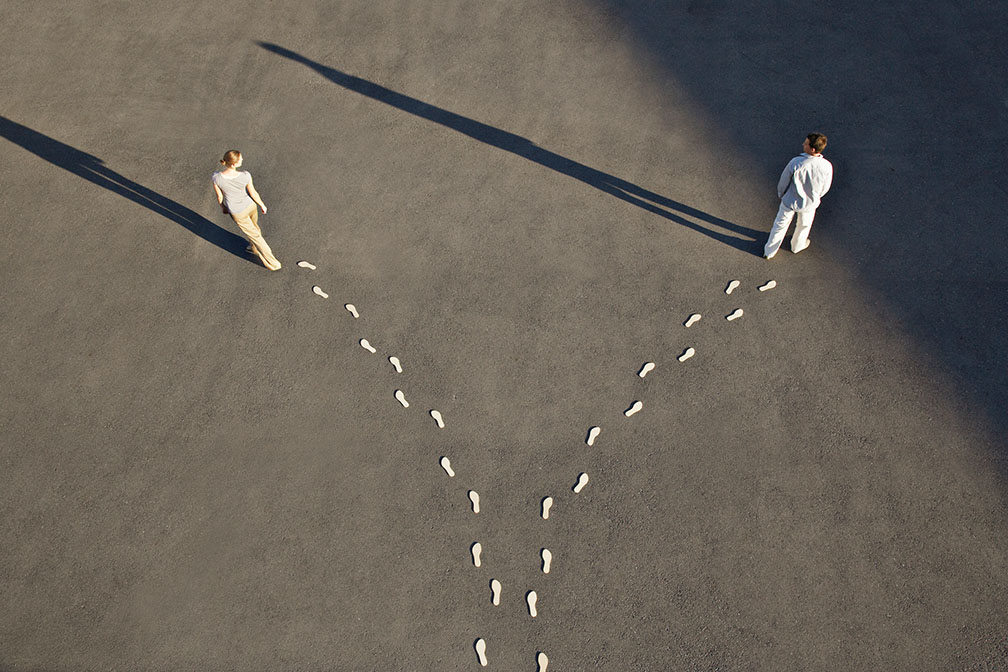

Too many of us these days are plagued with doubts about our self-worth. A rabbi I know who has counseled people for more than 35 years told me that even his most professionally successful congregants, who include nationally renowned individuals, confess to him their fears that their lives haven’t really amounted to very much.
We carry these insecurities into Rosh Hashanah, perhaps wondering, “Is God really listening to me? Do I really matter to him as an individual in a world of more than 7 billion other people?”
How can we proclaim Avinu Malkeinu if we feel so small, if we question whether we deserve God’s attention, forgiveness and love? Why would we even bother making resolutions for self-improvement?
Here’s the belief that has changed my life: I believe that I count in God’s eyes and so do you. I believe that he loves me and loves you, too.
God tells us and shows us this love over and over again. He calls us his children banim atem in the parsha of Re’eh; in Malachai it says, “I have loved you, said HaShem” (Ahavti etchem amar Hashem). Shir HaShirim is an allegory of love between God and his people. Our continued existence throughout millennia of persecution is nothing if not a sign of God’s love.
Despite God being on record with his love, I have still needed to cultivate my own personal, steady, mindful awareness about his presence in my life to make my relationship with him feel real. I strengthen this awareness through prayer, trying to do as many mitzvot as I can, and trying to appreciate everything I have — even the challenges. When I am in pain, physically or emotionally, I also lean on God. “I know you’ll help me through this. I know this is leading somewhere that is necessary, even a breakthrough for me in some way.”
Years ago, Rabbi Moshe Weinberger of Congregation Aish Kodesh in Woodmere, N.Y., said something stunning that forever changed the way I viewed prayer. Not only did he insist that all our prayers mattered, he thundered, “When you make a bracha, you change worlds!”
Despite God being on record with his love, I have still needed to cultivate my own personal, steady, mindful awareness about his presence in my life.
Every apple tree grows from a single seed, he noted. We each have enormous and untapped potential within us to become far greater than we ever imagined. When we tap into the power of blessings and prayer, we actually can change worlds. If we have that kind of power, we obviously count in God’s world. The letters of Elul famously spell out the phrase Ani L’Dodi v’Dodi Li. I am for my beloved and my beloved is for me. It makes sense that before we arrive at Yom HaDin, the Day of Judgment, we would focus during Elul on nurturing the relationship and making it real. Feeling that connection with God inspires us to want to do teshuvah, and to grow.
God loves us despite our mistakes, despite our sins, despite having blown opportunities to do good. But he knows we can do better. That’s why the idea of God’s judgment can be scary, but it is also comforting. If God didn’t care about us, he wouldn’t bother judging us at all. Sometimes God dispenses tough love, making us drop and give him another 20 when we feel depleted and exhausted. Afterward, we will emerge exhausted but stronger.
Like anything else, God-focus takes practice. Wherever we are in that process, we can step it up a bit at this time of year, adding a new mitzvah, committing to a few more minutes of prayer or of study each week, trying to refine our characters. If your experience is anything like mine, a little investment will go a long way.
This Rosh Hashanah, I hope we can park our insecurities at the door and pray with the conviction that each of us counts. God loves us and wants us to emerge from these Days of Awe feeling closer to him, and spiritually uplifted and connected.
L’Shanah Tovah U’Metukah.
Judy Gruen’s latest book is “The Skeptic and the Rabbi: Falling in Love With Faith” (She Writes Press, 2017).