fbpx

September 4, 2018

Labour Party Amends Anti-Semitism Definition

After being plagued by allegations of anti-Semitism, the Labour Party voted on Tuesday to adopt the full International Holocaust Remembrance Alliance (IHRA) definition of anti-Semitism, but added a “free speech” qualification that has garnered criticism from Jewish groups.

The party issued a statement accompanying the IHRA definition of anti-Semitism that said that it doesn’t “undermine freedom of expression on Israel or the rights of Palestinians.”

Various Jewish groups denounced this caveat.

“A ‘freedom of expression on Israel’ clause is unnecessary and totally undermines the other examples the party has supposedly just adopted,” Labour Friends of Israel director Jennifer Garber said in a statement. “Labour appears determined to provide a safe space for anti-Semites. This decision is a sad reflection on Jeremy Corbyn’s leadership of the party and the culture it has instilled.”

Labour MP Margaret Hodge, who called Labour leader Jeremy Corbyn an anti-Semite to his face, tweeted that the party’s move was “two steps forward and one step back.”

“Why dilute the welcome adoption IN FULL of the #IHRA definition of #Antisemitism with an unnecessary qualification?” Hodge wrote.

Other Jewish groups, such as the World Jewish Council, viewed the move as progress for the Labour Party, but more work needed to be done.

Additionally, Corbyn reportedly attempted to introduce language that would have stated that it wasn’t anti-Semitic to describe “Israel, its policies or the circumstances around its foundation as racist.” He was rebuffed by his party.

In July, the Labour Party had only adopted part of the IHRA’s definition of anti-Semitism, but wouldn’t embrace the aspects of the definition that stated it was anti-Semitic to compare Israel to Nazi Germany.

Corbyn himself has been embroiled in a myriad of scandals in recent weeks, including a prior speech of him saying that Zionists don’t understand “English irony” and laying a wreath at the graves of the 1972 Munich terrorists.

Labour Party Amends Anti-Semitism Definition Read More »

It Will Be

We believe that God puts a piece of Himself inside you.
That’s your soul.
That means when a person believes in God
They not only believe in a Creator
They believe in the deepest part of themselves.
So therefore, if you want to believe in God
Believe in yourself
And if you want to believe in yourself
Believe in God.
God fills the entirety of all existence.
In fact, reality is just a subset of God.
On the deepest level
this whole world
is a conversation
God is having with Himself.
And through our choices
We get to decide
How God Expresses Himself in the world.
When we laugh
God laughs
When we yell
God yells
When we stop ourselves from being strict
God does the very same
We work the controls.
How would you like to see God express Himself today?
Be that
And it will be.

Sources: Rashi on the Book of Numbers 7:89; “Tomer Devorah” by Rabbi Moshe Cordovero.


David Sacks is an Emmy Award-winning writer and producer. His weekly podcast, “Spiritual Tools for an Outrageous World,” is available online.

It Will Be Read More »

Where I Can Do Better in 5779

A few days ago, I met a local Jewish columnist (name omitted to protect the innocent) at a bat mitzvah party. She mentioned that she’d followed the controversies in which I’ve been involved and she asked how I had cultivated a thick enough skin to ignore them. The answer: I haven’t. That’s a good thing. I think it’s the mark of a person who’s not done growing that the skin isn’t thick enough to prevent change from within. People trying to improve should respond first to good faith criticism with the thought that perhaps the critic is right.

That doesn’t mean that every critic is right — all too often in politics, critics are interested in destruction of their opposition by any means necessary. Sometimes attacks are wildly unjustified: comments deliberately removed from context, character assaulted, malign motives attributed without evidence.

But sometimes, criticisms are justified. And during the Ten Days of Repentance, it’s well worthwhile to consider how we can improve ourselves and, by extension, our public discourse.

So, here’s my list of sins for the year — a sort of preliminary Ashamnu of political discourse.

I Have Used Unjustified Labels. One of the terms I’ve thrown around too often is “socialist.” This is a term with a meaning — and by using it to describe programs like Obamacare, I’ve muddied the waters. Obamacare is a move toward socialized medicine, to be sure, but it is not in fact socialized medicine (there’s no government option and it’s not single-payer). Labeling it so has allowed actual socialists to broaden their terminology to include successful capitalist enterprises and structures (see, for example, their claims that the Nordic countries are socialist, when their economic strength is based on the capitalistic system of free enterprise).

I Have Jumped to Conclusions. In a world of Twitter, Facebook and instant social media response, the temptation to be first sometimes outweighs the call to accuracy. I’ve tried to curb my enthusiasm but I don’t always succeed. It’s easy to get things wrong when we blurt out our first thoughts about events of the day — but sometimes, we blow it. When we do, we both undercut our own credibility and we promote false information. Confirmation bias is a dangerous drug.

During the Ten Days of Repentance, it’s well worthwhile to consider how we can improve ourselves and, by extension, our public discourse.

I Have Addressed the Worst Versions of Arguments. One of the easiest ways to win debates politically is to address the dumbest versions of arguments. Fortunately, the internet provides bushels of bad arguments every single day. It’s a lot easier and funnier to attack the worst versions of your opponents’ arguments than to find the best versions to address. I’ve been working on finding more sophisticated versions of the arguments I dislike to address — and I think that’s a worthwhile endeavor.

I Have Used Solutions-Talk When Sympathy-Talk Is Demanded. Early on in my marriage, I discovered that a particular type of spousal conversation invariably ended poorly: a conversation in which my wife told me about her problems and I tried to solve them. It turns out that what she really wanted was a sympathetic ear, somebody to simply listen, rather than jumping to solving the problem. Politics, in my view, is all about problem-solving — after all, my slogan is “facts don’t care about your feelings.”

But the reality is that in the political domain, very often we just want to be heard. Much of President Donald Trump’s support is based on the feeling among his supporters that he hears their concerns, where the cultural left dismisses them; the same is true for many on the left, who feel that conservatives dismiss their worries. While I’m generally annoyed by sympathy-talk in politics, that doesn’t alleviate the necessity to at least engage sympathetically before turning the conversation toward solutions.

So keep the criticism coming, please. I’ll try to do better. That’s what Rosh Hashanah and Yom Kippur are for.


Ben Shapiro is editor-in-chief at The Daily Wire, host of the podcast “The Ben Shapiro Show” and the author of The New York Times best-seller “Bullies: How the Left’s Culture of Fear Silences Americans.”

Where I Can Do Better in 5779 Read More »

Protecting Israel, Physically and Spiritually, Perhaps the Wrong Path to Peace

Make More Dressing, Just in Case
What an honor to be part of such a wonderful Rosh Hashanah food issue (Aug. 31). I loved it, and most importantly, so did my mom. Regarding the Roasted Beet Salad dressing: You might want to double or even triple the amount of dressing that you make. Use it on the Roasted Beet Salad to taste, and try it on other salads, too. Ashkephardic cooking is an adventure: Enjoy the journey!

Also, my dear and talented friend Jyl Riendeau is responsible for the beautiful photos that ran with my story.
Debby Segura, Los Angeles

Ronald Lauder: Hurt or Help?
David Suissa unfortunately misses the point of Ronald Lauder’s dramatic criticism of Israeli Prime Minister Benjamin Netanyahu’s government policies (“Did Ronald Lauder Help or Hurt Israel?” Aug. 24). The fundamental issue is whether the Diaspora should be relegated to be a mere rubber stamp or whether its commitment and investment in Israel, both of money and soul, entitles it to a voice in protecting its investment.

Ronald Lauder spoke for many of us who love and support Israel, and who are deeply concerned about the course the Netanyahu government is taking our beloved Israel. If Lauder’s message motivates the Knesset to alter its course, it will have served its purpose and will “help Israel,” not hurt it.
Louis Lipofsky, Beverly Hills

Protecting Israel, Physically and Spiritually
I’m proud of my nephew, the Chai Center’s Rabbi Mendel Schwartz, and of his son Ari’s choice to enroll in a preparatory program leading to a stint in the Israel Defense Forces (IDF), because “the IDF needs strong and brave men and women” (Table for Five, Aug. 17). 

At the same time, a yeshiva student must take his studies as seriously as the IDF solder takes his duties. Discipline is required in both fields, which are equally challenging and equally significant.

The Jewish people are unique in that their raison d’être is their spiritual connection to God by a segment of its people being totally committed to Torah study and its promulgation; it is not for the fainthearted. The body politic is weakened without that spiritual backbone. It is not only the IDF that protects the nation physically but those devoted to Torah study protect the nation spiritually; they go arm in arm. One atrophied arm, whether the right or the left, leaves the body handicapped.
Gershon Schusterman, Los Angeles

Ben Shapiro and Social Justice
Ben Shapiro defines social justice as “a panoply of left-leaning policy priorities” (“Where ‘Social Justice’ and #MeToo Fall Short,” Aug. 24).

I think most others would think of social justice as defined by Wikipedia: “Social justice is a concept of fair and just relations between the individual and society. This is measured by the explicit and tacit terms for the distribution of wealth, opportunities for personal activity, and social privileges.”

There is nothing left-leaning about a fair society, offering opportunity to all.

In fact, that’s what the United States is supposed to be all about. And going back to the prophet Amos and others, that’s what the Jewish religion is supposed to be all about.
Daniel Fink, Beverly Hills

Perhaps the Wrong Path to Peace
Shmuel Rosner, in his Aug. 31 column “Reality Train’s Next Stop: Right of Return,” writes about President Donald Trump administration’s three-part intrusion into the Palestinian conflict: Move the embassy to Jerusalem, cut $200 million in aid to the Palestinians and freeze $300 million in UNRWA aid to refugees. He realizes that the effect of all this is to destabilize the Palestinian situation, but thinks that this is not a bad thing because it will bring Palestinians to recognize reality.

I have no doubt that their leadership already knows that Israel will not give up Jerusalem or allow millions to “return” to Israel. What is needed is genuine desire by the Israeli government and Washington to resolve this impasse. As with any negotiation, a pass must be found to allow the Palestinians to say, “yes” with dignity. Prior Israeli governments already came very close and demonstrated that peace is possible. Washington held the position of honest broker, which it must bring back.
Michael Telerant, Los Angeles

Fiery Kites in Israel and Wildfires in California
Now California and Israel have something more in common: fires.

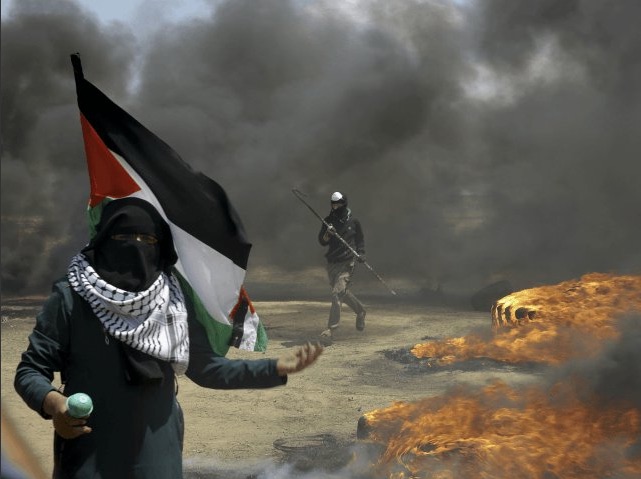
Authorities say some of California’s devastating wildfires were set by an arsonist. Comparably, Israel’s more than 1,500 devastating fires were set by imaginative Palestinian arsonists — children, teens and Hamas terrorists — using balloons, kites and inflated condoms laden with explosives, Molotov cocktails, burning embers and flaming, oil-soaked rags.

Such incendiary devices created ecological disasters, setting ablaze some 8,000 acres of Israeli farms, forests, nature reserves, animals, agricultural land and major highways.

Gaza’s failed “Great March of Return” (the “kite” war) was exposed as a Hamas fantasy-lie. The march was not peaceful, there was no possibility of “return”; most protesters were not innocent; women and children were forced to be human shields; and armed Hamas terrorists, disguised as civilians, were paid to die as martyrs while attempting to infiltrate Israel’s sovereign border.
June S. Brott, Walnut Creek, Calif.

Kindertransport and Illegal Immigration: Not the Same
Instead of just a heroic story of the Kindertransport artifacts (“Kindertransport Exhibit Displays ‘Childhood Left at the Station,” Aug. 24), there is a political aside by the curator Jordanna Gessler equating the Kindertransport with the present-day separation of illegal immigrant children from their parents on the United States’ southern border. This is totally distorted.

Legal migration is not equivalent to illegal immigration. Fleeing impending death is not the same as fleeing to better economic opportunities.
Enriqué Gascon, Westside Village

The Differences Between Men and Women
I truly enjoy reading the Journal every week. While I’ve never written a letter to the Journal before, I was moved to by the story on Jewish male-female relationships by Laura Lifshitz (“Hard Truths for Men About Jewish Women,” Aug. 24).

As a psychologist and author on relationships, had I written that column, I  probably would have been labelled a self-hating Jewish male. What Lifshitz articulates with humor helps explain —  better than I’ve seen before — why some Jewish men shy away from committed relationships with female members of their tribe.
Herb Goldberg, Via email


Don’t be shy. Send your letters to letters@jewishjournal.com. Letters should be no more than 200 words and must include a valid name and city. The Journal reserves the right to edit all letters.

Protecting Israel, Physically and Spiritually, Perhaps the Wrong Path to Peace Read More »

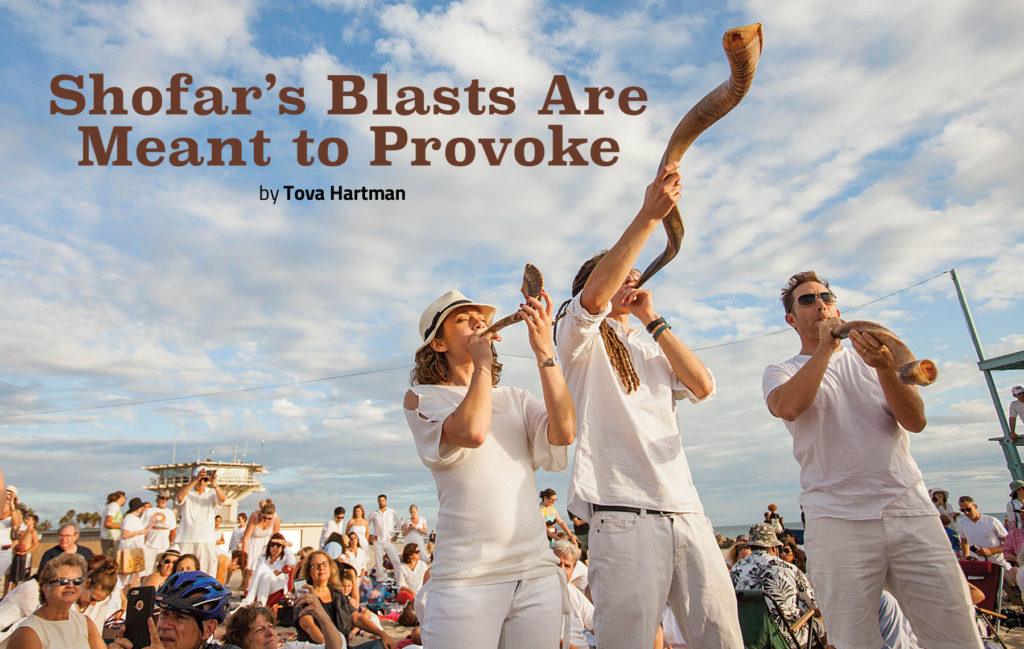
Shofar’s Blasts Are Meant to Provoke

When my late father, Rabbi David Hartman, took his first pulpit in the Bronx in 1955, he could not stop thinking about all the congregants who would come to him with questions about the intricacies of Jewish law. Finally, he thought, his many years of yeshiva study would be put to practical use.

There was just one problem: No one asked him anything. He had answers, but there were no questions.

He soon understood that his job as a pulpit rabbi was not so much to answer questions as to provoke them. He spent his professional and religious life addressing questions he believed were crucial to people’s lives and to Judaism: What does God want from us? What does it mean to be in a “covenantal” relationship? He regretted that so much of his rabbinic training had focused on the mixing of milk and meat and laws of the Sabbath. The titles of his books speak volumes: “A Living Covenant: The Innovative Spirit in Traditional Judaism” (1998); “The God Who Hates Lies: Confronting and Rethinking Jewish Tradition” (2011). Such were the questions he saw needed his rabbinic attention.

As someone who spent many years studying with my father, I am disturbed by how modern Hebrew refers to a person who takes on an observant way of life: hozer betshuvah. Usually translated as “repentance,” teshuvah also means “answer” — as if the person who observes Jewish law has all the answers. Even more troubling is the term for someone who abandons traditional observance: hozer bish’elah — one who “returns to questioning.” The idea that an observant Jew has all the answers, and that someone who leaves observance has all the questions, goes against my whole understanding of what serious Jewish life means.

Judaism encourages questioning. Going back to Abraham (who in Genesis 18 questions God’s intention to destroy Sodom), continuing through the question-and-answer method of Talmudic discussion, and on through the long-standing tradition of questioning the reasons for the different laws, Jews have always been taught to ask questions. This tradition reaches its peak at the Passover Seder, whose raison d’être is not just to recount the story of the Exodus, but to provoke children to ask why the night is so special.

The shofar snaps us out of our complacency. … We are prodded to ask serious and frank questions about ourselves, our community and our religion.

Our questions, however, often become rote; and our answers feel scripted, as with the Passover Haggadah. Sometimes we stop questioning because we are comfortable with the status quo in our community. Sometimes we are simply apathetic. And sometimes we are afraid that our questions don’t have easy answers. But when we stop questioning, we lose the ability to grow and to change.

That’s where Rosh Hashanah comes in. The shofar snaps us out of our complacency. Amid the scripted words of the machzor and the traditional melodies of the cantor, amid the comfort of our traditional seats at our traditional time, the shofar shakes us, destabilizes us. We are prodded to ask serious and frank questions about ourselves, our community and our religion.

How so? Jewish tradition teaches us that the sound of the shofar refers to two biblical moments — stories that force us to ask hard questions.

First, the Binding of Isaac. When God sends an angel to stop Abraham from following the divine command to slay his son Isaac (Genesis 22), Abraham sacrifices a ram instead. According to the ancient rabbis, the blowing of the ram’s horn on Rosh Hashanah reminds God of Abraham’s extreme dedication, a piety so great that its excess has flowed across the generations. But the rabbis offered a second meaning of the shofar as well: In its sounds they also heard the anguished cries of Sarah, Abraham’s wife, when she learns of Abraham’s near-execution of her beloved son.

The biblical text is silent about these cries; after the story, the text continues with the death of Sarah and with Abraham’s purchase of burial ground for her in Hebron. But the rabbis connected these two stories, imagining that Sarah dies from hearing about Abraham’s actions. Whether Isaac’s near-death was enough to cause her own, or whether Sarah only learned of Abraham’s original intention (some say this was whispered to her by Satan), the rabbis give voice to Sarah’s pain by citing it as a source for the sounds of the shofar.

In other words, the shofar symbolizes both extreme faith and extreme agony, to the point of death, with both of them flowing from the very same act. How does this make any sense?

The second story is more obscure. The Rabbis drew from an odd biblical source for both the number of shofar blasts on Rosh Hashanah (100) and the shofar’s staccato teruah sounds: the story of the mother of Sisera, the Canaanite military commander who is killed by Yael in the book of Judges. Sisera’s mother, who is never named, is said to have sobbed one hundred times when her son did not return home, and the blowing of the shofar on Rosh Hashanah reminds us of this.

With this teaching, the Rabbis have totally undercut the biblical text, which shows little sympathy for the mother of a fallen enemy. After all, Sisera’s mother is mocked in the biblical Song of Deborah, where she is imagined as waiting for her son, chalking up his delay to the taking of spoils (Judges 5.28-30). The Rabbis, however, are exceptionally sensitive to her pain, regardless of her son’s sins—to the point of reminding us of her story at the most sensitive moment in our prayers of the new year, the blast of the shofar.

Of course, it is good to remember that our enemies are human and that our joy in victory should always be tempered in the face of their suffering. In Passover, too, we remember this we spill drops of wine during the recitation of the Ten Plagues. But this seems different. The sounds of the shofar, the central ritual obligation of Rosh Hashanah, are the cries of Sisera’s mother, which then become our cries. Honestly, we came to synagogue to pray, to listen to the shofar, to promise to be better people, and then to go home and eat. Why invite the mother of our enemy into Rosh Hashanah?

Harmony is very pleasant. Synthesis is comfortable. To question our ways is to invite disharmony and disruption. And yet, this is what we are urged to do on Rosh Hashanah. Amid the beautiful melodies of cantors and choirs, the shofar pierces our inner ear. We become dizzy. Amid traditional holiday routines, traditional foods and traditional meals, the shofar confronts us with questions that cannot be dipped in honey.

Last year, before I addressed my community on Rosh Hashanah, I spent hours trying to figure out why the Rabbis traced the shofar sounds to the Binding of Isaac and to Sisera’s mother. How could the very same sound be both a reminder of Abraham’s righteousness and of Sarah’s horror? Why choose the cries of the mother of an enemy general as the basis for the sounds of the shofar? I tried to tie it all up neatly. As a student of Jewish Studies, I had been trained to smooth over jaggedness, to find the middle way, to create a Hegelian synthesis. But the synthesis did not come, and I refused to offer easy answers.

To question our ways is to invite disharmony and disruption. And yet, this is what we are urged to do on Rosh Hashanah.

At the end of my talk, all I could say was that I did not have answers. That instead, we have to learn to live with the unnerving contradictions of the shofar. That as a community, the only thing we can do is to support each other within the disharmony. We held hands during the blowing of the shofar.

Should we ask questions for which there are no simple answers? Can we embrace the jaggedness? Can we welcome into our communities people with wildly different religious needs? Can we hold the people of our community together as the walls of our sanctuary begin to shake? If it’s harmony we are looking for, then the answer is no.

The shofar teaches us that we really can leave things messy and jagged. We don’t have to always have answers. But we should never be afraid of hard questions. The shofar embraces both the piety of Abraham and the critique of that piety by Sarah. The harmony of our community is challenged by the presence of our enemy’s mother, telling us how to do teshuvah. It’s only when we allow this discord to puncture our spiritual inner ear, to touch our inner self, that we can truly bring our contradictory selves before God — which is the mitzvah of the day.


Tova Hartman is dean of humanities at Ono Academic College, Israel.

Shofar’s Blasts Are Meant to Provoke Read More »

Israeli NGO Accuses Hamas of War Crimes

The Shurat Hadin-Israel Law Center, on behalf of Israeli farmers and tens of thousands of individuals worldwide, filed a war crimes complaint against Hamas over the terror group’s use of incendiary kites and rockets against Israelis.

According to the Jerusalem Post, the complaint argues that the International Criminal Court (ICC) should launch a probe into the extensive damage to agricultural land caused by the fiery kites that Hamas has launched into Israel.

“Hamas transported civilians to the border for the purpose of burning 10,000 tires and throwing gasoline bombs, as well as openly issued propaganda videos advising civilians that the purpose of burning tires was to mask the movements of its armed militants, who had been directed to murder Israeli civilians,” the complaint argues.

The complaint specifically names Hamas leaders Khaled Mashal, Saleh al-Nouri and Zaher Jabarin as people who should be charged with war crimes, pointing out that they are Jordanian citizens, and Jordan is one of the countries represented on the ICC. They also argued that property damage and intent to murder civilians follows ICC precedent.

“For many months, Israeli farmers have endured thousands of destructive arson attacks and rocket fire from Gaza, while the world stood by in silence,” Shurat Hadin director Nitsana Darshan-Leitner said. “Amazingly, Hamas, which has orchestrated this campaign of terror… accuses Israel and the IDF of utilizing excessive force. We are demanding the ICC put an end to this hypocrisy and diligently investigate these Palestinian war crimes. “

Michael Uziyahi, an Israeli mother in the Eshkol region, said at an August 19 event at Stephen S. Wise Temple that over the past few months, balloons that were once the “symbol of hope and childhood and celebration and happiness, became the symbol of hell, the symbol of fear.” Another Israeli mother, Yedidya Harush from the Halutza region, told attendees that her daughter has come to fear balloons, stating when she saw a man selling balloons, “Balloon is bad, balloon explodes, balloon can kill us.”

“It is not easy for us,” Harush said. “We have been going through a rough time, but we are strong. Our spirit is so strong that even when we cry, even we go through tough times, we know we are going to stay and grow.”

In June, the United Nations rejected the United States’ effort to condemn Hamas for violence at the Israel-Gaza border.

Israeli NGO Accuses Hamas of War Crimes Read More »

Making it Real on Rosh Hashanah

Too many of us these days are plagued with doubts about our self-worth. A rabbi I know who has counseled people for more than 35 years told me that even his most professionally successful congregants, who include nationally renowned individuals, confess to him their fears that their lives haven’t really amounted to very much.

We carry these insecurities into Rosh Hashanah, perhaps wondering, “Is God really listening to me? Do I really matter to him as an individual in a world of more than 7 billion other people?”

How can we proclaim Avinu Malkeinu if we feel so small, if we question whether we deserve God’s attention, forgiveness and love? Why would we even bother making resolutions for self-improvement?

Here’s the belief that has changed my life: I believe that I count in God’s eyes and so do you. I believe that he loves me and loves you, too.

God tells us and shows us this love over and over again. He calls us his children banim atem in the parsha of Re’eh; in Malachai it says, “I have loved you, said HaShem” (Ahavti etchem amar Hashem). Shir HaShirim is an allegory of love between God and his people. Our continued existence throughout millennia of persecution is nothing if not a sign of God’s love.

Despite God being on record with his love, I have still needed to cultivate my own personal, steady, mindful awareness about his presence in my life to make my relationship with him feel real. I strengthen this awareness through prayer, trying to do as many mitzvot as I can, and trying to appreciate everything I have — even the challenges. When I am in pain, physically or emotionally, I also lean on God. “I know you’ll help me through this. I know this is leading somewhere that is necessary, even a breakthrough for me in some way.”

Years ago, Rabbi Moshe Weinberger of Congregation Aish Kodesh in Woodmere, N.Y., said something stunning that forever changed the way I viewed prayer. Not only did he insist that all our prayers mattered, he thundered, “When you make a bracha, you change worlds!”

Despite God being on record with his love, I have still needed to cultivate my own personal, steady, mindful awareness about his presence in my life.

Every apple tree grows from a single seed, he noted. We each have enormous and untapped potential within us to become far greater than we ever imagined. When we tap into the power of blessings and prayer, we actually can change worlds. If we have that kind of power, we obviously count in God’s world. The letters of Elul famously spell out the phrase Ani L’Dodi v’Dodi Li. I am for my beloved and my beloved is for me. It makes sense that before we arrive at Yom HaDin, the Day of Judgment, we would focus during Elul on nurturing the relationship and making it real. Feeling that connection with God inspires us to want to do teshuvah, and to grow.

God loves us despite our mistakes, despite our sins, despite having blown opportunities to do good. But he knows we can do better. That’s why the idea of God’s judgment can be scary, but it is also comforting. If God didn’t care about us, he wouldn’t bother judging us at all. Sometimes God dispenses tough love, making us drop and give him another 20 when we feel depleted and exhausted. Afterward, we will emerge exhausted but stronger.

Like anything else, God-focus takes practice. Wherever we are in that process, we can step it up a bit at this time of year, adding a new mitzvah, committing to a few more minutes of prayer or of study each week, trying to refine our characters. If your experience is anything like mine, a little investment will go a long way.

This Rosh Hashanah, I hope we can park our insecurities at the door and pray with the conviction that each of us counts. God loves us and wants us to emerge from these Days of Awe feeling closer to him, and spiritually uplifted and connected.

L’Shanah Tovah U’Metukah.


Judy Gruen’s latest book is “The Skeptic and the Rabbi: Falling in Love With Faith” (She Writes Press, 2017). 

Making it Real on Rosh Hashanah Read More »

A Saffron-Infused Honey for a Sweet Year

Pure honey is just as layered and complex as wine and chocolate and equally deserving of our appreciation. During Rosh Hashanah, we eat honey as a reminder that we want to have a sweet and good year ahead, but honey is not just for dipping challah and apples in or baking in a cake.

People have been eating honey since the seventh century, and its healing and medicinal properties are well documented. Honey is the only food that includes all the substances necessary to sustain life —including water — and it’s the only food that contains a substance called pinocembrin, which is associated with improved brain function. 

Recently, I toured an African honey farm with its owner and top beekeeper, Sandie Ejang, to learn about bee farming and honey production, on her 60-hive, 40-acre property in western Uganda. Ejang’s company, Asali Wa Moyo, which means “sweetheart” in Swahili, is one of the largest boutique honey producers in Uganda. Wearing a T-shirt that says “I’m an apiarist — what’s your superpower?” Ejang explained that the varietals of honey and their flavor are determined by their nectar source and the location of the hive. 

Sure enough, I tasted honey from northern Uganda, where the nectar source was avocado trees and wildflowers, producing distinctly darker honey with butterscotch and caramel notes. Another honey, produced by bees feeding on mango blossoms, produced a clearer, subtler honey with a mild flavor reminiscent of a flower. Climatic changes can produce a slightly different flavor in the honey from year to year, even with the same nectar source. 

You can be forgiven for thinking that honey producing is a bees’ only job. In truth, bees are one of our more important resources. Since honey bees visit millions of blossoms in their lifetimes, collecting nectar to bring back to deposit in their hives, they make the pollination of plants possible. In fact, 80 percent of all fruit, vegetable and seed crops in the world are pollinated by honey bees, and although a single honey bee will visit from 50 to 100 flowers on a single trip out of the hive, it produces only about 1/12th of a teaspoon of honey in its lifetime. Worker bees produce the honeycomb that comprises hexagon-shaped cells through the consumption of the honey and must ingest about 8 pounds of honey to produce one pound of beeswax.

Honey is the only food that includes all the substances necessary to sustain life.

Ejang told me that the buzzing sound produced by bees is the sound of their wings beating at an incredible 11,400 times per minute. The design of the honeycomb and constant fanning of the bees’ wings causes evaporation, which creates the liquid honey. Beekeepers harvest it by collecting the honeycomb frames and scraping off the wax cap that bees make to seal off honey in each cell. Once the caps are removed, the frames are placed in an extractor, a centrifuge that spins the frames, forcing honey out of the comb.

In Africa, where many of the rural beekeepers use hollowed-out logs as a home for the hive and then smoke them out with fire in order to collect honey, Ejang is so passionate about the sustainability of beekeeping that she makes every effort to keep the bees alive throughout the process. Since honeybees die after they sting, it’s important that the bees are not agitated or stressed during the collection process, so they will come back to the hive and begin working again immediately. 

After the honey is extracted, Ejang brings the combs to a processing plant Kampala where she strains it to remove any remaining wax or other particles. After straining, she bottles the liquid gold in glass containers, labels them and sells them at farmers markets and through her website. She points out that there is plenty of fake honey on the market made from corn syrup or liquid glucose and consumers should be wary if the label doesn’t say “pure honey,” an indication that nothing was added from bee to hive to bottle. There are, however, a few things Ejang adds to make flavored honey, and my sampling included honey steeped with cinnamon, cloves, garlic, ginger and even bee venom, the poison excreted during a sting that makes it painful. Apparently, bee venom heals wounds and reduces inflammation associated with arthritis and can even be used on the skin as a natural “botox” alternative. Remember you heard it here first!

After I got back from the farm, fresh from my inspiring honey tasting with virtually a bathtub’s worth of honey on my hands, I experimented with another ancient flavor combination that I use in the lamb tanjia recipe that follows — saffron honey. Saffron and honey are thought to be natural aphrodisiacs. Remember this when you are around the table celebrating the holidays this year, and you notice there is an extra sparkle in the eyes of your guests. 

Next time you see a bee buzzing around a flower in your garden collecting nectar, think about the miracle of honey bees and stop to appreciate beekeepers like Sandie Ejang who work their magic all over the world to make our lives sweeter.

SAFFRON-INFUSED HONEY
1 /2 cup light-colored, pure honey
1/2 teaspoon saffron threads, preferably from Iran, Greece, Spain or Morocco
Pinch of sea salt

Using a mortar and pestle, crush the saffron threads with salt until it turns into a powder. Gently heat the honey in a small saucepan and add the saffron. Let heat until warm and store in a clean glass jar until use. This makes a great spread for toast, and it’s heavenly drizzled on top of yogurt and fresh figs.

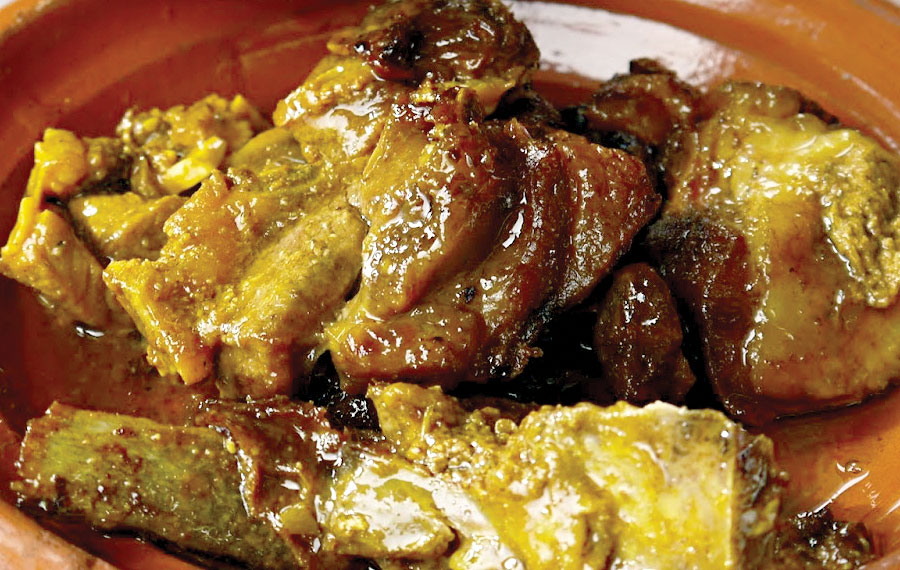
MOROCCAN LAMB TANJIA WITH DRIED FRUIT
6 to 8 lamb shanks (about 10 pounds)
1/4 cup olive oil (not extra virgin)
1 tablespoon kosher salt
1 teaspoon freshly ground black pepper
2 large yellow onions, coarsely chopped
8 cloves of garlic, coarsely chopped
1 1/2 teaspoons ground cumin
1 teaspoon ground coriander
1 teaspoon sweet paprika
1 pinch smoked paprika
1 cinnamon stick*
1/4 cup dried whole apricots
1/4 cup dried whole prunes (pits removed)
1/4 cup dried whole figs
3 carrots, peeled and cut into spears lengthwise
1/2 cup fresh cilantro leaves washed and chopped coarsely
1 /4 cup saffron-infused honey (recipe above)
1/2 cup dry red wine (optional)
Preheat oven to 450 degrees F.

Trim lamb shanks of excess fat or membrane, wash and dry thoroughly. Season with salt and pepper. Heat olive oil in an oven-safe pot or Dutch oven and brown meat on all sides over medium-high heat.

Remove meat and set aside. Turn down heat to meduim and place chopped onion and garlic in pot. Sprinkle with salt and fry until translucent and starting to caramelize. Add all spices and fry until fragrant — about a minute. Add dried fruit, carrot spears, cilantro leaves and saffron honey and stir.

Add the meat and then the wine (if using) and just enough water to barely cover the meat — about 1 cup.

Cover pot with tight-fitting lid or transfer to a clay tagine or tanjia pot, reduce heat to 275 degrees F and place in the oven.

Slow cook at this low temperature for 5 to 6 hours, then remove pot from oven and carefully open the lid. Meat should be tender and fall off the bones and liquid should be syrupy and thick. If not, continue to cook tanjia on the stovetop on medium heat until sauce reduces. Skim fat from top of stew, taste and adjust seasonings with salt and pepper. 

*Remove cinnamon stick before serving. Serves 8 to 10.


Yamit Behar Wood, an Israeli-American food and travel writer, is the executive chef at the U.S. Embassy in Kampala, Uganda, and founder of the New York Kitchen Catering Co. 

A Saffron-Infused Honey for a Sweet Year Read More »

The Year of Donald Cyrus

When does a year begin? 

Dumb question? Not for Jews. The Mishnah counts four beginnings of the year; in our modern life, we count two. We have New Year’s Day, and then we have Rosh Hashanah. Thus, it is not always easy to define when our year begins.

This Rosh Hashanah finds me at the finish line of a book that I’m co-writing with a wise colleague, Camil Fuchs, a professor at Tel Aviv University. It’s about Israeli Judaism. Fuchs is Israel’s most distinguished pollster, and our book is based on vast data that were collected and analyzed in the hope of getting to better understand what Israeli Judaism stands for.

Naturally, one of the questions we asked Jewish Israelis was, “When is your ‘real’ beginning of a new year?” We wanted to know if it is Jan. 1 or Tishrei 1. We also wanted to know on which of these dates Jews engage in their annual introspection. The end of one year and the beginning of another is an arbitrary event. Only by giving it a thought, by using it for something, is it suffused with a meaning.

Rosh Hashanah is much more important to Jewish Israelis than the New Year. Most of them engage in introspection — or so they say — when one year ends and another begins. What does introspection mean? For some, it is more about the past, what they did and did not achieve last year. For others, it is most about resolutions for the next year. For some, it’s a personal exercise — it’s about them. For some, it is communal — it is about the people or the country.

What happened to my people during the past year? The quirks of human memory often make it easier to remember insignificant yet high-profile events than focus on much more profound, yet gradual, changes. What happened last year?

Israel won the Eurovision song contest with the catchy hit “Toy.” That I vividly remember, as well as previous years in which Israel triumphed in the contest (with “A-Ba-Ni-Bi” in 1978; “Hallelujah” in 1979; and “Diva” in 1998).

This was the year in which a question mark was eliminated from the phrase “Jerusalem, the capital of Israel.”

The rest is vaguer: There was a scandal over Israel’s nation-state law; there was fear — still is — about Britain’s anti-Semitic political candidate Jeremy Corbyn; Syria’s civil war began to subside; Rabbi Aharon Shteinman, an important Charedi rabbi of great influence, died; Israel celebrated its 70 anniversary; a few Jews were detained as they entered Israel; #MeToo toppled several Jewish notables; Israeli Prime Minister Benjamin Netanyahu was still under investigation; President Donald Trump was still doing his thing; Israel-Diaspora relations kept deteriorating, as they seem to always do; documents from Iran were smuggled in a brilliant Israeli operation; the United States withdrew from the Iran agreement.

Which of these events will have significant impact in the annals of Jewish history? Shteinman’s death could ignite a leadership crisis in Israel’s Charedi community — or not. The United States’ more hawkish line on Iran could alter Middle East trends — or not. The Jews of Britain could face a dramatic crisis soon — or not. Netanyahu might be at the end of a long and distinguished political journey — or not. The Nationality Law could mark a beginning of a new era — or (more likely) not.

In other words: Not a lot was settled this year. Not many things were concluded. The end of a year is an arbitrary time. Historical processes do not abide by arbitrary dates.

And yet, it is possible to pinpoint this year’s most significant Jewish moment: It is the move of the American Embassy to Jerusalem. Unlike other aforementioned events (Eurovision victory excluded), this event marks an end of an old era and a beginning of a new era. Much like the decision to recognize the State of Israel in 1948 — remember former President Harry Truman’s “I am Cyrus” declaration? — the decision to recognize Jerusalem as Israel’s capital is a watershed moment.

Such moments often are dimmed by politics-as-usual rhetoric, controversial by nature, tainted, for some, by the leaders behind them. But the more distant they become, the easier it becomes to see them with clarity.

So yes, this was the year in which a question mark was eliminated from the phrase “Jerusalem, the capital of Israel.” If you’re looking for a way to make it more memorable, try this: The year in which Jerusalem ceased from being a political “Toy.”


Shmuel Rosner is senior political editor. For more analysis of Israeli and international politics, visit Rosner’s Domain at jewishjournal.com/rosnersdomain.

The Year of Donald Cyrus Read More »

Happy New Questions

One of the toughest parts of this job is choosing what to put on the cover. For Rosh Hashanah, it’s that much tougher. It’s been a chaotic, crazy year. I can only imagine how difficult it must be for American rabbis to craft sermons that will inspire without appearing to ignore the craziness of this year. And yes, I’m thinking of the elephant in the room — that man in the White House who has dominated the consciousness of a nation and made us as divided as ever.

For our cover theme, then, my first instinct was kumbaya — something on healing our community, remembering all we have in common, disagreeing without being disagreeable, and so on. But I quickly ditched that. For readers who are enraged with the direction of the country, this is no time for kumbaya. There is work to be done — injustices to fight, midterm elections to win.

And yet, I was loath to inject politics on our Rosh Hahanah cover; it’s simply too incendiary and divisive. We have all year to fight and argue. Rosh Hashanah ought to be a time to pull back and reflect.

But reflect on what?

The answer came from a contributing writer at our weekly editorial meeting. Esther D. Kustanowitz was speaking about the organization 10Q, which was created by network members at Reboot, which has been described as “an organization that encourages people to reimagine Jewish traditions and make them their own.”

What caught my attention was the idea of using this time of year not to look for answers, but to search for questions — the kind of questions that can help us grow. I wondered: Why not make that our Rosh Hashanah theme this year? God knows the art of questioning is a venerable Jewish tradition.

So, we ran with it.

As part of our cover story, Kustanowitz reports on the growth and mission of the 10Q movement, with a focus on the Days of Awe. “Instead of saving repentance for a single day,” she writes, “[10Q] thinks about it in smaller increments, challenged by one question every day between Rosh Hashanah and Yom Kippur, a span known as the Ten Days of Repentance.” Her story delves into the program, interviews people who use it, and suggests questions that can ignite a process of personal and communal growth for the coming year.

What caught my attention was the idea of using this time of year not to look for answers, but to search for questions — the kind of questions that can help us grow.

What especially intrigued me about the theme of questions is that it goes against the mood of the times — when we’re surrounded by answers, whether from media pundits or friends with adamant views. The search for questions, it seems to me, is a lot deeper and more interesting.

In that spirit, I asked my friend Tova Hartman in Jerusalem to write an accompanying story on the same theme, and to pick her own angle.

Her piece connects us to the shofar, which, she writes, “snaps us out of our complacency. Amid the scripted words of the mahzor and the traditional melodies of the cantor, amid the comfort of our traditional seats at our traditional time, the shofar shakes us, destabilizes us. We are prodded to ask serious and frank questions about ourselves, our community and our religion.”

She reminds us that asking tough questions often goes against human nature: “Sometimes we stop questioning because we are comfortable with the status quo in our community. Sometimes we are simply apathetic. And sometimes we are afraid that our questions don’t have easy answers. But when we stop questioning, we lose the ability to grow and to change. That’s where Rosh Hashanah comes in.”

It’s a pleasant thought to imagine a community walking around during the Days of Awe with sharp questions on their minds — questions that encourage us to look inward.

Yes, that’s where Rosh Hashanah comes in. In fact, that’s where all Jewish holidays come in. They each offer us a chance to take a break from the ordinary and do things differently. I invite you to read both pieces of our cover story and use the High Holy Days to engage with some fresh questions. Make it your own. I’m making a personal commitment to do the same. I will follow the 10Q idea and see where it takes me.

It’s a pleasant thought to imagine a community walking around during the Days of Awe with sharp questions on their minds — questions that encourage us to look inward, to refine our characters, to improve our relationships, to bring out our better selves. I guess I did a little kumbaya, after all.

Shanah tovah.

Happy New Questions Read More »