fbpx

September 4, 2018

Elul Week Five: Start With Compassion

This is the fifth of six weekly columns by Rabbi Zimmerman leading up to Yom Kippur.

As our High Holy Days preparation continues and Rosh Hashanah draws near, our prayers become more urgent, because ready or not, the Days of Repentance are upon us. We reflect more deeply on our misdeeds of the past year, and where we have fallen short of being our best selves.

Part of the powerful ritual we go through each High Holy Day season is the cleansing of our souls by speaking out loud all the ways we have strayed from our path and asking for forgiveness. We actively seek the truth, no matter how painful it might be.

There is a powerful essence that must accompany our soul accounting, and it can be found in the framework and metaphors of the High Holy Days.

Many of our prayer books, thankfully, have evolved by including a multitude of images for God, but what too many of us remember from childhood is the metaphor of the King on the throne.

Our tradition does present us with the metaphor of God sitting on the “throne of judgment (din),” but also of God sitting on the “throne of compassion (rachamim).” Deep in our tradition, and right in front of us throughout the liturgy, is the Divine quality of compassion. This, too, must be included in our spiritual preparations seeking wholeness. (And please remember that these images are only metaphors, pointing us to something deeper, higher and more expansive.)

In the story of the reconciliation around the golden calf, when Moses asks for an assurance of God’s presence, God responds by proclaiming the Divine qualities to Moses (and to us): “Compassionate and gracious, slow to anger, abounding in kindness and faithfulness, extending kindness to the thousandth generation, and forgiving.” (Exodus 34:6) (The verse, based on its Hebraic recitation, became known as the 13 attributes of God’s compassion.)

Deep in our tradition … is the Divine quality of compassion. This, too, must be included in our spiritual preparations seeking wholeness.

The rabbis imagine God wrapped in a tallit, like a prayer leader, who states these qualities and then tells Moses that when the people of Israel sin, they should recite the 13 attributes in their specific order and God will forgive them. (Babylonian Talmud Rosh Hashana 17b)

For thousands of years, the 13 attributes (shelosh esray middot ha’rachamim) have been a centerpiece of our High Holy Days prayer services, beginning at Selichot. We recite them before the open Ark.

This repetition is meant to teach us something crucial: compassion needs to be a starting point of our spiritual reflection and action during this season, along with and equal to the confessing of misdeeds.

When we bring compassion to any situation, our hearts soften. How many times have you made a judgment about a person, only to later hear their whole story and have your feelings ease and release? Your picture of who that person is expands, and you can see their humanity.

Cultivating compassion is like a breath of fresh air, and it can be learned. Sylvia Boorstein, the well-known Jewish-Buddhist author, writes that when she is in distress, she says to herself: “Sweetheart, you’re in pain. Relax, take a breath.”

What would it look like to impart compassion to yourself and the people in your life this season? It’s been an arduous year. Families are divided about crucial, passionate issues. Many of us are suffering from physical illnesses and losses. Relationships have been torn asunder.

Perhaps these High Holy Days can be an opportunity for each of us to grow the kindness in our hearts as we all struggle to be human beings.

One practice I teach in my classes and in individual spiritual guidance is a form of lovingkindness (chesed) meditation. Set your timer for 5 to 20 minutes and repeat the phrases below, with intention. First, direct these statements to yourself; next, include someone who love; then, add a person with whom you experience difficulty. This simple but powerful practice can shift one’s energy toward cultivating compassion:

May I feel safe. May I feel content. May I feel strong. May I feel worthy.


Rabbi Jill Berkson Zimmerman is an at-large rabbi. She can be found online.

Elul Week Five: Start With Compassion Read More »

Sacred Space

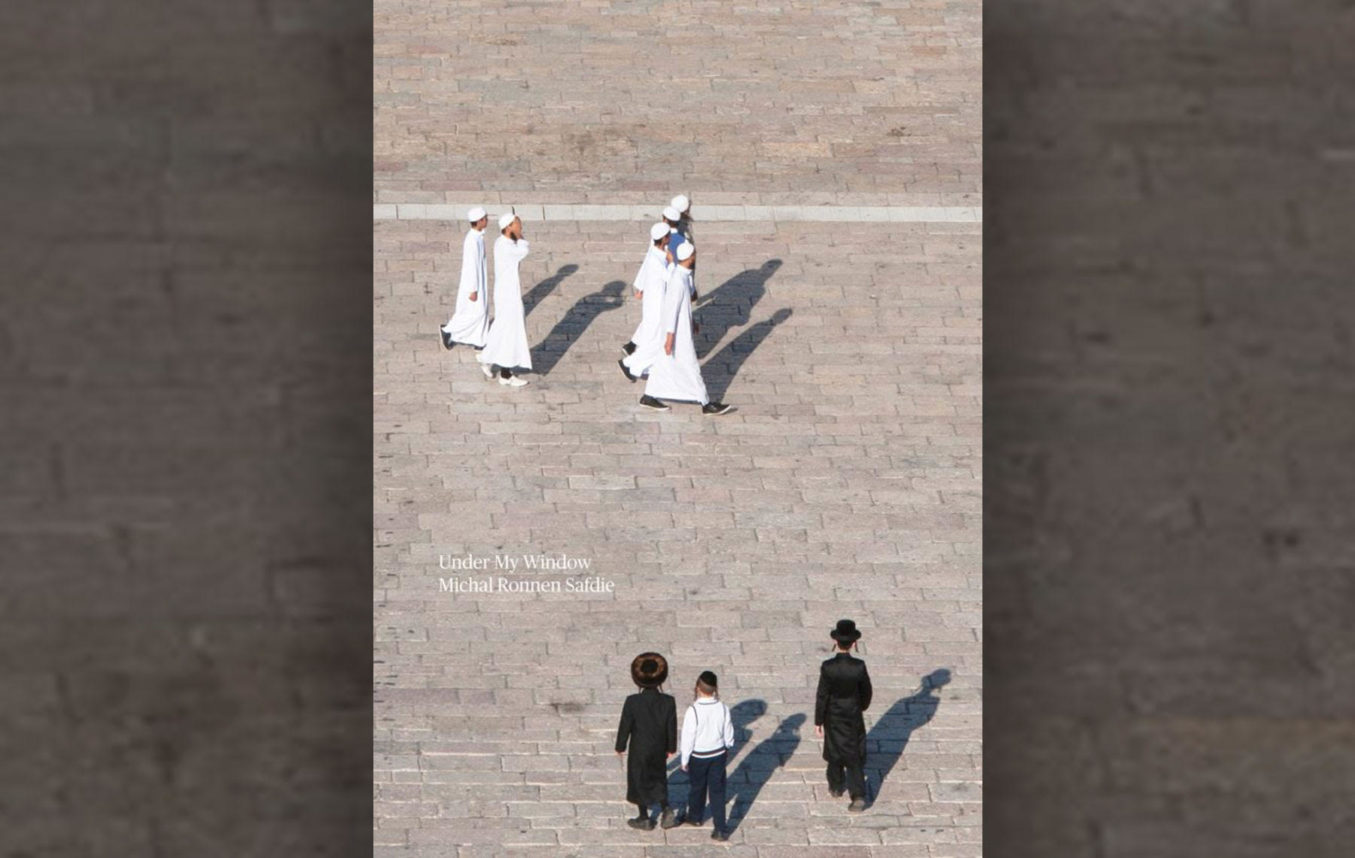
“Perched up on a hill in the Old City of Jerusalem, along the fragile border between the Jewish and Muslim Quarters, is our home,” writes Michal Ronnen Safdie at the start of her ethereal new book of photographs, “Under My Window.”

Her husband, renowned architect Moshe Safdie, was involved with the renovation of the Jewish Quarter after 1967, including the restoration of a ruin that eventually became their home.

From their arched window they can see nearly all of Jerusalem’s sacred sites. But what began to interest Safdie was the view under the window — of a narrow alley, through which “thousands of people pass every day.” The alley is a conduit through which Jews, Muslims and Christians go about their daily lives. “My window over this spot is like a premium box in an opera house overlooking the stage — displaying a constant performance of the theater of life of Jerusalem.”

Setting up her camera on a tripod, Safdie captures images of this complex mosaic. Pointing her lens toward the Western Wall precinct, Safdie captured the vast ceremonial spaces and the majestic silhouette of the Old City quarters. Focusing below, in the alley and terraces, she documents a great variety of people either seeking the sacred or carrying out mundane tasks of daily life.

“It is the social and physical layering that interests me, the communal and the private ‘rooms’ of the city” — a layering of architecture and people, private courtyards and vast public spaces. Woven among the scenes of prayer, celebration and ceremonial events are images of couples in awkward romance, children at play, and residents reading, texting, hanging linens and carrying groceries.

Safdie shows that, despite all the ugly words said about Israel on any given day, coexistence exists. Right there. Under her window. Although, it exists warily. “No scene is innocent in Jerusalem,” Safdie writes. “Every interaction is more than what it appears to be.” Scenes are “rampant with tension,” not just between Jews and Muslims but between Jews and Jews, the Orthodox and the secular.

“Within my house there is no escape from what transpires outside,” she writes. “It is an ever-engaging experience, and it penetrates my home as soundwaves: of church bells, of the sounding of the shofar, the susurration of thousands of people walking to the mosques, a city rooster calling at dawn.”

Safdie shows that, despite all the ugly words said about Israel on any given day, coexistence exists. Right there. Under her window.

“Under My Window” is a book of deep, spiritual beauty. The brilliant architectural composition of the photographs fuses with the book’s exquisitely quiet design to create a sacred space that controls the chaos displayed within.

“I have now lived in the house for 40 years,” Safdie writes. “What occurs outside has not become routine, nor do I take it for granted. Each day brings surprises, new revelations, and unexpected moments of wonder. I think about the complexity and the richness of it all. The macro and the micro.

“Why has this particular spot on earth become so meaningful and significant to so many of different beliefs, cultures, and histories?” she asks. “What is the hope, in this city dubbed ‘The City of Peace,’ of ever seeing harmony and reconciliation?”

In both Safdie’s text and the beautiful Introduction by Ari Shavit, terrorist attacks are generally downplayed and the Jewish response to the fear of living with those attacks is overplayed. Thankfully, the politics are subtle enough not to undermine the larger existential questions the book provokes:

What is the meaning of Jerusalem? What is the purpose of the conflict? Both the transcendental beauty and the complex tensions show the ineffable hand of God. But why must so many still suffer in this holy city?

Safdie ends the book with a photo of the Western Wall, with Jews praying on one side and Muslims kneeling on the other. Poet Yehuda Amichai, writing about the photo, has the last word: “They seem to be on the same level, and their equality is the equality of God and may be a glimpse of hopeful peace.”


Karen Lehrman Bloch is an author and cultural critic.

Sacred Space Read More »

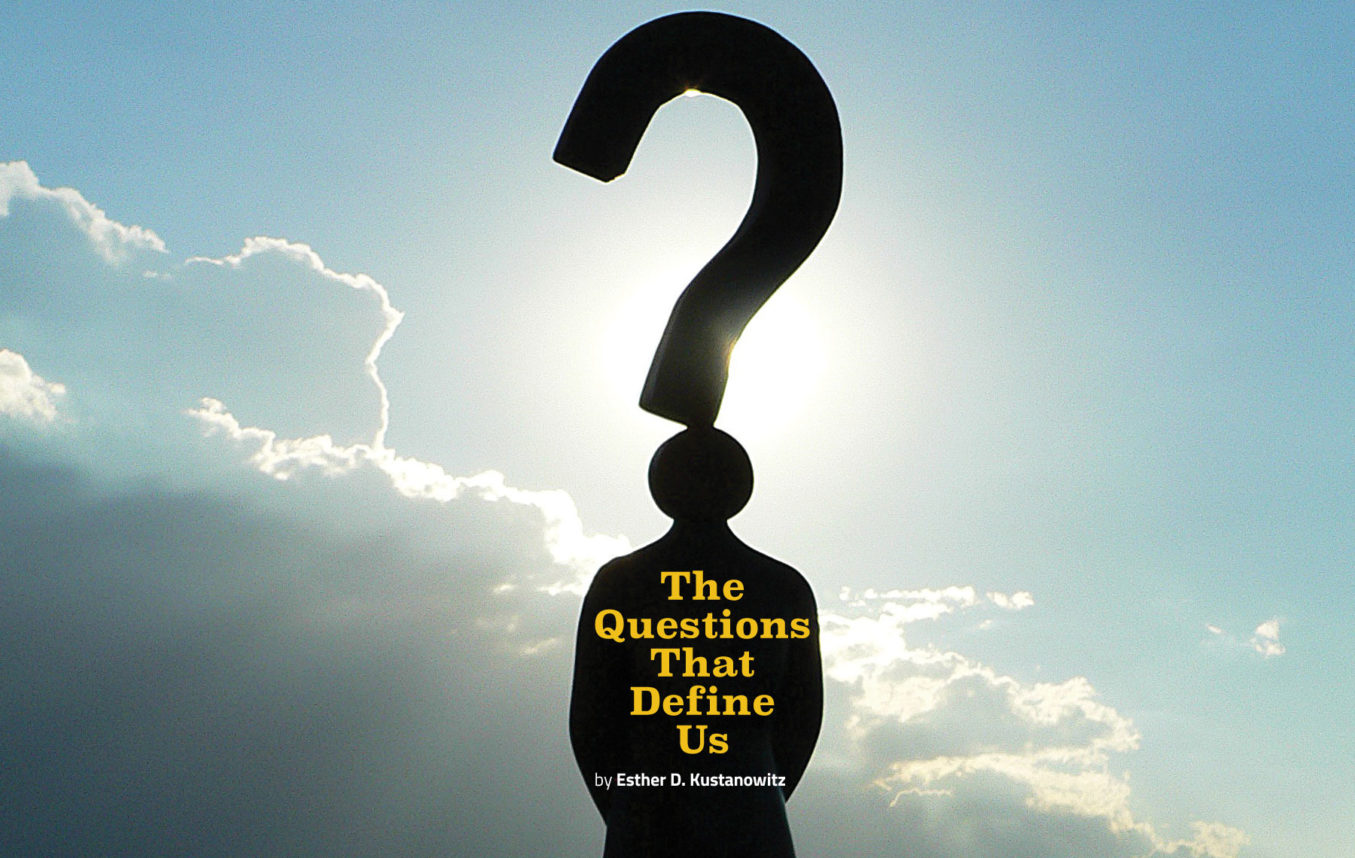
The Questions That Define Us

As a people, our questions started early: Am I my brother’s keeper? Where is the sheep for a sacrifice? If there are 10 righteous people, will the city be saved?

The Talmud presents questions, answers them, then questions them again. Halakhot (Jewish laws) were codified, but that didn’t stop the questions. Once a year, we focus on four specific questions in the Haggadah at Passover but also meet four children, three of whom are defined by the way they ask questions. The fourth is defined by his inability to ask at all.

Jews question. We challenge statements as we hear them. Some of our questions rouse us to action: If I am not for myself, who am I? If not me, who? If not now, when? Others are rhetorical remarks, indicators of disbelief: “Is this the little girl I carried? Is this the little boy at play?” We’re even known for answering questions with other questions.

“Important questions have always been at the heart of the Jewish tradition,” said Sheila Katz, vice president of student engagement and leadership at Hillel International, and co-founder of Hillel’s Ask Big Questions initiative. “Where a statement proclaims fact or truth, a question invites discussion and reflection and sparks learning. Instead of asking questions in ways that exclude or mock, Rabbi Hillel the Elder would ask questions in a way that honored the integrity of those with whom he was engaged and invited people into a great conversation.”

Hillel International, continuing in its namesake’s tradition, founded Ask Big Questions in 2011. First created at Northwestern Hillel to encourage more High Holy Days engagement for Northwestern University students, it has since expanded into a national program through which more than 300,000 people have had reflective conversations on life’s big questions.

“The power of questions is really important to the cultivation of anyone’s identity but particularly Jewish identity,” said Rabbi Yechiel Hoffman, director of  youth learning and engagement at Temple Beth Am. Some questions are inward-facing, focused on personal goals and reflection; other questions are external-facing, addressing the world’s challenges; while other questions look backward or force you to look forward, he said. “This is really a particularly Jewish way of questioning,” Hoffman said. “[Understand] who you are at the moment, then you can understand where you come from and where you’re going.”

Answering Questions With Confessions
When the High Holy Days arrive, our questions are directed inward. What did we do right? What should we have done differently? What are our hopes for the new year? These are hard questions because it is difficult to assess one’s own behaviors and remember the smaller moments. We resolve to ourselves and to the deity-in-chief that this year we will be different. More considerate. More respectful. Humbler. Better. But few of us change. A year later, we’re back in synagogue, holding the same prayer books, beating our chests penitently and repeating our admission: we have sinned. We have failed to make the changes that we wanted to make, and we have to face reality. We are not good at holding ourselves accountable.

Yom Kippur replaces questions with a list of confessional statements of wrongdoing. It is as if “al chet” (the confession of sins) is communicating that when it comes to bad behavior, there is no question. We are all guilty. So much so that the language of confession is communal. All of us. Every single one. It’s not a “choose all that apply” checklist of misdeeds we have personally committed. Even if we have not committed every misdeed on the list, someone in this room probably has. We’re a community of sinners.

“The power of questions is really important to the cultivation of anyone’s identity but particularly Jewish identity.” — Rabbi Yechiel Hoffman

And when we, again, promise God and ourselves to change our behavior, we know that only God or ourselves can hold us accountable. But our internal echo isn’t an effective taskmaster, and most of us rarely hear back from God.

But what if the process of self-analysis came with a coach who could remind us, nearly a year later, of the promises we’ve made to ourselves; who could prompt us to repent and remind us of the changes we wanted to make? Then we’d be more accountable, more able to answer the questions: “How have you changed, and how have you made progress toward your goals?”

10Q: The Origin Story
Enter 10Q, a 10-day process of self-inquiry available online at doyou10q.com that was created by network members of Reboot, an organization that encourages people to reimagine Jewish traditions and make them their own. Instead of allotting a single day for repentance, the process allows participants to think about repenting in smaller increments, challenged by one question every day between Rosh Hashanah and Yom Kippur, the span known as the Ten Days of Repentance, or the Days of Awe. At the end of that period, a person’s answers are “sent to the vault” and locked away until the following Rosh Hashanah, when 10Q returns the person’s answers to them so they can see if they made progress and, if so, how much.

The idea for 10Q grew out of a 2007 Reboot retreat, when a conversation about ethical wills between playwright Nicola Behrman, author and New Yorker magazine contributing writer Ben Greenman and then-Reboot staff member Amelia Klein evolved into something else. Riffing on ideas of time capsules and last letters, the three started connecting the idea to Rosh Hashanah and the Ten Days of Repentance.

“It felt like the most perfect time to create a curated experience of self-reflection for people,” said Behrman, now the resident energy alchemist at the Ojai Valley Inn in Ojai, Calif.

The original goal was to have 50 to 100 “Rebooters” and their friends engage in 10Q, but within a couple of days more than 1,000 people had signed up, including religious Christians from the South, “and the rest is history,” Behrman said.

In the past 11 years, more than 450 organizations and communities have used 10Q, with more than 60,500 individuals signing up, including 8,600 added last year alone. Reboot and its community partners also have hosted more than 310 in-person events using 10Q materials, engaging with more than 23,000 participants.

“Reboot is an invitation to people who don’t necessarily spend all of their time thinking about Jewish identity, inviting them to think about Jewishness and what is Jewishly powerful,” said Francine Hermelin Levite, Reboot’s creative director. “The results are often transformative, and 10Q is an example.”

Reboot has 542 network members, more than 900 community organization partners and hundreds of thousands of people engaging in its programs with names like Beyond Bubbie, The National Day of Unplugging, and Sukkah City, many of them created by network members. Hermelin Levite said 10Q is one of the projects that has really struck a chord.

“10Q is an invitation to reflect on the year that’s passed and set intention for the year ahead,” she said. “Jews say that all the time. But this, you really have to think about, because it gives you actual questions, inviting you to stop and reflect and take it out of the theoretical. It creates a crack in time to spend with yourself and jot those things down.”

The 10Q User Experience
Writer and illustrator Christopher Noxon — an avid 10Q user for the past five or six years — called the modality of asking questions as part of the reflection “potentially life-changing.”

“There’s no theology [in 10Q],” Noxon said. “It’s about what’s deeply important to you. Where do you want to get better? There isn’t a lot of room for very honest personal reflection in our lives otherwise. No one’s asking those searching questions in a secular environment. No one’s asking you to confront your deeper truth.”

As the program has grown, Reboot has learned that, in addition to individuals sitting down to answer the questions, some groups have used the 10Q materials to engage their members in contemplation and conversation about the group’s needs and goals.

Hoffman, for instance, who uses 10Q “every year, religiously,” worked with Reboot to generate programs that use the 10Q methodology beyond the online experience. One program, designed for the classroom, featured each 10Q question printed on a sheet of giant butcher-block paper. At Temple Beth Am, students added their answers to each of the sheets, which were then displayed throughout the High Holy Days, providing a snapshot of what students were thinking about.

“The kids appreciated it as an intentional structure, a thoughtful way to reflect,” Hoffman said. “And it’s easier to access than prayers.”

“It’s a wonderful tool and it feels like it’s been around for a long time now,” said Ashley Sullivan, a self-proclaimed “unofficial ambassador” for the program who also uses 10Q in her work as outreach coordinator for Nefesh services at Wilshire Boulevard Temple. If someone says they haven’t heard of it, she’s surprised. “I actually have this twinge of feeling sorry for people, I suppose, that they don’t have this trove to look back on if they are just getting started with it.”

In yet another example of asking questions, Reboot does an annual survey of users, and the responses reveal the program’s wide impact.

“When I get distracted or feel motivated during services, I start looking over the questions and thinking through my answers,” one participant said. “10Q has changed the way I interact with spirituality and reflection during the High Holy Days.”

“10Q has helped me to strive for new futures,” another user wrote. “Over the past few years, I have seen common threads in my responses and, upon reflection, I realized that I needed to pull those threads if I was ever going to make necessary changes in my life.”
Noxon said he loves the project “because of how it gets at very deep personal and spiritual truths that are rooted in Jewish tradition without ever explicitly screaming ‘Judaism! Judaism! Judaism!’ ” he said. “They tapped an ancient technology and made it work in a smartphone world, which is really subversive and really ingenious.”

The Questions
10Q’s format starts with questions that prompt your reflection on personal things that have happened to you in the past year, as well as world events that have had an impact on you. It then moves toward goal-setting for the next year, such as with Question 7, which asks: “How would you like to improve yourself and your life next year? Is there a piece of advice or counsel you received in the past year that could guide you?”

The questions are the same every year, but Noxon said that “every year I feel like I’m answering them for the first time because I feel like I’m a totally different person.”

“What we did was create a very basic time capsule structure that homed in on a specific series of moments every year,” Behrman said. “It’s structured enough that people actually do it, but it’s spacious enough that they get to do what they want with it. I have found again and again that the deepest wisdom and joy comes when we give people a simple structure and space to express themselves.”

Hermelin Levite said Reboot is responding to the shifting needs of 10Q’s users. New adopters are “more mobile-ready, more accustomed to using hand-held devices to access their favorite programs and culture,” she said. This year, Reboot expects to have a mobile app ready by the time the 10Q vault opens for reflections just before Rosh Hashanah. It has also created print journals for 10Q partners.

“[Reboot and 10Q] tapped an ancient technology and made it work in a smartphone world, which is really subversive and really ingenious.”
— Christopher Noxon

Reboot regulars find creative ways to “do the 10Q.” For instance, Jill Soloway, a Reboot network member and creator of the Amazon series “Transparent,” answered in a video 10Q’s Question 8 — “Is there something (a person, a cause, an idea) that you want to investigate more fully in the coming year?”

“My answer is the concept of joy,” Soloway said in the video. “I think I don’t feel anywhere near enough joy. And I think joy needs to be sought out, curated, time held for it.”

Damon Lindelof, a network member and co-creator of the television series “Lost,” got creative with his 10Q last year. As his spiritual mystery show “The Leftovers” ended in June — generating questions among fans — Lindelof answered his 10Q from the perspectives of that show’s characters.

Each year, when “the vault” opens the day before Rosh Hashanah, the Reboot staff is inundated with emotional emails.

“On the eve of 10Q when they get their answers back, I receive the most incredible texts overflowing with gratitude,” Behrman said, noting that 10Q is used in some prisons and as a point of conversation for families with distant family members. “Thousands of people around the world, regardless of religious affiliation, now have beautiful time capsules of self-reflection as a result. It’s such a beautiful reminder of what is possible in this world.”

Do You 10Q? I Do
I too am a regular user of 10Q. I started using it in 2008. There have been years when I skipped one or more of the questions, rushed through my answers just to check them off my list, or even skipped it entirely — such as in 2016. I’m not sure why.

But whether I use 10Q conscientiously, I still believe that the self-reflection it promotes with the same questions year-to-year — while I potentially experience changes in my personal, intellectual or professional life — is a particular kind of time gift. It challenges me to suspend the other things on my never-ending list of things to do, and dedicate separate and distinct time to reflection. One might even call that period of time kadosh (holy).

Part of the challenge of the High Holy Days season is understanding that we possess far more questions than answers about our friends and family, our community, the world, the future and ourselves. But as Jews who are centered on making the world and ourselves better — during this or any season — we still have to create the space, make the time and ask the questions that in the year ahead may come to define us.

The Questions That Define Us Read More »

Linda Sarsour Arrested for Disrupting Kavanaugh Hearing

Women’s March leader Linda Sarsour was arrested on Tuesday for being among the many activists that disrupted Supreme Court nominee Brett Kavanaugh’s Senate confirmation hearing.

The video below shows Sarsour standing up and shouting, “This is a mockery and a travesty of justice!” before being hauled away by security.

The disruption that occurred forced Kavanaugh’s daughters – ages 10 and 13 – to be “rushed” out of the hearing by their mother.

Sarsour was also arrested in March for civil disobedience when she protested outside of Speaker of the House Paul Ryan’s (R-Wisc.) office over the Deferred Action for Childhood Arrivals (DACA) program.

Sarsour has previously come under fire for her ties to Louis Farrakhan and her criticism of Zionism.

Linda Sarsour Arrested for Disrupting Kavanaugh Hearing Read More »

USA Today’s new report on Iran’s Jews is Inaccurate and Irresponsible

Every so often the when the Iranian regime’s public image in the West has taken a hit, the regime’s leadership loves to invite various Western media outlets to Iran in order to parade members of the Jewish community in front of them in an effort to bolster their true negative image as an anti-Semitic repressive regime.  The regime’s Intelligence Ministry has hand-picked leaders of the Jewish community in Iran telling the Western reporters that Iran is a supposed a “safe and peaceful place” for Jews to live in. Unfortunately in the past Western media outlets such as the Guardian in England, the Forward in New York, the New York Times, CNN or NBC News have either been naïve enough to believe and report these lies, or just complicit in spreading them. Again such has been the case with USA Today recently publishing an article claiming the Jews of Iran feel “safe and respected”. As an Iranian Jewish journalist who has been covering Iranian Jewry worldwide for nearly two decades, I feel compelled to expose USA Today’s inaccurate and irresponsible reporting on Iran’s Jews.

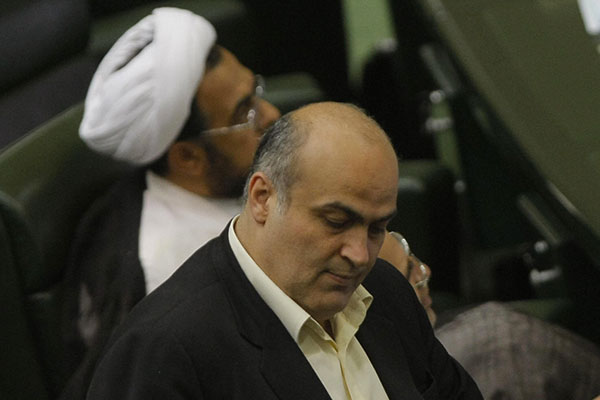
While the reporter who covered this story for USA Today generally mentions the hardships Jews and religious minorities experience in Iran, she inaccurately portrays a “rosy” life for Iran’s Jews throughout her story without giving us the real facts about their real condition. This is done by the reporter repeatedly quoting the Jewish community leaders’ worn out and parroted comments about how life is supposedly “great for the Jews of Iran”.  The Iranian regime’s Jewish mouthpieces nowadays are Ciamak Morsadegh, the only Jewish member of the Iranian parliament and the community leader, Homayoun Sameyah Najafabadi. Both men are always claiming that the Jews of Iran are living in “total freedom and face no danger while living in Iran.” Yet what both men failed to tell the USA Today reporter and other western journalists are that Jews will say whatever their radical Islamic puppet masters in Tehran tell them to say in order to avoid arrest or other potential calamities brought upon the Jewish community in Iran. Morsadegh and Najafabadi may either be paid stooges for the Iranian regime to spread lies or may be saying good things about the Iranian regime’s treatment of the Jews under duress. The truth of the matter is that the Iranian regime and its secret police of thugs have a tight grip on the activities of the Jewish community in Iran.  So how can any journalist in their right mind give any credibility to what these hand-picked “spokespersons” for Iran’s Jews say? Moreover why isn’t the reporter or the editors at USA Today informing the reader of their article that what these men are claiming may not be accurate due to the repressive conditions in which they and other Jews in Iran live in today?

The USA Today article about Iran’s Jews is also inaccurate because it claims there are 12,000 to 15,000 Jews living in Iran, a number given to them by the Jewish Committee of Iran. Again these numbers are highly inaccurate and are hard for me as an Iranian Jewish journalist to accept because these are the same numbers Jewish leaders in Iran and the Iranian authorities have been giving western media for the past 25 years! Anyone who has been following Jewish immigration out of Iran and knows of the work of HIAS (Hebrew Immigrant Aid Society)that  has been quietly helping Jews fleeing Iran during the last near three decades and resettling the U.S. and Israel, knows that the number of Jews living in Iran today is getting smaller and smaller each year. In fact on a regular basis I meet and interview countless new Iranian Jewish immigrants to Los Angeles in the course of my reporting on the Iranian Jewish community in the city. So it’s a hard pill for me to swallow when the Iranian regime and its Jewish stooges claim that there are supposedly such a high number of Jews still living in Iran. According to the estimates privately given to me by Iranian Jewish leaders in Los Angeles and New York, the number of Jews still living in Iran are between 5,000 to 8,000 people. Yet these numbers are not widely published because Iranian Jews in America are by in large fearful that if they indicate these low numbers of Jews living in Iran, it may upset the Iranian regime’s leaders and therefore jeopardize the lives of Jews still living in Iran. Likewise the Jewish community leadership and the Iranian regime have never once conducted a proper census of the Jews living in Iran since 1979. Therefore the numbers the Jewish leadership in Iran gives the western media should not be given any serious credibility.

The USA Today article likewise claims that the Iranian regime’s founder the Ayatollah Khomeini tried to build good relations with the country’s Jews after the regime wrongly executed the community’s innocent leader, Habib Elghanian in May 1979. Again this is totally false because of the Iranian regime’s long record of nefarious actions against Iran’s Jews and its blatantly discriminatory laws. The USA Today article also failed to mention the fact that just this past December, two synagogues in the southwestern Iranian city of Shiraz were vandalized and that a total of five Torah scrolls and numerous prayer books were damaged or totally destroyed. Moreover the Iranian regime never publicly acknowledged this crime against the Jews of Shiraz, nor did it investigate this crime. Is this the sign of a regime which is supposedly benevolent to its Jewish community? Again I am shocked and surprised that the USA Today reporter covering this story failed to mention this serious anti-Semitic incident. In addition the USA Today story also failed to mention the brutal murder of Toobah Nehdaran, a 57-year-old married Jewish woman living in the Iranian city of Isfahan who in November 2012 was horrifically butchered and her body mutilated by radical Islamic thugs. Again if Iran is such a safe and peaceful place for the Jews to live in, then why have Nehdaran’s killers not been brought to justice yet by the Iranian authorities? Why wasn’t the case ever investigated by the regime’s police?

If the Iranian regime “loves the Jews and grants them equality,” then why have more than a dozen Jews been randomly executed by the regime on trumped-up charges of spying for Israel and the United States during the last 39 years? And why, between 1994 and 1996, if life is great for Jews in Iran, were 12 Jews who were trying to flee Iran via Pakistan arrested by the Iranian secret police and not been heard from since? On a regular basis, as a journalist covering Iranian Jewry, I am reminded by countless Iranian-American Jewish leaders to “watch” what I might be writing about the Iranian regime for fear that what I might report on may have negative repercussions on the Jews of Iran. So my question is: Why on earth are Iranian-American Jews so concerned about my words and the safety of their brethren in Iran if everything is supposedly so fine and dandy for Jews in Iran? These are unanswered questions that should leave serious doubts in the minds of all individuals about the Iranian regime’s supposed “love” for the Jews of Iran.

The USA Today article briefly mentions the Holocaust denial cartoon contests that the Iranian regime regularly sponsors, but why didn’t the reporter mention the fact that the Iranian regime has always maintained warm relations with notorious anti-Semites, including former KKK Grand Wizard David Duke and other American neo-Nazi groups who appear regularly on PRESS TV, the Iranian regime’s state-controlled English language news network. Furthermore, the Iranian regime has a long history of ties to European neo-Nazis groups and Holocaust deniers. For example, the Iranian regime proudly announced many years ago that it paid for the legal defense in France of French Holocaust denier Roger Garaudy, who was convicted and fined $80,000 in 1998 in France for denying the Holocaust. Garaudy was subsequently welcomed in Tehran as a hero, where he met with the Iranian Supreme leader Ali Khamenei. In 2012, Khamenei publicly grieved the death of Garaudy in a personal Twitter message. Additionally Iranian state-run media outlets have also frequently cited the writings of the neo-Nazi American leader William Pierce. In addition the Iranian regime every year publishes hundreds of copies of a 500 page plus volume of the notorious anti-Semitic “Protocols of the Elders of Zion” book in Farsi language which they distribute not only in Iran but through most of their embassies in Europe. Again, I am baffled at how the USA Today article can in good faith and honesty give any credibility to the words of Jewish leaders in Iran who claim Iran is a supposed “paradise” for Jews to live in when the regime that rules them is so dangerously anti-Semitic.

Moreover, what the USA Today article fails to mention is the fact that the Iranian regime’s official laws are blatantly discriminatory against Jews. For example, the Iranian regime’s criminal laws state that if a Muslim kills an infidel such as a Jew, Christian or Zoroastrian, his punishment is a mere monetary fine as the life of an infidel is only worth one-half the life of a Muslim. Whereas if an infidel kills a Muslim, his punishment is the death penalty. Or even the Iranian regime’s civil laws are discriminatory against Jews and other religious minorities. For example, Article 881 of the Civil Code of the Islamic Republic states: “an infidel does not get inheritance from a Muslim and if there are infidels among the heirs of a deceased infidel, the infidel heirs do not take inheritance even if they are prior to the Muslim as concerns class and degree.” This discriminatory inheritance law encourages non-Muslims to convert to Islam to gain all of their family members’ inheritance in Iran.  Another very anti-Semitic law the Iranian regime has on hand is that books may not be published in the Hebrew language in Iran and Jews cannot teach their children to speak the Hebrew language. What the USA Today article failed to mention was the fact that religious texts that the Jewish community in Iran uses today were published 40 years ago prior to the Iran’s Islamic revolution. Are these discriminatory laws and anti-Jewish actions the signs of a regime that are respectful and tolerant of the Jews? Clearly they are not.

The USA Today article additionally fails to mention the fact that its reporter was most likely granted a visa to come to Iran after the regime’s Ministry of Intelligence approved of her beforehand and they were given assurances that her final published piece would be favorable towards the regime. Almost always, U.S. or European journalist like myself who are highly critical of the Iranian regime would never be granted a visa to come to Iran by the regime and to report on the real truth surrounding Iran’s Jews. (I would never go to Iran myself for fear of my own safety as a Jew). Moreover what the USA Today article also fails to mention is that the reporter who traveled to Iran, most likely had a regime handler follow her, translate for her and prevent her from speaking to Jews not previously hand-picked by the regime beforehand! Again how can any reporter’s story have any credibility when there are such stringent restrictions of their ability to openly and honestly report the facts on the ground in Iran?

Lastly the most obvious and ridiculous statement in the USA Today article about Iran’s Jewish community is the fact 100,000 to 150,000 Jews lived in Iran in 1979 and today the number is substantially less! No doubt anyone with half a brain would read that statement and decipher that Iran under the rule of the radical Islamic clerics today is obviously not such a great place for Jews to live if such a substantial number of its Jewish population have fled the country! The USA Today article also claims “many Jews fled” after the revolution. This is an understatement. Thousands of Jews have fled Iran in massive waves since 1979 for fear of their lives, or when their family members were imprisoned on false charges by the regime, or when the regime executed innocent Jews, or when the regime wrongly seized their billions of dollars’ worth of Jewish assets! Today those thousands of Jews who fled Iran now live primarily in Los Angeles, New York and Israel and each and every single one of them will tell you the real horror of living under this evil regime and how it is not a safe place for Jews to live in. It is shocking and absurd that the USA Today reporter who wrote this article didn’t have the brains to interview Iranian Jewish leaders and activists in America, Europe or Israel who could give her more accurate information about the very real anti-Jewish nature of Iran’s regime.  At least facts from my community members living in the U.S. would balance this article out and shed light on the real danger Jews face in Iran.

With all of these unanswered questions about the conditions of Jews living in Iran today and the clear facts about the Iranian regime’s true anti-Semitic nature, one is left wondering why USA Today published this false and inaccurate article about Iran’s Jews. The answer is two-fold. One, the reporter who covered this story and her editors were either ignorant and naïve about the dangerous and unsafe condition for Iran’s Jews. Or two, the USA Today reporter and her editors ignored the Iranian regime’s blatant anti-Jewish activities and anti-Jewish laws in order to advance the Iranian regime’s propaganda interests to bolster their negative image in the western media by parading their “beloved Jews”. In either case USA Today must publish a retraction of this inaccurate story or at the very least publish a follow-up article exposing the real anti-Semitic  nature of the Iranian regime. USA Today’s article about Iran’s Jews is poor journalism and must be exposed for its inaccuracy because it only serves to improve the image of an evil regime that not only represses its religious minority population but also cracks down hard on its Muslim majority population which opposes its repressive totalitarian rule.

Those interested in reading my past responses to those who falsely claim the Jews of Iran live in freedom and peace in Iran today can read here, here, here, here, here, here, here and here.

USA Today’s new report on Iran’s Jews is Inaccurate and Irresponsible Read More »