
Movies are meant to be escapism, but in Spike Lee’s new film, “BlacKkKlansman,” there is no escaping. Lee is actively trying to blur the line between cinematic reality and our own.
The film tells the story of African-American police officer Ron Stallworth, who, with the help of a white colleague, infiltrates the Ku Klux Klan. This powerhouse of a film is a rendering of real-life events in the 1970s, but with Klan members talking about “America first” and “Making America great again,” the references are about as subtle as tiki torches on the streets of Charlottesville, Va. This film intentionally calls in the modern era and the state of racism and anti-Semitism in the age of President Donald Trump. And the film, based on Stallworth’s 2014 nonfiction book of the same name, also contains some fascinating insights on Jewish identity. (Warning: This column contains a few spoilers.)
While Stallworth handles the phone conversations with the Klan, he must rely on Flip Zimmerman, a white detective, to stand in for him in person at Klan meetings. In a short monologue, Zimmerman says he was born Jewish but not raised to be Jewish, that his experience contained no synagogues or bar mitzvahs or holiday observances. In fact, he never thought about being Jewish at all until his under-cover assignment. Now, he says, he “can’t stop thinking about it.”
Anti-Semitism can become a crucible that forges Jewish identity and awakens the Jew within. Zimmerman is now aware. Even though the Klan members hate Jews, he can “pass” in a way Stallworth can’t. He hadn’t seen the Klan as an immediate threat because his Jewishness was invisible, at most moments, even to himself. But now he realizes the danger is very real, not just to people of color, but to himself and others.
But Zimmerman was invented for the film. In an interview with Filmmaker magazine, one of the film’s screenwriters, David Rabinowitz, said they made the character Jewish to heighten the stakes, and, “on top of that, we’re [he and co-writer Charlie Wachtel] both Jewish.”
At one point in the film, Stallworth goes to hear civil rights activist Kwame Ture, who riles up a crowd of African-American students using the words of Hillel the Elder as a call to action: “If I am not for myself, who will be? If I am only for myself, what am I? If not now, when?”
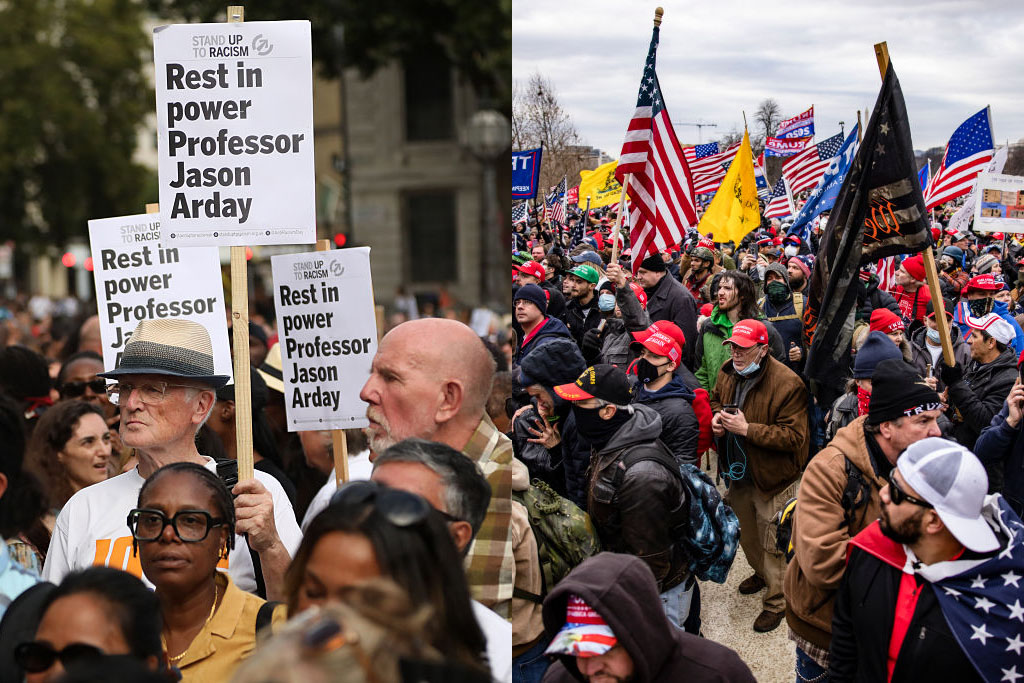
Remembering the agenda of “BlacKkKlansman” — to share Stallworth’s story while reminding audiences of the story unfolding now outside the theater — the message is clear. The chants of “blood and soil” and “Jews will not replace us” in Charlottesville and the proliferation of online hate, including social media trolling by neo-Nazis and white supremacists, have reminded us that racism and anti-Semitism are still alive and well in America. The release of the film was intentionally scheduled for the first anniversary of the events in Charlottesville, including the death of activist Heather Heyer. Now is a time for empowerment and justice for ourselves. Empowerment and justice for others. And action immediately, in this moment.
Never has this been more true. We need to find our ways into other people’s stories. And we need to do it now. Because if we only act when we ourselves are the most active or most visible targets of hatred, we play into the hands of racists who count on complacency to help them move their agendas forward. Lee’s movie — entertaining in parts, starkly somber in others — may not be a vacation from reality, but it’s a well crafted, important statement about where we are and perhaps a warning of what we might become, if we continue on this path.
Esther D. Kustanowitz is a contributing writer to the Jewish Journal.