
fbpx
[additional-authors]
November 16, 2018
Photo from Wikipedia.

Among the criticisms of the National Students for Justice in Palestine (NSJP) conference this weekend at UCLA has been their policy of selective exclusion.

Apparently, this policy extends to certain journalists, as I was repeatedly rejected by SJP from covering their conference.

I contacted them on Sept. 26 on the possibility of covering the conference; on Oct. 12 they sent me a link to apply for the conference. Those that get a reply within a couple of days after sending in the application are allowed in; no replies mean that you didn’t.

I never got a reply. I have since followed up with them twice: once last Friday, and again on Wednesday this past week. Still no response. A prominent Jewish leader on campus told me the conference is “hermetically sealed.”

My question: Why is SJP being so secretive about a conference they have proudly promoted with such colorful materials? What are they hiding?

They have been accused by numerous groups, including the Simon Wiesenthal Center, StandWithUs and the Anti Defamation League, of promoting anti-Semitism and maligning the Jewish state. If these accusations are not accurate or overblown, why not allow people to come see for themselves?

From my end, I would have abided by the policies of the conference and not taken any pictures or recordings. If SJP is afraid of a disruption, isn’t that what security is for? Wouldn’t a disruption at their conference actually garner sympathy for them, especially after they’ve been accused of the May disruption at a Students Supporting Israel event?

My concern is that such secrecy only fuels the criticism that SJP is indeed anti-Semitic and harbors sympathy toward terror groups like Hamas.

Maybe it’s no coincidence that even the Los Angeles City Council unanimously passed a resolution calling on UCLA to cancel the conference.

In any event, for all those who were refused entry, there will be two counter-events on Sunday at UCLA: Yad Yamin’s at 10 a.m., and then Bruins for Israel’s celebration of Israel from 11 a.m.-2 p.m. I will be at both, and you should be there, too.


Did you enjoy this article?
You'll love our roundtable.

Editor's Picks

Latest Articles

Chicken With a Lemony Twist

The huge plus is that a super, simple sheet pan recipe results in a dish that looks so impressive and sophisticated.

Troubled Marriage

As Netanyahu visits Trump, Israelis look to Washington with wearier eyes. What does the future hold for the relationship?

Tu b’Av and Redemption

On Tu b’Av, the full moon rises. The same people who mourned begin to dance. The same nation who splintered begins to seek one another out again in the vineyards, in the fields, in the moments of vulnerability and return.

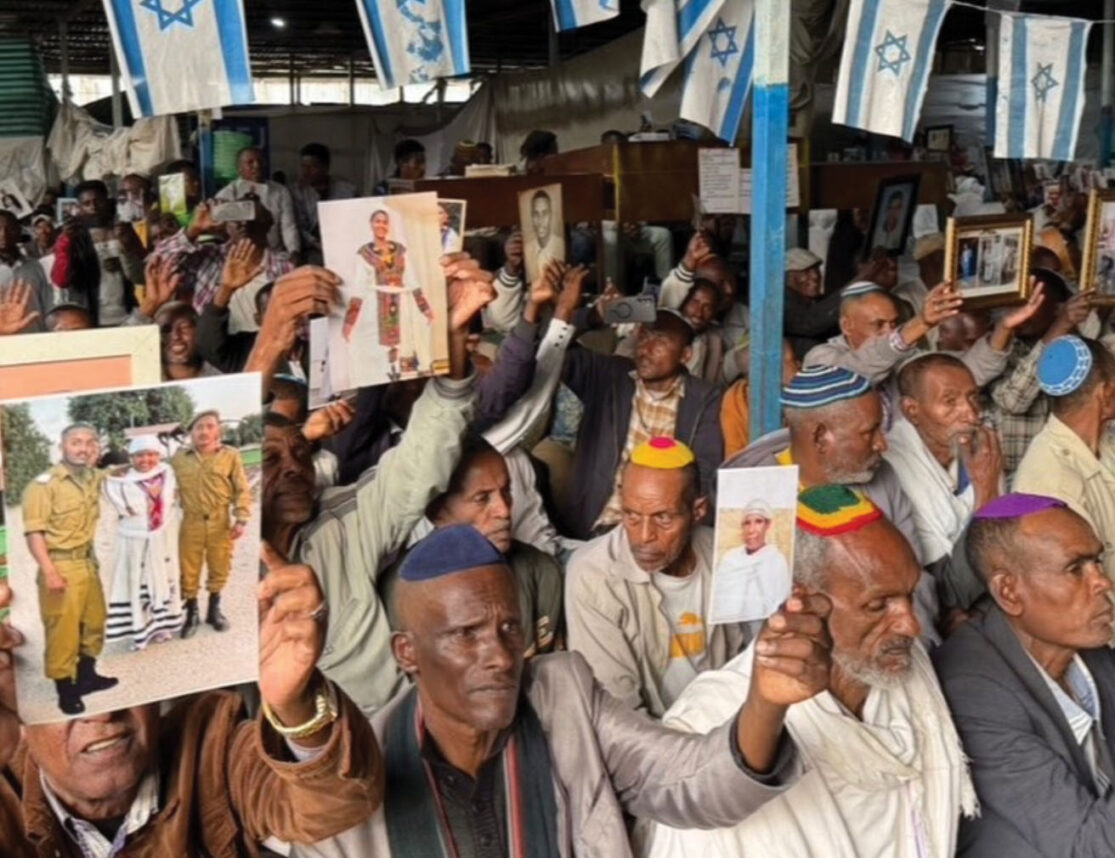
Mission to the Jewish Community of Ethiopia

I didn’t even know that there were still Jews left in Ethiopia, but what I encountered there firsthand was a thriving Jewish community, with some very significant struggles.

The Myth of the Marxist Mishpacha

The Jewish immigrant who organized for a 40-hour work week did not do so to give his grandchildren a politics that asks them to feel guilty for their education, their professional success or their attachment to a Jewish state.

Framing the Faith of Maimonides

In this enriching new edition of the classic code of Jewish law, readers can delve deeply into the mind of Maimonides, from his analysis of the commandments to the controversies that have accompanied his writings, offering a window into the wisdom of one of our tradition’s preeminent thinkers.

Finding Communal Comfort

In the book of Isaiah, God calls the prophet to comfort the Jewish people. But we know this is really something we must do for one another.

Leaving Behind a Better World

The America my generation seems to be leaving our kids and grandkids is not safer nor saner, and it breaks my heart.

Was Our Golden Age Fool’s Gold?

We didn’t think that we were living in a “Golden Age,” because it did not occur to us that what we were experiencing was only a temporary respite from centuries of animosity and intolerance.

Genocide Shmenocide

Since Israel evacuated Gaza in 2005, the Palestinian population has grown from 1.3 million to 2.1 million. In the West Bank, it has grown from 2.4 million to 3.4 million. If the Israelis were hellbent on committing genocide, it’s one of the most epic failures in military history.

More news and opinions than at a Shabbat dinner, right in your inbox.