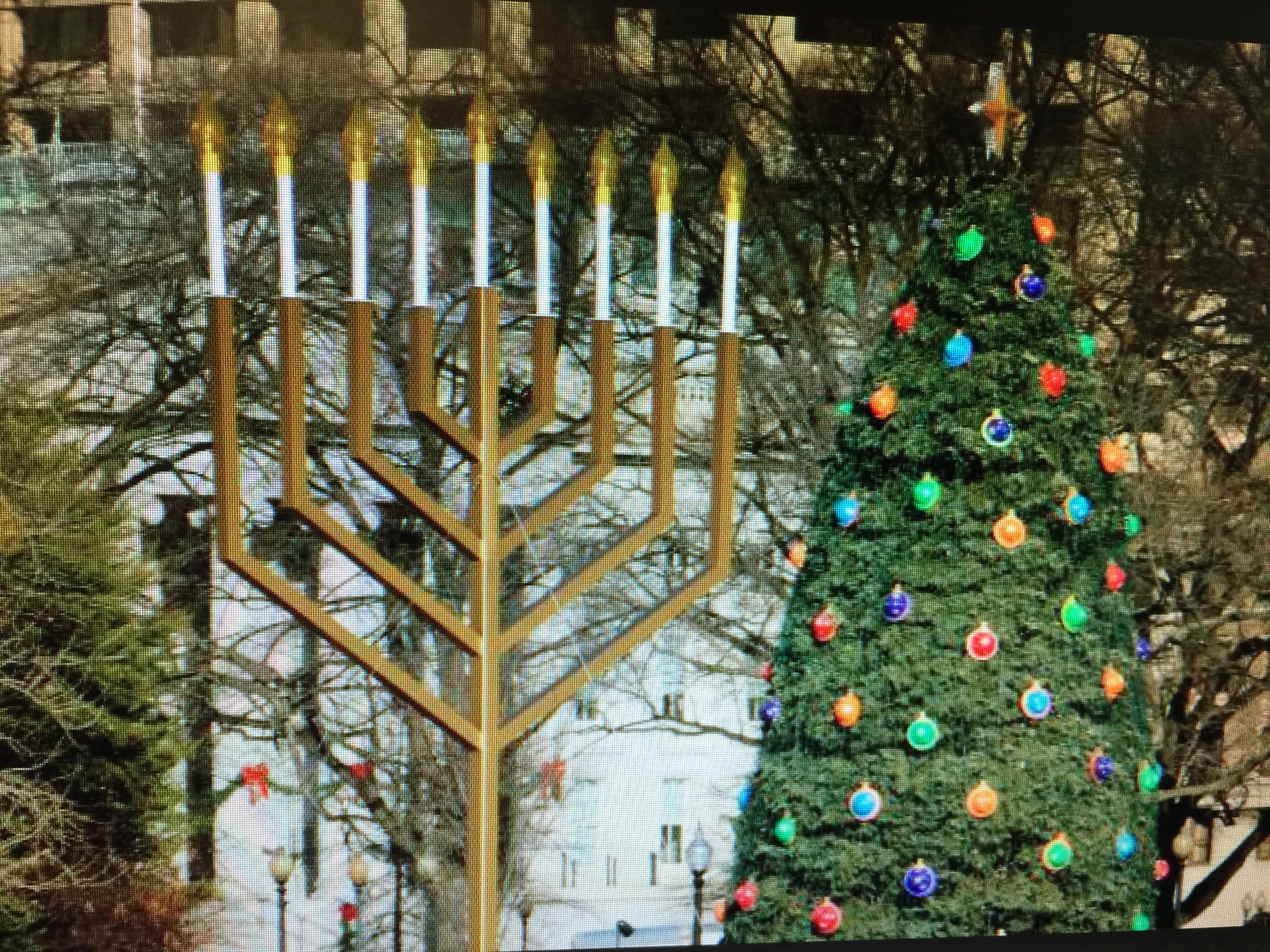
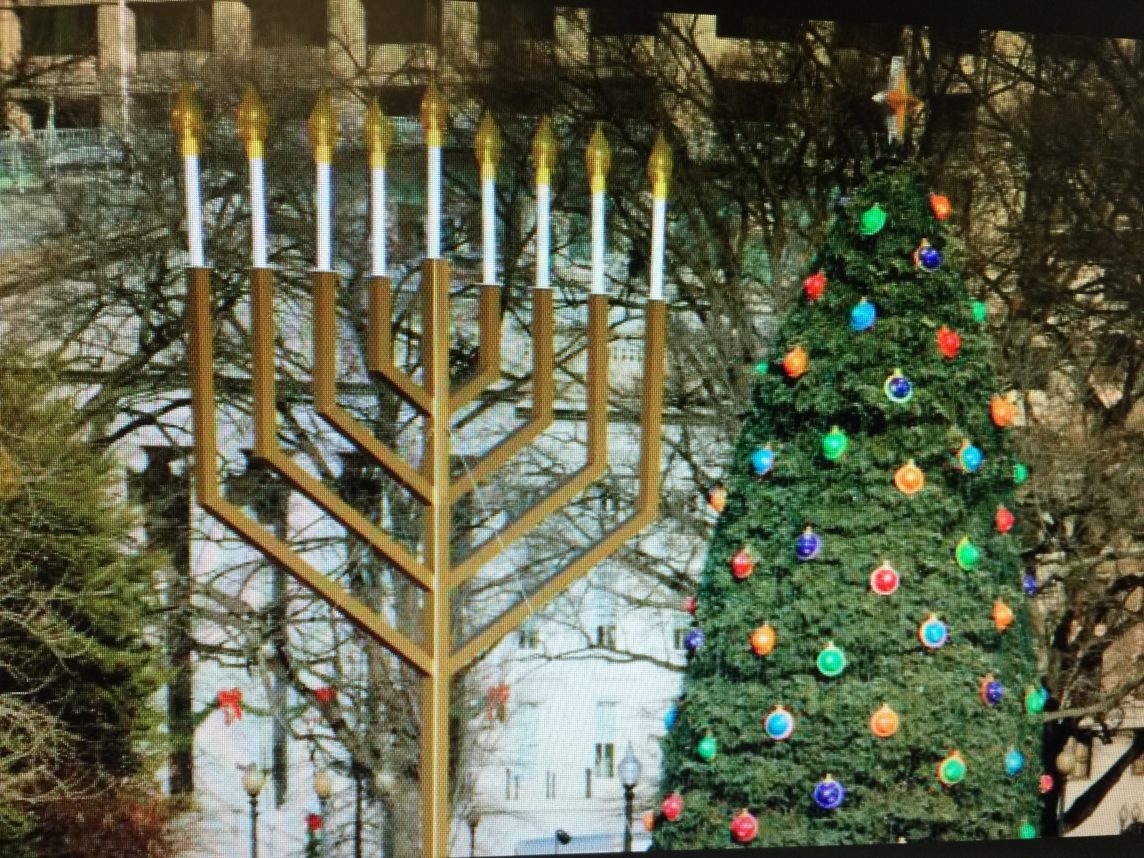
Every year I’m asked what I think about Jews bringing Christmas trees into their homes. For Jews, my answer is simple – it’s inappropriate. But, when a Jew is married or living with a Christian, it isn’t an unreasonable request, as emotionally difficult as it may be, for the Jew to accept having a Christmas tree in the home. After all, for the Christian partner, the tree is a tactile and joyous symbol of the season, the coming together of family, and for more than 50% of American Christians (according to recent polls) the Christmas tree is representative of a deeply held religious belief in Jesus as the Christ Messiah.
For so many Jews, the thought of bringing a Christmas tree into the house feels like a betrayal against the Jewish people, Jewish tradition, Jewish history, and one’s own Jewish identity. Not only this. For Jewish couples to have a Christmas tree in their homes, unwittingly perhaps, is disrespectful of the sacred symbols of Christianity.
Though many regard the Christmas season in America as a secular celebration, the Christmas tree is far more than a secular sign of the season. According to many Christian religious authorities the tree represents the cross upon which Jesus was executed. The crowning star recalls the star over Bethlehem on the eve of the Christian savior’s birth. The tinsel represents angel hair. The bulbs recall the apple on the tree of knowledge and the Christian dogma of “original sin.” The holly wreath symbolizes the crown of thorns worn by Jesus as he carried the cross, and the berries are drops of blood symbolizing the Christian Messiah’s vicarious suffering for the sins of humanity.
For Jews to appropriate cavalierly the sacred symbols of another faith tradition for our own use and purposes is a profound act of disrespect.
All this being said, I confess that there’s something magical about this time of year. I personally love Christmas carols. I enjoy the smell of pine and the beauty of the tree decorated in my Christian friends’ homes. I appreciate it all and I value the deeper religious meaning of these symbols for Christians. But as Dr. Ron Wolfson of the American Jewish University has written, it is one thing for a Jew to “appreciate” Christmas and it is quite another for a Jew to “appropriate” Christmas as it is not ours to appropriate.
A good rule of thumb for Jews when questioning whether we should use a symbol is to ask if that symbol would be appropriate to place in a synagogue lobby.
“Of course not!” most of us would say. “After all – the synagogue is a Jewish house of worship, a place of study and assembly!”
Jewish tradition teaches that not only is the synagogue a holy place, but so too is the home which is called a mik’dash m’at (a small sanctuary). Therefore, what is observed at home ought not to conflict with what is observed in the synagogue.
I once suggested to an interfaith couple that was arguing vehemently about having a Christmas tree in their living room that the Jewish partner might consider creating a “fiction” whereby he would consider the corner of the house in which the tree is placed to be temporarily not part of his home. He’d be a “visitor” there and after the holiday, when the tree is removed, he could reclaim that space as part of his home. That bout of mental gymnastics worked for him, and I’ve suggested it to others as well.
What about the children of interfaith marriages? Can they be raised in both traditions, as so many couples claim to be doing?
I believe it’s a mistake to think that children can be raised in two different religious traditions. Not only is such an effort lacking in integrity, it’s confusing to children.
Judaism and Christianity fundamentally hold different religious world-views, theologies, beliefs, customs, rites, rituals, practices, histories, and traditions. One cannot be “half-Jewish” and “half-Christian.” One is either Jewish or Christian.
For parents of children who believe that during the Christmas season it’s easier to acquiesce to their children’s desires for Christmas in their own home, I have two responses. First, Judaism provides many ongoing opportunities for celebration including Shabbat every week, the holidays, festivals, and life-cycle events. And second, parents often say “no” to their children, whether it be “no” to more toys, television and social media time, high fat foods, and staying up late. Why should it be any different when it comes to having a Christmas tree in a Jewish home?
Parents need to be able to explain that Christmas does not belong to Jews. It isn’t our holiday. It’s certainly appropriate and even enriching for children to visit the homes of their Christian friends and relatives during this season and enjoy the holiday there, but they need to understand that Christmas does not belong in a Jewish home. Giving this clear message to our children is important for as we do so we are teaching them that we Jews have self-respect and that we respect others as well.