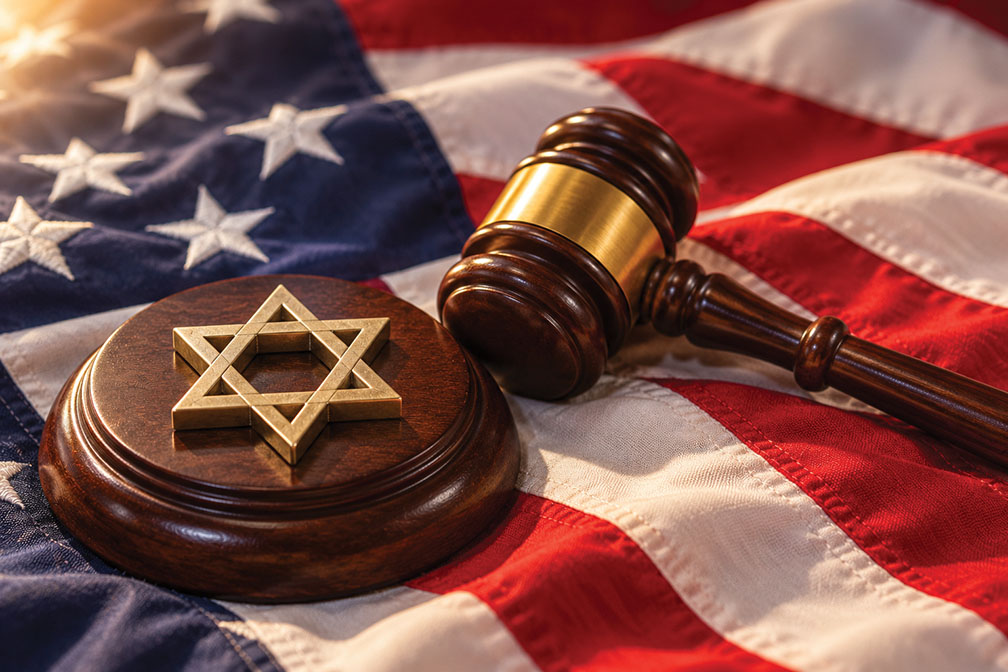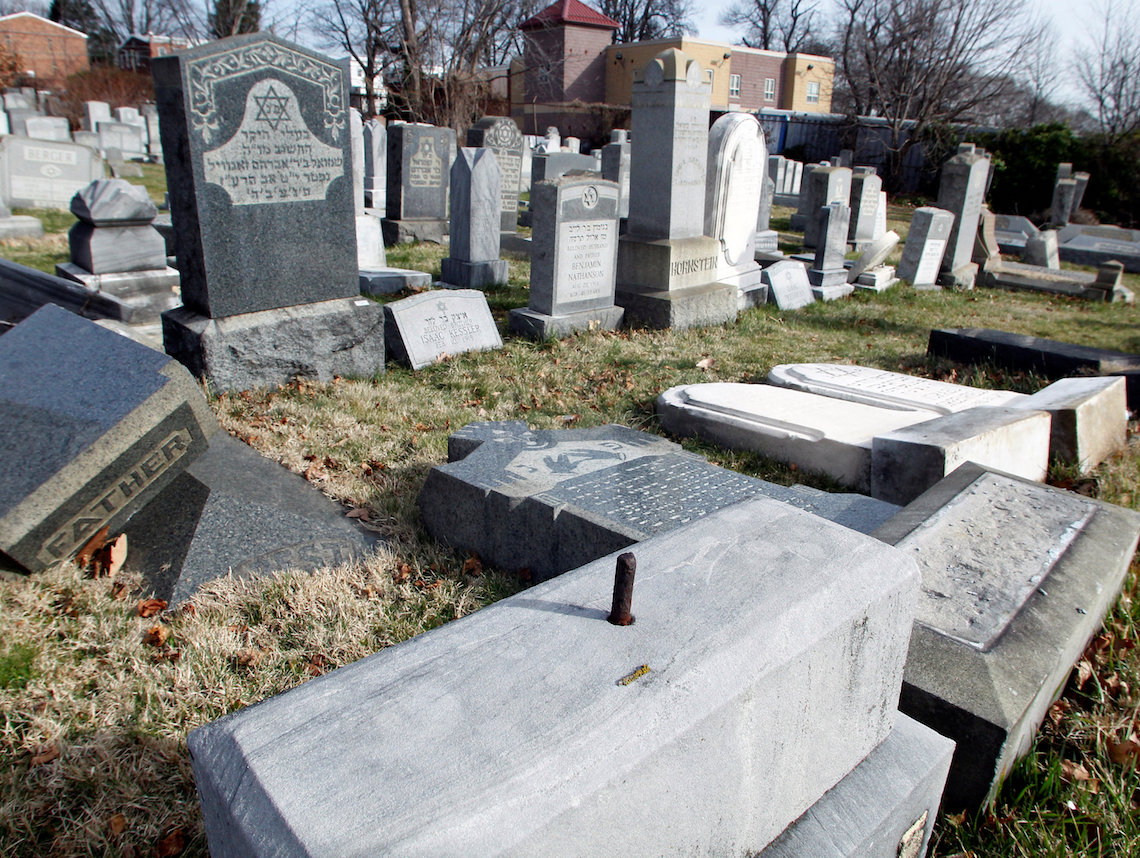
There has been an epidemic of anti-Semitic threats and acts of vandalism directed at Jewish institutions in the United States over the past several weeks. The Anti-Defamation League has reported more than 90 incidents this year.
The level of concern and the number of incidents even led to President Trump opening his speech to the joint session of the Congress last night with a robust condemnation of what has transpired, “we are a country that stands united in condemning hate and evil in all of its very ugly forms.”
His remarks may help quell some of the anxiety in the Jewish community which was exacerbated by his recent suggestion that the incidents may have been “false flag” operations designed to discredit him.
Obviously, simply the fact that Jewish cemeteries and centers are the targets of threats 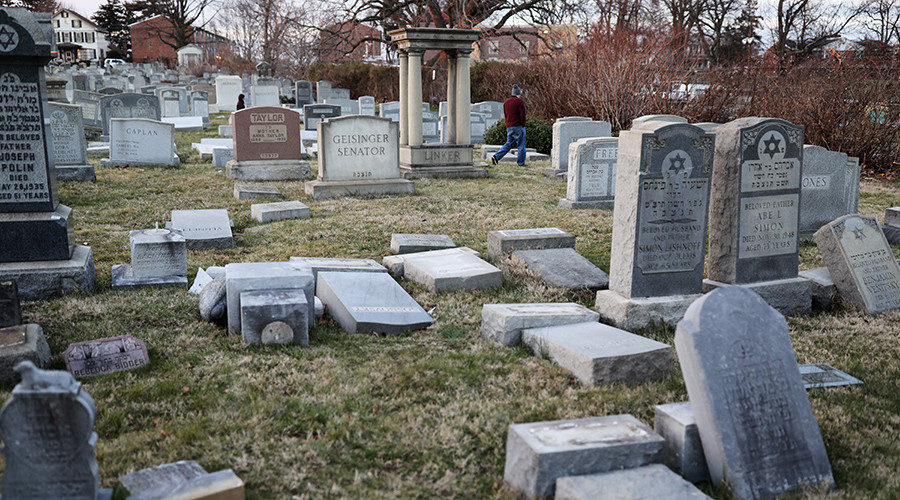 and vandalism is, in itself, troubling. What is not clear is whether they reflect an increase in anti-Semitic sentiment in the body politic or isolated acts of some of society’s losers.
It is instructive to put the headline-making events in some historical context.
Historically, inflammatory incidents such as these (toppling tombstones) which receive intense media attention tend to promote copycat incidents which take on a life of their own—often unrelated to an underlying sentiment of anti-Semitism that motivated the precipitating incident.
In 1959-60 an epidemic of anti-Semitic garnered world-wide attention, the ADL published a study, Swastika 1960 .”On December 24, 1959, a swastika was painted on a synagogue in Cologne, Germany. On December 26, the first wave of similar incidents occurred in the United States. For the next nine weeks, swastikas were smeared on Jewish temples, on Jewish community centers, on Jewish homes, on churches, on sidewalks, on college campuses, on automobiles….By the time the epidemic had spent itself, some 643 incidents had occurred.”
Among the study’s conclusions was, “It cannot be disputed that publicity given to the German desecrations and subsequent outbreaks played a major role in setting off further incidents. The offenders, as we saw earlier, often reported that they got the idea from newspapers, from television, and other mass media. It is probable that as early incidents mounted, publicity given to them precipitated other incidents as offenders of otherwise low predisposition were stimulated to participate….”
It is a striking parallel to today, except that today the threshold for a troubled actor to “participate” is so much lower. Anyone can email, call or otherwise threaten and frighten individuals around the globe with a few key strokes or a muffled voice distorter. Domestically, it hardly takes a committed bigot to enter an old cemetery and topple gravestones and then see the results of his handiwork on the 11 o’clock news.
When I advised victims of vandalism in my years at ADL, I invariably suggested that publicity be avoided unless there was already a series of bad acts—inspiring other thugs was to be avoided at all costs. I knew from experience that press attention on an act of hate, especially if it provoked a public display of emotional injury by the victim, generated copy cats.
There are reasons for concern because of today’s incidents—but not for panic. There are no indications of a wave of anti-Semitism in the US today.
In fact, in the midst of the threats, desecrations and presidential mixed messages there was an under-reported study by the Pew Center two weeks ago which should offer some solace.
Pew published its periodic “religious feeling thermometer” to determine how religious groups feel about each other in the US. Last month’s survey had only better news; the “warmth” meter for Jews and Catholics (historic subjects of American bigotry) is high—even higher than in 2014 when the survey was last done,
Americans express warm feelings toward Jews, with half of U.S. adults rating them at 67 degrees or higher on the 0-to-100 scale…..These warm ratings are not significantly affected by the ratings of Jews themselves, because Jews make up just 2% of the U.S. adult population.
Similarly, about half of U.S. adults (49%) rate Catholics at 67 degrees or higher. But this does include a substantial share of respondents who are themselves Catholic, as Catholics make up roughly one-fifth of the adult population in the U.S. Looking only at non-Catholic respondents, 43% rate Catholics at 67 or higher on the thermometer and 44% place them in the middle range.
The Pew results are worth remembering as we watch the news and witness events that seem to run counter to what the data show. Bad acts and occasional reversals can and will happen, even if the flow of history is favorable. The media will tire of reporting the incidents and they will diminish as the troublemakers get less pay off for their anti-social conduct. The thugs and vandals are not today’s most serious problem.