fbpx

March 1, 2017

Mother and Child

She kneeled at the hill’s base, stirred
the new season,
held the scent of cut lawn in her palms.
Sprinklers arched into spring with a confident grace
I have not seen since.
The water flecks swept, lingered
like the stretching arms of a waking woman.
Her arms covered and honest, open to receive
my tangled hair, white pants, grass-stained at the knees.
I am afraid
of this distinct joy, scared to praise.
She smiled with a sensible pleasure
I have not seen since.
Running down that hill I let … I
let the urgent wind bite through my open jacket and T-shirt.
Pay attention, it’s hard to admit:
I offered my body to it.


“Mother and Child” appeared in “Morning Prayer,” Sheep Meadow Press (2005). Eve Grubin teaches at NYU London and is the poet in residence at the London School of Jewish Studies. Her chapbook, “The House of Our First Loving,” was recently published by Rack Press.

Mother and Child Read More »

DIY alphabet art with cereal boxes

Walk into any home décor store these days and you’ll see that alphabet art is a big trend. There are big capital letters made of metal, wood, wire, plastic — and some even light up. But you can make your own alphabet artwork without spending much money by using upcycled cereal boxes. As if you needed an excuse to eat more cereal.

WHAT YOU’LL NEED:

– Cereal box
– Blank piece of paper
– Black marker
– Paperweight (e.g. an old battery)
– Duct tape
– Construction paper
– Glue
– Old maps or other colorful paper

alphabet1

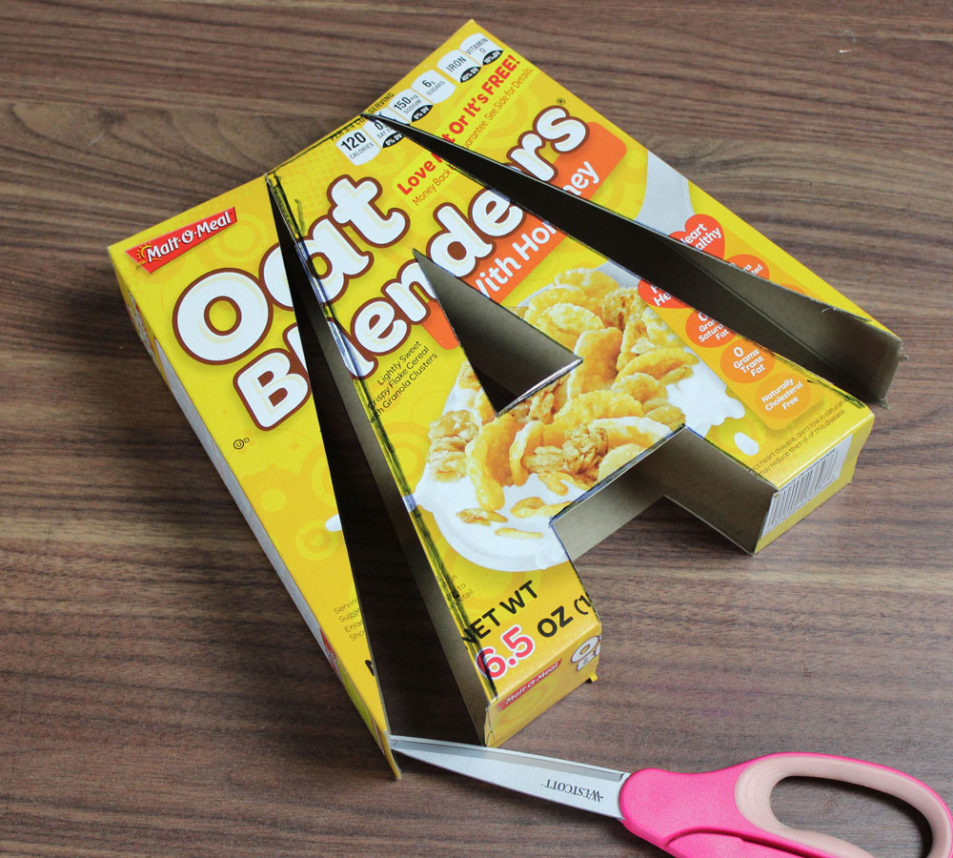
1. Trim a blank piece of paper so it is the same size as the front of the cereal box. Then draw a large letter of the alphabet on it so it touches the top and bottom edges. Cut out the letter on the paper and trace it on the front of the cereal box with a black marker. Then flip over the letter so it’s backward and trace it on the back of the cereal box. (For some letters, such as “A,” flipping it over isn’t as important because the letter looks the same either way. But letters such as “E” or “Z” are in reverse when you flip them over.)

alphabet2

2. Cut along the lines, but don’t cut out the letter from the top or bottom of the box, so that the front and back letters are connected. 

alphabet3

3. Tape a paperweight to the bottom of the letter, on the inside, with duct tape. An old battery works well. This will help the letter stand without tipping over.

alphabet4

4. Cover the open-ended sides of the letter with some construction paper. Measure the depth of the cereal box and cut paper strips that will overlap the sides. For example, if the box is 2 inches deep, then cut 3-inch strips — 2 inches to cover the sides and a half-inch tab on either side to wrap around the box. Cut the strips to fit each section of the letter, fold over the tabs and use glue to attach the tabs to the box. 

alphabet5

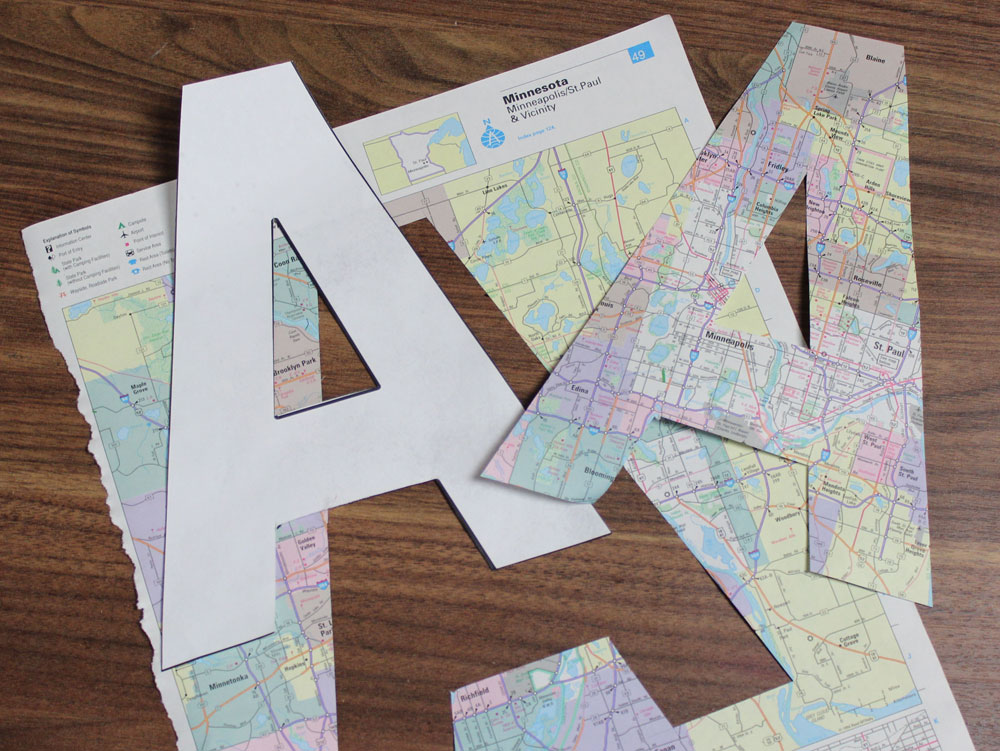
5. With the same letter template that you used to trace on the cereal box, trace the letter on an old map and cut out the letter. Flip over the letter template and trace on another old map so you have artwork for the back of the letter. (Of course, you can use any type of artwork you wish besides maps — the Sunday comics, comic books, wrapping paper, etc.)

alphabet6

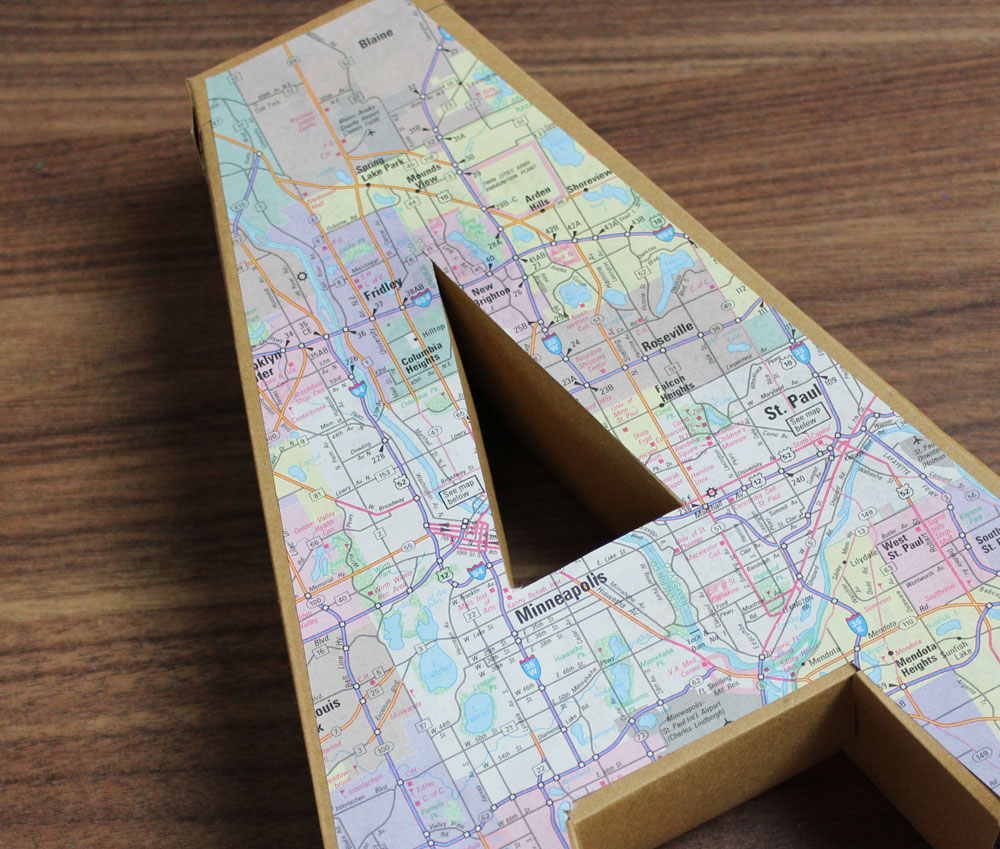
6. Glue the map letters onto the front and back of the cereal box. The great thing about wrapping the sides first with construction paper is that the map letters don’t need to fit perfectly; the construction paper acts like a border. Display your alphabet art — no one will believe you made it out of an old cereal box.


Jonathan Fong is the author of “Walls That Wow,” “Flowers That Wow” and “Parties That Wow,” and host of “Style With a Smile” on YouTube. You can see more of his do-it-yourself  projects at jonathanfongstyle.com.

DIY alphabet art with cereal boxes Read More »

Igor Levit takes on the pinnacle of piano repertory

Igor Levit rarely does anything small. The acclaimed Russian-Jewish-German pianist raised eyebrows as a 26-year-old when, for his Sony Classical debut in 2013, he tackled Beethoven’s last five piano sonatas, considered by many to be among the most challenging and profound works ever composed.

Levit continued to set the bar high with his next recordings: Bach’s six partitas and an award-winning three-CD set of three massive scores — Bach’s “Goldberg” Variations, Beethoven’s “33 Variations on a Waltz by Diabelli” and Frederic Rzewski’s 1975 “The People United Will Never Be Defeated! (36 Variations on a Chilean Song).”

For his March 9 recital at Hahn Hall at the Music Academy of the West in Montecito, Calif., Levit is scheduled to perform the second half of Rzewski’s 2014 suite “Dreams,” which is inspired by an Akira Kurosawa film, and Beethoven’s “Diabelli” Variations (Op. 120), an intense musical-intellectual-emotional Everest many pianists don’t usually attempt to climb until later in their careers.

“I don’t make my life easy sometimes,” Levit said by phone from Berlin. “People say you’re too young to play Beethoven before age 40, but without knowing the individual musician, without being in touch with the individual personality, to say, ‘Under 40, you should not play Beethoven’ is, to put it in short form, BS.”

The pianist said Beethoven’s “Diabelli” Variations set has always been “the pinnacle” for him. “I’ve been living with it longer than any other score, working on it longer than any other,” he said. “When Leonard Cohen passed away, a friend wrote that probably the only adequate obituary must be ‘Go listen.’ That’s it. Here I would say the same. There’s much more to say, but first thing, go listen.”

Levit was born in Gorky (now Nizhny Novgorod) in Russia in 1987. His family took up permanent residence in Hanover, Germany, when he was 8. Levit said he learned German “in a couple of weeks.”

Though he still speaks Russian fluently, Levit said he has few memories of the country. “I’ve been back twice for brief visits, the last time 15 years ago,” he said. “Through my parents I know a lot, but I can’t recall anything, almost.”

After 21 years in Hanover, Levit moved to Berlin last year. He said the city — whose thriving, close-knit artistic community and culture have attracted many Jewish musicians over the past decade — offers a unique kind of freedom.

“Berlin hasn’t found itself yet,” Levit said. “This is a very beautiful thing, because the city is open to questions, to new ideas. It was only 27 years ago that Berlin was reunited. And what is 27 years? I am older than 27. Berlin still hasn’t decided who it is, and thank God it hasn’t. There are about a million identities and answers to the question, ‘Who or what is Berlin?’ ”

Levit said that while he’s not observant, he identifies as Jewish. And while he is socially and politically outspoken, he harbors no illusions about the power of music to affect the world’s current political situation.

“It’s very tricky and complicated,” Levit said. “I don’t think it is possible to change anything with music. It can help, but people make decisions. We have to act. Music can and should inspire ideas and create a certain environment. But just because you love Beethoven doesn’t necessarily make you a good human being.”

To inspire, music should somehow reflect the current time, Levit said. For him, it’s not enough to study the era in which a composer lived.

“It’s important, but only one-half of what is important,” Levit said. “The other half is, ‘I’m a child — a person — of my time and not of the composer’s time.’ ”

Whether he’s confronting a new score like Rzewski’s “Dreams” or a classic such as Beethoven’s 1823 “Diabelli” Variations, he keeps an open mind.

“I can hear what I read,” Levit said. “I start learning a piece for the first time without preconditions. I play it and certain ideas arrive and disappear. I see what I see.”

Levit counts pianists Artur Schnabel and Marc-André Hamelin among his major influences. “I don’t know a single recording of any Beethoven piece which is as alive, incredible, insane, unpredictable and inspiring as Schnabel’s Beethoven recordings,” Levit said. “And Hamelin has a huge responsibility for my repertoire curiosity. Without his recording, I wouldn’t have known about Rzewski’s ‘The People United’ and many other scores.”

Like Hamelin’s, Levit’s wide repertory includes rarely performed works. When he made his Southern California debut in 2015 at the Wallis Annenberg Center for the Performing Arts, he performed British composer Ronald Stevenson’s “Fantasy on ‘Peter Grimes.’ ” So don’t expect Chopin anytime soon. Indeed, a London newspaper once quoted Levit as calling Chopin “dumb.”

“That was a misinterpretation,” Levit said. “I never said Chopin was dumb. On the contrary, I love listening to Chopin’s music. There are pianists who play him in the most incredible way. It’s only me playing it. I don’t feel comfortable.”

Levit is currently in the middle of performing a complete cycle of Beethoven’s 32 piano sonatas, and he’s working on Shostakovich’s cycle of 24 Preludes and Fugues. His future plans include more Schumann — “I love playing his concerto” — and eventually some Liszt. “But there are so many things going on now that he’s in the back room.”

Meanwhile, Levit said he takes his roles as both musician and citizen seriously. “This society was created and built by responsible fellows,” Levit said. “To say, ‘Oh, well, I’m a musician and I’m making art, so don’t bother me with daily life’ is arrogant and wrong. I am a citizen of my country who happens to be a musician, and not vice versa.”

Igor Levit takes on the pinnacle of piano repertory Read More »

Meant2Be: A joyful Jewish love story

I’m so in love with my husband. What a magical, mystical journey it was to find each other. We each wandered through our metaphorical desert for more than 40 years, finally meeting a decade ago. Now, we’re about to celebrate our third wedding anniversary.

My husband, Gerard, is from Jewish, French immigrant, Holocaust survivor parents. His father and mother, Joseph and Lydia, arrived in the United States after World War II. Gerard was born in Los Angeles and grew up in the ’60s in the Fairfax District among the Orthodox rabbis at Poinsettia Park, where he worked out as a gymnast.

Gerard remembers how the rabbis would lift him to reach the high bar. One day, a rabbi showed up at Gerard’s house with a radio, which the rabbi had promised him if he mastered a trick. “This is for Gerard,” he said. It became a big part of his Jewish education, learning that the rabbis cared about him.

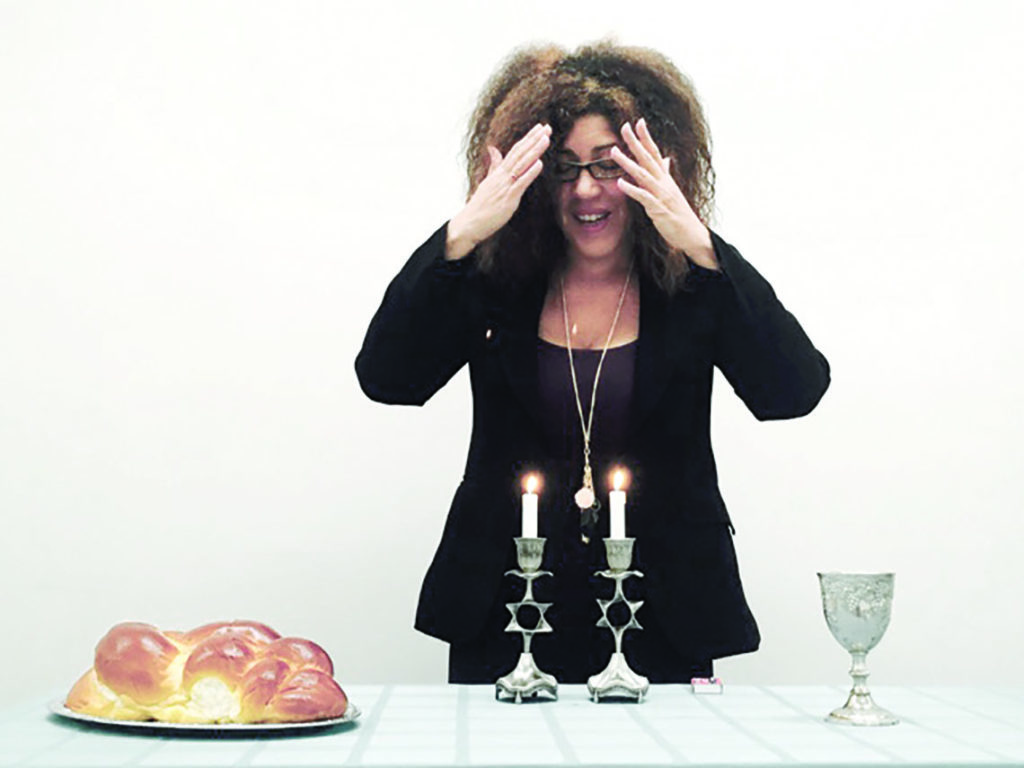
I grew up in the San Fernando Valley in an American-Jewish family. My parents, Richard and Lee, were born here. My Russian-Polish grandparents came to the U.S. before the Holocaust. My mother emphasized Jewish philosophy more than ritual, although lighting Shabbat candles and singing the blessing remains a favorite childhood memory.

Like Gerard’s, my formal Jewish education was spotty. We weren’t regular temple-goers, but Judaism was a defining part of my parents’ values. I have a vivid memory of my mother teaching me all the Yiddish words to “Tumbalalaika.” My father, a professional musician, gave me piano lessons.

As I grew, I yearned for the perfect someone to share my love of Judaism and a full life of Jewish celebration. After years alone, in walked Gerard. The magnetism between us was overwhelming.

We met, at John Pisano’s Guitar Night in Sherman Oaks, brought together by a friend, Larry Stensvold, and music. He heard the vibration between Gerard and me, but it was the Jewish connection that was deeper than the musical one. Meeting Gerard was like coming home to my ancient soul mate.

Early in our relationship, Gerard began asking me questions about Judaism. As an adult, I studied and learned more about Torah, Jewish practices and synagogue music. One day, Gerard asked me, “I remember there was one holiday when my Grandpa Jacques took me to shul and the Jews were dancing around with an apple on a stick. What holiday is that?”

It must have been Simchat Torah.

Gerard learned about God from his Grandpa Jacques, who told him the story of his “God of Abraham.” The Nazis were going door to door in the building where the family lived in Paris, looking for Jews. Grandpa stood in front of his family’s front door, spread his arms wide and prayed: “God of my father, God of Abraham, they won’t come in.” The Gestapo skipped their door.

With all that Gerard’s family endured in escaping the Nazis — Gerard’s mother hid in a Catholic camp; Gerard’s father, in a forest —  in the U.S. they weren’t eager to focus on their Jewishness. They were struggling to raise a family in a foreign land and learn English. There were Passover seders and Chanukah candles but not a formal education or regular shul attendance.

Despite our music connection — Gerard and I both play guitar, and we teach music and play and sing together on the first Saturday of each month at sing-along night at Henri’s in Canoga Park — Gerard wanted to connect more with his Judaism. My way of relating to the traditions fit for him. I continue to teach him about home rituals. We don’t do all the prayers, but we tie a little bow around each week together with Friday night Shabbat candles, “A Woman of Valor” and the Kiddush.

When we were visiting his mother’s grave early last year, I read “A Woman of Valor.” Then, I told him that traditional Jewish husbands recite it for their wives every Friday night. “Why don’t you let me read it to you?” he asked, and he’s read it to me every week since then.

He makes me feel so loved. My girlfriends are jealous. I’ve given their husbands copies of this poem from Proverbs and suggested they honor their wives with it.

Traditions keep our Jewish marriage strong. We passed the ultimate test last year when I was diagnosed with breast cancer. Gerard embraced me through treatment. He helped me become stronger and healthier than ever.

I am blessed with the most devoted, caring, loving husband. Our sharing of prayers and stories in the Torah every week connects us closer each day. My heart is bursting with the peace and joy of a Jewish woman, completely fulfilled and in love.

Meant2Be: A joyful Jewish love story Read More »

‘Journey’ a quest for understanding over postwar Polish pogrom

“Everything good in me comes from my faith.”

The words, spoken by Bogdan Bialek, a Catholic Polish psychologist, are heard at the beginning of a documentary film that confronts one of the bloodiest and most fiercely debated episodes in Poland’s history: the Kielce Pogrom of 1946. By the end of “Bogdan’s Journey,” the faith of its remarkable protagonist feels almost beside the point. Bialek speaks to Jews and Poles alike, bringing them together in the interest of healing.

Unity appears to be a common bond where this tale is concerned. The film’s two co-directors — a Jewish American and a Catholic Pole — spent 10 years assembling footage for the story they thought they were going to tell. Two years into the filming, after encountering Bialek, the documentary that originally was going to be titled “The Burden of Memory” became “Bogdan’s Journey.”

“After we did our second interview with Bogdan, we realized that he is a revelation,” said Michal Jaskulski, the Catholic, who began as the cinematographer and eventually became the film’s co-director and producer. “He can be a voice. He was not presenting either a Polish or Jewish view. He was thinking about people as people, with empathy for everyone.”

“I see this film as an important gateway to understanding something that I think is profound,” added co-director Lawrence Loewinger. “There would be no Jewish life in Poland today if there wasn’t some core of Poles who are interested in fostering Jewish life.”

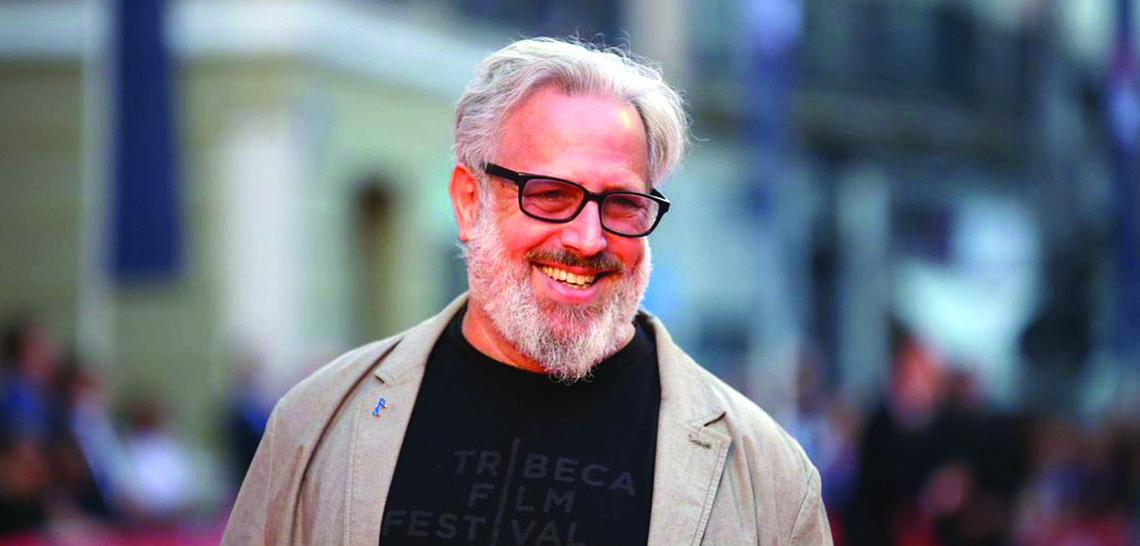
Jaskulski and Loewinger will take the stage for a Q&A session following a screening of the film at 7 p.m. on March 8 at the Laemmle Music Hall 3 in Beverly Hills. They will be joined by professor Michael Berenbaum, director of the Sigi Ziering Institute at American Jewish University. Rabbi Haim Dov Beliak of Friends of Jewish Renewal in Poland will moderate.

Bialek, no relation to the rabbi despite the similarity of their names, is making his first visit to Los Angeles. He also will join the panel, but Beliak doesn’t expect the film’s soft-spoken title character to hold forth.

“The role of being the center is not what I think he set out to do. I think he meant to be a facilitator, a conduit for people to talk,” the rabbi said. “In many ways, Bogdan has already said his piece; the film in many ways speaks for him. I’m glad he’s coming, but I think he will feel a little superfluous in the conversation.”

As “Bogdan’s Journey” recounts, when the subject is the history of Jews in Poland, and specifically the events of July 4, 1946, the conversation is not always civil. Amid postwar anti-Semitism in Poland, townspeople in Kielce murdered more than 40 Jewish survivors who were trying to take shelter in a building; 40 more were injured. Even with memorials and annual ceremonies in Kielce honoring the dead, there still are suspicions that the Nazis or secret police caused the uprising or that the incident never happened.

The film depicts angry Kielce residents denouncing the suggestion that their home could have been the site of such an atrocity and demanding why anybody would want to “open an old wound.”

Beliak, who has participated in events commemorating the Kielce pogrom, understands the climate in which the film was made. The Friends of Jewish Renewal in Poland, a Beverly Hills-based advocacy group, has contributed money to the movie’s Kickstarter campaign, and Beliak calls himself a “fan producer.”

“There are pockets of good will in the Polish community and the Jewish community that want to find a way to come to understanding and reconciliation, and there are pockets of people who, for whatever reason, are highly nationalistic and feel that Poland has been treated shabbily by history,” Beliak said. “Not looking at the historical record is not something that is unique to Poland. So I think this film highlights that part of the Polish population that is largely willing to confront the past and to try to move together to an understanding about it.”

Chief among the “looking forward” faction is Bogdan Bialek, himself, a psychologist who moved to Kielce in the 1970s and made it his lifelong mission to educate people about the pogrom in healing and nonjudgmental ways. The film uses archival footage and photographs and re-creates scenes from the pogrom to chronicle its devastation. In the present, we see attempts at healing as Bialek talks — and listens — to all sides, bringing survivors, relatives of survivors and others from all over the world to Kielce for commemorative events, tours and discussions.

On the anniversary itself, he leads a walk to the Jewish cemetery, where he reads the names of the dead and lights a candle for each of them.

“It’s always very important to remember every person who was murdered that day,” he said in a separate interview. “It’s always very spontaneous and sometimes the program is made very last-minute.”

Bialek has attended screenings of “Bogdan’s Journey” in New York and in Poland, both inside and outside of Kielce. In the discussions that follow, he frequently detects a sense of catharsis among audience members. His own experience watching the film for the first time was quite different.

“For me, of course, it’s different, first of all, because I take so much time on the screen,” Bialek said. “This journey was 20 years for me, so watching it for the first time was more a kind of spiritual experience.”

“Bogdan’s Journey” will screen at 7 p.m. on March 8 at the Laemmle Music Hall 3, 9036 Wilshire Blvd., Beverly Hills. For more information, visit this story at jewishjournal.com.

‘Journey’ a quest for understanding over postwar Polish pogrom Read More »

Concern, not panic

There has been an epidemic of anti-Semitic threats and acts of vandalism directed at Jewish institutions in the United States over the past several weeks. The Anti-Defamation League has reported more than 90 incidents this year.

The level of concern and the number of incidents even led to President Trump opening his speech to the joint session of the Congress last night with a robust condemnation of what has transpired, “we are a country that stands united in condemning hate and evil in all of its very ugly forms.”

His remarks may help quell some of the anxiety in the Jewish community which was exacerbated by his recent suggestion that the incidents may have been “false flag” operations designed to discredit him.

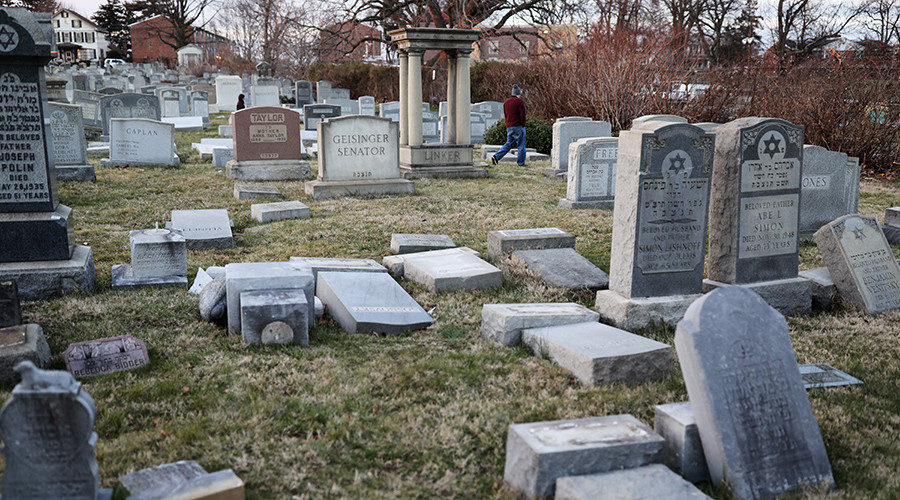
Obviously, simply the fact that Jewish cemeteries and centers are the targets of threats tombstone topplingand vandalism is, in itself, troubling. What is not clear is whether they reflect an increase in anti-Semitic sentiment in the body politic or isolated acts of some of society’s losers.

It is instructive to put the headline-making events in some historical context.

Historically, inflammatory incidents such as these (toppling tombstones) which receive intense media attention tend to promote copycat incidents which take on a life of their own—often unrelated to an underlying sentiment of anti-Semitism that motivated the precipitating incident.

In 1959-60 an epidemic of anti-Semitic garnered world-wide attention, the ADL published a study, Swastika 1960 .”On December 24, 1959, a swastika was painted on a synagogue in Cologne, Germany. On December 26, the first wave of similar incidents occurred in the United States. For the next nine weeks, swastikas were smeared on Jewish temples, on Jewish community centers, on Jewish homes, on churches, on sidewalks, on college campuses, on automobiles….By the time the epidemic had spent itself, some 643 incidents had occurred.”

Among the study’s conclusions was, “It cannot be disputed that publicity given to the German desecrations and subsequent outbreaks played a major role in setting off further incidents. The offenders, as we saw earlier, often reported that they got the idea from newspapers, from television, and other mass media. It is probable that as early incidents mounted, publicity given to them precipitated other incidents as offenders of otherwise low predisposition were stimulated to participate….”

It is a striking parallel to today, except that today the threshold for a troubled actor to “participate” is so much lower. Anyone can email, call or otherwise threaten and frighten individuals around the globe with a few key strokes or a muffled voice distorter. Domestically, it hardly takes a committed bigot to enter an old cemetery and topple gravestones and then see the results of his handiwork on the 11 o’clock news.

When I advised victims of vandalism in my years at ADL, I invariably suggested that publicity be avoided unless there was already a series of bad acts—inspiring other thugs was to be avoided at all costs.  I knew from experience that press attention on an act of hate, especially if it provoked a public display of emotional injury by the victim, generated copy cats.

There are reasons for concern because of today’s incidents—but not for panic. There are no indications of a wave of anti-Semitism in the US today.

In fact, in the midst of the threats, desecrations and presidential mixed messages there was an under-reported study by the Pew Center two weeks ago which should offer some solace.

Pew published its periodic “religious feeling thermometer” to determine how religious groups feel about each other in the US. Last month’s survey had only better news; the “warmth” meter for Jews and Catholics (historic subjects of American bigotry) is high—even higher than in 2014 when the survey was last done,

Americans express warm feelings toward Jews, with half of U.S. adults rating them at 67 degrees or higher on the 0-to-100 scale…..These warm ratings are not significantly affected by the ratings of Jews themselves, because Jews make up just 2% of the U.S. adult population.

Similarly, about half of U.S. adults (49%) rate Catholics at 67 degrees or higher. But this does include a substantial share of respondents who are themselves Catholic, as Catholics make up roughly one-fifth of the adult population in the U.S. Looking only at non-Catholic respondents, 43% rate Catholics at 67 or higher on the thermometer and 44% place them in the middle range.

The Pew results are worth remembering as we watch the news and witness events that seem to run counter to what the data show. Bad acts and occasional reversals can and will happen, even if the flow of history is favorable. The media will tire of reporting the incidents and they will diminish as the troublemakers get less pay off for their anti-social conduct. The thugs and vandals are not today’s most serious problem.

Concern, not panic Read More »

Bringing together Palestinians, Israelis both on screen and behind the scenes

In May, Israel’s Jews will celebrate the 69th anniversary of the state’s birth, while the country’s Arabs will mourn the event as a nakba, or catastrophe.

All attempts so far to forge a durable peace between the two Semitic peoples have come to naught. Even well-meaning optimists are throwing up their hands — but director Udi Aloni is not one of them.

“We can create a beautiful community, we can create a beautiful people,” Aloni insisted in a phone interview from Berlin, where he is shooting a film. “But first we have to acknowledge that we are two equal people.”

If there is such a thing as left-wing royalty, Udi Aloni is the crown prince. He is the son of Shulamit Aloni, a longtime Israeli minister of education and early champion of civil liberties, who consistently challenged her country’s religious establishment and the government’s occupation policies.

Unlike his mother, Udi Aloni’s stage is not the floor of the Knesset but the movie set, and he considers his latest film, “Junction 48,” as proof that Jews and Arabs in Israel can work together for their mutual good.

However, Aloni’s movie — about a Palestinian hip-hop artist and his singer girlfriend who try to use music to express both their political and humanistic beliefs — seems to make it clear that he sees the fault for the impasse as lying almost entirely with the Israelis. It shows, on balance, the Israelis as the oppressors and the Palestinians as the victims.

Aloni has no illusions that this view will be embraced by most Israelis in the near future. Asked how many Israelis shared his political and philosophical outlook, he answered, “About 1 percent.”

Palestinians who remained in their towns and villages after Israel’s military victory in the 1948 War of Independence frequently are labeled “48ers” and they consider their defeat as a junction between their old and current lives. Thus the title of the movie, which is set in the city called Lod by its Jewish inhabitants and Lyd by the Arab population. Lod/Lyd is the site of Ben Gurion Airport, about a 20-minute drive from Tel Aviv.

One of its best-known residents is Tamer Nafar, widely known as the fist Arab rap artist. He is both the co-writer and star of the film, which is based largely on his own experiences. As in his stage appearances, he uses his talents to convey both the deep resentments and the hopes of his people.

A very similar theme pervades the recent movie “The Idol,” this year’s Palestinian entry in the Oscar race. In “Idol’s” case, the protagonist is a more conventional singer, from a hardscrabble Palestinian background, who becomes the voice of his people when he goes to Cairo and places first in the top-rated TV show “Arab Idol.”

If the outsider’s image of Jews and Arabs in Israel is that of two completely separate communities, both the reality and the scenario in “Junction 48” are quite different.

For instance, there is the mind-bending scene in a Tel Aviv nightclub, where Jewish rappers sing “Am Yisrael Chai” (The People of Israel Live) and their act is followed by Kareem (Nafar) and his group with “Burn It, George,” a chant to alert his buddies when Israeli police are about to raid their drug hoard. More political is the next number, “Hamas Is in the Air, Raise Your Voices, Wake Up the Neighbors,” when Kareem’s girlfriend, Manar (Samar Qupty), laments in a song, “I have no land, I have no country.”

In another example of cross-ethnic relations, Kareem and his Palestinian buddies make a night of it in a Jewish bordello.

Udi Aloni directed “Junction 48” which is based largely on his own experiences. Photos courtesy of the Match Factory.

The movie is filled with striking scenes, such as a bulldozer demolishing a Palestinian’s home in order to erect a future “Museum of Coexistence.”

Other elements are just plain weird. Take Kareem’s mother, who is first seen attending a meeting of the local Communist Party cell in a room decorated with images of Marx and Lenin. Later, the mother has become a faith healer, applying Quranic verses to “cure” a Jewish youngster.

“Junction 48” also has a strong feminist thread, mainly in Manar’s struggle to assert her independence as an artist and a woman. As director Aloni points out, “Palestinian women have to fight against both Israel and their Palestinian male oppression.”

Aloni cites the making of “Junction 48” as one concrete example of close collaboration between Israel’s Arabs and Jews. Another joint effort underlays the film’s financing, partially through the Israel Film Fund, administered by the government, and partially through the privately supported Palestinian Film Fund.

As to his own feelings about the situation between these two Semitic peoples in Israel, Aloni remarks, “The more I work with Palestinians, the more they raise my Jewish consciousness.

“Junction 48” opens March 3 at Laemmle’s Royal Theatre in West Los Angeles.

Bringing together Palestinians, Israelis both on screen and behind the scenes Read More »

Measure S will fix system and support Jewish values

always look back to my Southern Jewish roots when I have to make important decisions in my life, whether they are personal or political, professional or social.

Since I moved to Los Angeles, I have relied on those values established as the daughter of a rabbi in Augusta, Ga. During these particularly conflicting times in our nation and our community, I apply them now more than ever.

[Opposing view: To protect seniors, vote no on Measure S]

Measure S is on the March 7 ballot in Los Angeles. As the president of the Pacific Palisades Residents Association, I have become deeply involved in our community and realize the importance of helping to pass Measure S.

Measure S is really about social justice as it gets to the core of how we want to live in our city. It challenges how we want our elected officials to perform and behave. It questions how we want our city to look and function in the future. My values not only encourage community engagement, but community discussion and decisions with conscience. That’s what Measure S promotes.

Measure S will demand that our officials take important planning decisions back to the community — engaging residents during the evenings and weekends, when people can attend. Holding meetings downtown in the morning during the workweek keeps the people’s voices to a minimum. It accommodates the developers and their lobbyists, not the public.

The current system of land-use decisions in our city is broken. Although many developers follow appropriate planning rules, some mega-developers get their way by showering campaign contributions on politicians, who then find it hard to say “no.” Developers are allowed to choose paid consultants to conduct the environmental studies for their mega-developments, and lobbyists have all the advantages over the community in pushing these development projects through City Hall.

Measure S will prevent elected officials from helping developers who have given them money to get around existing zoning rules. While campaign contributions are legal, too often they pave the way for developers to receive special “spot zoning” privileges, allowing for height and zoning variations that often don’t fit the scale or safety codes of the neighborhood.

As a grass-roots volunteer on the Measure S campaign, I have seen the untruths and fake news that the opposition has spread. Accusing Measure S of bringing doom and gloom to Los Angeles. Ending all affordable housing. Ending housing for seniors. Causing an economic recession. But these are scare tactics: unfounded claims spreading fear and anxiety with no real proof. Just as mega-developers hire consultants whose “studies” conveniently support their bids for mega-developments, so mega-developers themselves funded the so-called “study” that conveniently supports their allegations regarding Measure S.

Contrary to what the opponents of Measure S say, it will not end construction of affordable housing, which is critical for seniors and low-income individuals. Roughly 95 percent of development projects in Los Angeles conform to existing zoning and will not be impeded. Local construction jobs will not evaporate, and Los Angeles will not be plunged into a recession.

Measure S will stop, for a period of two years, those projects that require a zone change or “spot zoning” — which adds up to only about 5 percent of all development. It is true that this will briefly stop the mega-developers from building more luxury apartments and hotels, but these don’t help us solve our affordable housing problem in any way.

In fact, “affordable housing” is often a cover for hugely profitable mega-developments that require a General Plan Amendment or zone change. Developers promise city officials that they will mix in affordable housing with their luxury units so all will be well. The reality is that once people are pushed out of their rent-stabilized units, they are lost. But the mega-developments remain. The current system has failed in dealing with our city’s affordable housing problem and should not be relied upon to fix it.

Importantly, Measure S also will require the update of our General Plan and Community Plans that have not been updated for 20 years. The primary purpose of the General Plan, including Community Plans, is not to enrich real estate investors. It is to properly govern and plan Los Angeles. We need judicious assessment of infrastructure and public services, so the community can understand how developments will impact our health and safety.

We must update our plans so we can prepare properly for the future — planning for flooding, earthquakes and other unforeseen emergencies. We want to make sure roads are planned properly around new developments, rather than creating more hazards to accommodate large, oversized buildings.

Pursuing justice has become part of who I am. While Measure S may not be perfect, it is a big improvement over the current broken, unjust system of land-use decisions. Measure S will stop the backroom deals. It will bring us together in constructive discussion about our neighborhoods. Finally, it will bring the kind of transparency we need and deserve from our city leaders.


Sarah Conner is president of the Pacific Palisades Residents Association, a 60-year-old nonprofit dedicated to protecting the environment of Pacific Palisades and surrounding areas. She was an organizer for Save the Bluffs, a movement that successfully opposed non-conforming development on the coastal bluffs of Los Angeles.

Measure S will fix system and support Jewish values Read More »

Growing up Jewish, black and with a famous dad’s drugs and hookers

At age 13, Rain Pryor — daughter of comedian Richard Pryor and Jewish actress Shelley Bonus — put a plastic bag over her head and refused to take it off.

“I totally tried to kill myself,” Pryor, 47, said at The Braid performance space in Santa Monica, home of Jewish Women’s Theatre (JWT), which is producing her solo show “Fried Chicken & Latkes” through June 3. “The fact that I would do that and still talk to my mother through the bag is hilarious in hindsight. But at the time, I didn’t want to be here.”

She made that aborted try at suffocating herself not long after her father, despondent over the death of his beloved grandmother, had himself attempted suicide by setting himself on fire, according to Pryor

“Then there was my mother, who was struggling as an actress,” Pryor recalled, “and I felt like if I wasn’t here, it would just make their lives easier.”

At that time, in the 1980s, Pryor also was grappling with her identity as a biracial teenager. Jewish youths called her the N-word, schoolmates told her she wasn’t Jewish, and a cross was burned on her family’s front lawn.

“I felt like I couldn’t breathe,” Pryor said. And so, she put that plastic bag over her head.

The tension was diffused when her mother called a suicide hotline — and got placed on hold. “We laughed,” Pryor recalled.

In the poignant and hilarious “Fried Chicken & Latkes,” Pryor transforms herself into 11 different characters as she describes her fraught childhood, her efforts to merge her diverse identities, and her relationships with her parents and the family’s stalwart matriarchs. Her Jewish bubbe, Bunny, loved and helped raise her, even while dealing with confusion over her daughter’s interracial marriage. And her African-American great-grandmother, Mamma, was a former brothel owner, a “truth teller and speaker,” who taught Bonus how to cook soul food.

The show premiered at the Canon Theatre in Beverly Hills in 2003, but the version Pryor is performing at the JWT has been revised into a play from what was more of a cabaret act.

Eve Brandstein, the director and a producer of the show, has known Pryor since she was a girl and even attended her performances at Beverly Hills High School. Pryor went on to star on ABC’s “Head of the Class,” Brandstein noted.

Four years ago, Brandstein saw an earlier revision of “Fried Chicken & Latkes” at the Actors Temple Theatre in New York. “I was very moved by the struggles Rain experienced,” she said. “And there is a beautiful thing about the biracial experience that I particularly wanted to convey to the Jewish and the Black worlds.”

Brandstein brought the show to the attention of Ronda Spinak, JWT’s co-founder and artistic director, and together the two women helped Pryor rework her show, which they felt would appeal to diverse Jewish populations today.

“The characters now are fully developed people, as opposed to me just presenting caricatures,” Pryor said. She was funny and down to earth during a recent interview, wearing gray sweats since she had just come from the gym.

Pryor said her parents met in the late 1960s when her father spotted her mother at The Stardust Club on Sunset Boulevard. Richard Pryor was an up-and-coming comic and Bonus was a go-go dancer on the television show “Shindig!”

“He walked up to my mom wearing a giant clock around his neck, like Flavor Flav, and then he asked her for the time,” Pryor said.

The couple went on to write children’s stories about “race and coming together,” and were idealistic about having ‘rainbow-colored’ children,” she said. They married at a chapel in Las Vegas, and Bonus became the second of what would be Richard Pryor’s six wives (he married one woman twice).

“Then, he got famous,” Rain Pryor said. “He went to Vegas. He did his first big thing … and he came home with a silk shirt on, a gold necklace and cocaine. And that was it.”

Bonus eventually discovered him in bed with three other women. The couple divorced in 1969, when their daughter was 6 months old.

Thereafter, Pryor and her mother lived on welfare for a time until Bonus began working better jobs and ultimately became an astronomer.

Trying to connect to the Jewish world proved difficult for the family. Pryor said she and her grandparents attended a Reform synagogue for a time, but the rabbi made them feel unwelcome because of Bonus’ former interracial marriage.

Pryor lived with her father for a year when she was 13 and again from age 16 to about 18. He came to all of her high school plays and told her often that she was funny and talented. “He was utterly honest,” she recalled. “I loved the time I spent with him.”

But her father’s years of growing up in a brothel took a toll on him, she said. Seeing the unequal relationships between the johns and the prostitutes, she theorized, led him “to be driven to have money. It was like, ‘If I have money, I can control the women in my life and the people in my life. That became a ‘thing.’ ”

His comedy, in part, was a way to explore his issues “but also a great way to vent, and it was cheaper than therapy,” she said. “I just feel that most comedians are depressed … and he was probably bipolar.”

Pryor said she saw prostitutes coming and going at her father’s Bel Air mansion, which was lavishly decorated with African art. Cocaine was casually laid out in plain sight (she was told never to touch it). Sometimes she smelled the distinct odor of her father’s crack pipe. “My dad’s idea of baby-sitting was a hooker, Courvoisier and a blackout,” she recalls in her play.

Even so, the comic could be a strict parent. When she once came home with dyed, hot-pink hair, he declared, “There will be no punk rockers in this house!” To which she retorted, “Dad, there are hookers in this house.” He responded, “OK, you win.”

Pryor went on to become a drug counselor for six years at Beit T’Shuvah, a drug rehabilitation center and Jewish congregation. It was the first time she felt truly accepted by a Jewish community, she said.

Today, the divorced Pryor lives with her mother and her daughter, Lotus, 8, in Marina del Rey — across the street from Bunny. She honors her Judaism while practicing African religious traditions. Her show has traveled the country and was extended at The Braid after selling out its original six-week run.

“I don’t know why I’m so grounded, other than maybe I was kissed by angels,” Pryor said. “Maybe because the [drugs and alcohol] were so in my face growing up, I didn’t want any of that lifestyle. I didn’t want to become a statistic.”

The conversation turned back to when she was 16 and noticed her father complaining of debilitating headaches and walking slower. Two years later, in 1987, he was diagnosed with progressive multiple sclerosis, which eventually left him unable to move or speak. She helped care for him during his illness and became an ambassador for the National Multiple Sclerosis Society, raising money for research and speaking to families and caregivers.

In December 2005, she got a phone call informing her that her father had died from complications of his condition. “The next thing I remembered,” she says in her show, “[was] letting out a scream as if I had given birth to my pain.”

In the play, she lights a yahrzeit candle and recites the Kaddish for her father.

“But I didn’t want this play to be like a ‘poor me’ kind of thing,” she said. “It’s this universal piece about being Black and Jewish, and discovery and hope in the world.”

For ticket information, visit this story online at jewishjournal.com.

Growing up Jewish, black and with a famous dad’s drugs and hookers Read More »

The nature of rubbish

In the morning, we sat around the dining room table, on the second floor of the house on Shah Reza Street, and listened to the man on the radio announce the day’s news with religious solemnity. My father, always in a suit and tie, ready to drive us to school on his way to work, sat at the top of the table, directly across from the French doors that opened onto the round balcony, and shook his head in disapproval every few minutes.

In his early 20s and with three young children, he spoke little and explained even less about what he objected to or why. To my mother, he muttered only that the news was “pure rubbish”; to us, he said, “Don’t say a word about the shah in school, not even in praise, not even if your friends or teacher bring it up.”

My mother, only a year younger than him, moved about in her long, red, organza and lace Scarlett O’Hara dressing gown, and chided him for “saying such things.” Below the balcony in the yard for as far as the eye could see, the seasons marched in Technicolor as my sisters and I drank sweet tea, ate bread and jam, and tried to make sense of the merry-go-round — the voice of God booming from the radio, our parents’ mixed messages, the nature of “rubbish” and the meaning of “such things.”

Iranians then, and perhaps still now, were a nation of news junkies with very firm opinions they knew better than to express in public. Politics was the most discussed and debated subject no one ever talked about. The daily papers, the nightly news on television, the morning radio broadcast were, I came to realize in time, broadly recognized as moonshine, yet religiously followed. The adults tracked the news not for what it contained, but for what was left out of it, or masked in half-truths, or simply, boldly, lied about. They knew from experience how to translate the fiction created by the kings and the generals, or interpret the facts deleted by government sensors, or glean the truths modified and implied, instead of stated, out of deference to the clergy.   

They did this all day, every day, but never in public or within earshot of anyone who might be a secret police informer. Mostly, they also spared the children. They wanted to allow us a few years of innocence before we became cynics like our parents. They also wanted to avoid being “disappeared” by the secret police and their informers. Teachers, parents of other children, even some children served as the government’s eyes and ears.

My mother, intensely loyal to the shah as were nearly all Jews in Iran, did not believe in questioning his word. It didn’t matter if the “news” was real or invented as long as it served His Majesty and, by extension, all the good things he did for the country. My father, also loyal and equally appreciative of the positive aspects of the shah’s rule, nevertheless believed in the importance of truth for its own sake. He liked the shah but not his institutional fabrications, believed in God but not His “agents,” respected authority until it betrayed his trust. He knew there was such a thing as the lesser of two (or more) evils; that most of the time, most nations don’t have the luxury of choosing between good and bad, but the better and the less bad. He knew a secular monarchy, however oppressive, was less bad than a religious dictatorship, but he couldn’t stomach the price we were all asked to pay for keeping that monarchy in place.

For us in Iran then, and for much of the world still today, the price of having a state-controlled media, of a press that served authority and a government that silenced the press — for us, the price was a kind of emotional and intellectual subservience that slowly crushed the soul, made some of us bombastic imbeciles and others professional skeptics, kept us all in a constant state of fear and confusion, second-guessing our own powers of discernment, everyone else’s hidden motives.

We all felt this, I am sure. The shah’s die-hard fans and his most ardent opponents and anyone in between — we felt the diminishing, dehumanizing effects of having to be told what to think and believe. Some of us reacted by becoming little dictators and mindless autocrats. Some gave up entirely on trying to discern the veracity of things. The rest of us became professional skeptics who value, above all, having access to the facts, the alternative facts, and every possible spin and rendition of facts.

The rest of us go around every day thanking the stars and kissing the ground we walk on for the blessing of a free and independent press. Because when it comes to “fake news,” let me tell you, we’ve been there and done that.


Gina Nahai’s most recent novel is “The Luminous Heart of Jonah S.”

The nature of rubbish Read More »