For three decades, Henry Jaglom interviewed his father, Simon, about his past, including his privileged childhood in czarist Russia and his imprisonment as a “capitalist” under the Bolsheviks.
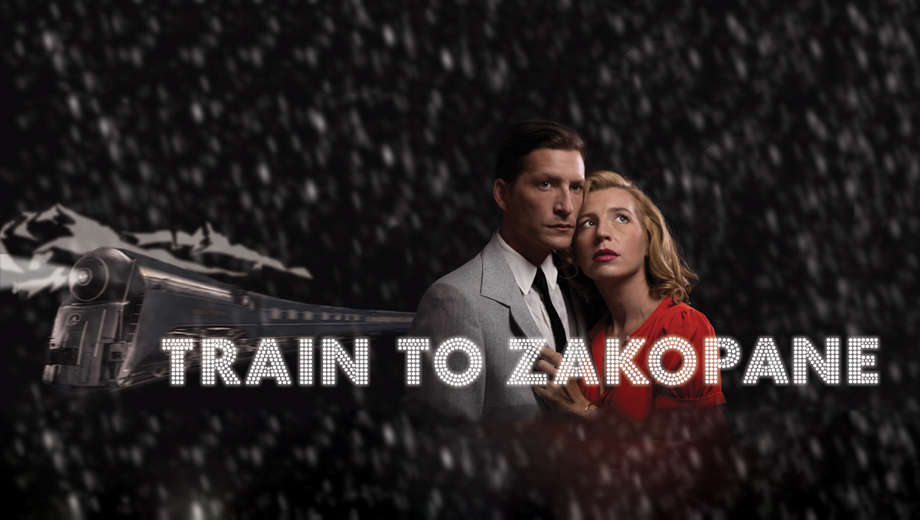
But the younger Jaglom’s new film, “Train to Zakopané,” captures the story that Simon was most reluctant to recount: How he met a charming Polish nurse in 1928 on a train to the ski resort of Zakopané, but was repelled when she began spewing virulent anti-Semitic remarks. (“I can smell a Jew a kilometer away,” she repeatedly said.)
As revenge, Simon vowed to seduce the young woman before telling her that he was Jewish. What he didn’t expect was that during their rendezvous, he would fall in love with her.
The world premiere of the film will take place April 29 as part of the Los Angeles Jewish Film Festival. The festival, which is a program of TRIBE Media, the parent company of the Jewish Journal, runs through May 3.
The feature film is bookended by videotaped interviews Henry Jaglom (“Festival in Cannes,” “Just 45 Minutes From Broadway”) conducted with his father three years before his death in 1993 at age 96. After the opening interview, the movie flashes back in time to tell the story, with actors playing the real-life characters, in vivid black and white.
“This has haunted me all my life,” Jaglom, 79, said of why he made the drama. “My father always said it was the one story he didn’t like to tell, because he did something he didn’t think was right. He was planning to sleep with a girl and then reveal something that would be very upsetting to her.
“My father was elegant, a gentleman, so this was very different than he had ever behaved when I knew him,” the filmmaker added. “I never could have made this film when he was alive.”
Five years ago — prompted by the resurgence of anti-Semitism in Europe — Jaglom first wrote the story as a play in order to avoid the technical distractions of filmmaking. The show, also titled “Train to Zakopané,” premiered in 2014 at the Edgemar Center for the Arts in Santa Monica, where it ran for a year and a half.
After the play closed, Jaglom began writing his movie version, which stars his wife, Tanna Frederick, as the nurse Katia. Digital images help create the atmosphere in the idyllic village of Zakopané. And unlike the play, the film begins and ends with real-life interviews with Simon Jaglom.
How does the filmmaker regard his father’s long-ago plans for revenge?
“I feel that it was almost biblical, and that he was justified,” the filmmaker said.
For tickets and information about “Train to Zakopané,” visit lajfilmfest.org.