Over the past two years, an anti-immigrant trend has taken over. When I turn on the news, all I hear is how the president wants to build a wall and keep the immigrants out.
But hasn’t this country always aspired to a greater good? People are doing everything they can to come here and work for a better future. It’s not that different from my paternal Ashkenazi great-grandparents, who came from Czarist Russia and settled on the East Coast. Not really so dissimilar from my maternal Persian family, whose last nuclear member came to Los Angeles in 1980 during the early days of the Islamic Revolution in Iran. How could I not make an effort to “pay it forward”?
And so, last week, together with Rabbi Yosef Kanefsky and a dozen congregants from B’nai David-Judea, we flew to a Phoenix detention center to volunteer as part of a humanitarian mission.
Rabbi Shmuly Yanklowitz of Valley Beit Midrash helped our group coordinate with Arizona Jews for Justice. We began our day learning Torah related to social action. We looked at the imperative to help the stranger and related it to our collective ancestral experience of having been strangers in the land of Egypt. One particular text stood out to me: “They issued a proclamation in Sodom saying everyone who strengthens the hand of the poor and the needy and the stranger with a loaf of bread shall be burnt by fire” (Pirke d’Rebbe Eliezer 25). Sodom was the ultimate unjust society, which we know is exactly the opposite of what we aspire to have here. I was motivated to help.
At the detention center, we met about 40 families with children as young as 3 years old. Most of them were from Guatemala, El Salvador and Honduras. After traveling anywhere between eight and 40 days, they had already spent between three days and three weeks sleeping on cold concrete, eating cold food and surrounded by the coldness of Immigration and Customs Enforcement (ICE) officers.
“These families were fleeing violent gangs that have taken over their home countries. We welcomed them with smiles and laughter. We served them warm soup and steaming hot tortillas.”
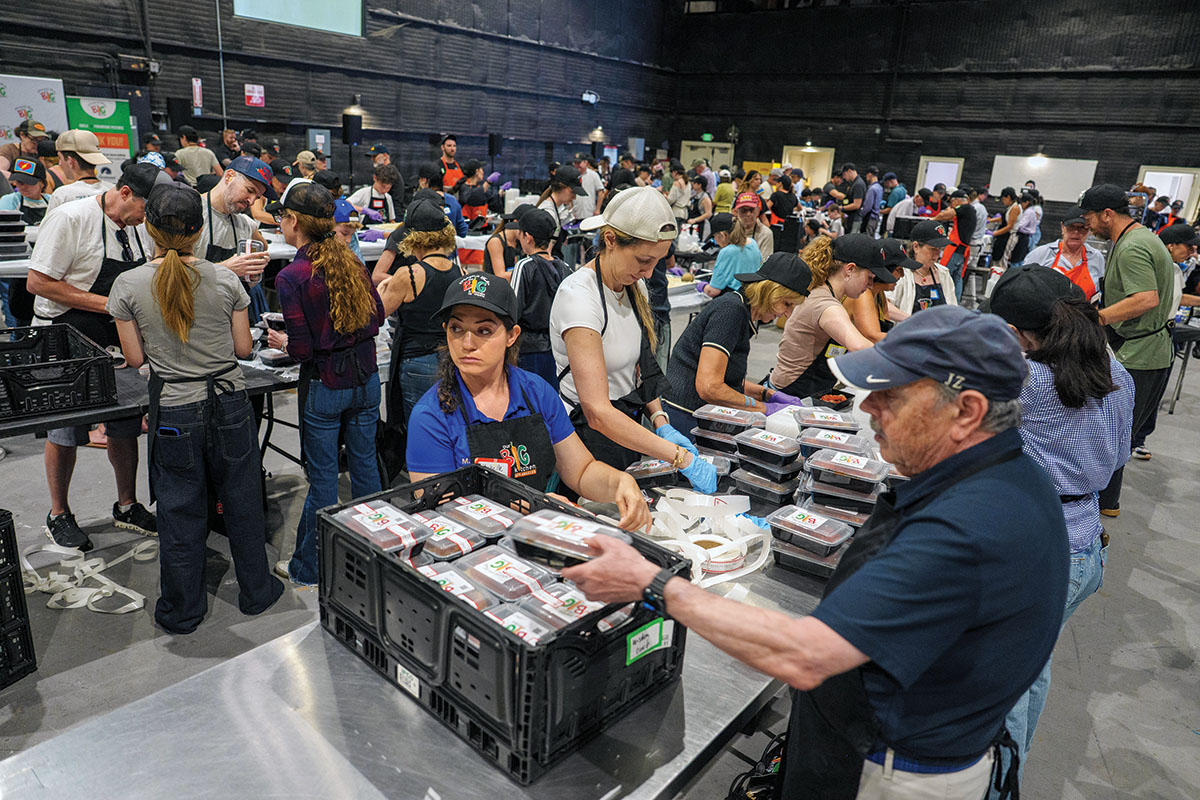
These asylum-seeking families were fleeing violent gangs that have taken over their home countries. We welcomed them with smiles and laughter. We served them warm soup and steaming hot tortillas, and they enjoyed what was possibly their first exposure to human warmth since leaving their homes.
After the meal, as part of the Spanish-speaking team doing intake (which included a Brazilian Jewish woman and a woman who had spent years living in the Argentine Jewish community), I went from family to family, filling out forms, asking their names, ages, medical conditions and known allergies. Then I had to write down where they were headed, who their family member was there and that person’s phone number.

The families were then checked by a volunteer medical team for colds, coughs and other ailments before being able to board Greyhound buses to their final destinations. One teenager in transit with her mother and younger brother had a rare form of albinism and needed lots of sun and skin protection. Her mother showed me her ointment and said she was concerned it might not last the duration of the next bus trip. I explained that our medical team would be able to help. Many other young children had sore throats and finally were able to find some relief. We gave them “new” secondhand clothing to wear after their showers, and two volunteers patiently searched their hair for lice, strand by strand.
Later that afternoon, as I was sorting through clothing and other donation boxes at a church with a woman seeking asylum from Guatemala, she suddenly said to me, “I know you’re not being paid for your work, but God will pay you.” I was touched. In the middle of her precarious situation — while waiting to take her first shower in over a week and wearing a mandatory ankle bracelet — here she was thinking about me.
It was dark and raining when we left Los Angeles, and it was dark and raining when we returned late at night. That day of sunshine in Phoenix, of hard work and grateful people, almost seems like a dream now. I remember certain moments: how the bags of instant oatmeal and medicine in my carry-on luggage didn’t seem enough; the mothers who looked at my chai necklace and asked me about the Hebrew language; the thin little girl with big brown eyes who was too scared to eat her soup; the father and son who were so happy when I remarked on their resemblance that they couldn’t stop smiling.
We may not have made a monumental difference in the condition of the thousands of asylum-seekers in the United States, but we definitely made a difference for a few.
Shanee B. Michaelson is an attorney and teacher living in Los Angeles.