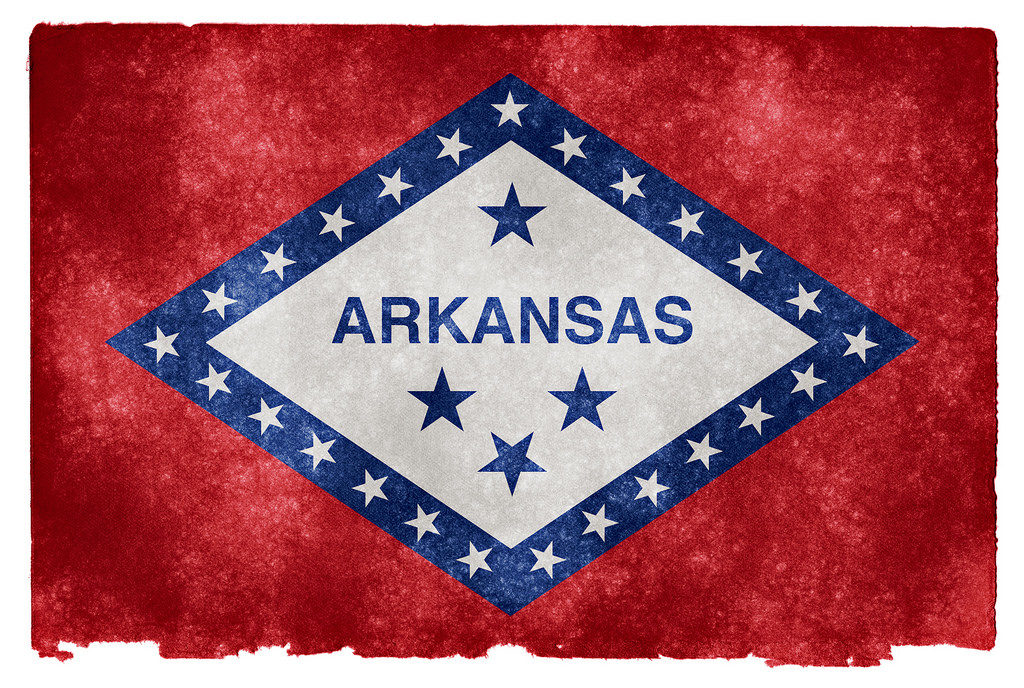
A federal judge threw out a lawsuit challenging the constitutionality of Arkansas’ anti-Boycott, Divestment and Sanctions (BDS) law.
The lawsuit, which was filed by the American Civil Liberties Union (ACLU) on behalf of The Arkansas Times, argued that the law violated the First Amendment for requiring state contractors to pledge against boycotting Israel.
Chief U.S. District Judge Brian Miller did not agree, arguing that commercial boycotts are not a protected form of speech since they don’t fall under the category of expressive speech.
“It [the Times] may even call upon others to boycott Israel, write in support of such boycotts, and engage in picketing and pamphleteering to that effect,” Miller wrote. “This does not mean, however, that its decision to refuse to deal, or to refrain from purchasing certain goods, is protected by the First Amendment.”
While the Times does not currently engage in a boycott of Israel or argue in favor it, the paper refused to sign a pledge to never boycott the Jewish State after one of its advertisers, the University of Arkansas-Pulaski Technical College, asked them to do so as part of the state law. The college then revoked its business from the Times.
Miller also wrote, “Israel in particular is known for its dynamic and innovative approach in many business sectors, and therefore a company’s decision to discriminate against Israel, Israeli entities, or entities that do business with or in Israel, is an unsound business practice, making the company an unduly risky contracting partner or vehicle for investment.”
Amanda Priest, spokeswoman for Arkansas Attorney General Leslie Rutledge, told the Associated Press (AP), “Attorney General Rutledge is pleased with Judge Miller’s ruling dismissing the Arkansas Times’ meritless lawsuit and upholding state law prohibiting discrimination against Israel, an important American ally.”
Holly Dickson, legal director of ACLU Arkansas, told the AP, “We disagree with the district court’s decision, which contradicts two recent federal court decisions and which would radically limit the First Amendment right to boycott.”
StandWithUs CEO Roz Rothstein said in a statement, “We commend the wisdom of the judge’s decision.”
“As the court recognized, taxpayers need to be protected from being complicit in discrimination, which both undermines state policy and harms its economy,” Rothstein said.
Women’s March Yasher koach to Rabbi Nicole Guzik for her column about her decision to attend the Women’s March LA event (“Marching as a Woman, as a Jew, as a Rabbi,” Jan. 18).
Americans today are overwhelmed with passion for political causes. What we lack is a proportionate level of reasoned discourse. Guzik fittingly cited Supreme Court Justice Louis Brandeis as one of her inspirations to march, just as Brandeis was fond of quoting the prophet Isaiah’s instruction: “Come let us reason together.” This, said Brandeis, is the attitude that citizens must have to inspire positive change. Although some might disagree with her choice to participate in the event, nobody can say that it is uninformed by American or Jewish tradition. Through her adept combination of feminist passion with enlightened reason, Guzik provided us with an encouraging example of how to navigate these troubled times. Guy Handelman, via email Editor’s note: Nicole Guzik left the march following anti-Semitic statements by one of the speakers.
Don’t Print Speculation Dan Schnur devotes his entire column to the unfounded supposition that President Donald Trump may have been doing dirty work wittingly or unwittingly, without any credible evidence. The Never Trumpers have been trying to prove this since the election was called for Trump on election night in 2016. Without any facts to support their position, they rely on conjecture, speculation and innuendo.
Various news media have become outrageously abusive of their platform to circulate fake news. For example, in January 2017, left-wing BuzzFeed published an unverified dossier that had been circulating in news circles that included wild sexual allegations about Trump and Russian prostitutes. Even left-wing CNN determined that the story had no credibility and publicly stated that it declined to publish the story.
Last week, the left-wing mainstream media were in a frenzy over a BuzzFeed news report that Trump directed his former attorney, Michael Cohen, to lie to Congress about a Moscow real estate deal. Even the Mueller investigation, which has displayed outrageous abuse of prosecutorial discretion against Trump, his administration and anyone associated with him, disputed this story. On Jan. 11, Mueller’s office took the rare step of disputing elements of the BuzzFeed report that Trump directed Cohen to lie to Congress about the Moscow real estate deal.
With commendable candor, Schnur states that “We don’t know if Trump works for the Russians.” Schnur and the Journal shouldn’t devote an entire page to speculation and conjecture that is just wishful thinking of the far left, the biased mainstream media and Never Trumpers. I assume that Schnur would not be pleased if someone wrote a column stating that if Schnur has been a puppet of the Russians, he should be removed from his teaching positions at USC, UC Berkeley and Pepperdine University.
I understand that the Jewish Journal publishes writers who have different points of view. However, the story by Schnur sounds more like wishful thinking by Never Trumpers to bring down the president without any credible evidence on which to base their allegations. Marshall Lerner, Beverly Hills
President Carter, 40 Years Later In his insightful review of Stuart E. Eizenstat’s monumental book on President Carter, Michael Berenbaum observes that “Jewish critics hastened to charge [Carter] with calling Israel an apartheid state” after Carter published “Palestine: Peace Not Apartheid.” In his book, Carter called Israel’s security wall/barrier the “segregation wall,” the “imprisonment wall,” and the “encircling barrier … imposing a system of … apartheid.”
It should be noted that among the critics was Eizenstat. In an interview last year, he recalled that as soon as he heard about the book:
“I wrote a long memorandum to Carter and said, ‘This is politically, morally, historically and legally incorrect.’ … I said: ‘You may say there’s discrimination of some kind against Israeli Arabs, but they have free education, they vote, they’re represented in the parliament, they get health care. If you talk about the Palestinians, that is territory which is, to this day, still contested…. I don’t like the settlement policies either, but it’s not apartheid.’ ” Rick Richman, Los Angeles
Mensch List Addition Here’s one more nominee for your Mensch List (Jan. 11): Executive Editor David M. Shribman and the editorial staff of the Pittsburgh Post-Gazette.
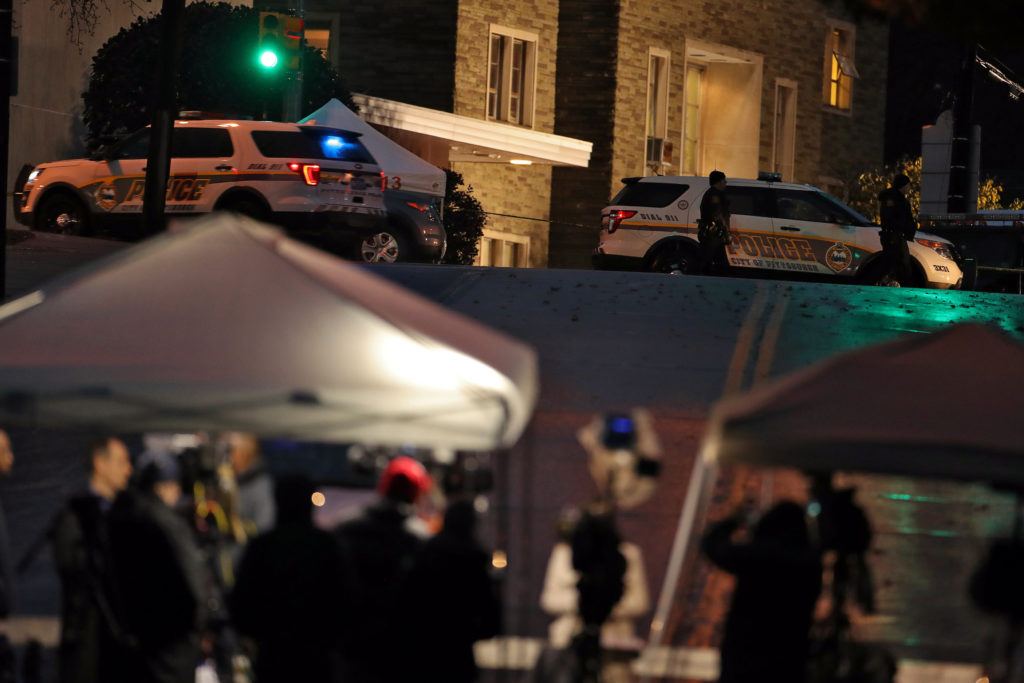
After the Oct. 27 massacre of 11 Jewish congregants at the Tree of Life Synagogue in Pittsburgh by an anti-Semitic extremist, the Post-Gazette’s Friday, Nov. 2 front page featured the first words of the Mourner’s Kaddish in large Hebrew script (“Yitgadal v’yitkadash sh’mei raba …”) displayed across the top. Beneath the Hebrew words, it explained in English: “These are the first words of the Jewish mourners’ prayer, ‘Magnified and sanctified be Your name,’ to be recited tonight on the first Sabbath since the tragedy at Tree of Life.”
Shribman subsequently explained the inspiration for the front-page design: “When you conclude there are no words to express a community’s feelings, then maybe you are thinking in the wrong language.”
It isn’t often that a newspaper’s design can bring a reader to tears, but I found this incredibly moving. That day, the Post-Gazette not only reported the news, but unequivocally embraced its Jewish community. Shribman and the Post-Gazette editorial staff created something deeply meaningful in a time of tragedy that I will never forget. Stephen A. Silver, San Francisco
Israel’s History Shmuel Rosner speculates on what would have happened if Israel had kept the Sinai (“What If Arens Had His Way?” Jan. 17). The Sinai is huge, empty and ungovernable. Bedouin tribes regularly kill Egyptian police and soldiers. If the Sinai belonged to Israel, it would have been equally ungovernable while Israeli soldiers would be getting killed. Myron Kayton, via email
CORRECTION The date of Noa Kligfeld’s election to serve as international president of United Synagogue Youth was incorrectly reported in the Jan. 18 Movers & Shakers. She was elected on Dec. 27.
Now it’s your turn. Don’t be shy. Send your letters to letters@jewishjournal.com. Letters should be no more than 200 words and must include a valid name and city. The Journal reserves the right to edit all letters
Jenni Konner is a writer, director and producer known for executive producing HBO’s limited series “Camping” and HBO’s acclaimed series “Girls,” which ran for six seasons. She began her career as a writer on Judd Apatow’s television series “Undeclared” and today resides in Los Angeles, where she runs her production company, I Am Jenni Konner Productions.
Together with her former producing partner, Lena Dunham, Konner launched the biweekly feminist newsletter ‘Lenny Letter’ in 2015 and established the publishing imprint Lenny Books with Random House in 2017.
Howard Rosenman: How did your involvement with “Girls” come about? Did you realize the show would define a generation?
Jenni Konner: No. The character Hannah says in the beginning, “I’m the voice of a new generation or of a generation.” That was meant entirely as a joke, so it was very funny to me that people at that time thought she was actually claiming that. I got involved because I saw Lena Dunham’s first feature, “Tiny Furniture,” and thought it was incredible. She had this amazing new voice. Honestly, our agents introduced us and we became partners.
HR: There appear to be progressive values of tikkun olam in “Girls.” Is that a fair assessment?
JK: I really believe in the concept of social justice and I believe that can happen through art. It was never our intention to fix the world. We were just making something we liked, but it did give me a platform to have a stronger voice in the world. We started a feminist newsletter, as well. We were interested in pushing new voices forward and voices that weren’t necessarily being heard.
HR: How has your Jewish background influenced your work?
JK: There’s a lot of humor in the Jewish community and that absolutely has been an influence for me, and my father, particularly, is very funny, as is my mother. That had a lot to do with who I am now as an artist. I was inculcated with reading and telling stories because that’s what we Jews do. I was a voracious reader. I still am. I read one to two books a week. There’s a lot of storytelling, hyperbole and exaggeration for the sake of the story, which feels to me inherently Jewish.
HR: What is your Jewish background?
JK: Until I was 12, there was almost no talk of Judaism beyond Hanukkah, which was fine with me since I was a kid. My father, all of a sudden, remembered that we were Jewish and decided to throw me a big bat mitzvah. So I had to cram, never having gone to Hebrew school, and I went to Temple Emanuel and got a tutor. I did it all in six months as opposed to two years. We went to High Holy Days for a while after that. Now I go to Kol Nidre and Neilah.
HR: As a progressive in Hollywood, how do you feel about Israel the nation, not necessarily the government?
JK: I feel conflicted. I’m not going to pretend that I don’t. I feel undereducated, which is why I would never come out with a very strong opinion at this point in my life.
HR: Might your daughter go on a Birthright trip?
JK: I don’t know if she’d go on Birthright, but she is part of a summer camp/movement called Habonim Dror — a sort of a socialist Jewish camp. She goes every summer. When you age out of the camp, you are supposed to go to Israel to a kibbutz. That’s something she’s talking about.
“It was never our intention [on ‘Girls’] to fix the world. We were just making something we liked, but it did give me a platform to have a stronger voice in the world.”
HR: You’re a member of IKAR and a friend of Rabbi Sharon Brous. How has she influenced you?
JK: Sharon’s commitment to social justice really moved me. It wasn’t a basic phone-in sermon of my childhood. Her High Holy Days, especially, are barn burners — incredibly motivating, emotional and come from the heart. She’s a brilliant woman leading this very cozy community. Every part of that excited me. My kids’ father, and one of my closest friends, goes most Saturdays, and my daughter was bat mitzvahed there and my son is about to be [a bar mitzvah].
HR: Have you ever experienced either sexism or a negative experience vis-à-vis the #MeToo movement?
JK: Yeah, I’ve seen some gross things in my time. One of them I wrote about in “Lenny,” and that was sort of before the #MeToo movement. I strongly feel that had it happened now, this man would have been walked off the set and unemployable.
HR: What are the plans for your new company?
JK: I work with two incredible women, Katie Belgrad and Nora Silver. We have hit the ground running. We have two movies we are producing, one at Netflix and one at New Regency. We also want to re-enter television. I’m now pushing other people’s voices forward, and writing, directing and showrunning myself. I’m going to take one step back on many projects and help other people do that job.
Howard Rosenman has produced more than 43 movies, including “Call Me by Your Name.” He also is a co-founder of Project Angel Food.
Elaine Attias died Dec. 4 at 94. Survived by son Daniel; daughters Diana, Jane; 2 grandchildren. Hillside
Judith Arenson died Aug. 9 at 78. Survived by husband Kenneth; daughter Monique (Steven) Levy; 3 grandchildren. Mount Sinai
Allan Bernstein died Dec. 4 at 72. Survived by wife Arlene; son Brandon. Mount Sinai
Harold L. Block died Dec. 2 at 94. Survived by daughter Trudi (Steven) Young; son Alan (Jan) Block; 5 grandchildren; sister Lenora Spiegel. Mount Sinai
Adrien M. Brown died Dec. 3 at 98. Survived by daughter Lynne Laudahl; son Ronald; 2 grandchildren; 3 great-grandchildren. Mount Sinai
Sarah Ann “Miss Ann” Burke died Dec. 5 at 66. Survived by husband Gary; daughters Monica, Michelle, Julie (Charles) North; sons Jason, Daniel, Sean; 13 grandchildren; brothers Keith Stone, Martin Stone. Mount Sinai
Kathryn Ciment died Dec. 3 at 93. Survived by daughters Robin (Skip) Keene, Cheryl (Carlos) Posso; 5 grandchildren; 5 great-grandchildren. Mount Sinai
Abraham Cohen died Dec. 3 at 97. Survived by daughter Carrie; son Mitch (Pam); 2 grandchildren. Hillside
Edward Dickstein died Dec. 3 at 89. Survived by wife Diana; daughters Sallie (Keith), Marcia (Fred). Hillside
Teresa L. Freidin died Dec. 1 at 64. Survived by son Alex (Heather); 1 grandchild; sister Nancy (Howard) Leader; brother Larry (Denise). Mount Sinai
Michael Ginsberg died Dec. 3 at 76. Survived by daughters Dina, Randi Ball; son Robert (Angela); 5 grandchildren; brother Stephen. Mount Sinai
Jon Henningsen died Nov. 29 at 60. Survived by wife Lisa; daughter Jessica; son David; brother Bill (Trudy); mother-in-law Evelyn Burns; sister-in-law Janice Burns-Fire; brother-in-law Glenn Burns. Mount Sinai
Rose Kapler died Dec. 2 at 102. Survived by daughters Judy Holliday, Nina (Richard) Rosen, Davida (Steve Galan); son Michael (Judy); 7 grandchildren; 5 great-grandchildren. Mount Sinai
Elaine Krasell died Dec. 2 at 86. Survived by daughter Janet Resnick; son Fred (Silvia) Antman; 5 grandchildren; 3 great-grandchildren. Mount Sinai
Hannah Levitas died Nov. 28 at 79. Survived by daughter Yetta; 2 grandchildren; sisters Libby and Chavi; brothers Basil, Harry, Maishe. Hillside
Warren Lewis died Dec. 1 at 91. Survived by nieces Nancy (Ron Silveira), Eileen. Mount Sinai
Arnold Marks died Nov. 6 at 77. Survived by wife Janice; son Garrett; sister Susan Shenfeld. Eden Cemetery
Sharon Rhonda Maston died Nov. 8 at 62. Survived by husband Timothy; daughters Danielle Lange, Natania; son Jacob; 2 grandchildren. Chevra Kadisha
Martin “Marty” Ross died Nov. 29 at 81. Survived by wife Lorraine; daughter Sheryl (Peggy); son Richard (Anthony); 3 grandchildren. Mount Sinai
Muriel Silver died Nov. 30 at 92. Survived by sons Douglas (Robbi), Judd (Margaret); 3 grandchildren; 2 great-grandchildren. Hillside
Ellen Silverstein died Dec. 1 at 72. Survived by husband Robert; daughters Rachel (David), Alison; son Seth (Christine); 2 grandchildren; sister Deborah. Hillside
Max Stodel died Dec. 3 at 95. Survived by daughter Betty (David); 1 grandchild; 2 great-grandchildren. Hillside
Hyman Walter died Dec. 1 at 99. Survived by daughter Leslie Miller; son William (Josey); 5 grandchildren; 6 great-grandchildren; sister Mickey (Mike) Feinstein; sister-in-law Rachel. Mount Sinai
Villi Weiss died Nov. 30 at 72. Survived by wife Zhanna; daughters Diaan (Albert) Weiss Aizman, Vicky (Dmitry) Sokol; 4 grandchildren; brother Boris (Julia). Mount Sinai
Geneva Yasskin died Nov. 27 at 100. Survived by daughter, Karen (Alan) Stokes; sons Philip (Roberta), Marc, Richard (Diane). Mount Sinai
Stacie Zinn died Nov. 27 at 52. Survived by daughter Angela Durante; mother Dorothy Schulman; sister Robin Monroe. Mount Sinai
David Ziskrout died Nov. 29 at 83. Survived by sons Jay, Dana; 3 grandchildren. Mount Sinai
The Anti-Defamation League’s (ADL) latest report on murder and extremism found that “right-wing extremism” was responsible for almost all hate-related murders in 2018.
According to the report, at least 50 people were killed in 2018 as a result of violent extremism, putting 2018 behind only 1995 (184), 2016 (72) and 2015 (70) in terms of extremist killings.
“On a scale of all murders in the United States, it’s pretty small,” Mark Pitcavage, senior research fellow for the ADL’s Center on Extremism, told the Journal in a phone interview. “But extremist-related murders have the potential to affect far more than the most proximate victims, and the Tree of Life shooting in Pittsburgh is a tragic but noteworthy example of just that, where it affected the Jewish community around the world and many non-Jews as well.”
The report also notes that the 50 recorded extremist-related murders are “merely the tip of a pyramid.”
“For each person killed by an extremist, many more are wounded or injured in attempted murders and assaults,” the report states. “Extremists engage in a wide variety of other crimes related to their causes, from threats and harassment to white collar crime. Every year, police uncover and prevent a wide range of extremist plots and conspiracies with lethal intentions.”
The ADL concluded that most of the extremist-related murders were due to “right-wing extremism,” as 78 percent of the murders were perpetrated by white supremacists, 16 percent were perpetrated by anti-government extremism, 4 percent were perpetrated by Incel [involuntarily celibate] extremism and 2 percent were the result of Islamic extremism.
The 50 deaths included the Tree of Life shooting, the death of 19-year-old Blaze Bernstein in Orange County, who was allegedly murdered by white supremacist Samuel Woodward; and Nikolas Cruz, who allegedly shot 17 Marjory Stoneman Douglas High Schools students to death in February 2018. While there may have some evidence that Cruz had white supremacist leanings, the evidence has not been conclusive that Cruz conducted the shooting as a result of white supremacist ideology, according to the report.
Pitcavage told the Journal that the one Islamic extremist-related death in the United States was the result of 17-year-old Corey Johnson, who allegedly stabbed a 13-year-old to death in Florida. Johnson reportedly converted from being a white supremacist to a radical Islamist.
“This is not to suggest that the threat from Islamist extremism has gone away or necessarily is even receding,” Pitcavage said. “By other measures such as terrorist plots or conspiracies or people arrested for attempting to provide material support for terrorism, there is a substantial amount of activity going on. So it’s not as if that threat is disappearing.”
“But thankfully, the amount of people that such extremists were able to kill in the U.S. this past year was very low,” he added.
One of the relatively new extremist movements that has surfaced was the Incel movement, which began as a forum for people who have trouble forming romantic relationship to vent their frustration. The Incel movement then morphed into “anger misogyny” against women, according to Pitcavage.
“They have egged each other on to the point where there have been several episodes of known violence associated with them, the most noteworthy being a 2014 shooting spree in California by a young man named Elliot Rodger,” Pitcavage said, “and then more recently we had a deadly incident in Canada, we had a deadly incident in Jacksonville and just this past week we had someone who was arrested for making violent threats who seems to have been part of that circle as well.”
Pitcavage added, “People need to be made aware of this going forward.”
The policy prescriptions recommended by the ADL include establishing a federal law focusing on domestic terrorism and having states adopt strong hate crime laws.
“At the federal level, the United States does not have a domestic terrorism law,” Pitcavage said. “[Alleged Pittsburgh shooter] Robert Bowers… whose act clearly was a terrorist act as well as a hate crime, cannot be prosecuted for terrorism simply because there is no domestic terrorism in the United States. Seems like we need one.”
Pitcavage hopes that the main takeaway people get from reading the ADL report is the issue of right-wing extremism.
“We’ve had a lot of right-wing extremist-related murders this past year, and that we actually have had a lot of right-wing extremist murders most years and not enough attention in this country is being devoted to that, even though some of these movements right now are clearly growing and becoming more dangerous,” Pitcavage said. “This is not to say that we need to do that at the expense of ignoring other threats. Islamist extremism is still a very genuine threat, and it’s not a horse race between right-wing extremism and Islamist extremism either. If we ignore either threat, we ignore it at our own peril.”
Shabbat in 3-D Kehillat Ma’arav’s “Shabbat in 3-D” offers Daven (prayer), Drash (a sermon) and Dine (Kiddush). Special guest Rabbi Martin Pasternak is celebrating his 14th anniversary as national director of Israel Bonds. Previously a congregational rabbi in Connecticut and Texas, Pasternak also is a certified family mediator. He writes gets (Jewish divorces) as a member of the beit din of the Conservative movement’s Rabbinical Assembly. 9:30 a.m.12:30 p.m. Kehillat Ma’arav, 1715 21st St., Santa Monica. (310) 829-0566.
Brooke Goldstein
“Civil Rights Advocacy and Litigation for the Jewish People” Brooke Goldstein, a human rights attorney, author, award-winning filmmaker and FOX News regular, appears for a Shabbat morning discussion. Sponsored by the Beverly Hills Jewish Community and Jewish Platform for Community Engagement. Shabbat service 9:30 a.m., lecture 11:30 a.m. Free. Beverly Hills Hotel, 9641 Sunset Blvd., Beverly Hills. (310) 276-4246.
Hero of the Holocaust The story of a Polish social worker who rescued 2,500 Jewish children from the Warsaw Ghetto will be told in “Irena Sendler: A Musical” at Temple Emanuel of Beverly Hills. Two performances will benefit the Los Angeles Museum of the Holocaust. In commemorating International Holocaust Remembrance Day with music composed by Emanuel member Megan Cavallari and playwright Kait Kerrigan, Noreen Green will conduct members of the Los Angeles Jewish Symphony and the American Jewish University choir. 7 p.m. Jan. 26; 1 p.m. Jan. 27. $20-$180. Temple Emanuel of Beverly Hills, 8844 Burton Way, Beverly Hills. (310) 288-3737.
Holocaust Remembrance Day: “Every Person Has a Name” In observance of the United Nations’ International Holocaust Remembrance Day, a 25-hour program titled “Every Person Has a Name” will be held on the steps of Pasadena City Hall, where names of Holocaust victims will be recited. Remembrance Day is held on the anniversary of the liberation of Auschwitz. In a 60-minute ceremony preceding a 24-hour vigil, Pasadena Mayor Terry Tornek, other politicians and religious leaders will be joined by the Youth Orchestra of the Jewish Federation of the Greater San Gabriel and Pomona Valleys and the Kol HaEmek community choir. Volunteers are needed to recite victims’ names for 30-minute segments during the vigil. Ceremony at 7 p.m. Vigil from 8 p.m. Jan. 26 to 8 p.m. Jan. 27. Free. Pasadena City Hall, 100 Garfield Ave., Pasadena. Contact the Jewish Federation at (626) 445-0810.
SUN JAN 27
“Surviving the Holocaust as a Hidden Child” Monique Saigal-Escudero, a child Holocaust survivor who became aware of her secret childhood and Jewish identity many years after immigrating to the United States, shares her story of survival and resilience in honor of International Holocaust Remembrance Day.At the age of 3, she was put on a train out of Nazi-occupied Paris by her grandmother and traveled to the south of France, where she was hidden by a Catholic family. The group Oneg Shabbat, in partnership with Temple Beth Israel of Highland Park and Francais du Monde Los Angeles, organizes the event. 2-3:30 p.m. Free. Temple Beth Israel of Highland Park and Eagle Rock, 5711 Monte Vista St., Los Angeles.
Nefesh Mountain
Bluegrass, Jewish-Style Nefesh Mountain — A Patty Wells Memorial Concert brings together the uncommon melding of bluegrass and old-time music with Jewish heritage, while honoring the memory of Wells. She was the daughter of past temple president Alan Wiener and his wife, Nancy, who have sponsored concerts for many years in their daughter’s memory. Nefesh Mountain is the husband-and-wife team of Eric Lindberg and Doni Zasloff, pioneers of this new blend of spiritual American music performed in Hebrew and English. 5-7:30 p.m. $18 adult tickets, $10 students. Temple Judea, 5429 Lindley Ave., Tarzana.(818) 758-3800.
“Kol Koleinu” L.A. Book Launch Join The World Congress: Keshet Ga’avah at the launch party for its new book,“Kol Koleinu — All Our Voices.” The book recognizes the contributions of major LGBTQ Jewish organizations in 15 countries on five continents, and documents current issues of LGBTQ communities. Consul General of France in Los Angeles Christophe Lemoine is the keynote speaker. Art auction and refreshments (including Israeli salads) follow. 3-6 p.m. $25 presale, $65 presale with book, $35 at the door (not including book). Book sold at full price. Hollywood Sculpture Garden, 2430 Vasanta Way, Hollywood. For additional information, contact drrobbygordon@gmail.com, or harpershechter@gmail.com. Tickets available by clicking link above.
“Greatest Satirical Songs” Since last year’s program was rated the best musical satire in history, can American Jewish University’s “Greatest Satirical Songs: The Sequel” improve on that record? The program includes music from Stephen Sondheim, The Beatles, “Crazy Ex-Girlfriend,” Georg Frideric Handel, Gilbert & Sullivan, Weird Al Yankovic, Randy Newman, Tom Lehrer and Monty Python. 4 p.m. $15 reserved seating, $25 premium seating. American Jewish University, Familian Campus, Gindi Auditorium, 15600 Mulholland Drive, Bel Air. (310) 440-1572.
Tu B’Shevat Festival At the Westside Jewish Community Center’s Tu B’Shevat Festival, the Birthday of the Trees will be celebrated — rain or shine. Besides games, a petting zoo, food, crafts and a silent auction, guests will have an opportunity to take home a tree. Courtesy of City Plants, a collaboration of Los Angeles City Hall and seven nonprofits, fruit or shade trees will be available to guests who are residents of Los Angeles. Trees, available on a first-come, first-served basis, one per address, must be planted on private property. Address verification required. 11:30 a.m.-2:30 p.m. Admission is free, but activity and food tickets may be pre-ordered. Westside Jewish Community Center, 5870 W. Olympic Blvd. (323) 556-5250.
Sculpture Garden Public Tour Take a guided tour of the Sondra and Marvin Smalley Family Sculpture Garden at American Jewish University. One of L.A.’s best kept secrets, the garden features works by Sol LeWitt, Jenny Holzer, Charles Ginnever, Anthony Caro and other artists. 2:30-3:30 p.m. Free. RSVP to arts@aju.edu. American Jewish University, Familian Campus, 15600 Mulholland Drive, Bel Air. (310) 440-1572.
MON JAN 28
“Found in Translation?” Daniel Stein Kokin, junior professor of Jewish literature and culture at the University of Greifswald in Germany and a visiting assistant professor at the UCLA Y&S Nazarian Center for Israel Studies, examines the role of foreign music in creating a uniquely Israeli musical culture. Israeli musicians have invested in the translation and adaptation of foreign pieces into the language of modern Israel. For example, Yehoram Gaon based his “Shalom Lakh Eretz Nehederet” on Steve Goodman’s “City of New Orleans,” and Naomi Shemer transformed The Beatles’ “Let It Be” into “Lu Yehi.” Kokin argues this importation of foreign songs into Hebrew played a key role in creating Israeli musical culture. 5:30-6:45 p.m. Free. UCLA Bunche Hall, Room 10383. (310) 825-9646.
Molly Forrest
Molly Forrest Molly Forrest, CEO and president of the L.A. Jewish Home, discusses “Caring for Our Elders — and Ourselves: The Status of Senior Care in Our Society.” The event is intended for anyone who has a parent or loved one who is aging. What are the options for our loved ones to continue to stay at home? If it is their preference, is it necessarily wise for them to stay in their homes? What about home caregiving? Forrest, who oversees the largest nonprofit elderly continuing care community in the Western United States, addresses these questions and more. 7:30 p.m. $20 general, $15 Stephen Wise Temple members. Stephen Wise Temple, 15500 Stephen S. Wise Drive, Los Angeles. (310) 476-8561.
“Cinema Exiles: From Hitler to Hollywood” In commemoration of International Holocaust Remembrance Day, Jan Christopher Horak, a film historian and the director of the UCLA Film and Television Archive, discusses the 1933-39 exodus from Nazi terror to Hollywood of more than 800 predominately Jewish members of the German film industry. He will relate personal and professional experiences of film luminaries Billy Wilder, Fred Zinnemann, Fritz Lang, Peter Lorre and others. After a Q-and-A session and intermission with light refreshments, a film will be shown. 6 p.m. registration, 6:30 p.m. program. $10 general, $5 Cedars-Sinai medical staff, employees and volunteers. Cedars-Sinai Medical Center, Harvey Morse Auditorium, Plaza level, 8700 Beverly Blvd., Los Angeles. RSVP to ellen.eichenberger@cshs.org.
TUE JAN 29
“Hybrid Jews in Cinema” The UCLA series “The Human Chameleon,” examines hybrid Jewish figures in cinema, specifically Jewish characters that change their appearance, transform their identity, infiltrate other cultures and express their Jewishness by becoming “other than Jewish.” Kicking off the two-day event is Amir Vudka, lecturer and researcher at the department of media studies at University of Amsterdam. He lectures at 4 p.m. at 314 Royce Hall. A 7 p.m. screening of Charlie Chaplin’s “The Great Dictator” follows in the James Bridges Theater at UCLA. On Jan. 31, a 7 p.m. screening of Spike Lee’s recent film, “BlacKkKlansman,” is held at the James Bridges Theater. Free. (310) 267-5327.
WED JAN 30
“Growing Up Jewish in Iran” Chazzan Farid Dardashti will relate his unusual life story — from Iranian teenage television idol to Ashkenazic chazzan in the United States — in a discussion with Sinai Temple Cantor Marcus Feldman. Dardashti’s memories will be brought to life in a multimedia, musical presentation. 7:30-9 p.m. Free for all. Sinai Temple, 10400 Wilshire Blvd. (310) 474-1518. Register above.
Have an event coming up? Send your information two weeks prior to the event to ryant@jewishjournal.com for consideration. For groups staging an event that requires an RSVP, please submit details about the event the week before the RSVP deadline.
Congress recently passed a bill with a two-thirds majority in the Senate and the House of Representatives, a seemingly impossible feat in these divided times. The Anwar Sadat Centennial Celebration Act posthumously awards a Congressional Gold Medal to the late Egyptian leader. It was signed into law by the president on Dec. 13, 40 years after the historic Camp David Accords, and 100 years after Anwar Sadat’s birth. The award will be presented to Sadat’s widow, Jehan, at an upcoming ceremony.
How did this bipartisan coalition come together to honor a long-deceased foreign leader? The answer is unexpected and inspiring. An Arab head-of-state is receiving America’s highest civilian honor nearly four decades after his death thanks to the tireless efforts of a group of Orthodox Jews.
Ezra Friedlander is a Liska Chasid and CEO of the Friedlander Group, a public policy firm. He is passionate about creating a more peaceful world, and he takes action to do it. Friedlander traces his interest in public affairs to his childhood, when he heard about an attempt by 400 Orthodox rabbis to meet with President Franklin Roosevelt regarding the Nazi slaughter of Jews in Europe. FDR refused to even meet the group congregated outside the White House. That moment in history taught Friedlander that involvement at every level of government must be a priority for the Orthodox Jewish community.
Anwar Sadat didn’t engage in secret negotiations but rather made open gestures toward Israel.
Friedlander formed a committee of like-minded leaders, including Los Angeles residents Sol Goldner, Stanley Treitel, and Aubrey Sharfman. This group was instrumental in building U.S. support for Israel’s Iron Dome program, and was behind successful efforts to honor Shimon Peres and Raoul Wallenberg with Congressional Gold Medals. Other backers of the Sadat bill include Shafik Gabr, an Egyptian industrialist; Isaac Dabah, an Israeli mogul who operates clothing factories in Egypt; and Tzili Charney, widow of Leon Charney, who advised the negotiators at Camp David in 1978.
The committee chose to honor Sadat with its latest initiative because of his exceptional courage and leadership in making peace with Israel, an accomplishment that ultimately cost him his life. The group wants a new generation to learn how an Arab leader made peace with the homeland of the Jewish people. Sadat didn’t engage in secret negotiations but rather made open gestures toward Israel, in effect saying to the world, “I want peace and I’m ready to go to Jerusalem to do it.” His visit to Jerusalem was historic — and deeply controversial in the Arab world. Egypt was immediately kicked out of the Arab League, and just three years later, Sadat was assassinated by furious Islamists.
Friedlander and his associates worked tirelessly for two years to make the Sadat award happen. They needed “a thousand points of contact” with legislators to get the necessary 270 votes. The lawmakers who led the charge in securing the votes were Sen. Ben Cardin (D-Md.) and Orrin Hatch (R-Utah), and Reps. Grace Meng (D-N.Y.) and Chris Stewart (R-Utah).
The average staffer of a U.S. lawmaker receives hundreds of emails a day, and breaking through the noise is often impossible. In July 2018, the Sadat Gold Medal Committee still lacked 70 signatures. The August recess was looming, followed by the Jewish High Holy Days and then the midterm elections. Friedlander worried that if he didn’t get the signatures by summer’s end, he never would. Having tried everything else, he flew to Hungary and prayed at the grave of his ancestors, the first and second Liska Rebbes. He asked them to beseech God on his behalf for the needed votes. As soon as Friedlander returned to the U.S., 70 sponsors came aboard and the bills succeeded in both houses. Whether a Liska miracle or the natural result of many years’ hard work, the bill passed and the president signed it into law.
Friedlander and Goldner, along with other committee members, are traveling to Egypt in February at the invitation of the Egyptian president. Egyptian leaders, like the Orthodox Jews who made the award happen, hope the late Anwar Sadat will become a model for creating peace in the Middle East.
Learn more about Sal Litvak’s Accidental Talmudist story, and join his followers at accidentaltalmudist.org.
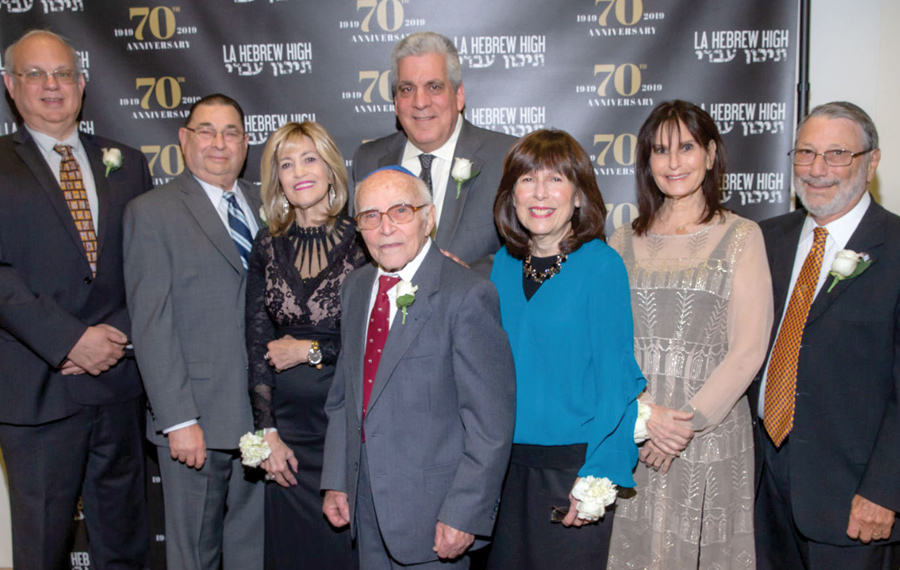
More than 200 guests celebrated Los Angeles Hebrew High School’s 70th anniversary at a gala on Jan. 13 at Sinai Temple in Westwood. Hebrew High sophomore Charlotte Green performed the national anthem and “Hatikvah.” Veteran teacher Michael Singer delivered the opening blessing followed by an invocation by the Bureau of Jewish Education’s Gil Graff, a longtime supporter of the school.
Board President Karen Freed introduced tribute videos. State Sen. Ben Allen (D-Santa Monica), a Hebrew High alumnus (class of 1996), paid tribute to alumnus and former Los Angeles City Councilman and L.A. County Supervisor Zev Yaroslavsky and his late wife, Barbara, who met while at Los Angeles Hebrew High School. Among those honored were former Head of School Rabbi Sheldon Dorph.
Also in attendance were current Head of School Amittai Benami, and founder of de Toledo High School and alumnus Rabbi David Vorspan.
The school, which is tailored to eighth- to 12th-grade students, saw a 20 percent surge in overall enrollment for the second year in a row. Its mission is to advance Hebrew and Jewish education and Israel advocacy among of Jewish teens in greater Los Angeles.
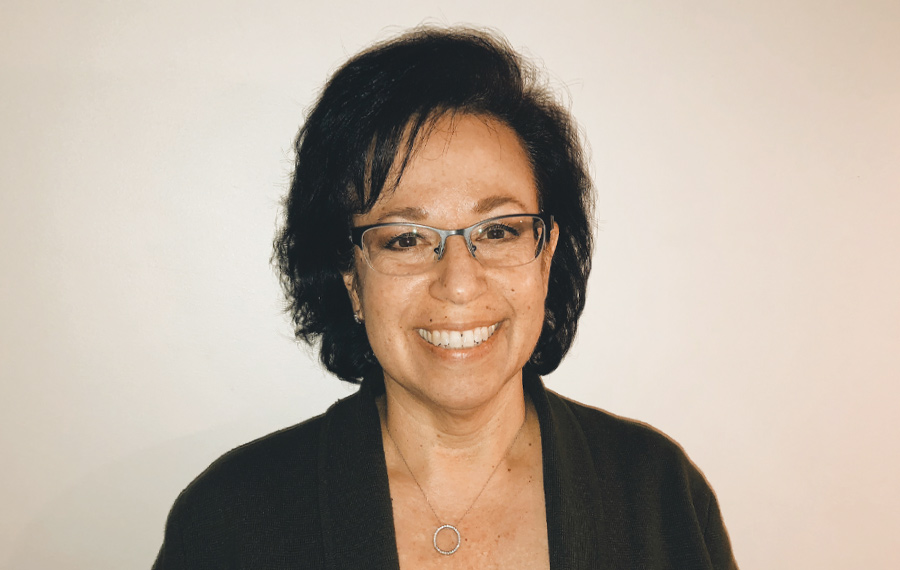
Marla Eglash Abraham. Photo courtesy of the United States Holocaust Memorial Museum
The United States Holocaust Memorial Museum in Washington, D.C., has appointed Marla Eglash Abraham as director of its Western region office in Los Angeles, which is responsible for the museum’s programs in Alaska, Arizona, California, Hawaii, Nevada, New Mexico, Oregon, Utah and Washington state. The museum’s regional offices help engage local communities and support the museum’s mission of holocaust education.
In a Jan. 14 statement announcing Abraham’s hiring, Jordan E. Tannenbaum, the museum’s chief development officer, praised her for her passion for Holocaust education. Abraham began working in the position in October. She previously was the regional director of development at American Jewish Committee Los Angeles for six years, leading development initiatives in Los Angeles, San Diego, Orange County, Santa Barbara, Phoenix and Denver.
Abraham holds a master’s degree in Jewish nonprofit management from Hebrew Union College-Jewish Institute of Religion, a master’s in social work from USC, and a bachelor’s degree in Spanish and linguistics from UCLA.
In the statement announcing her hiring, Abraham said she is taking the position at “a critical and challenging moment” for the 25-year-old museum.
“With the Holocaust receding in memory and the number of Holocaust survivors diminishing … the museum needs to continue to bring Holocaust education to the Western region of the United States and grow its global reach,” she said. “It’s only through the dedicated support of thousands of people here and many thousands more around the country that we can reach the millions we do each year around the globe. The survivors, their families and everyone who is committed to this mission are indebted to them for their unwavering support.”
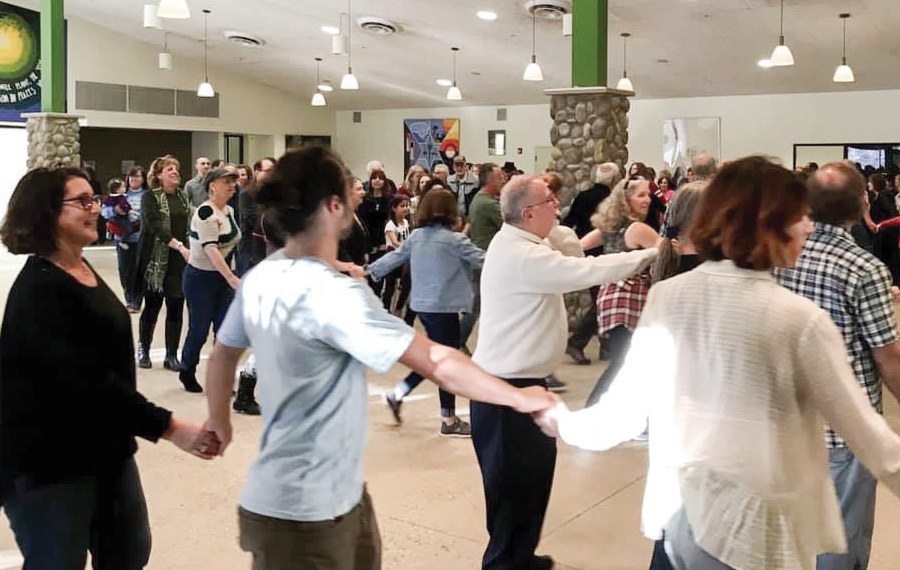
More than 500 friends, fans and family members gathered to celebrate Israeli Folk dancer and teacher Dani Dassa’s 90th birthday. Photo by Tish Laemmle
A love of Israeli dancing and famed Israeli dancer and teacher Dani Dassa were cause for celebration on Jan. 6 as about 500 guests gathered at the Brandeis-Bardin Campus of American Jewish University in Simi Valley for Dassa’s 90th birthday.
Among those attending were Dassa’s wife, Judy Dassa, and the couple’s four children and eight grandchildren.
Dassa, who has been called “the father of Israeli folk dancing in the United States,” was born in Jerusalem, where he discovered his love for dance at the age of 4 and grew up dancing in youth groups. He was involved in the folk dance movement of Israel and studied modern dance in Israel and New York before coming to Los Angeles in 1958.
Dassa founded and directed the folk dance camp RIKUD; toured the United States as a performer and teacher; served on the faculty of adult education programs at Sinai Temple in Westwood, Adat Ariel in Valley Village and Valley Beth Shalom in Encino; and founded Cafe Danssa, a folk-dance coffee house in the Sawtelle neighborhood.
“Our whole family and especially my father were overwhelmed with the strong sense of community [at the party],” said Dassa’s son David Dassa, a dancer and choreographer.
“It was as if we went back in time to the glory days of Israeli dance. There was also the disbelief at how young my 90-year-old father looks and moves still today.”
The event began as a large reunion, as many attendees hadn’t seen each other in decades. After 45 minutes of hugs and kisses, the dancing began and continued for 2 1/2 hours until former Camp Alonim Director Arthur Pinchev and song leader Greg Podell led the attendees in singing some of Dani Dassa’s favorite folk songs. Most of the songs were from early Israel’s “chalutzim” (or farming settlement) culture, but also included “This Is the Day,” by American composer Max Helfman. More dancing followed, and the event ended with Dani Dassa leading everyone in a joyous horah. n
— Debra Eckerling, Contributing Writer
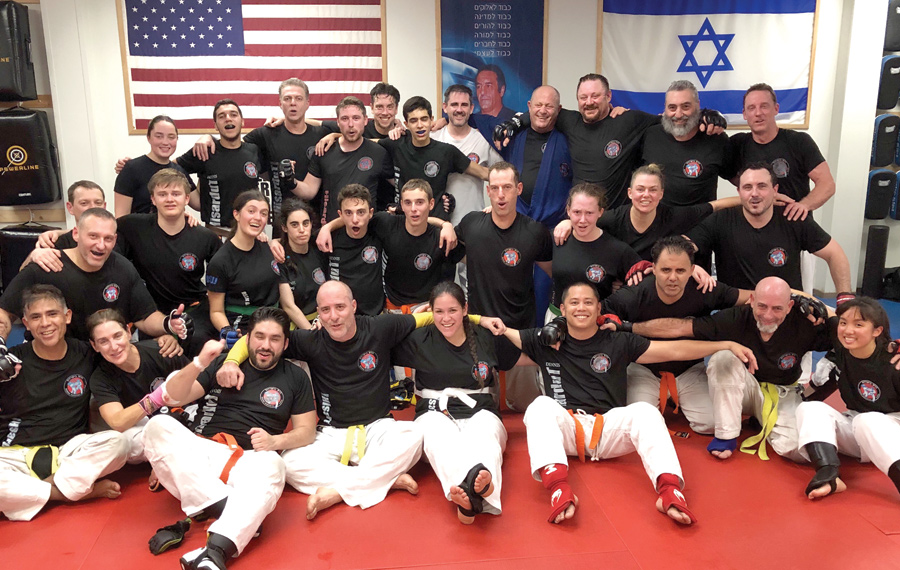
The students of the Israeli Martial Arts Academy at the Academy’s “Fighting for Our Heroes” fundraiser. Photo courtesy of The Israeli Martial Arts Academy.
The Israeli Martial Arts Academy in Westlake Village sponsored a “Fighting for Our Heroes” sparring event on Dec. 6 that raised nearly $3,000 to buy gifts for local firefighters, in appreciation for their efforts in November during the Borderline Bar and Grill shootings in Thousand Oaks and the Woolsey Fire.
The academy used the money raised to purchase gift certificates to movie theaters for 57 firefighters who work out of four fire stations in the area.
At the event, 40 children (ages 10 to 15) and 50 adults donated a minimum of $20 to participate in sparring matches of full-contact karate. The children sparred for 50 continuous rounds and the adults fought for 90 continuous rounds.
“During this whole ordeal [in November], we saw the work of our firefighters — their brave sacrifice and duty,” said Hezi Sheli, the academy’s owner and head instructor. “We decided to take action to support those who risked their lives to save our homes and our dojo.”
“The gym’s goal is to build a stronger community through the practice of the Israeli martial-art and self-defense method, [called] Hisardut,” he continued. “This is an example of how martial arts can bring people together and inspire a community to give back despite recent hardships.”
— Debra Eckerling, Contributing Writer
Want to be in Movers & Shakers? Send us your highlights, events, honors and simchas. Email ryant@jewishjournal.com.
With the proliferation of electronic communications, the fine art of writing notes and letters by hand is going by the wayside. But nothing beats the special touch of a handwritten message, especially when it’s on personalized stationery like these monogrammed notecards. Make a set for yourself or as a heartfelt gift, packaged with matching envelopes.
What you’ll need: Computer printout of a capital letter
Cutting mat
Hobby knife
Ruler
Cardstock
Ink pad
1. Using a computer program like Microsoft Word or Photoshop, type out your desired initial. Select a font that has a good thickness to it, which will make it easier to cut out. Size it to about one inch, and move the letter to the middle of the page — you want space around it. Then print it out, preferably on cardstock.
2. To make a stencil, place the printed capital letter on a cutting mat and cut out the letter with a hobby knife like an X-Acto knife. (Be careful not to cut your fingers.) Use a ruler to help you with the straight edges. If you’re cutting out a letter that has an opening in it, e.g. an “A,” “B” or “D,” be sure to leave a small piece connecting that opening to the letter outline itself so it doesn’t fall out.
3. Cut letter-sized cardstock into four equal sections. For precise cuts, use a paper cutter or a hobby knife and ruler. These note cards will fit perfectly into an A2 (4 3/8 x 5 3/4-inch) envelope.
4. Position the stencil on the note card. Lightly tape it in place if you want to make sure it doesn’t move. Then hold an ink pad upside down and press down over the stencil. Continue to dab with the ink pad until the letter is filled in with ink. Remove the stencil to reveal your monogram. Don’t worry if some ink has seeped under the stencil — the imperfection adds to the artisan feel.
Jonathan Fong is the author of “Flowers That Wow” and “Parties That Wow,” and host of “Style With a Smile” on YouTube. You can see more of his do-it-yourself projects at jonathanfongstyle.com.