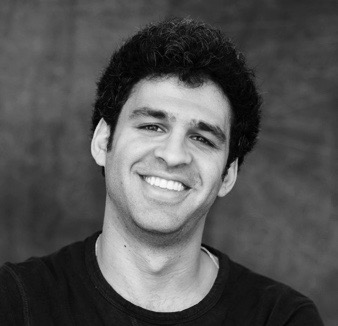

Ziv Batscha, a 2017 graduate of Milken Community Schools, is excited about the experiences he’s had in India over the past nine months as part of Princeton University’s Bridge Year Program.
Batscha, 19, plans to study engineering when he begins as a freshman at Princeton in the fall. He sat down with the Journal 24 hours after returning from his gap year abroad.
Batscha spoke about teaching English, math and computer skills to low-income and low-caste third-, fourth- and fifth-grade students at the Anjali School in the holy Indian city of Varanasi, and how his experiences have prepared him for college.
Jewish Journal: Why did you decide to do a bridge year in India?
Ziv Batscha: Before we applied to our prospective countries, there was a list of service sites. So, Bolivia, for example, had a lot of service sites that were more in the arts and music, and India was the only one with five or six schools you could teach at, and that was one of the things I wanted to do.
JJ: How did a typical day there begin?
ZB: Every morning, we would meet for breakfast at around 7 a.m. with our group. You check in and our instructors ask, “What is your poop scale?” “How are you feeling physically and emotionally?”
JJ: What’s your “poop scale”?
ZB: Yeah, that is a good way to see how you are feeling, to see if you are sick or not.
JJ: What’s the perception in India of Americans?
ZB: It’s a pretty good perception. A hard part of being in India is being a white male there. I think they like Americans, they always want to know where I’m from and what my story is and why I know Hindi, but, yeah, a difficult part was being a white male there. [At] Milken, they don’t teach you about being aware of [that] — whether it is privilege you are aware of, or privilege you are born with because you are white, male and American.
“I definitely had preconceptions of what I was going into, whether it was from watching ‘Slumdog Millionaire’ when I was younger, or just hearing about poverty and what it is like there.”
JJ: How did your perception of the country change over time?
ZB: I definitely had preconceptions of what I was going into, whether it was from watching “Slumdog Millionaire” when I was younger, or just hearing about poverty and what it is like there. When you’re living there, on the ground, you have friends and a base of people you can rely on. You don’t only focus on the trash, the sewage problems, the education problems — obviously, those are important to be aware of and critical of, but also the people, the culture is pretty incredible. Over time, you come to appreciate those things.
JJ: Did you meet any Jews in India?
ZB: There is a Chabad there. I went for Passover. It was a two-minute walk from my home. [The rabbis] are from Israel. They flew in Hebrew speakers. For nine months of the year, they are living there, and there are a lot of Israeli 21- and 22-year-olds straight out of the army.
JJ: How do you think this experience will prepare you for going into Princeton?
ZB: I think I’m going to still end up doing engineering. I’ll definitely try to do a minor, or even some additional classes, in politics, or war and peace, or development. I might even try to go into education later on, and I will be trying to combine engineering with everything I’ve learned: how to engineer sustainably, or build solutions that help people.
JJ: How do you think Milken prepared you for the bridge year experience?
ZB: A big part of the year [in India] was learning how to serve, and we were each placed at a different service site, either a school or an organization combating slavery, for example, but I think a big part of either the Jewish education or Milken philosophy is also serving. I don’t think I learned during those four years at Milken how to serve — it was always [the required] 20 hours checked off at the end of the year. But definitely, the values were strengthened at Milken.