fbpx

June 8, 2018

Kate spade committed suicide after a lengthy battle with depression.

Don’t Look the Other Way When Depression Hits

Refections on the recent suicides of Kate Spade, Avicci, and Anthony Bourdain and how we must act when depression hits

The world was shocked and saddened by the suicide of Kate Spade, a mega-designer, at age of 55 after a long battle with depression. According to her husband, Spade was “actively seeking help for depression and anxiety over the last five years, seeing a doctor on a regular basis and taking medication for both depression and anxiety…”

The immediate reactions have returned the spotlight to the real and immediate crisis that serious depression inflicts on our society. Avicci, Anthony Bourdain, Robin Williams…Depression not only inflicts pain on the one who bears the illness, but it also has the potential to create significant pain, strife, and damage to others.  

On the community level how do we address this? If you know someone who seems down, not themselves, withdrawn – don’t look the other way or think that only the “professionals” will be able to help them. According to research, “social connectedness and support from friends, family, communities and institutions may also help people who are struggling for any reason.”

In other words, taking pills and seeing a therapist aren’t necessarily enough. It does not mean that a certain person’s suicide could be prevented with these additions, but it can help. 

Judaism Prescribes Community Connections

Many people who are depressed don’t want to be around others, and will push people away. They may retreat into their own worlds making including them in LIFE so much more difficult. They also may turn to drugs to numb the pain of the depression. The self-medication is another malady that compounds the depression and makes treatment more difficult. But don’t give up on them, ever.

We are fortunate that our tradition and Torah prescribes participation in community, ample times for social connectedness, and the mitzvah to look out for one another. Additionally, our daily spiritual practices offers opportunities to strengthen our relationship with our Creator. 

But still people can become derailed, feeling that their life has no real purpose, and that somehow they have failed and they may be doing the world a favor by dying, God forbid.

We must tell everyone we know that seems to be falling off the rails,  “Gimme your hands, ’cause you’re wonderful.” Throw them a life preserving phone call, house visit, lunch or coffee. Invite them to the movies, a concert, a stroll along the boardwalk. No texting – but real live connections. 

God created everyone of us with an individual purpose and also also created a deep interconnectedness that transcends the individual. When someone falls into depression, it calls us to action.

Just turn on with me, and you’re not alone, 

Let’s turn on and be not alone

Gimme your hands, ’cause you’re wonderful

Gimme your hands, ’cause you’re wonderful

Oh, gimme your hands

— David Bowie, Rock n’Roll Suicide

We all have to act

The Torah teaches in Vayikra (19:16) “lo ta’amod al dam rei’echa,” do not stand idly by your fellows blood. The Talmud in Sanhderin 73a teaches that if one sees someone in a life-threatening situation they have an obligation to save them.

Kate Spade’s death is tragic. She was one of the 123 Americans that kill themselves every day on average. Depression is a real and life-threatening situation that obliges us to reach out and help.

I pray for all those who are depressed to be able to feel how much God and others love them and appreciate them being in the world. And how their death would pierce our hearts and our world and leave a vacuum that cannot be filled.

And I pray that with God’s help we can prevent future tragic deaths. 

If you would like to learn more about what to do when someone you know is facing depression, check out this recent article.

Don’t Look the Other Way When Depression Hits Read More »

Low Turnout in Quds Day Gaza Riots

The June 8 riots at the Israel-Gaza border were expected to be particularly violent given that June 8 is Quds Day, when Iran celebrates the Palestinian cause. However, turnout was low, prompting the Israel Defense Forces to declare that the protests “failed.”

Approximately 10,000 people attended the Hamas-led riots, when 40,000 people were expected to attend. About 25% of those 10,000 people engaged in clashes at the border fence, most of whom were men.

Those who engaged in violence threw burning tires, kite and balloons as well as grenades at Israeli soldiers and at Israeli territory. An IDF military post was hit by gunfire, although nobody was injured. A total of four Palestinians were killed and over 600 more were injured, according to Hamas’ Gaza Health Ministry.

And yet, the IDF was expecting the violence to be far worse due to Quds Day.

“The determination and professionalism of IDF soldiers on the Gaza border are proving themselves,” Israeli Defense Minister Avigdor Lieberman tweeted. “Despite the great efforts of Hamas and Iran, less and less terrorists are coming to our border.”

IDF Maj. Gen. Kamil Abu Rokon proclaimed on Facebook that Hamas had “failed twice.”

“First by investing money in terrorism rather than in caring for the needs of the population, and then again through Gazans’ reluctance to join the marches,” Rokon wrote.

The violence at the Gaza border has been ongoing since March under the guise of the Palestinians’ “Right to Return” to Israel; in actuality Hamas is attempting to breach the border fence with the hope of launching terror attacks against Israelis.

Israeli Prime Minister Benjamin Netanyahu recently defended the IDF’s handling of the violence at the Gaza border.

“When I talk with European leaders, I always say ‘What would you do?’” Netanyahu said in London. “The last thing we want is any violence, or casualties.”

Low Turnout in Quds Day Gaza Riots Read More »

Obituaries: Week of June 8

Sheldon “Don” Antelman died May 11 at 81. Survived by wife Darlene Traiger-Antelman; son Gregg; 3 grandchildren; 3 great-grandchildren. Mount Sinai

Robert Barry died May 14 at 71. Survived by wife Barbara; sons Brian (Heather), William; 4 grandchildren; brothers Richard (Jean), Kenneth. Hillside

Ruth Miles Borun died May 6 at 92. Survived by husband Elmer Raymond; daughters Nancy, Barbara; Amy. Mount Sinai

Ilona Braun died May 7 at 99. Survived by daughters Noemi Kossover, Esti Surkin, Ronit (Itshak) Rosner; 8 grandchildren; 13 great-grandchildren. Mount Sinai

Stephen Martin Cohen died April 24 at 67. Survived by daughters Lisa, Ashley (James) Little; mother Nina Cohen; brother Barry Cohen. Chevra Kadisha

Robert Galen died May 6 at 95. Survived by daughter Debbie; son Jeffrey (Lani); 2 grandchildren. Mount Sinai

Beverly Rosenthal Garfunkel died May 2 at 87. Survived by husband Irving Garfunkel; daughters Lesleigh Alchanati, Gail Rosenthal; sons Jay, Scott Rosenthal; 16 grandchildren; 4 great-grandchildren. Mount Sinai

Harry Gertz died May 4 at 91. Survived by sister Ethel Levine. Hillside

Charles Glazer died May 6 at 96. Survived by daughter Shelley (Lindsay); sons Bill (Rea), Paul (Barbara); 2 grandchildren; 1 great-grandchild. Hillside

Patricia Ann Goldman died May 6 at 84. Survived by sons Richard (Katherine), Bradley; 1 grandchild; sisters Barbara (Seymour) Phillips, Cyrena Feinberg. Mount Sinai

Mona Green died May 3 at 86. Survived by daughter Rose Nichols; son Steve (Tammy); 1 grandchild. Mount Sinai

Kevin Gross died May 11 at 24. Survived by father David (Bonnie); sisters Allison, Melanie, Lindsay; brothers Ryan, Darryl. Mount Sinai

Alexander Grushansky died May 11 at 89. Survived by wife Maria; daughters Maya, Alina (Moysey) Brio; 2 grandchildren; 1 great-grandchild. Mount Sinai

Joseph Guttman died May 11 at 80. Survived by wife Frances; sons Darrin (Barbara), Brent (Julie); 5 grandchildren; sisters Munci Ben David, Semu (Isa) Eisener; brother Tibor. Mount Sinai

David Kaye died May 5 at 76. Survived by wife Bea; daughters Roni (Bryan) Piterman, Ari (Michael) Kosmal; 4 grandchildren. Mount Sinai

Joyce Licht died May 4 at 90. Survived by husband Herbert; daughters Lorrie (Michael) Turner, Halie (Daniel) Holtzman; 4 grandchildren; 6 great-grandchildren; brother Melvin (Ingrid) Halpern. Mount Sinai

Martin Livingston died May 11 at 88. Survived by daughter Joy (Sandra Adams); son Ralph (Sheri); 3 grandchildren; sister Marjorie (David) Becker; brother-in-law Roger (Max) Gleckman. Mount Sinai

David Meimin died May 6 at 71. Survived by wife Vivian; daughters, Sara, Amanda. Mount Sinai

Susan L. Miller died May 10 at 66. Survived by husband Wayne; son Samuel; father Ken (Ruth) Cornwell; sisters Carol Bennet, Christine; brother Jon (Jackie) Paulsteum. Mount Sinai

Rita Roslyn Neuman died April 30 at 86. Survived by daughters Beth Aptaker, Neva; 3 grandchildren; 2 great-grandchildren. Mount Sinai

Irving Ogner died May 14 at 89. Survived by wife Petra; daughter Melissa; sons Joshua, Robert (Debbie); 2 grandchildren; 2 great-grandchildren. Mount Sinai

Oren Ram died May 10 at 31. Survived by father Shay (Amy); sisters Shelley, Talia; brother Aviv; grandmother Judy Steinberg. Mount Sinai

Maxine Rothenberg died May 11 at 97. Survived by daughter Jo Anne (Elliot) Mercer; sons Richard (Dianna), Howard, Phillip; 6 grandchildren. Hillside

Robert Thomas Saray died May 14 at 57. Survived by partner Dwayne Johnson; mother Eva (Gerald) Saray-Simon; father Ernest (Kathy); brother Gregory; brother-in-law Dana (Martha) Johnson. Mount Sinai

Harriet Sherman died May 4 at 87. Survived by husband Harvey; daughter Diane; 1 grandchild; 1 great-grandchild. Hillside

Shirley Small died April 6 at 90. Survived by husband Melvin; daughters Jennifer Lapidus, Hillarie (Tom); sons Jason (Linda), Noah (Lindi); 17 grandchildren; 5 great-grandchildren. Hillside

Daniel J. Sterling died May 14 at 85. Survived by wife Florene Rozen; daughter Diana Boydstun; sons Jon, David (Jennifer); 4 grandchildren; sister Sara Sheperd. Mount Sinai

Jerome Sussman died May 8 at 81. Survived by wife Sally; daughters Ann (Daniel Rokhsar), Julie (David) Eskenazi; 5 grandchildren. Hillside

Charlotte Weisberg died May 12 at 96. Survived by daughters Roni (Neil) Cummings, Bari (Win) Laner; son Mal (Connie); 5 grandchildren; 5 great-grandchildren. Hillside

Harriet Willens died May 13 at 87. Survived by daughter Stacey (Blake) Miller; sons Douglas (Connie), Michael (Susan), Damon (Sandra); 7 grandchildren; 2 great-grandchildren. Hillside. n

Obituaries: Week of June 8 Read More »

Service in India Prepares Milken Grad for Life Beyond L.A.

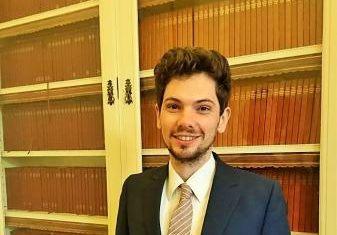
Ziv Batscha, a 2017 graduate of Milken Community Schools, is excited about the experiences he’s had in India over the past nine months as part of Princeton University’s Bridge Year Program.

Batscha, 19, plans to study engineering when he begins as a freshman at Princeton in the fall. He sat down with the Journal 24 hours after returning from his gap year abroad.  

Batscha spoke about teaching English, math and computer skills to low-income and low-caste third-, fourth- and fifth-grade students at the Anjali School in the holy Indian city of Varanasi, and how his experiences have prepared him for college.

Jewish Journal: Why did you decide to do a bridge year in India?
Ziv Batscha: Before we applied to our prospective countries, there was a list of service sites. So, Bolivia, for example, had a lot of service sites that were more in the arts and music, and India was the only one with five or six schools you could teach at, and that was one of the things I wanted to do.

JJ: How did a typical day there begin?
ZB: Every morning, we would meet for breakfast at around 7 a.m. with our group. You check in and our instructors ask, “What is your poop scale?” “How are you feeling physically and emotionally?”

JJ: What’s your “poop scale”?
ZB: Yeah, that is a good way to see how you are feeling, to see if you are sick or not. 

JJ: What’s the perception in India of Americans?
ZB: It’s a pretty good perception. A hard part of being in India is being a white male there. I think they like Americans, they always want to know where I’m from and what my story is and why I know Hindi, but, yeah, a difficult part was being a white male there. [At] Milken, they don’t teach you about being aware of [that] — whether it is privilege you are aware of, or privilege you are born with because you are white, male and American. 

“I definitely had preconceptions of what I was going into, whether it was from watching ‘Slumdog Millionaire’ when I was younger, or just hearing about poverty and what it is like there.”  

JJ: How did your perception of the country change over time?
ZB: I definitely had preconceptions of what I was going into, whether it was from watching “Slumdog Millionaire” when I was younger, or just hearing about poverty and what it is like there. When you’re living there, on the ground, you have friends and a base of people you can rely on. You don’t only focus on the trash, the sewage problems, the education problems — obviously, those are important to be aware of and critical of, but also the people, the culture is pretty incredible. Over time, you come to appreciate those things. 

JJ: Did you meet any Jews in India?
ZB: There is a Chabad there. I went for Passover. It was a two-minute walk from my home. [The rabbis] are from Israel. They flew in Hebrew speakers. For nine months of the year, they are living there, and there are a lot of Israeli 21- and 22-year-olds straight out of the army.

JJ: How do you think this experience will prepare you for going into Princeton?
ZB: I think I’m going to still end up doing engineering. I’ll definitely try to do a minor, or even some additional classes, in politics, or war and peace, or development. I might even try to go into education later on, and I will be trying to combine engineering with everything I’ve learned: how to engineer sustainably, or build solutions that help people.

JJ: How do you think Milken prepared you for the bridge year experience?
ZB: A big part of the year [in India] was learning how to serve, and we were each placed at a different service site, either a school or an organization combating slavery, for example, but I think a big part of either the Jewish education or Milken philosophy is also serving. I don’t think I learned during those four years at Milken how to serve — it was always [the required] 20 hours checked off at the end of the year. But definitely, the values were strengthened at Milken.

Service in India Prepares Milken Grad for Life Beyond L.A. Read More »

What’s Happening: Neshama Carlebach, ‘Hitler in Los Angeles’

FRI JUNE 8
LEARN. LIVE. CONNECT.
A conference and resource fair on Parkinson’s disease features Dr. Indu Subramanian, Dr. Michael Marvi and Dr. Khashayar Dashtipour discussing, respectively, “Parkinson’s Disease: Beyond Motor Functions,” “Parkinson’s Disease and Non-Motor Symptoms” and “New Options for the Treatment of Parkinson’s Disease.” The event is organized by the Parkinson and Movement Disorder Alliance, a nonprofit dedicated to enhancing the everyday lives of people affected by movement disorders. 11 a.m.-2 p.m. Free. Lunch included. Embassy Suites Glendale, 800 N. Central Ave., Glendale. (800) 256-0096. pmdalliance.org/learn-live-connect-glendale-ca.

FRIDAY NIGHT LIVE
Young professionals from Sinai Temple’s Atid group come together for a feel-good musical Friday night service, featuring Rabbi Jason Fruithandler weighing “The Meaning of Life.” A happy hour kicks off the event, and a dinner concludes the evening. Ages 21-39. 7-11 p.m. Happy hour and services are free. Dinner is $25, registration required. Sinai Temple, 10400 Wilshire Blvd., Los Angeles. (310) 474-1518. sinaitemple.org.

SAT JUNE 9
SINGLES SHABBAT LUNCHEON
A relaxed setting, wine and a meal provide the ideal environment for singles to schmooze, mingle and make connections. Nessah Congregation Rabbi Yitzchak Sakhai speaks. 9 a.m., Shabbat services. 1 p.m., lunch. Nessah Congregation, 142 S. Rexford Dr., Beverly Hills. (310) 273-2400. nessah.org/event/shabbatluncheon.html.

“FAT CHANCE”
In his new one-man show, “Fat Chance,” Jewish stand-up comedian Danny Lobell explores his lifelong struggle with his weight — from the time he was 9 years old and going to Weight Watchers meetings in Long Island basements with old ladies, to working at a fat-camp kitchen and adding pounds. He attempts to break his food addiction and solve the obesity epidemic not just for himself but the whole world. Part of the Hollywood Fringe Festival. June 9, 10 p.m.; June 10, 3 p.m.; June 16, 10 p.m. $15. The Hudson Theatres, 6539 Santa Monica Blvd., Los Angeles. hollywoodfringe.org.

SUN JUNE 10
NESHAMA CARLEBACH
Performer Neshama Carlebach, daughter of the iconic but controversial Rabbi Shlomo Carlebach, appears at Leo Baeck Temple to discuss the #MeToo movement, her family’s music, her father and the allegations brought against him, as well as the growth everyone is striving for during these challenging times. Leo Baeck Temple Rabbi Ken Chasen and Congregation Emanu-El Rabbi Sydney Mintz facilitate the conversation. The evening includes live music from Carlebach, Chasen and Emanuel-El Cantor Marsha Attie. 7-9 p.m. Free. Leo Baeck Temple, 1300 N. Sepulveda Blvd., Los Angeles. (310) 476-2861. leobaecktemple.org/events/an-evening-with-neshama-carlebach.

WALK FOR NA’AMAT USA
Bring your friends, kids and even your pets to Sunday morning’s 5-kilometer walk benefiting Na’amat USA, a local Jewish women’s organization supporting Israel’s educational and social services for women, children and families in need. Ages 12 and under are free. Registration, 8 a.m.; walk, 9 a.m. $25. Lake Balboa Park, 6300 Balboa Blvd., Encino. (818) 431-2200. naamat.org.

CHARITY BASKETBALL TOURNAMENT
Honor and remember Cantor Avrum Schwartz at the second annual co-ed three-on-three basketball tournament named for the late cantor. Spectators welcome. Warmup, 9 a.m.; round-robin games, 9:30 a.m.-noon. $18 per player; $18 for bronze sponsor; $36 for silver sponsor; $72 for gold sponsor. Organizers hope for numerous divisions in several age groups. Teams are selected the morning of the tournament. No team registrations. All proceeds will be divided between Shomrei Torah Synagogue and Abraham Joshua Heschel Day School. Tournament held at de Toledo High School, 22622 Vanowen St., West Hills. (818) 854-7650. stsonline.org. 

PAULY SHORE
Comedian Pauly Shore brings the funny to the Irvine Improv. In the 1990s, the foulmouthed performer starred in the big-screen comedies “Son-in-Law” and “Bio-Dome,” among others. 18 and over. 7 p.m.
$20. Irvine Improv, 527 Spectrum Center Dr., Irvine. (949) 854-5455. irvine.
improv.com.

HIKE WITH THE JEWISH FEDERATION
The Jewish Federation of Greater Los Angeles’ young professionals group, YALA, convenes for a 2½-mile hike up the Los Liones Trail in the Santa Monica Mountains. Afterward, the group enjoys frozen yogurt at Toppings, in Pacific Palisades. 9:30 a.m. Free. Pre-registration required. 580 Los Liones Dr., Pacific Palisades. (323) 761-8000. jewishla.org.

CONVERSATIONS IN SCULPTURE
Writers from American Jewish University’s Institute for Jewish Creativity, an incubator for Jewish art and creativity, interact with pieces from the Sondra and Marvin Smalley Sculpture Garden. 3 p.m. Free. American Jewish University Familian Campus, 15600 Mulholland Dr., Los Angeles. (310) 440-1572. aju.edu.

“A BROTHER’S TALE”
Sibling Cantors Samuel and Yudi Cohen take audiences on a musical journey, from their Shabbat table to the bimah. The two were raised in a family where cantorial singing was in the blood — both grandfathers were cantors, as was their father. 5:30 p.m. $36 students, $50 general, $100 reserved. Kehillat Ma’arav, 1715 21st St., Santa Monica. (310) 829-0566. km-synagogue.org.

“TRAPPED AT TEA TIME”

This world premiere dramedy by Marcos Cohen is set in the apartment of Yolanda, an 80-year-old Holocaust survivor. Brothers Omar and Ramiro, thieves and drug addicts, take her building’s doorman hostage in order to steal money and valuables from her to pay off their debt to drug lords. As the play unfolds, the characters reveal personal stories and conflicts, discovering that they share a common past. Directed by Linda Alznauer. Part of Hollywood Fringe. For ages 18 and older. 3:30 p.m. $18. Also, June 17 at 6 p.m. and June 21 at 7 p.m. The Actors Company, 916 N. Formosa Ave., Los Angeles. (424) 653-0926. hollywoodfringe.org.

THU JUNE 14
2018 JERUSALEM MIXER
Enjoy an open bar, music and Israeli-style food at a fundraiser for Friends of the Israel Defense Forces. Raid on Entebbe participant Sassy Reuven will speak. Ages 21-39. 7:30 p.m.-midnight. $26 online, $36 at the door. Private residence, 708 Rodeo Dr., Beverly Hills. For information, call (818) 344-2303 or (818) 961-6184.

“HITLER IN LOS ANGELES” AUTHOR
Join “Hitler in Los Angeles” author Steven J. Ross with Holocaust scholar Michael Berenbaum as they discuss the chilling, little-known story of the rise of Nazism in Los Angeles and the Jewish leaders and spies recruited to stop it. Presented by American Jewish University’s Sigi Ziering Institute and the Jewish Historical Society of Los Angeles. 7:30 p.m. $10. AJU’s Familian Campus, 15600 Muholland Drive, Bel Air. (310) 440-1572. aju.edu.

“HOPE, LIFE & FAITH: TRANSFORMING DARKNESS INTO LIGHT”

Join Los Angeles District Attorney Jackie Lacey, Doug Rosen and Becky Savage in a panel discussion and Q-and-A with leading experts on addiction, prevention and intervention. Savage, an Indiana nurse who has appeared on CNN, lost two sons to opioid overdoses in one night. Sponsored by Project Tikvah and The Aleph Institute, this program is a joint partnership with Beit T’Shuvah, The Jewish Federation of Greater Los Angeles, the Chabad Treatment Center and others. 6:30 p.m. doors open, 7 p.m. program. Space is limited; RSVP urged at rsvp@aleph-institute.org. Shaarei Tefila, 7269 Beverly Blvd., Los Angeles. (310) 598-2142. aleph-institute.orgNote: prior announcements stating that Rabbi Sholom Rubashkin would also be presenting were erroneous.

What’s Happening: Neshama Carlebach, ‘Hitler in Los Angeles’ Read More »

Movers & Shakers: NewGround Iftar, Impossible Burger

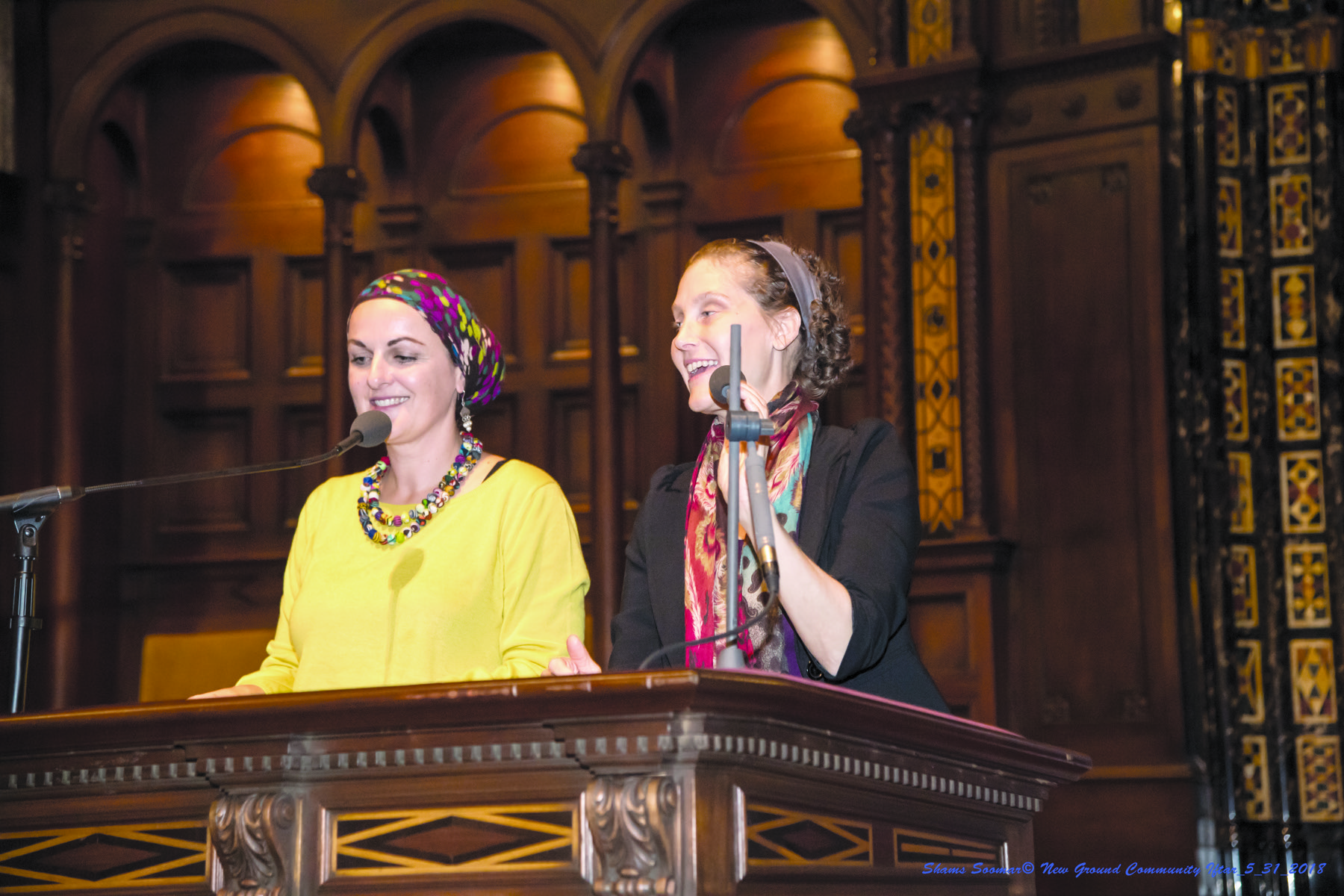
Edina Lekovic (left), communications strategist and media commentator, and Wilshire Boulevard Temple Rabbi Susan Goldberg speak at the annual NewGround Iftar.

More than 400 Jews, Muslims and others involved in interfaith efforts and civic life participated in a communal iftar dinner on May 31 at Wilshire Boulevard Temple.

Organized by NewGround: A Muslim-Jewish Partnership for Change, the event featured L.A. City Attorney Mike Feuer, who discussed his experience visiting Los Angeles International Airport at the time of President Donald Trump’s ban of Muslims entering this country from Muslim-majority countries. Feuer also discussed visiting a school of a Muslim student who had her hijab ripped off her head.

Additional speakers, including Aziza Hasan, executive director of NewGround; Wilshire Boulevard Temple Rabbi Susan Goldberg; Edina Lekovic, a communications strategist and media commentator; and Rabbi Zachary Zysman, the campus rabbi at Loyola Marymount University, highlighted the importance of strengthening Jewish-Muslim bonds.

Zysman was one of 23 individuals who participated in the 2017-18 NewGround professional fellowship, which brought together Jews and Muslims every other week at a mosque or synagogue to discuss anti-Semitism, Islamaphobia, the Israeli-Palestinian conflict and other hot-button topics. 

Adnan Majid, also a member of the fellowship, took part in the event.

The iftar also marked the culmination of the seven-month professional fellowship.

After speakers delivered remarks, Muslims, who had been fasting all day, participated in evening prayer, while Jews took part in evening prayers of their own. Breaking their daylong fast, Muslims ate dates and drank water and a halal dinner was then served for all in the synagogue’s courtyard. 


Valley Beth Shalom Day School Head of School Rabbi Deborah Schuldenfrei

Valley Beth Shalom (VBS) Day School has hired Rabbi Deborah Schuldenfrei as its new head of school, effective July 1.

Schuldenfrei will succeed VBS’ current head of school, Sheva Locke, who announced in September that she would step down from her position at the end of the school year.

“We wish to thank Sheva Locke, our head of school, for all of her years of service and dedication to the students, families and entire VBS community,” VBS Day School Board President Shelley Margulies said in a statement. “The appointment of Rabbi Schuldenfrei marks the end of a thorough international search. The head of school search process gave us a chance to work closely with our community to gather input about our school that was shared and studied by our board of trustees.”

In a statement, Schuldenfrei said she was excited about joining the VBS community.

“I am honored to join the Valley Beth Shalom Harold M. Schulweis Day School as the new head of school,” she said. “VBS families describe it as their second home, and we look forward to creating new memories together and continuing the rich Jewish experiences that make VBS Day School a pillar of the community.”

Schuldenfrei joins the VBS community along with her husband, Congregation Ner Tamid Rabbi Brian Schuldenfrei of the South Bay, and their three sons.

Ginger Vick, Contributing Writer


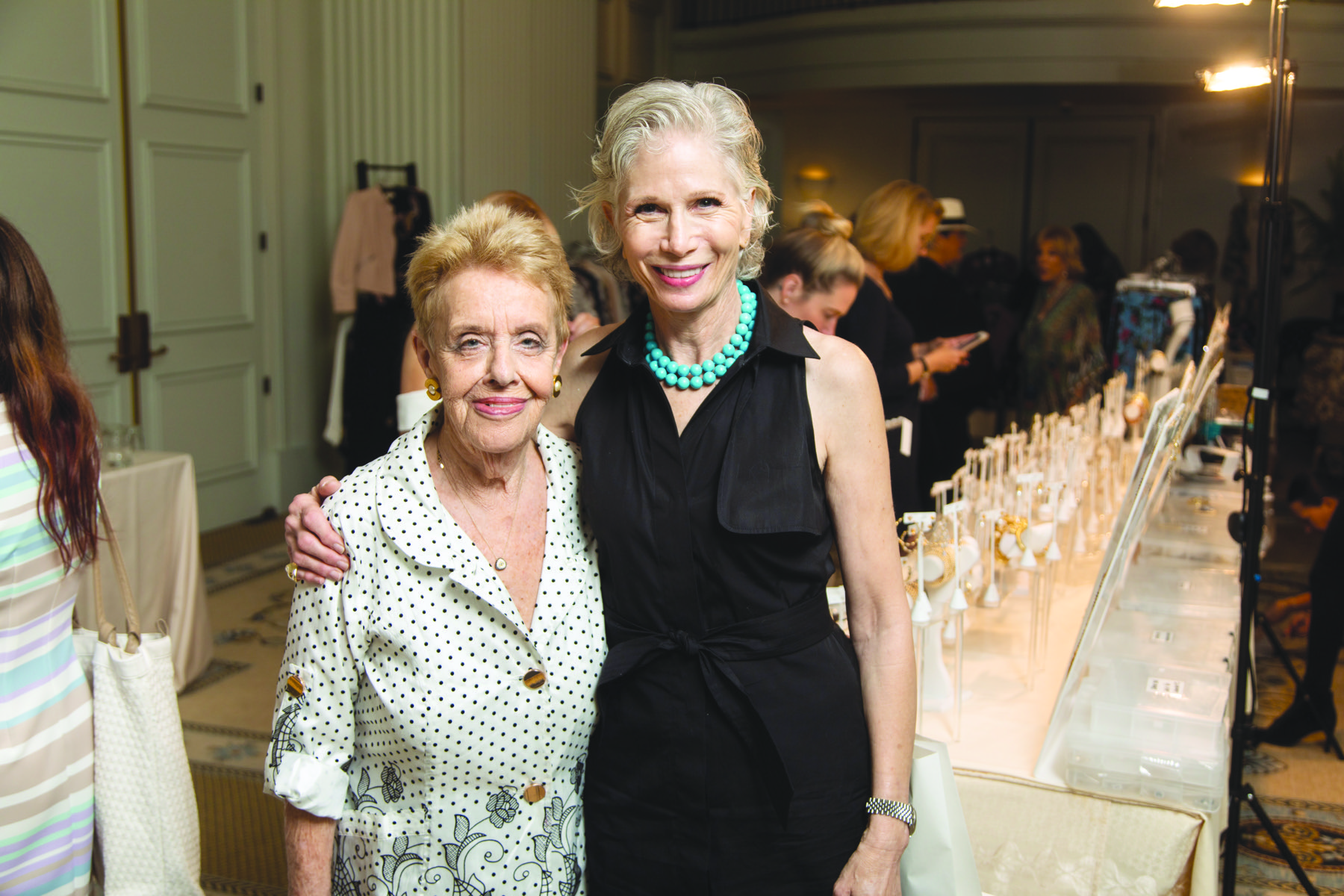
Harriet Rossetto (left), founder of Beit T’Shuvah, and Circle of Majesty honoree Lynn Shapiro attended the 11th annual Circle of Majesty luncheon.

More than 150 women gathered at Hotel Casa del Mar in Santa Monica for the 11th annual Circle of Majesty luncheon on May 24.

The Circle of Majesty comprises a group of women who have pledged to support the work of Jewish rehabilitation center Beit T’Shuvah in preventing, educating and treating the disease of addiction for those in need.

The event, which raised more than $150,000, honored Lynn Shapiro with the Majesty Service Award for her volunteer work with Beit T’Shuvah’s alternative sentencing department, which works with the criminal justice system to advocate for individuals to receive alternative sentencing at Beit T’Shuvah, as opposed to serving time in jail or prison.

“Shapiro is an integral part of the alternative sentencing department, and a beloved member of the Beit T’Shuvah community,” a Beit T’Shuvah statement said.

About 25 percent of residents at Beit T’Shuvah come there as a result of crimes related to drug and alcohol abuse. 

Attendees at the luncheon included Beit T’Shuvah founder Harriet Rossetto.


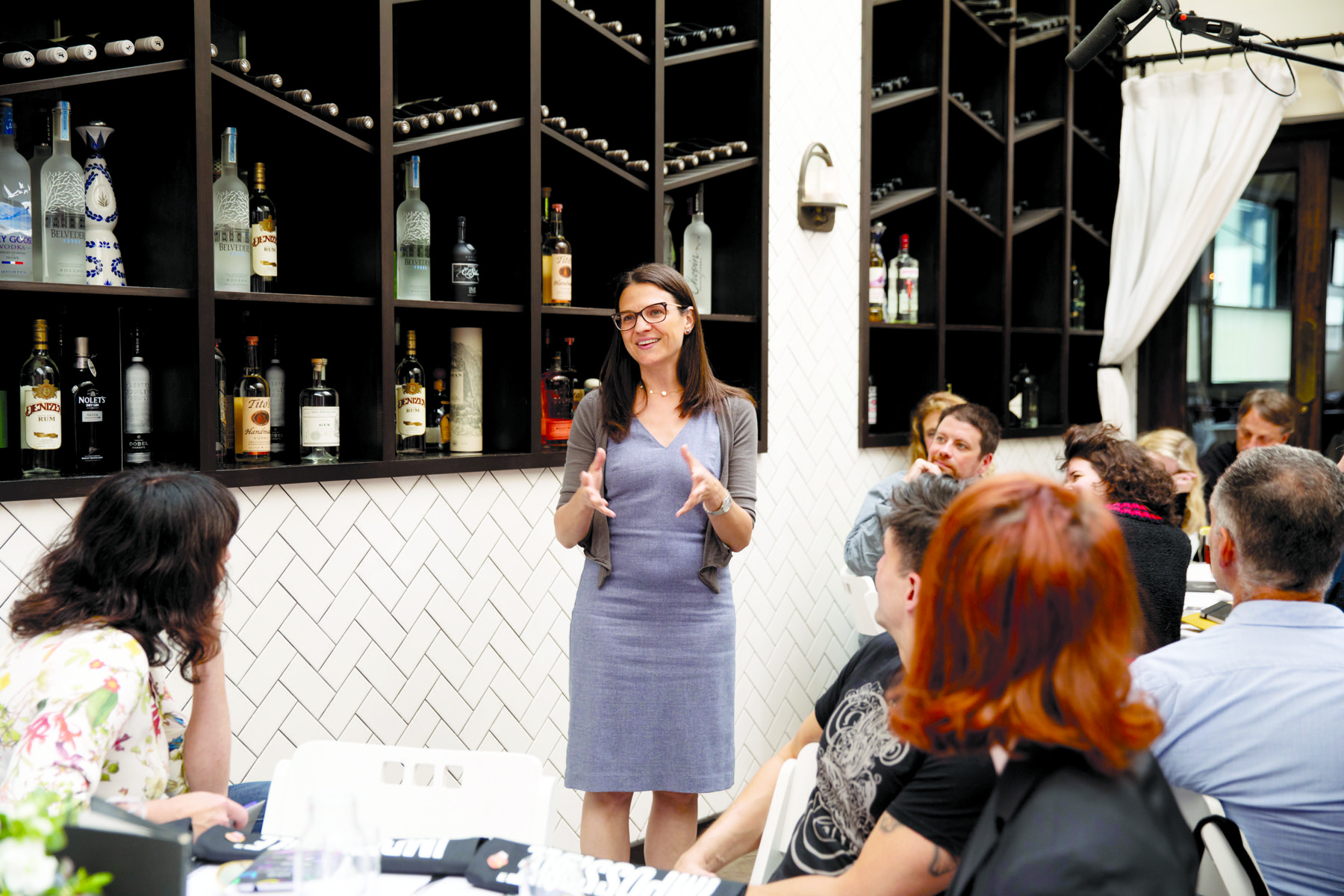
IKAR Senior Rabbi Sharon Brous delivers a blessing over Impossible Burger’s kosher-certified burger.

Impossible Burger, which develops realistic-tasting, plant-based hamburger patties, celebrated receiving its kosher certification from the Orthodox Union on May 22 at the Crossroads Kitchen restaurant in Los Angeles. 

“Getting kosher certification is an important milestone,” Impossible Foods CEO and Founder Patrick Brown said in a statement. “We want the Impossible Burger to be ubiquitous, and that means it must be affordable and accessible to everyone, including people who have food restrictions for religious reasons.”

Production of the Impossible Burger, according
to a company statement, uses 75 percent less water, emits 87 percent fewer greenhouse gases and
requires 95 percent less land than conventional ground beef. 

IKAR Senior Rabbi Sharon Brous attended the celebration and gave a blessing for Impossible Burger. 

An eclectic mix of Angelenos and Jewish community foodies also attended, including IKAR Executive Director Melissa Balaban, rapper Kosha Dillz and Kitchen Crossroads’ founder and chef Tal Ronnen. 


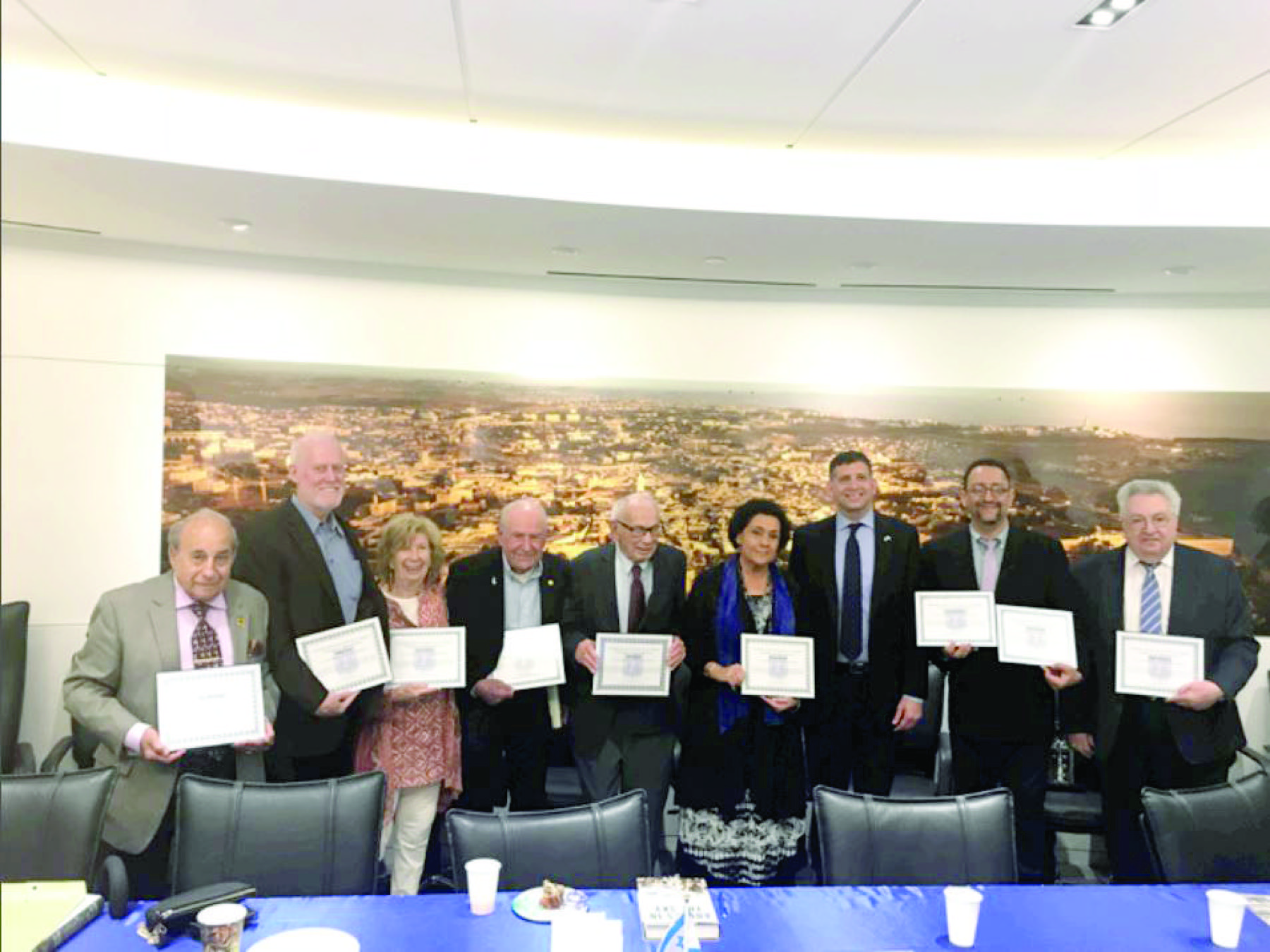
Holding their certificates of appreciation, American volunteers who fought in Israel’s War of Independence, and subsequent wars, are (from left) Max Barchichat, Yehuda Bock, Mavis Manus, Lee Silverman, Tom Tugend, Sharona Benami, Israel Consul General Sam Grundwerg, Rabbi Daniel Bouskila and Phil Yankofsk.

To mark the 70th anniversary Israel’s independence, Consul General of Israel in Los Angeles Sam Grundwerg invited a small group of surviving American volunteers, most of whom were World War II veterans who had clandestinely volunteered for the Israeli army, navy and air force during the 1948 War of Independence.

Joining the June 1 event at the Consulate General of Israel offices in West Los Angeles were younger men and women who had seen action in the Six-Day and Yom Kippur wars and the Lebanon campaigns, as well as families of deceased volunteers.

Grundwerg, who himself left his native Florida to enlist in the Israel Defense Forces, presented framed certificates of appreciation to the honored volunteers and noted that too often in life “we don’t extend recognition until it is too late.”

Each “Machalnik” was given a few minutes to recall the highlight of his or her war experiences, with some expressing gratitude to Israel for allowing them to participate in the historical events of the past century.

— Tom Tugend, Contributing Editor

Movers & Shakers: NewGround Iftar, Impossible Burger Read More »

Table for Five: Parshat Shelach

“And it shall be unto you for a fringe, that ye may look upon it, and remember all the commandments of the Lord, and do them; and that ye go not about after your own heart and your own eyes, after which ye use to go astray.” Num. 15:39

Rabbi Lisa Grushcow
Temple Emanu-El-Beth Sholom
Excerpted from ReformJudaism.org
Like the proverbial string around one’s finger, tzitzit serve as a counterbalance to the forces of distraction or forgetting. The Torah portion begins with the scouts being led off course by what their eyes see and what their hearts fear. The commandment of tzitzit, at the end of the parasha, gives a strategy for avoiding such mistakes.

Sh’lach L’cha opens with God telling Moses to send 12 scouts to report on the Promised Land. All 12 come back describing its goodness; but 10 share their conviction that the Land “eats its inhabitants,” and moreover, is settled by giants whom the Israelites cannot hope to conquer. The Israelites believe them, and as a result, God condemns an entire generation to die in the wilderness.

You or I may rarely be faced with a challenge like that of the scouts. But there is something universally human about the risk of going off course.

That, perhaps, may be what the tztitzit help us to avoid. But what might they help us to achieve? One answer might lie in a little-noticed word. We translate kanfei big’deihem as “the corners of their garments.” Kanaf more commonly means “wing,” and often refers metaphorically to the wings of the Divine Presence, kanfei haShechinah. On an individual level, the experience of wearing a tallit can be like being wrapped in something holy, creating a sacred space for prayer. And on the communal level? Perhaps the tallit can be seen as Judaism’s big tent. Whether or not you wear one, there is room enough for us all.

What are tzitzit? They are a specially tied and knotted set of fringes that many male Jews and some women once wore on all their garments, and more recently on the ceremonial prayer shawl. They seem abstract, but not only is there a tradition of the meaning of the numbers of turns and knots, but as a gestalt the tzitzit honor and celebrate the fact that between individuals within a community there must not be high, hard fences but soft and fading boundaries. These fringes are a mixture of “my” cloth and “communal” air. In biblical tradition, this was affirmed by assigning the produce of the corners of “my” field to the communal needs of the poor, the stranger, the orphan. The field was “mine” (under God’s ultimate ownership), but its corners faded away into communal space. In the new pattern shaped by the rabbis, the fringes of “my” garment played this role. Just as the shared communal use of the corners of the field betokened God’s share in my property, so the communal fringes of the garment betokened God’s share in my identity.

Rabbi Adam Kligfeld
Temple Beth Am

Thank you, Torah.  Thank you, book of Be-midbar/Numbers. For this gift. For this minuscule call to action that connects me to my obligations as a Jew. And which connects me to my child. For I sit in daily minyan, often deep in prayer, or far away in random ruminations. I rely on ritual to draw me back, as is so often the case in relationships. Between spouses. And friends. And parents to children. And between people and God. I wrap my fingers around the woolen threads as I begin to say the Shema. I kiss the fringes when I get to the word tzitzit in the third paragraph. And then I utter-mutter the words “that you may look upon it.” And I remember what I learned long ago, to pass the fringe before my eyes so that I actually do look at it. And be reminded of its meaning. And feel the tactile pull of a ritual garment and its dripping symbolism. And I turn to my 6-year-old son who sits next to me in morning minyan, whose osmotic learning will be as much an anchor of his Jewish identity as his didactic learning. I pass the fringe in front of my eyes. And then his. And we smile. And he giggles. And we are both reminded, wordlessly, how ritual and text can connect us to one another. And help us not to go astray, in all meanings of the word. But rather to listen to the murmurings of our own hearts. And of others.

Emunah Fialkoff
Teacher at Pacific Jewish Center

One of the verbs that jumps out in this verse is the verb “latur.” When we are commanded to place tzitzit on the corners of our garments, the meaning of this word seems to be “to go astray.” And yet in last week’s parsha, the same word appears in a different context. In Numbers 10:33, we are told that the Ark of God traveled three days ahead of the camp “latur lahem menucha” — to seek out for them a place for the Jews to camp. This word appears again repeatedly to describe the actions of the spies, as they “tur” the land of Israel. 

Seemingly, in allowing the Jews to send men to survey the land, God intended to encourage his people to do the same as he had done for them while in the desert. When the spies returned from their journey and elaborated on their task by casting judgment on the land, they profoundly abused this opportunity.

Tzitzit demand that we ask ourselves what motivates our seeking in life. Is it the commandments of God, and the memory of everything that he has done for us? Or is it “our hearts and our eyes which we pander to”? The most profound lesson in the use of the word “latur” is to remind us that often, God is providing us with an opportunity to emulate him and develop ourselves as godly people. Although we missed the mark in the case of the spies, tzitzit serve as an eternal second chance.

Rabbi Noam Weissman
Jerusalem U

The first two parshiot of Shema, Judaism’s greatest document of faith, seem to argue for two contradictory concepts. The first section contains a categorical imperative to love God, with nothing granted in return. The second chapter is called “consequentialist” by philosophers, meaning, “If I do X … then I get Y in return.” This relates to the two great concepts of faith and mitzvah observance in general — lishma and lo lishma. The ideal may be to fulfill mitzvot regardless of consequence and for intrinsic reasons. But, this is not to say that Judaism does not have room for doing mitzvot in some sort of transactional way. Yet, what emerges is that the purpose of faith is not in order to reap the rewards that follow, rather it is the faith itself.

These two ideas intersect at the mitzvah of tzitzit. Are we commanded to wear them because they protect us from sin? Or is wearing them valuable regardless of their function?

The assumption of the text seems to indicate that ipso facto, if I wear tzitzit, I am assured proper behavior by allowing my passions to sway me. Still, I believe reducing the value and intentionality of wearing tzitzit will not aid us in our pursuit to follow through on God’s commands.

And that is the challenge of all mitzvot. Simply engaging in the ritual is not enough. Simply engaging in the discussion of the value is not enough. Let’s marry the two and create a thoughtful, meaningful Jewish experience.

Rabbi Dov Linzer
Yeshivat Chovevei Torah
Excerpted from library.yctorah.org

Tzitzit come to serve as a corrective to the sin of the spies, encouraging us to see through the lens of the Torah. We may even, like the spies, have a mandate to seek out, to leave our sheltered existence. But it must be a seeking out that is directed by true religious motivation, not one that gives in to our weaker selves, be it our lusts and desires, or be it our fears and weaknesses.

The key to how we see the world is how we see ourselves. The power of tzitzit is not just that they serve as a reminder to our obligations, but that as a part of our clothing, they become part of our very identity. They help define who we are.

As such, tzitzit link to other garments that are central to one’s identity, in particular the bigdei kehunah.

Tzitzit can be seen to be a form of bigdei kehunah that can be worn by non-Kohanim outside the Temple. As such, they are a part of the larger theme of Sefer Be-midbar — how does one stay oriented to God’s presence when one travels away from Mount Sinai? Yes, there will be a Mishkan, but a person will often be distant from that Mishkan. The first answer is to have the Mishkan in the center, so that wherever one lives, the basic orientation and framing principle is the Mishkan and his or her relationship to it.

Table for Five: Parshat Shelach Read More »

The Woman Who Lived in a Wall - A Poem for Haftarah Shelach by Rick Lupert

The Woman Who Lived in a Wall – A Poem for Haftarah Shelach by Rick Lupert

In the fields of oppression
thousands of years after the fact
they sang of the famous battle

Joshua, Jericho…and inside
those walls that came down
a righteous woman

Shielding our inside men
from the king’s would-be captors.
She paid attention to the news

Heard the tale of the parted sea
The lands whose inhabitants had
melted away.

She knew which horse to bet on.
Our secret agents hid on the roof
covered in stalks of flax.

Sent the counter agents
to the river, chasing phantom spies.
A debt paid with a scarlet thread

meant to work like ram’s blood
during a flyover. A life for a life.
Go tell it to the mountain.

Then to Joshua.
Joshua whose face knew Moses.
Joshua would fight the battle.

The battle that still
comes out of our smallest lips
like a song.


God Wrestler: a poem for every Torah Portion by Rick LupertLos Angeles poet Rick Lupert created the Poetry Super Highway (an online publication and resource for poets), and hosted the Cobalt Cafe weekly poetry reading for almost 21 years. He’s authored 22 collections of poetry, including “God Wrestler: A Poem for Every Torah Portion“, “I’m a Jew, Are You” (Jewish themed poems) and “Feeding Holy Cats” (Poetry written while a staff member on the first Birthright Israel trip), and most recently “Beautiful Mistakes” (Rothco Press, May 2018) and edited the anthologies “A Poet’s Siddur: Shabbat Evening“,  “Ekphrastia Gone Wild”, “A Poet’s Haggadah”, and “The Night Goes on All Night.” He writes the daily web comic “Cat and Banana” with fellow Los Angeles poet Brendan Constantine. He’s widely published and reads his poetry wherever they let him.

The Woman Who Lived in a Wall – A Poem for Haftarah Shelach by Rick Lupert Read More »

Rosner’s Torah Talk: Parshat Shelach with rabbi Benji Stanley

Our guest this week is rabbi Benji Stanley, the Rabbi of Westminster Synagogue, an independent shul in the middle of London. He is passionate about getting  stuck into texts and has taught and helped to build the Limmud Bet Midrash, Open Talmud Project, Kehilat Kentish, and Willesden Minyan. He is married to Rabbi Leah Jordan.

This week’s Torah Portion- Parashat Shelach (Numbers 13:1- 15:41)- features the famous story of the twelve spies sent to examine the land of Canaan. It tells about how the people of Israel cry and grumble against Moses and Aaron, asking to go back to Egypt, and about God’s declaration that they will spend 40 years in the wilderness. The parasha ends with a set of commandments concerning offerings to God and with a curious story about a man who is stoned for picking up sticks on Shabbat. Our discussion focuses on the character of Joshua as a model for leadership development and as an example of our ability to change and improve ourselves.


https://www.youtube.com/watch?v=jR0rXksij3Y


Previous Torah Talks on this parsha:

Rabbi Michael Melchior

Rabbi Jeffrey Arnowitz

Rabbi Debra Newman Kamin

Rabbi Shana Mackler

Rabbi Marci Bellows


Rosner’s Torah Talk: Parshat Shelach with rabbi Benji Stanley Read More »