
Once every couple of years, we are reminded of the special relationship between Israel and American evangelical Christians. Often, it comes up in a form of scandal: This preacher said this, or that preacher said that — they tend to say shocking things. Shocking, at least for those who have little practice in listening to the words of religious leaders. Shocking, for those who are easily shocked. Shocking, for those whose political tendencies are different from those of the evangelical leaders.
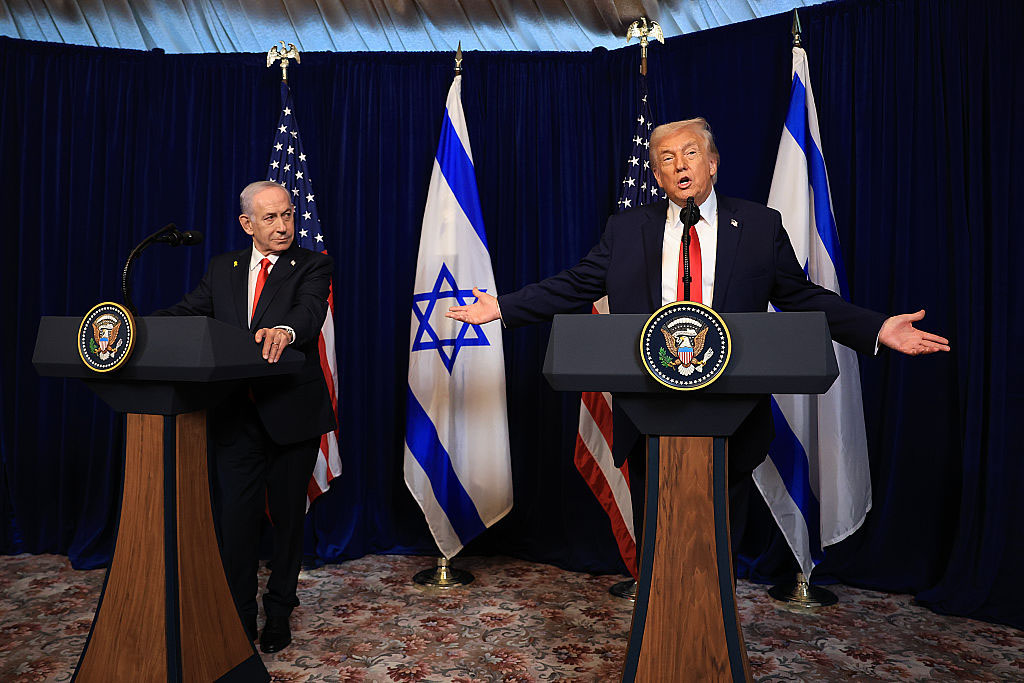
The relationship came to the fore in the last two weeks because of the presence of evangelicals at the ceremony marking the move of the United States Embassy in Israel to Jerusalem. “The dedication of the embassy in Jerusalem this past week doubled as the most public recognition yet of the growing importance the [Israeli Prime Minister Benjamin] Netanyahu government now assigns to its conservative Christian allies, even if some have been accused of making anti-Semitic statements,” The New York Times reported.
It is worth noting that complaints about evangelical anti-Semitism, and about evangelical evil-intentioned support of Israel (all they want is doomsday and Armageddon), always comes from the quarters that also happen to disagree with evangelical politics. And, of course, the opposite is also true: A tendency to ignore or dismiss problematic statements made by evangelical leaders always comes from the quarters that also happen to agree with evangelical politics.
So, this is more about politics than it is about religion.
If it is politics, then the politics are quite simple: Someone offers Israel friendship and Israel gladly accepts. Someone offers Israel not just friendship, but also influence in the world’s most important capital, and Israel gladly accepts. Is there a downside to accepting evangelical support? Of course there is — some of it inevitable, some of it not. For now, Israel seems to be willing to pay the price. It is willing to pay because the need for support is great and immediate, and the price is more vague and less immediate.
What’s the price? Neither Armageddon, nor doomsday. Israel has its own foreign policy that the evangelical leaders support (or don’t). It does not run the foreign policy of the evangelicals. The price is the identification of Israel with the Christian right in America. That is to say, what Israel gains on the right it loses on the left. And why did Israel decide to pay the price? Two reasons: 1) Because the Christian right supports the policies of Israel and the left would only support the policies of another Israel, not the real one. 2) Because the Christian right is supporting it already, while on the left it is not even clear if support is available for grabbing.
It is not the choice of Israel, or of evangelical supporters of Israel, to turn off American Jews.
And there is another price that Israel is paying. The Israeli government, the Times reported, “has made a historic and strategic shift, relying on the much larger base of evangelical Christians, even at the risk of turning off American Jews who may be troubled by some evangelicals’ denigration of their faith.”
Ah, the risk of turning off American Jews. Yes, it is a risk. And apparently, the government is ready to take the risk. But why is there such risk? Is it because the government would not accept the support of both Jews and evangelicals? Of course not. Is it because the evangelicals would not extend their support if Jews also support Israel? Again, wrong answer. If there is a risk, it stems not from Israel shunning the Jews or from evangelicals shunning the Jews; it stems from Jews shunning the evangelicals, and possibly shunning an Israel supported by evangelicals.
In other words, it is not the choice of Israel, or of evangelical supporters of Israel, to turn off American Jews. It is the choice of American Jews to turn off. It is their choice to see the support of evangelicals as a reason, or excuse, to turn off (and, of course, we do not talk in Israel about all American Jews, we only talk about those Jews who “turn off”).
In many ways, the story of turning off because of evangelicals is not much different than the story of turning off because of other reasons — the Kotel compromise, Netanyahu in Congress, the Orthodox, the occupation, Gaza shooting, you name it. Israel does what it does, not always wisely, not always perfectly. Still, the choice to turn off is made by those turning off. And evangelical support is a lame excuse to turn off, as there is no mandatory either-or situation when it comes to supporting Israel. Jews can support Israel. Evangelicals can support Israel. One does not negate the other — unless you want it to.
Shmuel Rosner is senior political editor. For more analysis of Israel and international politics, visit Rosner’s Domain at jewishjournal.com/rosnersdomain.