

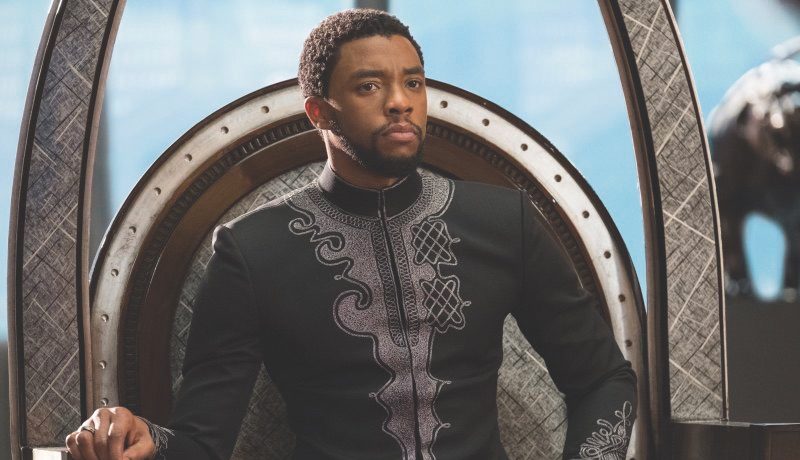
Marvel’s latest blockbuster, “Black Panther,” is an epic sermon on multiculturalism and the struggle to tame identity politics. Its grand themes of personal identity and ethnic pride are especially meaningful in today’s polarized socio-political climate, where a new sense of ethnocentric pride is galvanizing the outrage-driven left while also making American white nationalism “great again.”
The film is set in the fictional wealthy African kingdom of Wakanda, a highly sophisticated modern country with ancient traditions, rituals and beliefs. Since ancient times, when their technological advances were further ahead of the rest of the world, Wakanda’s foreign policy has been isolationist. The kingdom shuns outsiders to protect its most important resource, a secret mineral called Vibranium that powers their scientific achievements and would be deadly in evil hands.
The titular Black Panther and king of Wakanda is a man named T’Challa. His militant nemesis is Erik Killmonger. Having experienced and witnessed grave racial injustice, Killmonger believes Wakanda’s isolationist tradition is wrong. A supremacist, Killmonger plots to arm black people all over the world with Wakanda’s super-weapons in an attempt to conquer the world.
T’Challa also agrees that isolationism is wrong but he plans to enrich the lives of black people around the world through generosity, education and kindness.
T’Challa is cut from the same royal cloth as Queen Esther. His ethnic pride also inspires charity and kindness, as well as thriving within the global community.
Similarly, the Purim story is also about multiculturalism and ethnic pride. The entire threat of Haman’s genocidal plot turns on the fact that Queen Esther is a Jew but is hiding her identity because her people are refugees in exile. However, they do not intend on melting into Persian society. Their plan is to retain their Jewish identity and return to the Promised Land, but the memory of Israel and our Temple is beginning to fade at the beginning of the Purim story. We were so broken and downtrodden that King Achashverosh was nonplussed by the idea of exterminating us.
Our salvation came about because Esther owned her Jewish identity. She sparked a renewal of Jewish pride and identity across Persia that was so great, it inspires Purim traditions of charity and rituals of kindness to this day.
T’Challa is cut from the same royal cloth as Queen Esther. His ethnic pride also inspires charity and kindness, as well as thriving within the global community.
On one level, “Black Panther” is a metaphor for the historical struggle between Black nationalist extremism and the civil rights movement. Both are inspired by the same identity politics but yield opposite results.
Esther embraced her identity to save her people, and when her people were safe they celebrated by bringing light into the world. “La’Yehudim hyta ora v’simcha” – “There was light and joy for the Jews.”
Similarly, T’Challa’s ethnic pride inspires him to add light into the world by raising up the oppressed and downtrodden.
“Black Panther” makes the case for embracing identity politics to uplift others and inspire brotherhood. That is the opposite of supremacy. Ethnic pride is not an end in itself. At its best, it’s part of a vibrant and unifying multiculturalism.
Eli Fink is a rabbi, writer and managing supervisor at the Jewish Journal.

































