















Moral cannibalism demands something more than enforcing the boundaries of a group. The accused must participate in their own demise: confess, apologize, accept the indictment, and surrender the part of themselves the group has condemned

Sukkot asks us to receive the harvest that has actually come in—not the one we imagined or wished for.

These are the seven guests, ushpizot, invited to our Sukkah –
Who a society calls a hero is not a minor detail; it’s close to the whole diagnosis.

Jewish members are describing antisemitism within CFA itself as the union presses to weaken protections born of the post-Oct. 7 campus antisemitism crisis.

The sukkah reminds us to go out into the world, especially when the comforts of insularity beckon us closer—to explore paths we have yet to take and seek journeys ready for wandering.


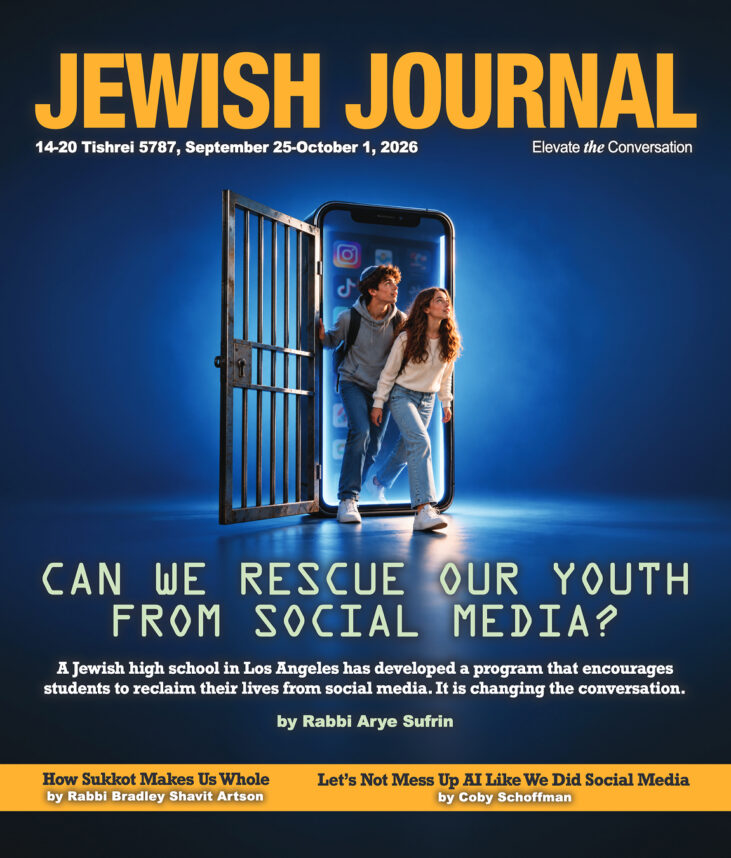
A Jewish high school in Los Angeles has developed a program that encourages students to reclaim their lives from social media. It is changing the conversation.

Season 5 is the first season of “Fauda” built around the Hamas-led Oct. 7, 2023 terror attacks on Israel.

The Journal spoke with a dozen Israelis from California who are planning to travel to Israel for the election.

I love making soup for this holiday because even if the days are still warm, the cooler evenings make you start craving something warm and comforting.
A Divine Hug

A Jewish high school in Los Angeles has developed a program that encourages students to reclaim their lives from social media. It is changing the conversation.

There is a difference between criticism that comes from responsibility and love, and an almost psychological need to prove to the world: I am not one of them.

Shaare Zedek Medical Center in Jerusalem said Wednesday night that after undergoing lifesaving procedures in its trauma unit, Leiter underwent complex brain surgery lasting several hours along with additional treatments.
First launched in 2024 and updated again this year, the guide offers practical resources and advice for navigating the current campus climate.

While so much of the world seems obsessed with and consumed by its hatred of Israel and Jews, Israelis continue to build, create, work, celebrate, argue, raise families, and plan for the future.

“The biggest concern is that people now have a pathway to shut down Jewish voices through complete falsities that people will believe. … For the future of Jewish entertainment, it’s very scary.”

Mark Smith has compiled an important anthology of Jewish history using 49 works by Yiddish historians to recreate or at least open the door to a world of Jewish thought that was once almost mainstream, but which no longer exists, except in the minds of too few specialists.